Orchids have a special way of making any indoor space feel more refined. Their glossy leaves, sculptural roots, and delicate flowers can transform a simple windowsill into a calm, expensive-looking plant corner. But as beautiful as orchids are, they can also be sensitive. Their roots do not like staying wet for too long, their potting mix must breathe well, and their feeding routine needs to be gentle. This is why many plant lovers are curious about simple natural tricks that may help keep orchid roots cleaner, leaves greener, and blooms more consistent.
One garden idea that often gets attention is using a very small amount of clean wood ash around orchids. Wood ash is the powdery gray residue left after untreated wood has fully burned. In traditional gardening, it has been used carefully as a mineral-rich soil amendment because it contains potassium, calcium, and other trace elements. For orchids, however, the key word is carefully. Orchids are not heavy-feeding garden shrubs. They are delicate epiphytes with exposed, air-loving roots, so any home trick must be used lightly, safely, and with respect for the plant’s natural needs.
This guide explains how to think about the wood ash orchid method in a safer and more realistic way. It also shows how to create a cleaner orchid display, how to avoid root burn, how to style orchids beautifully indoors, and how to use this idea without turning a delicate plant into a risky experiment.
What Wood Ash Can Do in Plant Care
Wood ash is naturally alkaline and contains minerals that plants may use in small amounts. The most talked-about nutrients in ash are potassium and calcium. Potassium is often associated with general plant strength, water movement inside the plant, and flower support. Calcium is linked to cell strength and healthy growth. Because orchids need balanced nutrition to grow leaves, roots, and flower spikes, it is easy to understand why this idea became popular.
But wood ash is not a complete orchid fertilizer. It does not replace a balanced orchid feed, and it does not instantly force flowers to appear. It is better to view it as a very occasional mineral supplement, not as a miracle blooming powder. The goal is not to bury the orchid roots in ash. The goal is to use a tiny amount, diluted or lightly dusted, while keeping the roots airy and the potting medium clean.
The biggest mistake people make with ash is using too much. Because ash raises alkalinity, a heavy dose can disturb the root environment. Orchids usually prefer a slightly acidic to neutral root zone, depending on the type and potting mix. Too much ash can push the conditions too alkaline, which may interfere with nutrient uptake and stress the roots.
Why Orchids Need Gentle Feeding
Most common indoor orchids, especially Phalaenopsis orchids, grow differently from many houseplants. In nature, they often attach to trees, where their roots receive air, moisture, and small amounts of nutrients from rain, bark, and organic matter. They are not designed to sit in dense soil full of heavy fertilizer.
This is why orchid potting mixes usually contain bark, charcoal, coconut chips, perlite, or other chunky materials. These materials let air move around the roots. When orchid roots are healthy, they are usually firm and green or silvery. When they are overwatered or suffocated, they may turn brown, black, mushy, or hollow.
A gentle feeding routine works better than dramatic treatments. Orchids respond to consistency: bright indirect light, proper watering, good airflow, and diluted nutrients. A tiny amount of mineral support can be helpful only when the basic care routine is already correct.
When Wood Ash Might Be Useful
A tiny amount of clean wood ash may be considered when an orchid is actively growing and already has healthy roots. It may be used as an occasional potassium-rich supplement for plants that are producing leaves, roots, or preparing for a blooming cycle. It may also help some growers refresh the surface of a very organic potting mix, but it must never be used as a thick layer.
The safest time to try this method is during active growth, not when the orchid is extremely stressed. If a plant has mushy roots, yellowing leaves, or a collapsing crown, ash is not the first solution. In that case, the orchid likely needs root inspection, trimming of rotten roots, fresh bark mix, better drainage, or improved watering habits.
Use ash only if the orchid is stable. Think of it as a gentle support step, not a rescue treatment for severe root rot.
What Kind of Ash Is Safe?
Only use ash from clean, untreated wood. The ash must not come from painted wood, treated lumber, charcoal briquettes with additives, glossy paper, cardboard with ink, plastic, or anything chemically processed. Those materials can leave harmful residues that may damage roots.
The ash should be fully cooled, dry, and finely sifted. Large charcoal chunks can be used in some orchid mixes, but powdery ash behaves differently. Powder can clog air spaces if used heavily, so it should be used sparingly.
If you are unsure where the ash came from, do not use it. Orchids are too valuable and sensitive to risk unknown residues.
The Safest Way to Use Wood Ash for Orchids
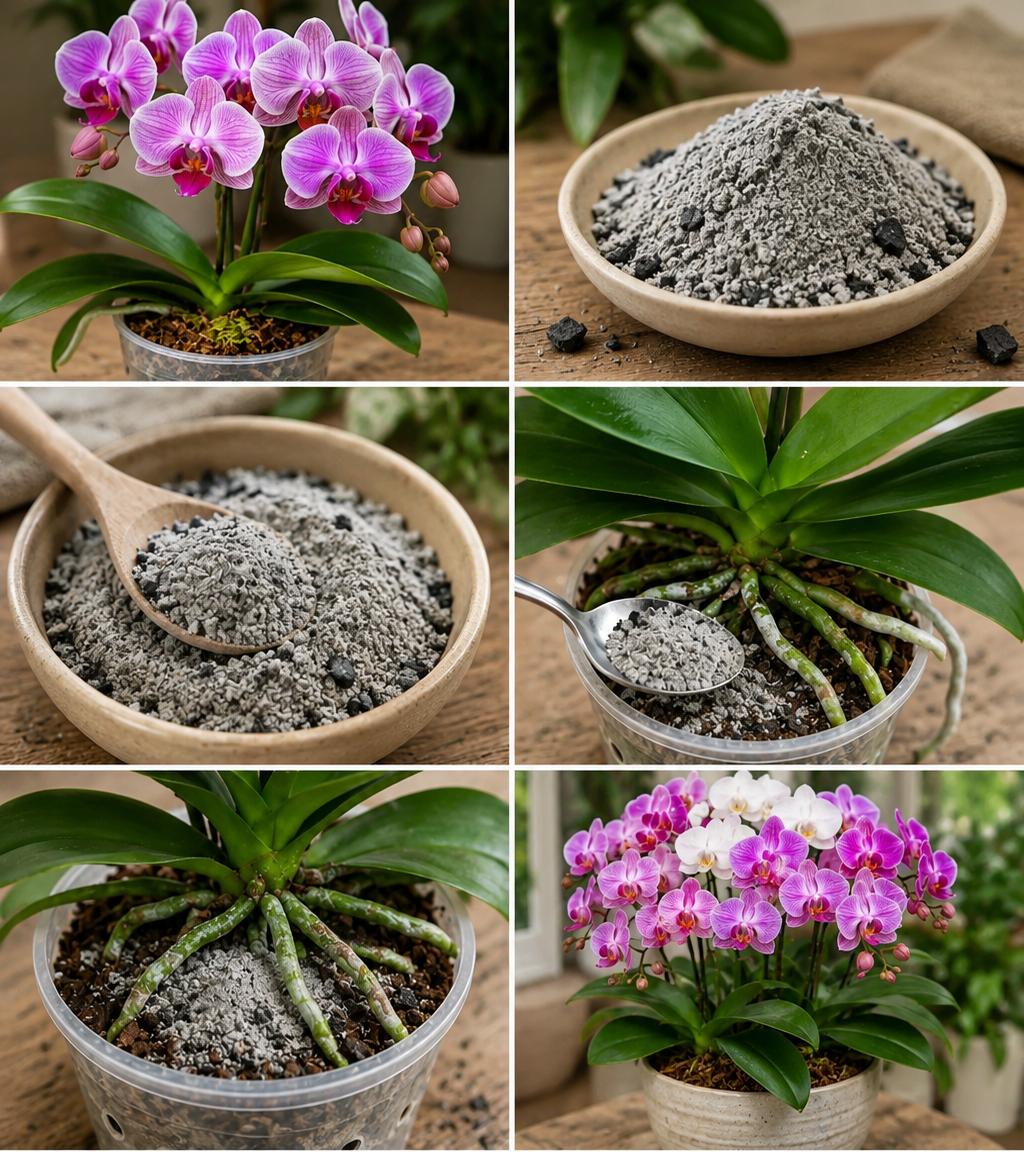
The safest method is not to pour ash directly all over the roots. Instead, use a tiny pinch or a very weak ash-water rinse. For most small orchid pots, a small pinch is enough. Think in terms of dust, not a layer.
One simple approach is to mix a very small amount of ash into water, let the heavier particles settle, and use only a little of the diluted liquid around the edge of the potting medium. Avoid pouring it directly into the crown or onto tender root tips. After using it, return to normal watering and monitor the plant.
Another method is to lightly sprinkle a tiny amount on the surface of the potting mix, away from the crown, then water normally later. This allows the minerals to move slowly through the medium. Again, the amount should be minimal. If the bark surface turns gray-white from too much powder, you have used more than needed.
How Often Should You Use It?
Wood ash should not be used weekly. Orchids do not need frequent ash applications. A very occasional use every few months is more than enough for experimentation. Many orchids will do perfectly well without it.
If you already use a balanced orchid fertilizer, be even more cautious. Combining too many feeding methods can cause salt buildup or root stress. It is better to underfeed orchids slightly than to overload them.
After using ash once, wait and observe. Look for steady leaf color, healthy root tips, and no sudden decline. If the plant shows stress, stop using ash and flush the potting medium with clean water.
Important Warning: Do Not Pack Ash Around Orchid Roots
Orchid roots need air. A thick layer of ash can clog the bark, hold fine particles around roots, and create an unhealthy root environment. This is especially risky in clear plastic orchid pots where airflow already depends on chunky bark and drainage holes.
Never cover the roots with a heavy mound of ash. Never replace orchid bark with ash. Never use ash as a potting medium. The goal is gentle mineral support, not root burial.
If the orchid has exposed aerial roots, do not coat them heavily. Aerial roots absorb moisture from the air and need to breathe. Powder buildup can dry them or irritate the surface.
How to Check Whether Your Orchid Actually Needs Support
Before adding anything, study the plant. Healthy orchid leaves should feel firm, not limp. They should be green, not overly yellow or black-spotted. Roots should be firm. Green roots usually indicate they are hydrated, while silvery roots often indicate they are ready for water. Brown mushy roots are a warning sign.
If the leaves are wrinkled, the problem may be root damage or underwatering. If the roots are rotten, feeding will not fix the plant. If the orchid is not blooming, the issue may be light, temperature, maturity, or natural rest cycles rather than lack of minerals.
A plant trick works best when matched to the real problem. Adding ash to an orchid that actually needs brighter light will not create flowers. Adding ash to an overwatered orchid may make the problem worse.
The Real Blooming Secret: Light Comes First
Many orchids fail to bloom because they are not receiving enough light. A Phalaenopsis orchid usually prefers bright indirect light. Too little light can produce dark green leaves but no flower spike. Too much direct sun can burn the leaves.
Place orchids near a bright window with filtered light. East-facing windows are often excellent. South or west windows may work if the light is softened by a sheer curtain. The leaves should receive brightness, but not harsh midday sun.
If the orchid receives good light, healthy roots, and a steady care routine, it is more likely to bloom. A tiny mineral supplement can only support the plant; it cannot replace proper light.
Watering Orchids the Clean Way
Watering is one of the most important parts of orchid care. Most orchids dislike sitting in stagnant water. The pot should drain fully after watering. If the orchid is in a decorative outer pot, remove the inner pot, water it, let it drain, and then place it back.
Clear pots are helpful because they show root color and moisture levels. If roots are green and the potting mix looks wet, wait. If roots are silvery and the bark is dry, it may be time to water.
When using any additive, including ash, clean watering becomes even more important. Occasional flushing with plain water helps reduce buildup and keeps the root zone fresh.
How to Flush the Pot After Using Ash
If you used a tiny amount of ash, you can flush the pot after a few weeks. Take the orchid to a sink and run room-temperature water through the potting mix for several seconds. Let the water drain completely. This helps wash away excess minerals and keeps the bark from becoming too concentrated.
Do not flush the crown with water. Water trapped in the crown can encourage rot, especially in cool rooms. Aim the water at the potting medium and roots, then let the plant dry in a bright, airy place.
This simple step keeps the display cleaner and reduces the risk of mineral stress.
How to Keep Orchid Leaves Glossy and Elegant
Healthy orchid leaves are a major part of the plant’s beauty. Even when the orchid is not flowering, glossy leaves make it look fresh. Wipe leaves gently with a soft damp cloth to remove dust. Do not use heavy oils or leaf shine products, because they can clog leaf surfaces and attract dust.
Support the leaves by giving the plant balanced care. Good light, clean water, and healthy roots produce better foliage than any quick trick. If leaves are dusty, the plant may photosynthesize less efficiently, so regular cleaning is useful.
For a more refined look, remove old yellow leaves only when they are ready to detach. Do not pull healthy leaves. Trim dry flower spikes neatly with sterile scissors.
How to Style Orchids With a Natural Ash-Care Theme
If you like the visual style of natural orchid care, you can create a beautiful display using simple materials. Place the orchid in a clear inner pot and set it inside a ceramic or stone-look outer pot. Use bark chips on the surface for texture. Keep the roots visible enough to check their health.
A small wooden spoon, a tiny bowl of clean ash, and a natural wood tray can create a rustic garden-care scene. But for daily decor, keep powders and tools away from the plant so the area looks clean.
Orchids look especially elegant with neutral colors: white pots, gray stone bowls, black plant stakes, natural wood, and soft linen curtains. Pink or white orchids stand out beautifully against these backgrounds.
Best Indoor Places for Orchids
A bright windowsill with filtered light is a classic choice. A dining table near a window can make the orchid feel like a floral centerpiece. A bathroom with bright light can work well because orchids enjoy humidity, but the room must not be dark.
A living room plant shelf can look stunning with orchids grouped at different heights. Use one blooming orchid as the main feature and smaller leafy plants around it for softness. Avoid placing orchids near heaters, air conditioners, or cold drafts.
For a luxury look, use fewer plants but keep them healthier and cleaner. One strong orchid with glossy leaves and fresh blooms can look more expensive than many neglected plants crowded together.
What to Do If Your Orchid Has Weak Roots
If the roots are weak, do not start with ash. First, remove the orchid from its pot and inspect the roots. Trim mushy, hollow, or blackened roots with sterile scissors. Keep firm roots, even if they are pale. Repot the orchid into fresh orchid bark if the old mix smells sour or looks broken down.
After repotting, water carefully and allow airflow. Do not fertilize heavily while the plant is recovering. A stressed orchid needs stability before extra nutrients.
Once new root tips appear, the orchid is ready for a gentle feeding routine. That is a better time to consider any mild supplement.
Can Ash Help With Pests?
Wood ash is sometimes discussed in outdoor gardening as a pest deterrent, but indoor orchids require caution. Powdery substances around roots and leaves can create mess and may irritate delicate tissue. If your orchid has pests such as mealybugs, scale, or spider mites, use proper pest control methods instead.
For mealybugs, isolate the plant and clean visible pests with cotton swabs dipped in alcohol, avoiding overuse on tender areas. For scale, remove insects gently and repeat treatment. For spider mites, improve humidity and clean leaves regularly. Ash should not be treated as a reliable orchid pest solution.
Better Alternatives for Regular Orchid Feeding
A balanced orchid fertilizer is usually more predictable than homemade amendments. Use it diluted, often at quarter strength, during active growth. Many growers prefer the “weakly, weekly” idea, meaning very weak fertilizer more regularly, but this depends on your watering routine and product instructions.
You can also feed less often, such as every two to four weeks, especially for beginners. Always flush with plain water occasionally to avoid buildup.
Wood ash, if used at all, should remain a rare supplement, not the main feeding plan.
How to Avoid Overdoing Natural Plant Tricks
Natural does not always mean safe in large amounts. Lemon juice, vinegar, coffee, ash, banana water, garlic water, and similar home remedies can all cause problems when used too strongly. Orchids especially need moderation.
The safest rule is simple: if a trick changes the root environment strongly, use less than you think, and use it rarely. Observe the plant for weeks before repeating.
Do not combine many tricks at once. If you use ash one month, do not also add coffee, banana peel water, strong fertilizer, and lemon rinse. Too many changes make it impossible to know what helped or harmed the plant.
Continue to Page 2
Continue to page 2 for more details about this article and the key points many readers miss on the first page.