Orchids are among the most elegant houseplants you can grow indoors. Their glossy leaves, sculptural roots, and long-lasting blooms make them look refined even in the simplest corner of the home. But orchids also have a reputation for being sensitive. They do not like heavy soil, they dislike soggy roots, and they can react badly when plant lovers use strong homemade fertilizers without dilution. This is why a gentle aloe vera root tonic has become an interesting idea for orchid owners who want a softer, cleaner, more natural way to support their plants without overwhelming the root system.
Aloe vera is known for its soothing gel, high water content, and plant-friendly texture. In garden routines, diluted aloe gel is sometimes used as a mild plant tonic because it contains natural compounds, moisture, and trace nutrients. For orchids, the most important point is not to treat aloe as a miracle fertilizer. Instead, it should be used as a gentle support rinse that may help refresh roots, hydrate the potting medium lightly, and create a more polished care routine when combined with proper orchid basics.
This guide explains how to prepare a soft aloe vera orchid tonic, how to dilute it correctly, how often to use it, and how to avoid the common mistakes that can harm orchids. You will also find styling ideas for turning your orchid care routine into a clean, beautiful indoor plant display that looks calm, natural, and expensive.
Why Aloe Vera Is Popular in Plant Care
Aloe vera is a succulent plant with thick leaves filled with cooling gel. That gel is mostly water, but it also contains small amounts of minerals, sugars, amino acids, and plant compounds. Because of its smooth texture and mild nature, many plant lovers use diluted aloe gel in propagation, seed starting, and gentle plant-refresh routines.
For orchids, aloe vera is best viewed as a light root-support tonic rather than a strong fertilizer. Orchids do not need heavy feeding to look beautiful. They need airflow, clean moisture, filtered light, and a steady routine. Aloe can be used occasionally as a mild supplement, especially when the plant is already healthy and actively growing.
The key is dilution. Fresh aloe gel can be thick and sticky. If it is poured directly into orchid bark without enough water, it may coat the roots, sit in the potting medium, attract residue, or reduce airflow. A thin, strained aloe water is much safer and cleaner.
Why Orchids Need a Gentle Approach
Most indoor orchids, especially Phalaenopsis orchids, are epiphytes. This means they naturally grow attached to trees rather than buried in heavy soil. Their roots are designed to receive air, light moisture, and quick drainage. This is why orchid pots often contain bark chips, charcoal, perlite, or other chunky materials instead of ordinary potting soil.
When orchid roots are healthy, they are usually firm. They may look green when hydrated and silvery when dry. If roots become brown, black, mushy, hollow, or sour-smelling, the plant may be suffering from root rot. In that case, no tonic will solve the problem until the damaged roots and old potting mix are handled properly.
Aloe vera can support a good routine, but it cannot replace correct watering, proper light, fresh bark, or healthy drainage. It should be used only as one small part of orchid care.
Benefits of a Diluted Aloe Vera Orchid Tonic
A gentle aloe tonic may help refresh the orchid’s root environment when used correctly. It can add light moisture, provide a mild natural boost, and make the care routine feel cleaner and more intentional. Because aloe is soft and plant-based, many growers prefer it over harsh homemade mixtures that contain strong acids, salts, or concentrated kitchen scraps.
The tonic may also be useful after routine watering if the orchid is in active growth. Active growth means the plant is producing new roots, new leaves, or a flower spike. During this stage, orchids can benefit from consistent care and very gentle nutritional support.
However, aloe should not be used too often. Anything organic can break down inside the potting medium. If used heavily, it may create buildup. A light application once in a while is better than frequent soaking.
What You Need
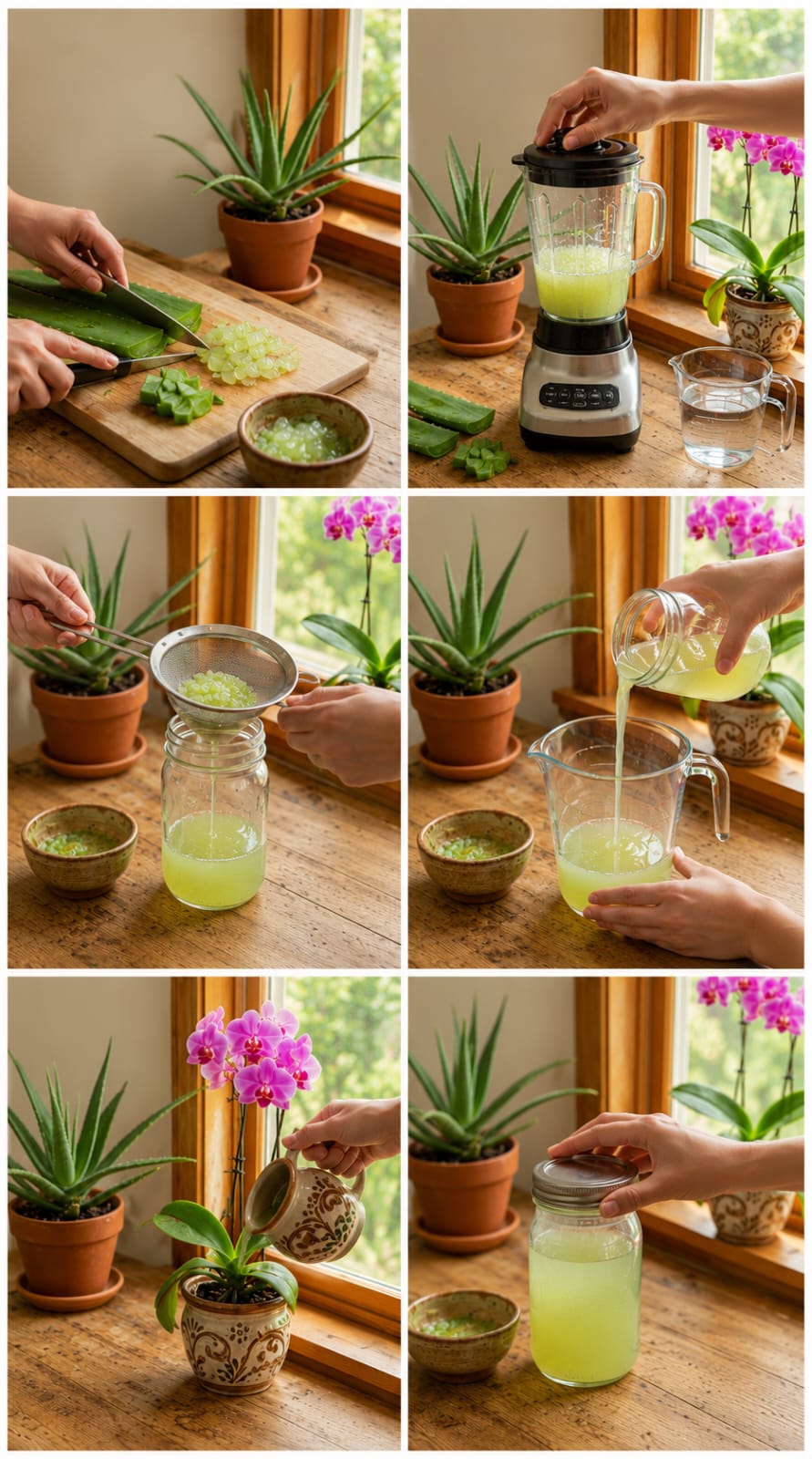
To make a simple aloe vera orchid tonic, you only need a few clean materials. Use one fresh aloe vera leaf, clean water, a blender, a fine strainer, and a clean jar. If possible, use rainwater, filtered water, or water that has been left out for several hours. Orchids can be sensitive to hard water and chemical buildup, so cleaner water is always better.
You will also need a measuring cup so you can dilute the aloe properly. This step matters because the safest orchid tonic is thin and watery, not thick and gel-like.
How to Prepare the Aloe Vera Gel
Start by cutting one healthy aloe vera leaf. Wash the outside of the leaf well to remove dust. Trim away the spiky edges. Then slice the leaf open and scoop out the clear gel from inside. Avoid using too much of the yellow latex that may sit near the skin, because it can be irritating and unnecessary for plant care.
Cut the gel into small pieces. This makes it easier to blend smoothly. Do not add sugar, honey, oil, vinegar, salt, lemon juice, or fertilizer to the mixture. The goal is to keep the tonic simple and gentle.
How to Blend the Tonic
Place the aloe gel into a blender with clean water. A safe beginner ratio is about one tablespoon of fresh aloe gel to one liter of water. If you are making a smaller amount, use one teaspoon of gel in about one cup of water. Blend until the mixture becomes pale and smooth.
The mixture should look thin, not slimy. If it feels thick, add more water. Orchids prefer a diluted rinse because their roots need air. Thick aloe can leave residue in the bark and make the potting medium too damp.
After blending, strain the mixture through a fine sieve or cloth. This removes pulp and small gel pieces. Straining is important because chunks can sit in the potting mix and break down. A clean liquid is safer for orchid roots.
How to Store the Aloe Tonic
Fresh aloe tonic is best used the same day. If you need to store it, keep it in a clean jar in the refrigerator for no more than two or three days. Shake gently before using. If it smells sour, changes texture, or develops bubbles, throw it away and make a fresh batch.
Do not store homemade plant tonics for a long time. Fresh organic mixtures can ferment. Fermented liquids may harm delicate orchid roots or attract unwanted odors indoors.
How to Apply Aloe Vera Tonic to Orchids
Water the orchid only when the potting medium is close to dry and the roots look silvery. Pour the diluted aloe tonic slowly around the edge of the potting medium, not directly into the crown of the plant. The crown is the center where the leaves meet. Water trapped there can lead to rot, especially in cool or low-airflow rooms.
Let the liquid run through the bark and drain completely. Never leave the orchid sitting in a saucer full of aloe water. After watering, allow the pot to drain well before placing it back into a decorative outer pot.
If your orchid is in a clear pot, check the roots after watering. They should look hydrated, not suffocated. If the pot remains wet for many days, your mix may be too old or too dense.
How Often to Use Aloe Vera on Orchids
Use the aloe tonic sparingly. Once every four to six weeks during active growth is enough for most orchids. Some growers may use it even less often. It should not replace regular plain-water flushing or a balanced orchid fertilizer.
If your orchid already receives fertilizer, do not combine aloe tonic and fertilizer in the same watering unless you are experienced and the mixture is very diluted. Too many additives can create buildup. A simple schedule is better: plain water most of the time, diluted orchid fertilizer occasionally, and aloe tonic only once in a while.
Orchids respond better to consistency than to constant experiments. Give the plant time to react before repeating any tonic.
When Not to Use Aloe Vera Tonic
Do not use aloe tonic if the orchid has mushy roots, crown rot, a sour-smelling pot, or a potting mix that stays wet too long. In those cases, the plant needs root inspection and repotting, not extra moisture.
Also avoid aloe tonic immediately after buying a new orchid. Let the plant adjust to your home first. Store-bought orchids often arrive in compact moss or bark that may already be holding moisture. Adding any extra organic liquid too soon can increase the risk of root stress.
If your home is cold, dark, or humid, use aloe even less often. Organic liquids break down more slowly in cool, damp conditions.
How to Flush the Pot After Using Aloe
A few weeks after using aloe tonic, water the orchid thoroughly with plain clean water. Let the water run through the potting medium and drain fully. This helps wash away any residue and keeps the roots fresh.
Flushing is especially useful for orchids in bark because bark can hold small amounts of minerals and organic residue over time. A clean rinse prevents buildup and keeps the root zone balanced.
Do not flush too often if your home is cool and the pot dries slowly. Always allow the plant to dry properly between waterings.
How Aloe Tonic Fits Into a Complete Orchid Routine
A beautiful orchid is usually the result of a full care system. Start with light. Most Phalaenopsis orchids prefer bright indirect light. A window with soft morning sun is ideal. Harsh direct afternoon sun can burn leaves, while low light can prevent blooming.
Next, focus on watering. Water when the roots and mix indicate the plant is ready, not on a strict calendar. Clear pots help because they show root color and moisture. Green roots usually mean the plant is hydrated. Silvery roots often mean it may be ready for water.
Then check airflow. Orchids like fresh air around their roots and leaves. Avoid crowding them too tightly against walls or inside closed containers. A light, airy room helps reduce fungal problems and keeps the leaves cleaner.
Finally, feed gently. Use a balanced orchid fertilizer at a diluted strength during active growth. The aloe tonic can be used as a rare natural support step, not the main food source.
Why the Tonic Should Be Strained
Straining makes the difference between a clean orchid rinse and a messy organic mixture. Aloe pulp can remain in the bark and decay. Decaying pulp may create odor, attract tiny insects, or hold too much moisture near the roots.
A fine strainer removes small chunks and leaves you with a pale liquid that flows through the bark more easily. This keeps the orchid setup neat and reduces the chance of buildup.
For an even cleaner tonic, strain the mixture twice. The final liquid should pour like water.
Can Aloe Vera Make Orchids Bloom Faster?
Aloe vera does not force orchids to bloom instantly. Blooming depends on light, plant maturity, root health, temperature changes, and the natural growth cycle. A tonic can support the plant, but it cannot replace these conditions.
If your orchid has healthy leaves but no flowers, improve light first. Many orchids fail to bloom because they are kept too far from a bright window. A slight temperature drop at night can also help some orchids begin a flower spike.
Think of aloe as a gentle wellness step. The real blooming formula is healthy roots, bright indirect light, patient care, and time.
Continue to Page 2
Continue to page 2 for more details about this article and the key points many readers miss on the first page.