How to Recognize Healthy Orchid Roots
Healthy orchid roots are firm. They may look green after watering and silvery-white when dry. Some roots may grow outside the pot; these are aerial roots and should not be cut simply because they look unusual. Aerial roots help the orchid absorb moisture and air.
Unhealthy roots are often mushy, black, brown, hollow, or stringy. If many roots are damaged, remove the orchid from the pot, trim the rotten parts with sterile scissors, and repot into fresh orchid bark.
Never try to fix rotten roots by adding more tonics. Root rot is usually caused by excess moisture, poor airflow, old bark, or bad drainage. The solution is to correct the environment.
How to Use Aloe Tonic for Recently Repotted Orchids
After repotting, give the orchid time to settle. Fresh bark can dry quickly at first, but the roots may also need time to adjust. Use plain water for the first few weeks. Once the plant shows signs of stability, such as firm leaves or new root tips, you can consider a very diluted aloe tonic.
Do not soak a newly trimmed root system in thick aloe. Fresh cuts need airflow and cleanliness. Too much organic material can slow drying and create risk.
If you want to use aloe after repotting, keep it extremely diluted and apply lightly around the pot edge.
How to Style the Orchid Care Station
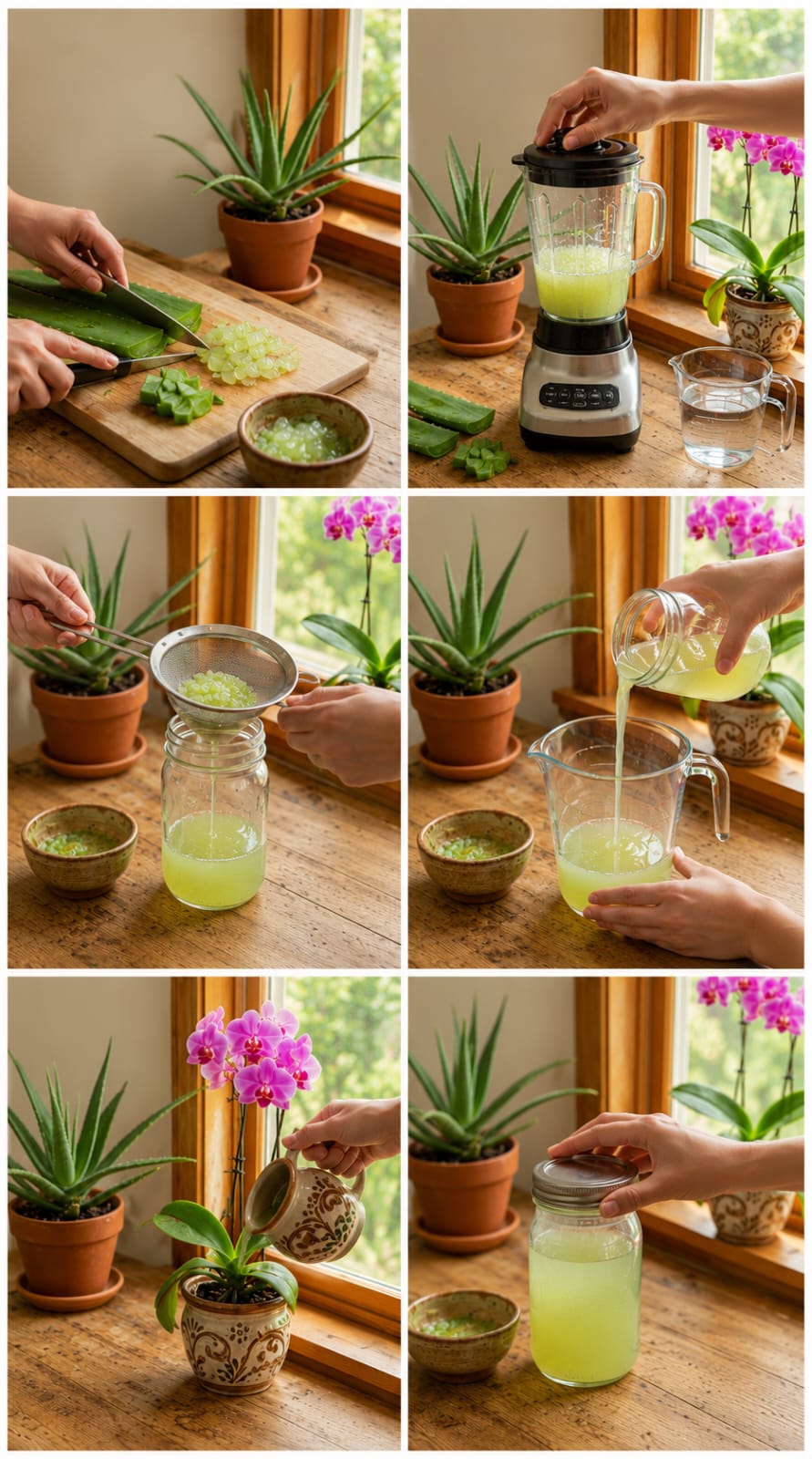
Aloe tonic preparation can become part of a beautiful indoor plant-care corner. Use a wooden tray, a clear jar, a small ceramic bowl, and a fine metal strainer. Place the orchid near a warm-toned window or on a clean plant shelf. Natural materials make the setup look calm and elegant.
A terracotta pot with an aloe plant in the background creates a lovely botanical theme. A blooming orchid beside the aloe plant makes the care routine feel connected and intentional. Clear jars also look attractive because the pale green tonic has a fresh garden look.
For a luxury indoor display, avoid clutter. Keep only the orchid, the aloe plant, a watering cup, and one decorative tray. Clean surfaces make plants look more expensive.
Best Decorative Pots for Orchids
Orchids should usually remain in a plastic inner pot with drainage holes. You can place that pot inside a decorative outer pot for style. Ceramic, stone-look, glass, and woven baskets all work beautifully as outer containers.
Choose a pot color that highlights the flower. White orchids look elegant in beige, stone, black, or terracotta pots. Pink orchids look beautiful in cream, soft gray, or natural wood settings. Yellow orchids stand out against dark green or charcoal planters.
Always remove the inner pot when watering so the orchid can drain fully. A pretty pot is helpful only if it does not trap water around the roots.
How to Keep the Display Clean After Watering
After using aloe tonic, wipe the outer pot and table surface. Homemade plant liquids can leave small marks if they splash. A clean display keeps the orchid looking refined.
Use a saucer only after the orchid has drained. Do not let the saucer hold standing water. If water collects underneath, empty it.
Clean orchid leaves with a soft damp cloth every few weeks. Dusty leaves reduce the elegant look of the plant and may affect light absorption.
Common Mistakes to Avoid
The first mistake is using too much aloe gel. A thick mixture can coat the roots and bark. Always dilute and strain. The second mistake is using aloe too often. Orchids do not need constant homemade treatments. The third mistake is pouring tonic into the crown. Keep the crown dry.
Another mistake is using aloe on a plant with root rot. A struggling orchid needs fresh bark and proper drainage first. Adding more liquid to a wet, damaged root system can make things worse.
Finally, do not mix aloe with many other ingredients. Simple is safer. Aloe and water are enough.
Signs the Aloe Routine Is Working Well
If the orchid responds well, you may notice steady leaves, firm roots, and a generally fresher appearance over time. New root tips may appear during active growth, and leaves may look smoother when the plant is properly hydrated.
Remember that plant improvements take time. Orchids do not transform overnight. Look for slow, healthy progress rather than instant results.
If you notice sticky residue, sour smell, soft roots, or yellowing after repeated use, stop the tonic and flush with plain water.
Final Thoughts
A gentle aloe vera orchid tonic can be a beautiful and natural addition to a careful plant routine. It is simple to make, visually clean, and easy to apply when properly diluted. But the secret is moderation. Orchids are delicate, air-loving plants, and their roots need oxygen more than heavy homemade mixtures.
Use one small amount of fresh aloe gel, blend it with plenty of clean water, strain it well, and apply it occasionally around the potting medium. Keep the crown dry, allow full drainage, and flush the pot with plain water later.
When paired with bright indirect light, good airflow, clean watering, and a balanced orchid fertilizer, this gentle aloe routine can help your orchid care feel more polished and intentional. The result is not just a healthier-looking plant, but a more refined indoor display that brings softness, freshness, and natural beauty into your home.