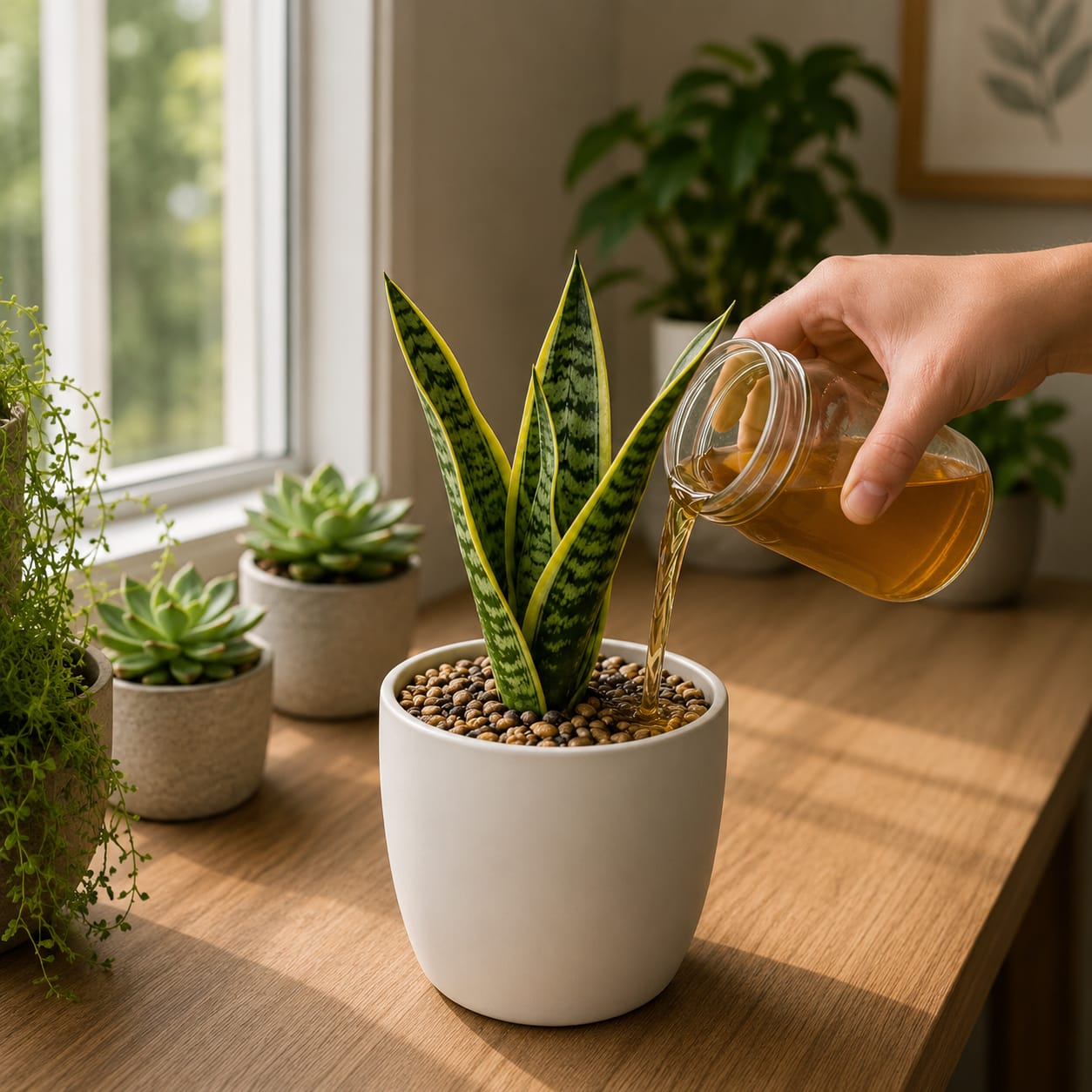
Snake plants are loved because they look sculptural, modern, and almost effortless. Their upright sword-like leaves can turn a plain windowsill, office corner, bedroom shelf, or living-room console into a clean interior display with very little styling work. But even though snake plants are famous for being low-maintenance, they still respond best when their roots are treated with care. A plant can look bold above the soil only when the root zone below the soil stays balanced, airy, and healthy.
One gentle plant-care idea that many indoor gardeners enjoy is using a light golden root tonic as an occasional watering support for snake plants. The goal is not to force dramatic overnight growth, and it is not to replace normal plant care. Instead, this kind of routine works best as a soft refresh: a diluted, mild liquid used sparingly to support the soil, encourage a cleaner watering habit, and help the plant maintain its strong upright look over time.
The most important rule is simple: snake plants do not like excess moisture. They are drought-tolerant plants with thick leaves that store water. Any homemade tonic, even a gentle one, must be diluted, used rarely, and applied only when the soil is dry enough. Used correctly, this kind of golden watering routine can become a neat, stylish part of your indoor plant-care system. Used too often, it can lead to wet soil, root stress, yellowing leaves, or rot.
This guide explains how to use a gentle golden tonic safely for snake plants, what ingredients make sense, what mistakes to avoid, how often to apply it, and how to turn the whole routine into a clean, elegant indoor plant display.
Why Snake Plants Need Root Care More Than Leaf Tricks
Snake plants, also known as Sansevieria or Dracaena trifasciata, are often described as nearly indestructible. That reputation is useful, but it can also cause problems. Many people ignore the root system because the leaves look strong for a long time, even when the plant is struggling below the surface. A snake plant can stay upright for weeks while the roots are sitting in a pot that is too wet, too compact, or poorly drained.
The leaves are thick and firm because they store moisture. This means the plant does not need frequent watering. It also means that if the roots begin to rot, the damage may not show immediately. By the time leaves become soft, wrinkled, yellow, or mushy at the base, the root problem may already be advanced.
That is why the best snake plant care focuses on the soil and roots first. Strong roots support strong leaves. Airy soil supports strong roots. Careful watering supports airy soil. A gentle tonic should only be added after these basics are already in place.
What Is a Golden Root Tonic?
A golden root tonic is a light, diluted homemade liquid used occasionally around the root zone. It may be made from very mild natural ingredients such as banana peel water, diluted compost tea, rice water, aloe water, or another soft plant-safe infusion. The color can range from pale yellow to amber depending on the ingredient used.
For snake plants, the safest version is always weak and watery. It should never be thick, sugary, oily, fermented, salty, or acidic. Snake plants prefer clean, dry conditions between waterings, so any liquid that leaves residue in the soil can become a problem.
The purpose of the tonic is not to act like a powerful fertilizer. It is better to think of it as a gentle seasonal boost. It can be used during active growth, usually in spring or summer, when the plant is receiving enough light and the soil dries properly. In low light, cold rooms, or winter months, even a gentle tonic should be used rarely or skipped completely.
The Safest Golden Tonic Option for Snake Plants
One of the safest ways to make a mild golden tonic is to use a very diluted banana peel infusion. Banana peels contain small amounts of potassium and other minerals, but they should never be buried directly in a snake plant pot. Fresh peels can rot, attract insects, and keep the soil too wet. A strained liquid is cleaner and easier to control.
To make it, place a small piece of clean banana peel in a jar with one liter of water. Let it sit for several hours, not several days. The longer it sits, the more likely it is to ferment. After a short soak, strain the liquid very well. The final tonic should be pale, not strong-smelling. If it smells sour, throw it away.
Before using it on a snake plant, dilute it again with clean water. A good beginner ratio is one part banana peel infusion to three or four parts water. This keeps the mixture light and reduces the risk of buildup in the pot.
Another Gentle Option: Aloe Water
Aloe water is another mild option for plant lovers who prefer a cleaner, less sweet tonic. Blend a very small amount of fresh aloe gel with water, then strain it until the liquid is thin and smooth. For snake plants, use no more than one teaspoon of aloe gel in one cup of water, or one tablespoon in one liter of water.
Aloe water should also be used sparingly. It is gentle, but it is still organic. Any organic liquid can break down in the soil if used too often. Always strain it well so no gel pieces remain in the pot.
Aloe water is especially useful for plant lovers who want a soft root-support routine without the stronger smell of kitchen-scrap infusions.
What Not to Use on Snake Plants
Some homemade plant tricks are too strong for snake plants. Avoid pouring undiluted coffee, lemon juice, vinegar, sugary water, milk, cooking oil, salty water, or thick fermented mixtures into the pot. These can disturb the soil, attract pests, damage roots, or create unpleasant smells indoors.
Also avoid adding fresh food scraps directly to the pot. Banana peels, rice, garlic pieces, eggshell chunks, potato pieces, or fruit leftovers may look natural, but inside a decorative indoor pot they can rot. Snake plants need clean, dry, well-draining conditions. Rotting organic matter works against that.
If you want to use homemade ingredients, turn them into a weak liquid, strain them carefully, dilute them, and apply them only occasionally.
When to Use a Golden Root Tonic
The best time to use a snake plant tonic is during active growth. This is usually spring through early autumn, depending on your climate and indoor conditions. During active growth, snake plants may produce new leaves, small pups, or stronger root growth.
Use the tonic only when the soil is dry. Push your finger into the soil, or use a wooden stick to check moisture. If the soil still feels damp below the surface, wait. Snake plants would rather be slightly dry than constantly wet.
If the plant is in a dark corner, do not use the tonic often. Low light slows water use. When water sits too long in the pot, roots become vulnerable. A tonic is safest when the plant receives bright indirect light and dries at a normal pace.
How Often to Apply It
For most snake plants, once every six to eight weeks during the warm growing season is enough. Some plants may only need it two or three times per year. More is not better.
Between tonic applications, water with plain water only. This helps prevent residue from collecting in the soil. If you also use a commercial houseplant fertilizer, do not use it at the same time as the homemade tonic. Alternate them, and keep everything diluted.
A snake plant that is already healthy does not need constant feeding. It grows slowly and steadily. The goal is to support its natural rhythm, not push it into weak, fast growth.
How to Apply the Tonic Correctly
Pour the diluted tonic slowly around the outer edge of the pot, not directly into the center of the plant. The base of a snake plant can become sensitive if liquid collects between the leaves. Keep the crown and leaf bases as dry as possible.
Add only enough liquid to lightly moisten the root zone. Do not flood the pot. If the pot has drainage holes, allow any extra liquid to drain fully. Empty the saucer afterward. Never let the pot sit in standing water.
If your decorative pot has no drainage hole, be extra careful. Ideally, keep the plant in a nursery pot with drainage and place it inside the decorative container. Remove the inner pot when watering, let it drain, then return it after the bottom is no longer dripping.
Why Drainage Is More Important Than the Tonic
Good drainage is the foundation of snake plant success. Without drainage, even the best tonic can become harmful. Snake plants need a pot that allows extra water to escape. They also need a loose, gritty mix that does not stay wet for too long.
A good snake plant mix can include cactus soil, perlite, pumice, coarse sand, or fine orchid bark. The goal is to create air pockets around the roots. Dense soil holds moisture too long and increases the chance of rot.
If your snake plant is planted in heavy soil, improve the soil before using any tonic. A healthy potting mix does more for growth than any homemade liquid.
Signs Your Snake Plant Likes the Routine
A snake plant that is responding well will stay firm, upright, and richly colored. New leaves may appear from the center or new pups may rise from the soil. The leaf edges should remain strong, and the base should feel solid.
Progress will be slow. Snake plants are not fast plants. A good routine may show results over months, not days. That is normal. The healthiest snake plant growth is usually steady and compact.
If the plant begins to lean, wrinkle, yellow, or soften after watering, stop the tonic and check the soil moisture. Too much water is more common than too little.
Warning Signs to Stop Immediately
Stop using the tonic if you notice soft leaf bases, mushy roots, sour soil smell, fungus gnats, sticky residue, mold on the soil, or leaves turning yellow from the base upward. These signs may mean the pot is staying too wet or organic matter is breaking down in the soil.
Remove the plant from the pot if rot is suspected. Healthy roots should be firm. Rotten roots may look brown, black, soft, or slimy. Trim damaged parts with clean scissors and repot the plant into fresh dry mix.
After repotting, do not use tonic right away. Let the plant recover with bright indirect light and careful watering.
How to Make the Display Look More Expensive
A snake plant already has a luxury look because of its vertical shape. To make it look more expensive, use a simple pot with clean lines. White ceramic, matte black, stone gray, beige clay, or textured cream planters all work beautifully.
Top-dress the soil with small decorative stones, clay pebbles, or clean gravel. This creates a polished surface and hides uneven soil. Make sure the top dressing is not too thick, because the soil still needs to breathe and dry properly.
Place the plant near a bright window, on a wooden table, or beside softer trailing plants. The contrast between the snake plant’s upright leaves and rounded decorative pot gives the arrangement a modern interior-design feel.
Best Places to Display a Snake Plant
Snake plants are flexible, but they look best where their shape can be seen clearly. A windowsill, entryway table, bedroom corner, office shelf, or living-room plant stand can all work well.
For brighter growth, place the plant near a window with indirect light. It can tolerate lower light, but it will grow more slowly. Variegated varieties with yellow edges often keep their color better in brighter light.
Avoid placing the plant in a dark, humid bathroom unless there is strong natural light. Humid air plus low light can slow drying and make watering more difficult.
How to Clean Snake Plant Leaves
Clean leaves help the plant look elegant. Dust can dull the surface and make the plant appear neglected. Wipe each leaf with a soft damp cloth every few weeks. Support the leaf with one hand and wipe gently with the other so you do not bend or crack it.
Avoid leaf-shine sprays. They can clog the leaf surface and leave an artificial finish. Plain water on a cloth is usually enough.
If leaves have hard-water spots, use a cloth slightly dampened with clean filtered water. Dry the leaves afterward so water does not sit in the leaf joints.
How to Combine the Tonic With Normal Fertilizer
A golden tonic is not a complete fertilizer. If you want stronger long-term growth, use a balanced houseplant fertilizer at half strength during the growing season. Apply it only when the plant is actively growing and the soil is dry enough to water.
Do not fertilize every week. Snake plants are slow feeders. Overfeeding can cause weak growth, salt buildup, and root stress.
A simple schedule is best: plain water most of the time, diluted fertilizer once in a while, and a gentle homemade tonic only occasionally. Keeping the routine light protects the roots.
Continue to Page 2
Continue to page 2 for more details about this article and the key points many readers miss on the first page.