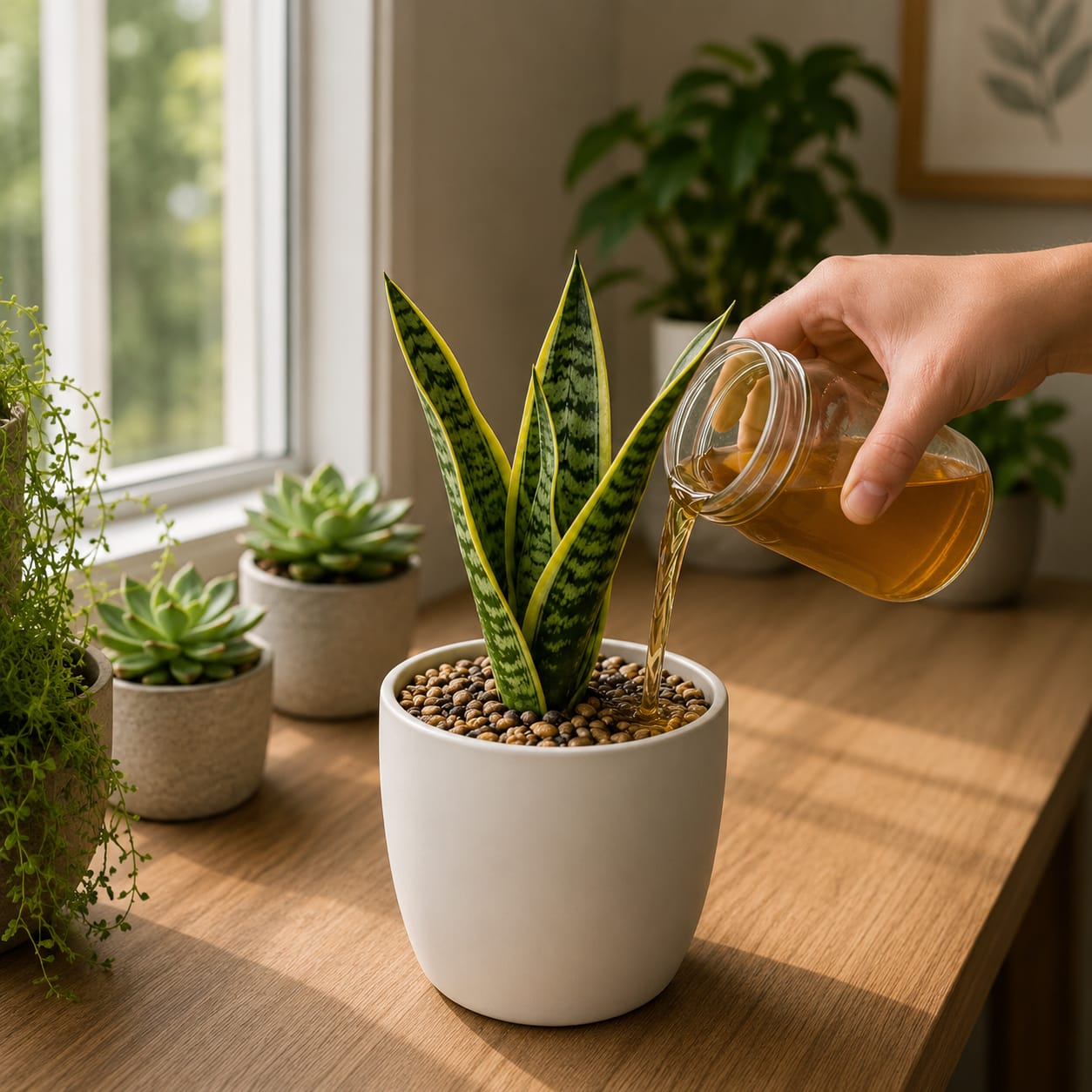
Can This Tonic Make a Small Snake Plant Grow Big?
A tonic can support the plant, but size depends on light, pot size, variety, root health, and time. A small snake plant will not become huge overnight because of one watering. However, a consistent routine can help it grow fuller over the long term.
If you want a fuller pot, allow pups to develop instead of separating them too quickly. Snake plants spread through underground rhizomes. When the plant is happy, new shoots appear near the mother plant and gradually fill the container.
Do not move the plant into a huge pot too soon. A pot that is too large holds extra moisture around the roots. Choose a pot only slightly bigger than the root system.
How to Encourage New Pups
New pups are a sign that the plant is comfortable. To encourage them, provide bright indirect light, use a well-draining mix, water only when dry, and avoid disturbing the roots too often.
A gentle tonic may be used during the growing season, but light is usually more important. A snake plant kept in a very dim corner may survive, but it may not produce many new shoots.
Once pups appear, let them grow several inches tall before dividing. A fuller pot often looks more luxurious than a collection of tiny separated plants.
Why the “Before and After” Look Takes Time
Many plant-care images show a small plant becoming full and dramatic. In real life, that transformation takes patience. Snake plants grow slowly, especially indoors. A healthy plant may produce only a few new leaves in a season, depending on light and temperature.
The tonic is only one small part of the transformation. The bigger factors are correct light, drainage, watering restraint, and time. If you keep these conditions steady, the plant can gradually develop a denser, more architectural look.
For faster decorative impact, you can plant several small snake plants together in one wide pot. This creates an instant fuller display while the plants continue to grow naturally.
Indoor Styling Ideas for a Luxury Snake Plant Corner
For a clean modern look, place a snake plant in a white ceramic pot on a natural wood surface. Add one small trailing plant nearby, such as pothos or string of hearts, to soften the vertical lines. Keep the background simple so the leaves stand out.
For a warm natural look, use terracotta, clay pebbles, and a woven basket. This style works well in sunny rooms, balconies, and casual living spaces.
For a hotel-style display, choose a large matte black pot, top-dress with dark stones, and place the plant near a floor lamp or window. The strong leaf shape creates a sculptural accent.
Best Companion Plants
Snake plants pair well with plants that have different shapes. Pothos adds trailing softness. ZZ plants create glossy structure. Peace lilies add broad leaves and white blooms. Succulents add a desert-style look when placed nearby.
Keep plants with similar watering needs together when possible. Snake plants and succulents prefer drying out. Peace lilies need more moisture, so they should be in a separate pot with their own routine.
Companion styling is about appearance, not shared watering. Each plant should still be cared for based on its own needs.
Common Questions
Can I pour the tonic every week?
No. Weekly use is too frequent for snake plants. Use it rarely, about once every six to eight weeks during active growth, and only when the soil is dry.
Can I use banana peel pieces directly in the soil?
It is better not to. Fresh peel can rot, smell, and attract insects. A strained, diluted liquid is cleaner and safer.
Can I use the tonic in winter?
Usually it is better to skip it in winter unless the plant is in a very bright, warm room and still actively growing. Most snake plants need less water in cooler months.
Can I use it on cuttings?
Use plain water or a dry propagation method first. Snake plant cuttings can rot if exposed to too much organic liquid. Keep propagation simple and clean.
Final Thoughts
A gentle golden root tonic can be a beautiful addition to a snake plant care routine when it is used with patience and restraint. The secret is not the color of the liquid or the idea of a miracle treatment. The real secret is balance. Snake plants need airy soil, dry intervals, clean drainage, and enough light to support strong growth.
Use any homemade tonic as a light seasonal refresh, not as a constant fertilizer. Dilute it well, strain it carefully, apply it only to dry soil, and let the pot drain completely. Watch the plant’s response over time. Firm leaves, steady color, and new pups are signs that the routine is working.
When paired with a stylish pot, clean top dressing, and a bright indoor location, your snake plant can become more than a low-maintenance houseplant. It can become a bold, elegant design feature that makes your home feel greener, calmer, and more refined.