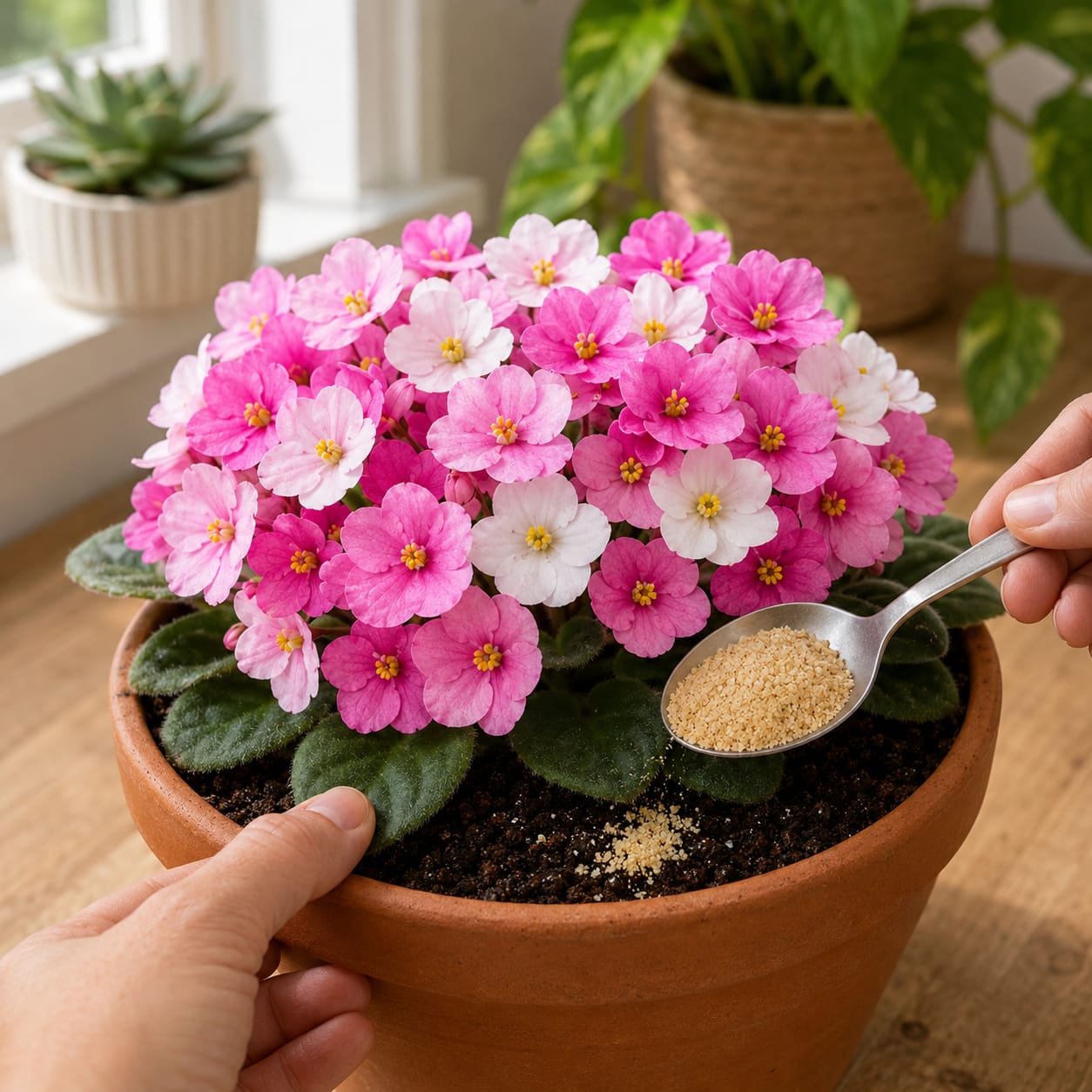
African violets are among the most charming indoor flowering plants because they bring soft color, rounded leaves, and a cozy cottage-style look into the home without needing a large space. A small pot of African violets can brighten a kitchen windowsill, a bedroom shelf, a coffee table, or a shaded balcony corner with clusters of pink, white, purple, blue, or bi-colored flowers. Their compact shape makes them perfect for apartments and indoor plant collections, while their velvety leaves give them a delicate, expensive-looking texture when they are cared for correctly.
One simple plant-care idea that many indoor gardeners use is applying a very small amount of gentle bloom-supporting powder around the soil surface. This can be a mild granular houseplant fertilizer, a slow-release flowering plant feed, or a finely prepared natural amendment used carefully and sparingly. The purpose is not to force instant blooms. The real goal is to support the root zone, keep the plant growing steadily, and help African violets produce stronger leaves and more consistent flowers over time.
African violets are beautiful, but they are also sensitive. They dislike heavy feeding, wet crowns, cold water, direct harsh sun, and compact soil. Because of that, any powder added to the pot must be used lightly. A spoonful may look simple, but too much fertilizer can burn roots, damage leaves, reduce flowering, or create salt buildup in the soil. The safest approach is always gentle, measured, and consistent.
This guide explains how to use a bloom-supporting powder safely around African violets, how often to apply it, what mistakes to avoid, and how to style these plants so they look cleaner, fuller, and more refined indoors.
Why African Violets Need Gentle Feeding
African violets bloom best when they receive balanced care. They need enough light to create energy, enough moisture to keep the roots active, and enough nutrients to support leaves and flower buds. However, they are not heavy feeders like large outdoor plants. Their roots are fine and delicate, so strong fertilizers can shock them quickly.
When an African violet is hungry, it may still survive, but it often looks tired. Leaves may become smaller, growth may slow, and flowers may appear less often. Sometimes the plant forms healthy foliage but very few blooms. This usually means the plant needs better light, a better watering routine, or a more balanced feeding schedule.
A gentle powder can help when it is used as part of a complete routine. It should never replace correct light, clean watering, fresh soil, and proper pot size. Think of the powder as a small support step, not the main secret.
What Kind of Powder Works Best?
The best option for most African violets is a balanced, water-soluble or slow-release fertilizer designed for flowering houseplants. Some growers prefer African violet fertilizer because it is formulated for compact blooming plants. If using a granular product, choose one that is mild, clean, and suitable for potted indoor plants.
African violets usually respond well to balanced nutrients. Nitrogen supports leaves, phosphorus supports root and bloom development, and potassium supports overall strength. But more nutrients do not mean more flowers. Too much fertilizer can cause thick leaves, brown leaf edges, weak roots, or fewer blooms.
If using a natural homemade powder, it must be very fine, clean, and fully dry. Examples sometimes used by plant lovers include finely crushed eggshell powder, diluted rice-water residue, or very small amounts of compost-based material. However, homemade powders can vary greatly, so they must be used with caution. Fresh food scraps should never be placed directly in African violet soil because they can rot, attract insects, and damage the root zone.
The Safest Way to Apply a Small Amount
Use only a tiny pinch around the outer edge of the pot. Do not dump powder directly against the crown of the plant. The crown is the central growing point where leaves and flowers emerge. If fertilizer or damp powder collects there, it can cause rot or leaf damage.
Sprinkle the powder lightly over the soil surface, keeping it away from the leaves. Then water carefully from the bottom or around the edge of the pot, depending on your usual routine. The goal is to let the nutrients move slowly into the root zone without soaking the crown.
If the fertilizer label gives specific measurements, follow the label and reduce the dose if your plant is small. Many indoor plant problems come from using a full outdoor-style dose in a tiny pot. African violets prefer light feeding repeated carefully, not heavy feeding all at once.
Bottom Watering Is Often Better
African violets are famous for their velvety leaves. Those leaves can develop spots if cold water sits on them. That is why many growers prefer bottom watering. Place the pot in a shallow tray of room-temperature water and let the soil absorb moisture through the drainage holes. After about 15 to 30 minutes, remove the pot and let extra water drain away.
Bottom watering keeps the leaves dry and helps the plant drink evenly. It also reduces the chance of water collecting in the crown. If you sprinkle a gentle powder on the soil surface, you can still bottom water afterward, but do not let the pot sit in water for too long.
The soil should become evenly moist, not soggy. African violets like moisture, but they do not like stagnant water. Always empty any saucer after watering.
How Often Should You Use Bloom Powder?
Frequency depends on the product. If you are using a slow-release fertilizer, it may only need to be applied every few months. If you are using a water-soluble African violet fertilizer, it may be used in a very diluted form more often. If you are using a gentle homemade amendment, use it rarely and observe the plant carefully.
A safe general routine is to feed lightly during active growth and flowering, then reduce feeding when the plant slows down. Many African violets bloom repeatedly indoors, but they still need rest periods. During cooler months or low-light seasons, reduce fertilizer because the plant uses nutrients more slowly.
If the plant is not receiving enough light, fertilizer will not solve the problem. Feeding a low-light plant can cause salt buildup because the plant cannot use the nutrients efficiently.
Signs the Plant Is Responding Well
A healthy African violet will form a balanced rosette of leaves. The leaves should look firm, slightly glossy under their soft texture, and evenly colored. New growth should appear from the center, and flower buds should rise above the foliage on short stems.
When the feeding routine is working, flowers may become more consistent. The plant may produce more buds, and the foliage may look fuller and cleaner. However, results are gradual. African violets respond over weeks and months, not overnight.
If flowers are fading quickly, check light, watering, temperature, and humidity before increasing fertilizer. Blooming depends on the whole environment.
Warning Signs of Too Much Powder
Too much fertilizer can harm African violets. Watch for brown leaf tips, crispy edges, white crust on the soil surface, sudden wilting after feeding, yellowing leaves, or fewer flowers. These signs may point to fertilizer burn or salt buildup.
If you see white crust on the soil, flush the pot gently with room-temperature water and let it drain well. In severe cases, repot the plant into fresh African violet mix. Do not continue adding powder if the plant is already stressed.
Remember that African violets are small plants. A tiny dose is enough. The more delicate the plant, the more careful the feeding should be.
The Right Soil Makes Feeding Safer
African violets need light, airy soil. A good African violet mix usually contains peat moss or coco coir, perlite, and other materials that hold moisture while still allowing air to reach the roots. Heavy garden soil is not suitable for indoor African violets because it compacts and stays wet too long.
If the soil is old, dense, or sour-smelling, fertilizer will not fix it. Repotting into fresh mix may be more helpful than adding nutrients. Fresh soil allows roots to breathe, reduces salt buildup, and supports better watering.
Repot African violets when the soil breaks down, when the plant becomes crowded, or when the neck of the plant becomes too long and exposed. Many growers refresh the soil once or twice a year for the best results.
Light Is the Real Bloom Trigger
Fertilizer can support blooms, but light usually triggers them. African violets prefer bright indirect light. A north or east-facing window is often ideal. They can also do well under grow lights if natural light is weak.
If the leaves reach upward or stretch, the plant may need more light. If the leaves become pale, scorched, or curled, the light may be too strong. Direct hot sun can burn African violet leaves quickly.
For even growth, rotate the pot every few days. This helps the rosette stay symmetrical instead of leaning toward the window. A balanced rosette always looks more elegant and decorative.
Temperature and Humidity Matter
African violets prefer comfortable indoor temperatures. They do not like cold drafts, cold windowsills, or sudden temperature changes. Keep them away from air conditioners, heaters, and open windows during cold weather.
Moderate humidity helps the leaves and flowers look fresh. If the room is very dry, place the pot near a humidity tray filled with pebbles and water. The pot should sit on the pebbles, not directly in the water. This raises humidity gently without soaking the roots.
A small group of African violets placed together can also create a more humid microclimate and a fuller decorative display.
How to Keep Leaves Clean and Beautiful
African violet leaves are soft and fuzzy, so they should not be wiped aggressively. Dust can be removed with a soft brush, a small makeup brush, or a gentle puff of air. Avoid spraying water directly onto the leaves, especially if the room is cool.
Remove old flowers and damaged leaves regularly. This keeps the plant looking fresh and encourages energy to move toward new growth. Use clean fingers or sterilized scissors, and avoid tearing the crown.
A clean plant looks healthier, and it also makes the flower color stand out more strongly.
How to Encourage More Blooms Naturally
To encourage more blooms, focus on a steady routine. Give the plant bright indirect light, keep the soil lightly moist, feed gently, and remove spent blooms. Avoid sudden changes in location or watering style.
African violets often bloom best when slightly snug in their pot. A pot that is too large can hold too much wet soil around the roots. Choose a pot that matches the size of the root system. As a general guide, the pot should be about one-third the width of the leaf spread.
When the plant feels stable, it can use its energy for flowers instead of constantly adjusting to stress.
Should You Use Powder Before or After Watering?
If using a granular fertilizer, lightly sprinkle it on the soil and water afterward so it begins to dissolve. If the soil is extremely dry and pulling away from the pot edges, moisten it lightly first, then apply the powder, then water gently again. This helps prevent concentrated fertilizer from hitting dry roots too harshly.
Never apply strong fertilizer to a severely wilted plant. First, correct the watering issue and let the plant recover. Feeding a stressed plant can make the problem worse.
Healthy plants use nutrients better than stressed plants.
Can This Trick Revive a Weak African Violet?
A bloom-supporting powder may help a mildly tired plant, but it will not revive a plant that has root rot, crown rot, severe dehydration, or pest damage. If an African violet is weak, inspect the basics first.
Check the roots, soil moisture, pot drainage, light level, and crown health. If the crown is soft or the roots are mushy, fertilizer should not be used. The plant needs cleaning, trimming, and repotting.
If the plant is healthy but simply not blooming, then a light feeding routine may help, especially when combined with better light.
Best Pot Styles for African Violets
African violets look beautiful in shallow decorative pots, ceramic bowls, small terracotta containers, and self-watering African violet pots. The pot should have drainage or a proper self-watering system. Decorative containers without drainage can cause root problems if water collects at the bottom.
For a clean indoor look, choose soft colors such as white, cream, blush, terracotta, sage green, or matte gray. These tones make pink and white flowers look brighter.
A cluster of three small African violets in matching pots can look more luxurious than one large plant. Place them on a tray, windowsill, or small table for a polished display.
Continue to Page 2
Continue to page 2 for more details about this article and the key points many readers miss on the first page.