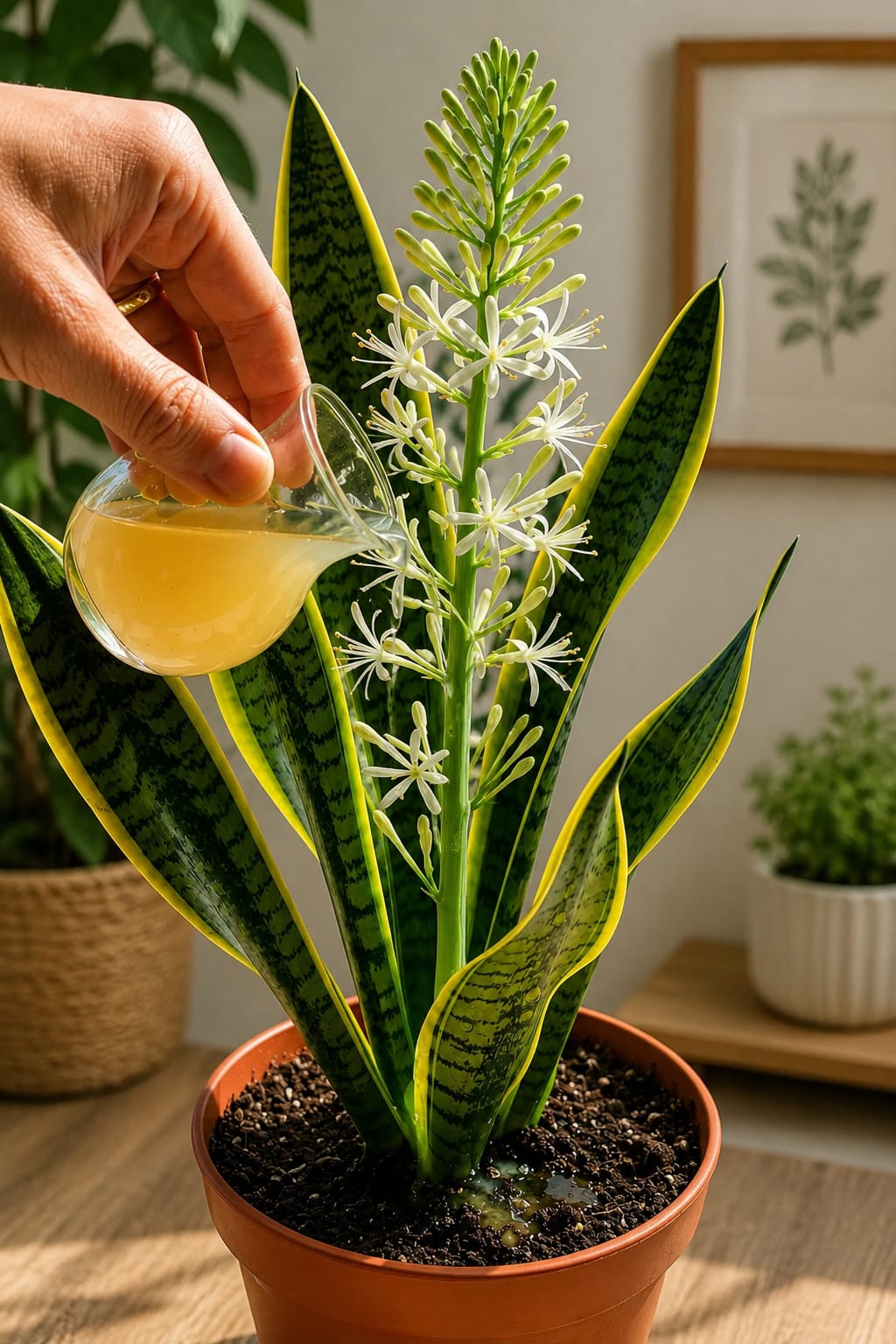
Snake plants are famous for being tough, sculptural, and easy to style indoors. Their upright leaves bring height, structure, and a modern architectural look to any room, which is why they are often used in living rooms, offices, bedrooms, entryways, balconies, and minimalist plant corners. But even though snake plants are low-maintenance, many plant lovers still ask the same question: how can you encourage faster growth and more pups?
The answer is not one miracle liquid. Snake plants grow more pups when their roots are healthy, the pot is slightly snug, the soil drains well, the plant receives enough bright indirect light, and watering is controlled. A gentle natural root tonic can support this routine, but it must be used carefully. Snake plants store water in their thick leaves and rhizomes, so they do not like heavy watering, strong fertilizer, or soggy soil.
A light homemade tonic can be used as a mild seasonal boost for active growth. The goal is to gently refresh the soil, support root activity, and encourage the plant to use its energy for new leaf shoots and pups. Used correctly, this kind of routine can help your snake plant look fuller, cleaner, and more expensive indoors. Used too often, however, it can do the opposite and cause root stress.
This guide explains how to use a gentle yellow-toned natural tonic safely for snake plants, how to avoid overwatering, how to encourage pups naturally, and how to style your plant so it becomes a bold decorative feature in the home.
Why Snake Plants Produce Pups
Snake plant pups are small new shoots that grow from underground rhizomes. These rhizomes are thick storage structures that help the plant survive dry periods. When the plant feels stable and healthy, it sends up new shoots from the soil. These pups eventually become full leaves and make the pot look more crowded and lush.
Pups usually appear when the plant has enough energy, enough light, and a strong root system. A plant that is sitting in dark corners may stay alive for a long time, but it may grow very slowly. A plant in bright indirect light usually grows faster and produces pups more often.
Feeding can help, but only when the basic conditions are already right. A tonic cannot force pups if the soil is wet, the roots are weak, or the plant is not receiving enough light.
The Gentle Natural Tonic Idea
A simple root tonic for snake plants can be made from mild natural ingredients that are diluted heavily with water. Some plant lovers use banana peel water, rice water, compost tea, aloe water, or very weak organic fertilizer. The best option is always mild, strained, and diluted. Snake plants do not need rich liquid poured constantly into the pot.
A safe approach is to prepare a light tonic and use only a small amount around the soil, not directly into the crown of the plant. The tonic should be thin, clean, and free from chunks. Any thick residue can rot in the soil and attract fungus gnats.
For snake plants, less is better. A small seasonal boost is safer than frequent feeding. The purpose is to support root health, not flood the plant with nutrients.
Simple Snake Plant Root Tonic Recipe
To make a gentle tonic, use a mild homemade plant drink rather than a strong fertilizer mixture. One easy version uses banana peel because banana peel contains small amounts of potassium and organic material. However, it must be prepared carefully to avoid smell, mold, and pests.
Cut one clean banana peel into small pieces. Soak it in one liter of water for 12 to 24 hours. Strain the liquid very well so no pieces remain. Then dilute the strained liquid again with plain water. Use one part banana peel water with three to four parts plain water. This creates a very light tonic that is safer for potted snake plants.
Use only a small amount around the outer soil edge. Do not pour it directly into the center of the plant, because trapped moisture near the crown can cause rot.
How to Apply It Safely
Before applying any tonic, check the soil. If the soil is still wet, do not add anything. Wait until the soil is dry at least several centimeters deep. Snake plants prefer to dry between waterings, and this is especially important when using any homemade plant drink.
When the soil is dry, pour a small amount around the outer edge of the pot. Keep the liquid away from the leaf bases. Let the soil absorb it slowly, then allow extra water to drain completely. Never let the pot sit in a saucer full of liquid.
If your pot has no drainage holes, do not use liquid tonics. Snake plants need drainage. Without drainage, extra liquid collects at the bottom and can rot the roots.
How Often to Use It
Use the tonic only during active growth, usually in spring and summer. Once every four to six weeks is enough for most snake plants. In autumn and winter, reduce or stop feeding because the plant grows more slowly and uses less water.
If your snake plant is in a low-light room, use the tonic even less often. Low light means slow growth. When growth is slow, extra nutrients can remain unused in the soil and create buildup.
If the plant is already growing well and producing pups, do not overdo the routine. Healthy growth often comes from stability, not constant changes.
The Most Important Rule: Do Not Overwater
Snake plants are more likely to die from too much water than from too little. Their thick leaves and rhizomes store moisture, so they can handle dry periods. But if the soil stays wet, the roots may suffocate and rot.
After using any tonic, wait until the soil dries again before watering. Do not follow a strict weekly watering schedule unless your home conditions truly require it. Instead, check the soil. In many indoor spaces, snake plants only need water every two to four weeks, sometimes even less in winter.
The pot, soil type, temperature, humidity, and light level all affect watering frequency. A plant in bright light dries faster than one in a dim corner. A terracotta pot dries faster than a glazed ceramic or plastic pot.
Best Soil for More Pups
Snake plants need a fast-draining soil mix. A cactus or succulent mix is often a good base. You can improve drainage by adding perlite, pumice, coarse sand, or orchid bark. The goal is a mix that holds a little moisture but does not stay heavy and wet.
If the soil is dense, dark, and compact, the roots may struggle. In that case, repotting into a lighter mix can do more for pup growth than any tonic. Roots need air as much as they need water.
A good mix helps the plant drink, breathe, and recover quickly after watering. This creates a better environment for rhizomes to spread and produce pups.
Pot Size Matters
Snake plants often produce pups when they are slightly snug in their pot. A pot that is too large holds too much soil and too much moisture around the roots. This can slow growth and increase the risk of rot.
Choose a pot only slightly larger than the root ball. If your snake plant is small, do not move it into a huge decorative pot. A slightly tight container encourages the rhizomes to fill the space and send up new shoots.
When pups crowd the pot too much, you can divide the plant and create new pots. But do not divide too early if your goal is a fuller display. Let the plant build a thick, dramatic cluster first.
Light for Faster Growth
Snake plants tolerate low light, but they grow faster in bright indirect light. A position near a bright window is usually ideal. Morning sun can be helpful, but harsh afternoon sun may scorch the leaves, especially behind hot glass.
If your snake plant has yellow-edged variegation, enough light helps keep the markings sharp and attractive. In very low light, growth can become slow and the plant may produce fewer pups.
Rotate the pot every few weeks so all sides receive light. This helps the plant grow evenly and keeps the display balanced.
Signs Your Snake Plant Is Ready to Grow Pups
A snake plant that is ready to produce pups usually has firm leaves, stable color, and a healthy root system. The plant should not be mushy, wrinkled, or yellowing from stress. The soil should dry normally between waterings, and the pot should feel balanced, not constantly wet.
New pups may appear as small pointed shoots breaking through the soil. They often look like tiny green spears. At first, they grow slowly, then they begin to stretch upward into mature leaves.
When pups appear, avoid disturbing the soil too much. Let them grow strong before dividing or repotting.
What Not to Pour on Snake Plants
Avoid strong kitchen mixtures, undiluted juice, sugary liquids, salty water, milk, thick blended scraps, or oily liquids. These can create smell, mold, insects, and root damage. Snake plant soil should stay clean and airy.
Also avoid pouring fertilizer directly into the center of the plant. Water trapped between the leaves can cause soft rot. Always water the soil, not the leaf crown.
If you want to use natural amendments, keep them strained, diluted, and occasional.
Continue to Page 2
Continue to page 2 for more details about this article and the key points many readers miss on the first page.