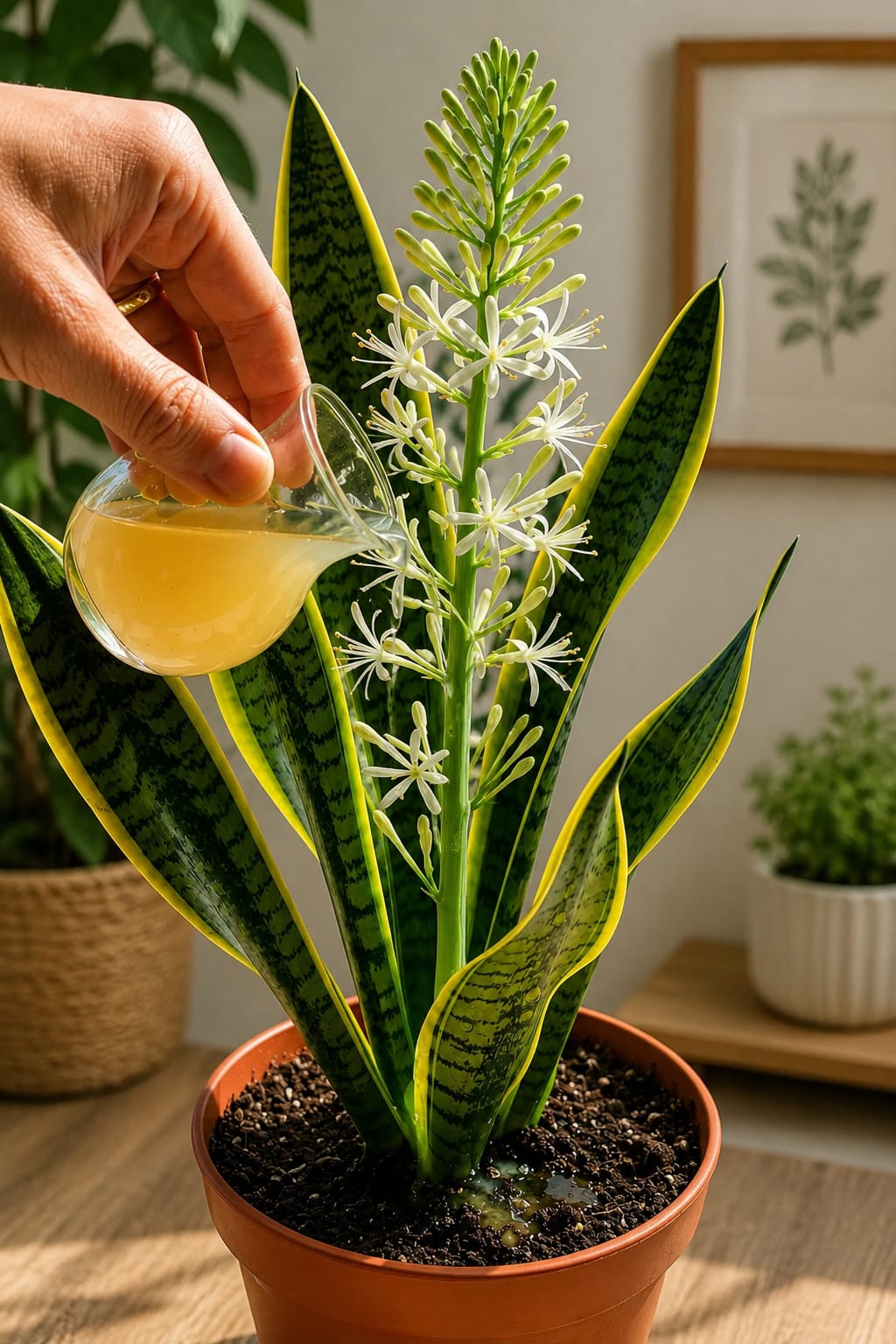
How to Know If the Tonic Is Too Strong
If leaf tips turn brown, the soil smells sour, white crust forms on the surface, fungus gnats appear, or the plant begins to soften at the base, stop using the tonic immediately. Flush the soil with plain water if the pot drains well, then let it dry fully. If the plant looks worse, remove it from the pot and check the roots.
Healthy snake plant roots are firm. Rotten roots are mushy, dark, and may smell bad. Cut away rotten roots with clean scissors and repot into fresh dry mix.
It is always easier to prevent root rot than to fix it later.
A Better Routine for Stronger Growth
For the best results, combine gentle feeding with a simple care routine. Keep the plant in bright indirect light. Use a pot with drainage. Let the soil dry between waterings. Feed lightly during warm months. Clean dust from the leaves so they can absorb more light.
Dusty leaves make the plant look dull and can reduce photosynthesis. Wipe the leaves with a slightly damp cloth, then dry them gently. Do not use heavy leaf-shine products, because they can clog the leaf surface and make the plant look artificial.
A clean snake plant instantly looks more expensive and healthier.
How to Encourage Pups Without Fertilizer
You can encourage pups naturally by giving the plant better light, using a snug pot, and keeping the soil on the dry side. Warm temperatures also help. Snake plants grow slowly in cold rooms, so keep them away from cold drafts and chilly windows during winter.
If the plant has not been repotted for years and the soil is exhausted, refresh the mix. But avoid repotting too often. Snake plants like stability. After repotting, give the plant time to settle before expecting new pups.
Patience is important. Snake plants are not fast like pothos. Their growth is steady and strong when conditions are right.
When to Divide Snake Plant Pups
Wait until pups have several strong leaves before dividing them. Small pups depend on the parent plant and may struggle if separated too early. When ready, remove the plant from the pot and gently separate the rhizome using clean tools.
Each division should have roots attached. Let any cut areas dry for a day before repotting if the rhizome is thick and freshly cut. This helps reduce the risk of rot.
Plant divisions in dry, airy soil and wait a few days before watering. This gives damaged roots time to heal.
Indoor Decor Ideas for Snake Plants
Snake plants are among the best plants for interior styling because their shape is bold and vertical. They work beautifully in modern, boho, minimalist, rustic, and luxury-inspired spaces. A full pot of snake plant pups looks like a living sculpture.
For a clean modern look, place the plant in a white, black, or matte ceramic pot. For a warmer natural look, use terracotta, woven baskets, or clay planters. For a luxury feel, choose a tall textured planter in stone, beige, charcoal, or bronze tones.
Because snake plants grow upright, they are perfect for narrow corners, beside sofas, next to windows, near console tables, or in entryways. They add height without spreading too much.
Best Places to Display Snake Plants
A snake plant looks beautiful near a bright window with filtered light. It can also sit near a desk, beside a bed, or in a hallway with medium light. For a dramatic effect, place a large snake plant in a floor pot near curtains or a neutral wall.
Smaller snake plants look great on shelves and plant stands. A group of three in different heights can create a layered indoor garden look. Combine them with trailing pothos, ZZ plants, or small succulents for contrast.
The upright leaves create structure, while softer plants add movement. This makes the whole display feel intentional and designed.
How to Make the Plant Look Fuller
To make a snake plant look fuller, do not divide pups too quickly. Let new shoots grow in place. Rotate the pot so pups do not all lean in one direction. Remove only damaged or rotting leaves, not healthy older leaves.
If the plant is very sparse, consider planting several divisions together in one pot. This creates an instantly fuller look. Make sure the pot is not too large and the soil drains well.
A top dressing of clean pebbles can make the pot look more polished, but do not use a thick layer that traps moisture. A light decorative layer is enough.
Can Snake Plants Bloom Indoors?
Snake plants can bloom, though it is not guaranteed. Mature plants sometimes produce tall flower stalks with small fragrant white or pale green flowers. Blooming often happens when the plant is mature, slightly root-bound, and receiving good light.
Do not stress the plant intentionally to force flowers. A healthy routine is better. If your snake plant blooms, enjoy it as a bonus. The flowers may have a sweet scent, especially in the evening.
After blooming, continue normal care. The plant may return to leaf and pup growth after the flower stalk fades.
Final Thoughts
A gentle natural root tonic can be a helpful support for snake plants, especially during the growing season, but it should always be used lightly. The real secret to faster growth and more pups is a strong foundation: bright indirect light, dry periods between watering, airy soil, drainage, warmth, and patience.
Snake plants reward steady care. When the roots feel safe and the plant receives enough light, pups begin to appear naturally. A mild diluted tonic can support that process, but too much liquid or fertilizer can quickly cause problems.
Use the tonic as a small boost, not a miracle cure. Keep the soil clean, avoid wetting the crown, and let the plant dry properly. With time, your snake plant can become fuller, taller, and more dramatic, turning a simple pot into a refined indoor feature that looks fresh, sculptural, and expensive.