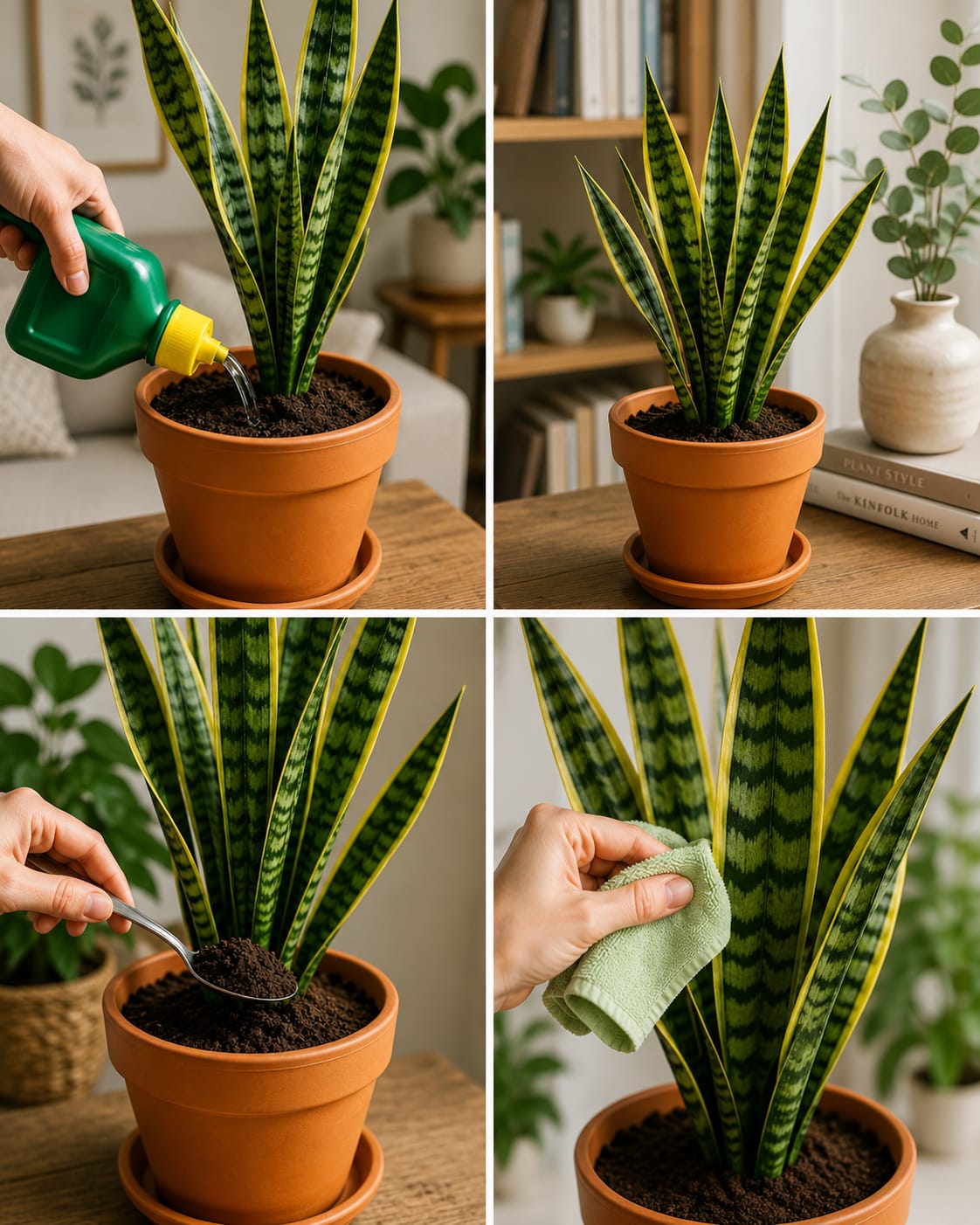
Snake plants are one of the most reliable indoor plants for anyone who wants a clean, modern, low-maintenance plant that still looks stylish. Their tall sword-shaped leaves, strong green pattern, and yellow edges make them perfect for windowsills, corners, desks, shelves, balconies, and minimalist living rooms. But even though snake plants are famous for surviving neglect, they still grow best when they receive a careful routine that keeps the roots dry, the soil fresh, and the leaves clean.
A simple snake plant refresh routine can make a big difference. Instead of cutting leaves, forcing growth, or pouring strong fertilizer into the pot, this method focuses on three gentle steps: watering carefully around the soil, lightly refreshing the top layer, and wiping the leaves so they can absorb more light. This is not a harsh treatment. It is a clean-care routine that supports healthier roots, stronger leaves, and a more expensive-looking indoor plant display.
Snake plants do not need constant attention. In fact, too much attention can harm them. The secret is giving them the right kind of care at the right time. A little water when the soil is dry, a small topsoil refresh when the surface becomes compacted, and a soft cloth wipe when dust collects on the leaves can help the plant look instantly better. Over time, these small steps can support steadier growth and encourage the plant to produce new shoots, also called pups.
Why Snake Plants Need a Gentle Refresh Routine
Snake plants are drought-tolerant because they store moisture in their thick leaves and underground rhizomes. This is why they can survive in homes where watering is sometimes forgotten. However, the same water-storing ability also means they are sensitive to wet soil. If the pot stays too damp, the roots can rot, the leaf bases can soften, and the plant may decline quickly.
A refresh routine helps prevent common problems before they become serious. When the top layer of soil becomes hard, water may run off instead of soaking evenly. When dust builds up on the leaves, the plant looks dull and receives less light. When watering is done too close to the center crown, moisture can sit between the leaves and cause rot. A careful routine keeps the plant clean, balanced, and attractive without overwhelming it.
This method is especially useful for snake plants kept indoors near windows, where dust, dry air, and uneven light can affect appearance. It is also helpful for decorative terracotta pots because terracotta dries faster and often leaves the soil surface looking crusty or uneven after repeated watering.
The Main Goal: Healthy Roots First
The strongest snake plants start with healthy roots. Beautiful leaves depend on what is happening below the soil. If the roots are firm, dry between waterings, and sitting in breathable soil, the plant can slowly build energy. That energy supports upright leaves, bright markings, and new pups.
The routine should never be about forcing instant growth. Snake plants are naturally slow to moderate growers indoors. Their growth speed depends on light, temperature, pot size, and root condition. A plant in bright indirect light may grow faster than one in a dark corner. A plant in airy soil may produce pups more easily than one in heavy, wet mix.
Think of this routine as a way to create better growing conditions. The plant still decides when to grow, but you are making the environment cleaner and safer for that growth to happen.
Step 1: Check the Soil Before Watering
The first and most important step is checking the soil. Never water a snake plant only because a certain number of days has passed. Instead, touch the soil and check how dry it feels. The top several centimeters should be dry before watering. For larger pots, it is even better to check deeper with a wooden stick or moisture meter.
If soil sticks to the stick and feels damp, wait longer. If the stick comes out mostly dry, the plant may be ready for water. Snake plants can handle dryness better than soggy soil, so waiting a few extra days is usually safer than watering too early.
In warm weather and bright light, the soil may dry faster. In winter, low light, or cool rooms, the soil can stay wet much longer. This is why a fixed watering schedule can be risky. The plant’s needs change with the season and the room conditions.
Step 2: Water Around the Outer Soil
When the plant is ready for water, pour slowly around the outer edge of the soil rather than directly into the center of the plant. Snake plant leaves grow from a central crown, and moisture trapped between the leaves can lead to soft rot. Keeping water on the soil surface and away from the leaf bases is much safer.
Use room-temperature water and pour gently. The goal is to moisten the root zone without flooding the pot. If the pot has drainage holes, water until a little drains from the bottom, then empty the saucer. Do not allow the pot to sit in standing water.
If your pot does not have drainage holes, be extremely careful. Snake plants should ideally be grown in pots with drainage. A decorative outer pot is fine, but the inner nursery pot should be able to drain. Without drainage, water collects at the bottom and root rot becomes much more likely.
Step 3: Lightly Refresh the Topsoil
After watering or between watering sessions, the top layer of soil may become compacted. A compacted surface can stop air from moving properly and can make watering uneven. A gentle topsoil refresh can help the pot look cleaner and support better moisture movement.
Use a small spoon or hand trowel to loosen only the top layer of soil. Do not dig deeply around the rhizomes or roots. Snake plant roots can be shallow and thick, so rough digging may damage them. The goal is simply to break up crusted soil and improve the surface texture.
If the topsoil looks old, salty, moldy, or dusty, remove a small amount and replace it with fresh, dry, well-draining mix. A cactus or succulent mix works well. You can also add a little perlite, pumice, or coarse sand to keep the surface airy.
This step makes the plant look neater immediately. It also prevents the soil from becoming a hard cap that blocks water and air.
Step 4: Wipe the Leaves With a Soft Cloth
Snake plant leaves often collect dust, especially indoors. Dust makes the plant look tired and can reduce the amount of light reaching the leaf surface. A simple wipe with a soft damp cloth helps restore shine and freshness.
Use clean water only. Dampen a microfiber cloth or soft cotton cloth, then gently wipe each leaf from base to tip. Support the leaf with your other hand so it does not bend or crack. After wiping, use a dry cloth to remove extra moisture.
Do not use oily leaf shine products. They can block the leaf surface and attract more dust. A clean damp cloth is enough to make the plant look polished and healthy.
This step is also a good time to inspect the plant for pests, soft spots, brown tips, or damaged leaves. Early detection makes plant care much easier.
Why Leaf Cleaning Helps Growth
Plants use their leaves to capture light. When leaves are covered in dust, they cannot absorb light as efficiently. Snake plants are tough, but clean leaves still help them function better. This is especially important if the plant is placed in medium or low indoor light.
Clean leaves also improve the decorative value of the plant. A snake plant with glossy, dust-free leaves looks sharper, more modern, and more expensive. The yellow edges appear brighter, the green patterns look clearer, and the plant becomes a stronger design feature in the room.
For best results, wipe the leaves every two to four weeks, or whenever dust becomes visible.
Should You Add Fertilizer?
Snake plants do not need heavy fertilizer. During spring and summer, you can use a diluted balanced houseplant fertilizer or cactus fertilizer once every four to eight weeks. Always dilute more than the label suggests if your plant is growing slowly or receiving medium light.
Do not fertilize dry roots heavily. Water lightly first or apply fertilizer only when the plant is already in a normal watering cycle. Avoid fertilizing in winter unless the plant is actively growing under strong light.
If you prefer a natural routine, use mild options only. A weak compost tea or heavily diluted banana peel water can be used occasionally, but it must be strained well. Never add thick kitchen scraps, sugar, milk, oil, or strong homemade mixtures to snake plant soil.
How to Encourage More Snake Plant Pups
New pups appear when the plant has enough energy and the roots are healthy. To encourage pups, give the plant bright indirect light, keep it in a slightly snug pot, use fast-draining soil, and avoid overwatering.
A pot that is too large can slow growth because the soil holds too much moisture. Snake plants often like being slightly root-bound. When the rhizomes fill the pot, they may send up new shoots. This does not mean the plant should be trapped forever, but it does mean you should avoid moving a small plant into a huge pot.
Light is another major factor. Snake plants survive in low light, but they grow better in brighter positions. Place the plant near a window with filtered light. Morning sun is usually fine, but strong afternoon sun may burn the leaves, especially behind glass.
Continue to Page 2
Continue to page 2 for more details about this article and the key points many readers miss on the first page.