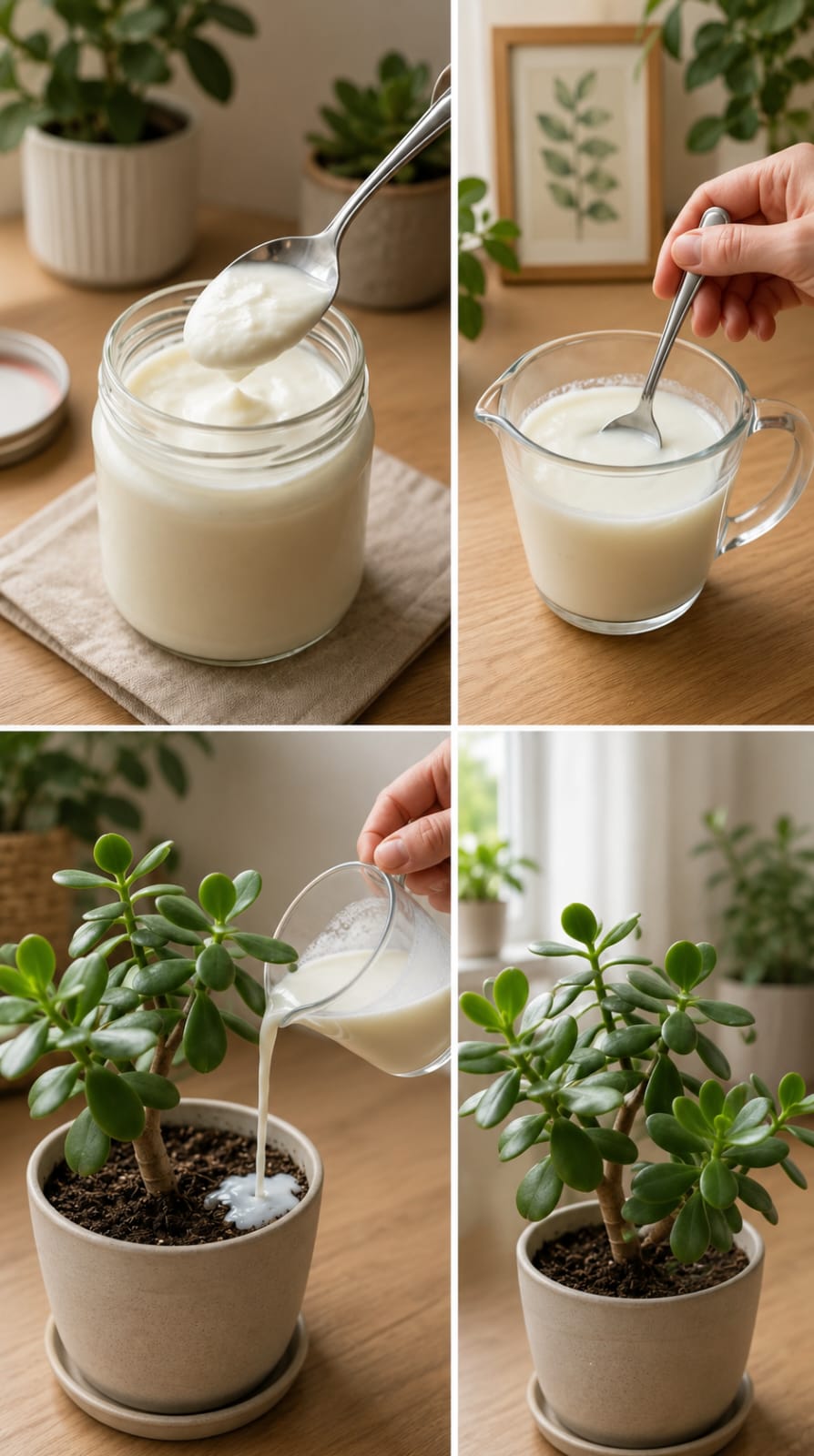
Jade plants are among the most loved houseplants because they look sculptural, calm, and expensive without needing constant attention. Their thick glossy leaves, woody stems, and compact tree-like shape make them perfect for windowsills, side tables, sunny shelves, office desks, and minimalist indoor corners. A healthy jade plant can look like a small living bonsai, adding structure and softness to a room at the same time.
But even strong plants can start to look dull when the soil becomes tired, the leaves lose their shine, or growth slows down. Many plant lovers look for simple home routines that can refresh the plant without using harsh chemicals. One gentle idea is a very diluted yogurt-based soil tonic used occasionally around the edge of the pot. When handled carefully, this kind of natural routine can be used as a mild soil-care trick, not as a miracle cure or a replacement for proper light, drainage, and watering.
The key is moderation. Jade plants are succulents, which means they store water in their leaves and stems. They do not like heavy, wet, rich soil. A thick dairy mixture poured often into the pot would be a bad idea because it could smell, attract pests, encourage mold, and keep the soil too wet. But a light, well-diluted, occasional tonic can be presented as a gentle plant-care experiment for people who enjoy natural routines, as long as the plant is healthy, the pot drains well, and the soil is allowed to dry afterward.
This guide explains how to use the idea safely, how to dilute it properly, when to avoid it, and how to combine it with the real foundations of jade plant care: bright light, fast-draining soil, careful watering, clean leaves, and a calm indoor styling setup.
Why Jade Plants Need Gentle Care
Jade plants are not thirsty tropical plants. They are succulents with thick leaves designed to hold moisture. This makes them forgiving when watering is missed, but sensitive when the soil stays wet. The most common jade plant problem is not dryness; it is overwatering. Soft stems, leaf drop, blackened roots, and mushy bases often happen when the plant sits in damp soil for too long.
For this reason, any homemade tonic must be used carefully. The goal is not to soak the pot. The goal is to lightly refresh the soil surface and support a balanced root environment while still respecting the plant’s dry-loving nature.
A jade plant grows best when its roots can breathe. The soil should dry between waterings, the pot should have drainage holes, and the plant should receive bright light. A small care routine can help improve appearance, but it cannot fix poor conditions. If a jade plant is kept in a dark room or a pot without drainage, no tonic will make it thrive long-term.
What Is a Yogurt-Based Plant Tonic?
A yogurt-based plant tonic is a heavily diluted mixture made with plain unsweetened yogurt and water. It should be thin, watery, and mild. It should never be thick like food. It should never contain sugar, flavoring, fruit, honey, artificial sweeteners, or oils.
The reason some gardeners like this idea is that plain yogurt contains organic matter and beneficial cultures. In outdoor composting and soil biology discussions, fermented foods are sometimes used in very small amounts to support microbial activity. However, indoor pots are closed systems, so too much organic material can quickly become messy. That is why dilution and rare use matter so much.
For a jade plant, this routine should be treated as a light soil refresh, not a regular fertilizer. Use it sparingly and only when the plant is healthy, actively growing, and sitting in a well-draining pot.
The Safe Dilution Ratio
The safest way to prepare this tonic is to use a very weak mixture. Add one teaspoon of plain unsweetened yogurt to one cup of water. Stir until the mixture becomes thin and smooth. If it still looks thick or creamy, add more water.
For a small jade plant, use only a few tablespoons of the diluted liquid. For a medium pot, use a small amount around the outer soil edge. Do not flood the pot. Do not pour the mixture directly against the trunk. Do not let it sit on the leaves.
After applying, allow the soil to dry normally. Good airflow and bright indirect light help prevent surface mold. If the soil stays wet for many days, avoid repeating the routine.
How Often to Use It
This is not a weekly treatment. For jade plants, occasional use is much safer. Once every two to three months during spring or summer is enough. Avoid using it in winter, when jade plants naturally grow more slowly and need less moisture.
If the plant is already healthy and growing well, you may not need this tonic at all. Sometimes the best care is simple watering, bright light, and clean leaves. Homemade routines should always support good care, not replace it.
Step-by-Step Method
Step 1: Check the Plant First
Before using any soil tonic, inspect the jade plant. The stems should feel firm. The leaves should be plump, not mushy. The soil should not smell bad. The pot should have drainage holes. If the plant is already struggling from rot, pests, or soggy soil, do not add anything rich to the pot. Fix the main problem first.
Step 2: Let the Soil Dry
Use the tonic only when the soil is mostly dry. Jade plants dislike wet conditions, so applying any liquid to already damp soil can cause trouble. Touch the top layer and check deeper with a wooden stick. If the stick comes out damp, wait.
Step 3: Mix the Tonic Lightly
Combine one teaspoon of plain unsweetened yogurt with one cup of water. Stir until completely smooth. The mixture should pour like cloudy water, not like cream. If needed, strain it through a fine mesh strainer to remove clumps.
Step 4: Apply Around the Soil Edge
Pour a small amount around the outer edge of the pot, away from the trunk. This helps prevent moisture from sitting directly around the base of the plant. Use only enough to lightly moisten part of the soil surface.
Step 5: Keep the Pot Bright and Airy
After applying, place the plant in bright indirect light or gentle morning sun. Avoid dark corners. Good light helps the soil dry at a healthy pace and supports stronger growth.
Step 6: Watch the Soil Surface
Over the next few days, check for any sour smell, fuzzy mold, fungus gnats, or sticky residue. If anything appears, stop using the tonic and refresh the top layer of soil. A healthy jade plant should never smell fermented or sour.
Why This Routine Must Stay Light
Jade plants are not heavy feeders. They grow slowly and store resources in their leaves. Too much fertilizer or too much organic liquid can harm them. A light routine respects the plant’s natural rhythm.
Thick yogurt can create a film on the soil, attract insects, and encourage mold. That is why the mixture must be very diluted. It should never be poured straight from the jar. It should never be used as a leaf polish. It should never be left sitting in a saucer.
Moderation is the difference between a gentle soil refresh and a messy pot problem.
Best Time of Year to Try It
Spring and summer are the best times to try any mild soil-care routine because jade plants are usually more active during warmer, brighter months. They can use light moisture and nutrients more efficiently when they are growing.
In fall and winter, reduce watering and avoid homemade tonics. Short days and cooler rooms slow the plant down. Soil also dries more slowly, which increases the risk of root problems.
Best Light for a Jade Plant
Light is more important than any tonic. Jade plants need bright light to stay compact and full. A sunny windowsill with several hours of gentle light is ideal. Morning sun is usually safe. Strong afternoon sun behind glass can sometimes scorch leaves, especially if the plant was previously kept in shade.
If the jade plant becomes stretched, pale, or leggy, it likely needs more light. Move it gradually closer to a brighter window. Do not suddenly place a shaded plant in intense sun, because the leaves can burn.
Bright light also helps the plant use water properly. A jade plant in bright light dries faster and grows stronger. A jade plant in low light stays wet longer and becomes more vulnerable to rot.
Best Soil for Jade Plants
A jade plant needs a fast-draining mix. Regular houseplant soil often holds too much moisture. A cactus or succulent mix is better. You can improve it by adding perlite, pumice, coarse sand, or small lava rock.
A good mix should feel loose and gritty. When watered, it should drain quickly. It should not stay soggy for a week. If the soil is dense and heavy, repotting into a better mix will help more than any homemade tonic.
For a simple jade plant soil blend, use two parts cactus mix, one part perlite, and one part pumice or coarse sand. This gives the roots air pockets and helps prevent water from staying trapped.
Best Pot Choice
Terracotta pots are excellent for jade plants because they allow moisture to evaporate through the sides. This helps the soil dry faster. Ceramic and plastic pots can also work, but they hold moisture longer, so watering must be reduced.
Drainage holes are essential. A jade plant should not sit in a sealed decorative pot full of water. If you love decorative containers, use a nursery pot with drainage inside a cover pot. Remove it for watering, let it drain, and then place it back.
How to Water Jade Plants Correctly
Water deeply but infrequently. When the soil is fully dry, water until liquid drains from the bottom, then empty the saucer. After that, wait until the soil dries again. This dry-wet cycle is healthier than giving small sips every few days.
Small sips can keep only the surface damp while deeper roots stay dry or uneven. Frequent tiny watering can also encourage shallow roots and soil problems. A full watering followed by a dry period is better.
When using a diluted tonic, count it as part of the watering routine. Do not apply it and then water heavily right after unless the mix is extremely airy and the plant is actively growing.
Leaf Cleaning for a Fresher Look
Jade plants look best when their leaves are clean and glossy. Dust can dull the surface and reduce light absorption. Use a soft damp cloth to wipe the leaves gently. Support each branch while cleaning so you do not break the stems.
Do not use oily leaf shine products. Jade leaves already have a natural glow when clean. Oils can clog the surface and attract dust.
Clean leaves instantly make the plant look more expensive and cared for. This small step is often more effective visually than any fertilizer.
How to Encourage Fuller Growth
To encourage a fuller jade plant, provide bright light and rotate the pot every week or two. This keeps growth balanced on all sides. If one side receives more light, the plant may lean toward the window.
Pruning can also help create a bushier shape. Trim leggy stems just above a leaf node using clean scissors or pruning shears. New branches may form near the cut. Allow cuttings to dry for a few days before propagating them in soil.
Do not prune a weak or overwatered plant heavily. First, restore proper care and wait until the plant is firm and growing.
Can This Tonic Make Jade Plants Grow Faster?
A light yogurt-based tonic may support the soil environment when used carefully, but it will not magically speed up growth overnight. Jade plant growth depends mainly on light, temperature, watering, soil quality, and root health.
If you want faster growth, focus on bright light, a small but comfortable pot, proper drainage, and occasional mild fertilizer during the growing season. The tonic can be an optional extra, not the main solution.
Continue to Page 2
Continue to page 2 for more details about this article and the key points many readers miss on the first page.