When Not to Use This Routine
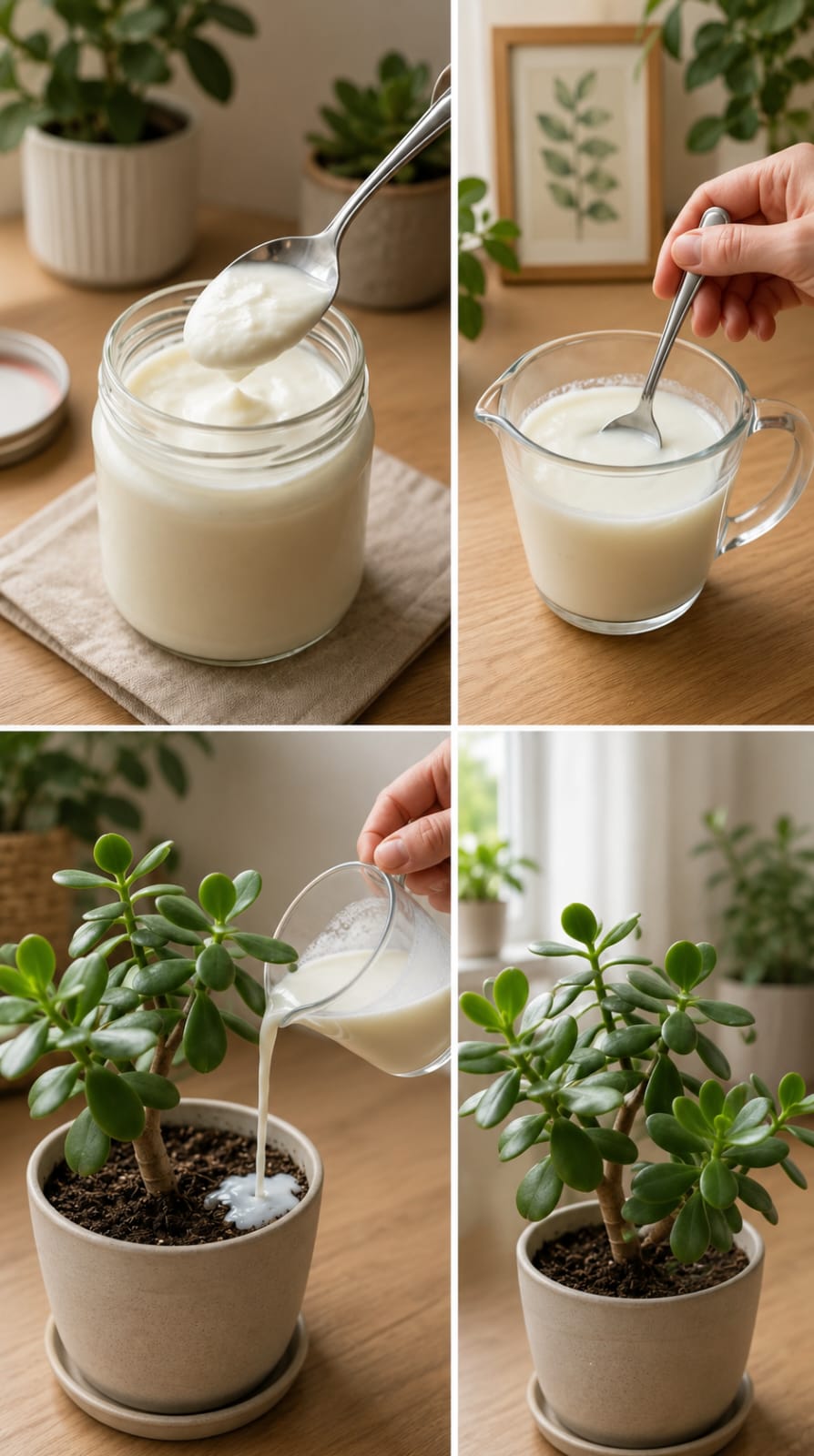
Do not use a yogurt-based tonic if the plant has root rot, fungus gnats, moldy soil, a sour smell, soft stems, or yellow mushy leaves. Do not use it in pots without drainage. Do not use it in cold rooms or low-light corners. Do not use flavored yogurt, sweetened yogurt, or thick mixtures.
If your jade plant is stressed, simple dry care is better. Let the soil dry, check the roots, improve drainage, and increase light gradually.
What to Do if Mold Appears
If white fuzz or mold appears on the soil surface after using any organic tonic, remove the top layer of soil and replace it with fresh dry cactus mix. Increase airflow and reduce moisture. Do not apply the tonic again.
A small amount of surface mold may not always kill the plant, but it is a sign that the pot environment is too damp or rich. Jade plants prefer a cleaner, drier setup.
Natural Alternatives
If you want a safer and more predictable option, use a diluted cactus fertilizer during spring and summer. This gives measured nutrients without adding dairy to the soil. You can also refresh the topsoil with fresh cactus mix or add worm castings in very small amounts.
Another gentle option is plain water with proper light and leaf cleaning. Many jade plants thrive for years without homemade tonics when their basic needs are met.
Indoor Styling Ideas for Jade Plants
Jade plants have a calm, sculptural look that works beautifully with natural interiors. A white ceramic pot gives a clean modern style. A terracotta pot adds warmth and Mediterranean charm. A black or charcoal pot creates contrast and makes the green leaves look richer.
Place the jade plant near a bright window where light can highlight the rounded leaves. A wooden table, stone tray, or simple plant stand can make the display look more intentional. Avoid overcrowding the plant with too many small accessories. Jade plants look best when their shape is allowed to stand out.
For a luxury look, keep the pot surface tidy. Remove fallen leaves, wipe the pot rim, and add a very thin layer of clean grit or decorative stones if the soil dries well. Do not use thick stones if they trap moisture.
Balcony Styling Ideas
In mild climates, jade plants can look stunning on balconies. Place them where they receive bright light but are protected from heavy rain. Too much rain can waterlog the pot. A covered balcony or sunny ledge works well.
Pair jade plants with other succulents, small cacti, aloe, or snake plants for a clean drought-tolerant display. Use matching terracotta pots for a warm garden feel, or use white planters for a modern apartment balcony look.
Always bring the plant indoors or protect it if temperatures drop too low. Jade plants dislike frost and cold wet soil.
Signs of a Healthy Jade Plant
A healthy jade plant has firm leaves, sturdy stems, and a stable upright shape. The leaves should feel plump, not thin or wrinkled. New growth often appears at stem tips as smaller fresh green leaves.
Some older leaves may drop naturally, especially after changes in light or watering. Occasional leaf drop is not always a problem. But sudden heavy leaf drop usually means stress, often from overwatering, underwatering, cold, or low light.
Signs of Overwatering
Overwatered jade plants may develop soft leaves, yellowing leaves, mushy stems, black spots near the base, or a sour smell from the soil. If this happens, stop watering immediately. Remove the plant from the pot and inspect the roots. Healthy roots are firm. Rotten roots are dark, mushy, and may smell bad.
Cut away rotten roots with clean scissors, let the plant dry, and repot into fresh dry cactus mix. Do not use any tonic on a recovering plant.
Signs of Underwatering
Underwatered jade plants may have wrinkled, thin, or slightly soft leaves. The soil may pull away from the pot edges. If the plant is dry but otherwise healthy, water thoroughly and let excess drain. The leaves may plump up slowly over several days.
Do not overcorrect by watering again and again. One deep watering followed by observation is safer.
A Simple Monthly Jade Plant Routine
Once a month, inspect the plant closely. Check the soil dryness, wipe the leaves, rotate the pot, remove fallen leaves, and look for pests. Water only if the soil is dry. During spring and summer, feed lightly if the plant is actively growing.
Every few months, refresh the topsoil if it looks compacted. If you choose to use the yogurt-based tonic, use it rarely and in a very diluted form. The simpler the routine, the healthier