Signs Your Snake Plant Is Happy
A healthy snake plant has firm upright leaves, clear markings, and stable color. The leaves should not feel mushy or wrinkled. The base should be firm, and the soil should not smell sour. New pups may appear as small pointed shoots rising from the soil.
Some older leaves may develop minor marks or dry tips over time, especially in dry indoor air. This is normal. But widespread yellowing, soft bases, or collapsing leaves usually means the plant has been overwatered or the roots are stressed.
If your plant is growing slowly but looks firm and healthy, do not panic. Snake plants are naturally patient growers. Steady care is more important than constant changes.
Common Mistakes to Avoid
The biggest mistake is watering too often. Snake plants dislike constantly moist soil. Another mistake is using dense potting mix that stays wet for too long. A third mistake is pouring water directly into the center crown of the plant.
Overfertilizing is also common. More fertilizer does not mean faster growth. Too much can burn roots and create salt buildup in the soil. If you see white crust on the soil surface, reduce feeding and consider refreshing the top layer.
Another mistake is cutting healthy leaves for no reason. If a leaf is damaged, you can remove it near the base with clean scissors. But healthy leaves should stay because they help the plant produce energy.
Best Soil Mix for This Routine
A good snake plant soil mix should be light, chunky, and fast-draining. You can use cactus soil as a base and improve it with perlite, pumice, orchid bark, or coarse sand. The mix should not feel heavy like garden soil.
A simple mix can include two parts cactus mix, one part perlite, and one part orchid bark or pumice. This creates air pockets around the roots and helps prevent water from sitting too long.
If you notice that your plant takes more than two weeks to dry after watering, the soil may be too dense or the pot may be too large. Improving drainage can make a huge difference.
Best Pot for Snake Plants
Terracotta pots are excellent for snake plants because they allow moisture to evaporate through the sides. This helps the soil dry faster. Ceramic and plastic pots can also work, but they hold moisture longer, so watering must be adjusted.
Always choose a pot with drainage holes. A saucer is useful, but it should be emptied after watering. If you want a luxury decorative look, place the draining pot inside a beautiful outer cover pot. Just remember to remove the inner pot when watering so it can drain properly.
The pot size should be only slightly larger than the root ball. A snug pot supports controlled moisture and can help encourage pups.
How Often to Refresh the Plant
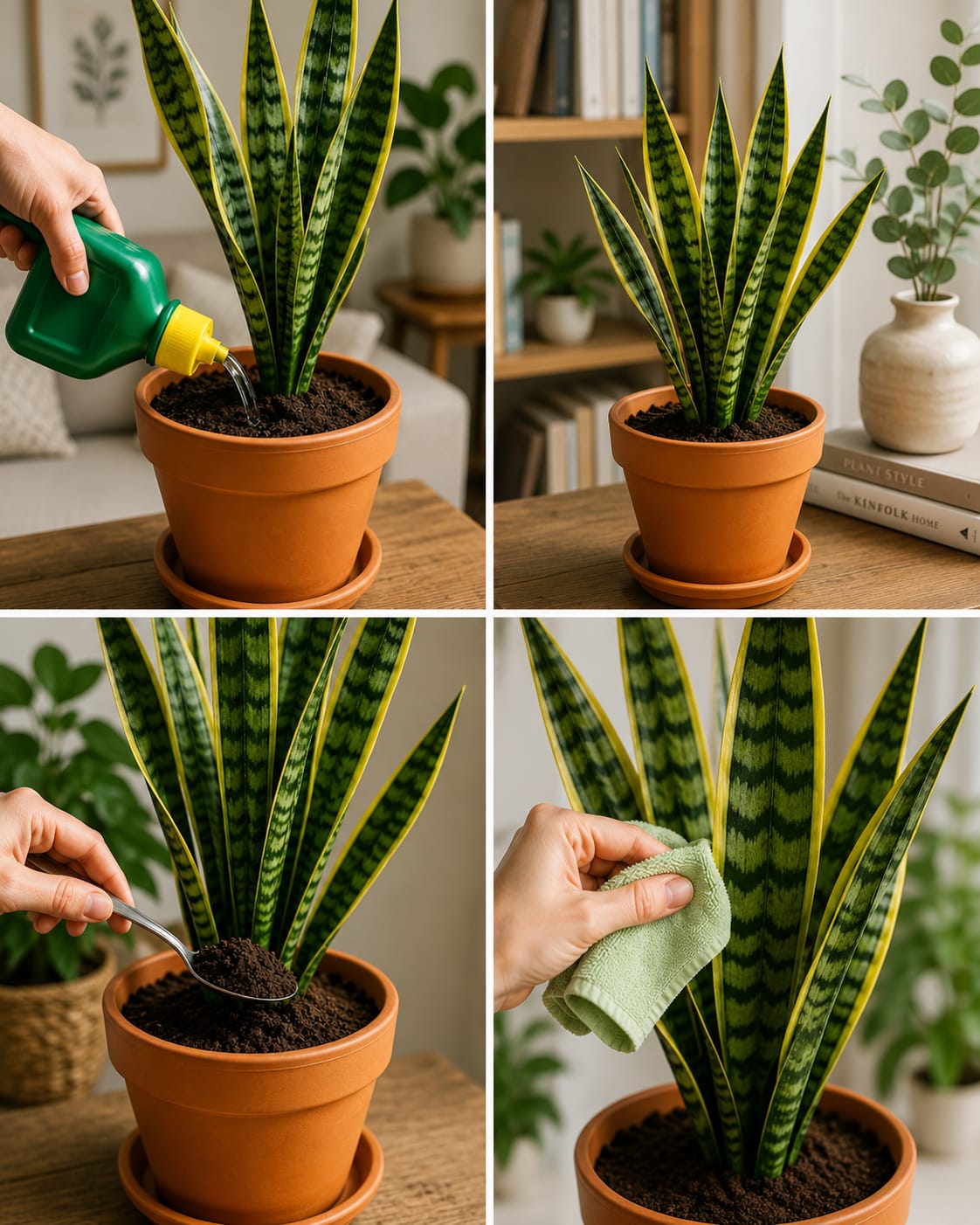
Water only when the soil is dry. This may be every two to four weeks indoors, but it depends on your conditions. Wipe the leaves every few weeks. Refresh the topsoil every one to three months if it becomes compacted or dusty.
Do not loosen the soil every day. Too much disturbance can stress the roots. A gentle occasional refresh is enough.
During winter, reduce watering and avoid feeding. Snake plants grow more slowly in cooler months and need less moisture.
Indoor Styling Ideas
A snake plant in a terracotta pot gives a warm, natural look that fits beautifully with wooden tables, woven baskets, neutral walls, and sunny windows. For a modern look, place the plant in a matte white, black, beige, or stone planter. The upright leaves add height and structure without taking up much space.
Snake plants are perfect for corners because they grow vertically. They also look elegant beside sofas, near bookshelves, in entryways, or on plant stands. A fuller plant with many leaves can become a statement piece in a living room.
For a cleaner display, wipe the pot rim, remove fallen soil from the saucer, and keep the leaf surfaces dust-free. These small details make the plant look professionally styled.
How to Create a More Expensive-Looking Display
The easiest way to make a snake plant look more expensive is to focus on proportion and cleanliness. Choose a pot that matches the plant’s height. A tall snake plant looks beautiful in a simple, heavy-looking container. Avoid tiny decorative pots that make the plant look unstable.
Add a very light top dressing if desired, such as small stones or clean bark chips. Do not create a thick layer that traps moisture. Keep the display simple. Snake plants already have strong visual lines, so they do not need too many accessories.
Place the plant where natural light highlights the yellow edges. Near a bright window, the leaves glow and the pattern becomes more dramatic.
When to Repot
Repot only when necessary. Signs include roots pushing out of drainage holes, the pot cracking, soil drying too fast because the pot is completely full of roots, or many pups crowding the container. Repot in spring or early summer when the plant is actively growing.
Choose a pot only one size larger. Remove old compacted soil gently, check roots, and cut away any mushy parts. Repot into dry, airy soil and wait a few days before watering if roots were disturbed.
After repotting, place the plant in bright indirect light and avoid fertilizer for several weeks.
Final Thoughts
A snake plant does not need complicated care to look beautiful. A simple routine of careful watering, light soil refreshing, and regular leaf cleaning can keep the plant strong, clean, and stylish. This method supports healthy roots, brighter leaves, and better growth without forcing the plant or risking damage.
The most important rule is balance. Give enough water, but not too much. Give enough light, but avoid harsh burning sun. Refresh the soil surface, but do not disturb the roots deeply. Wipe the leaves, but avoid oily products. With this steady routine, your snake plant can become fuller, healthier, and more elegant over time.
For plant lovers who want more pups and a cleaner indoor display, this gentle care routine is one of the easiest habits to follow. It keeps the plant looking polished, supports natural growth, and turns a simple terracotta pot into a fresh, sculptural feature for the home.