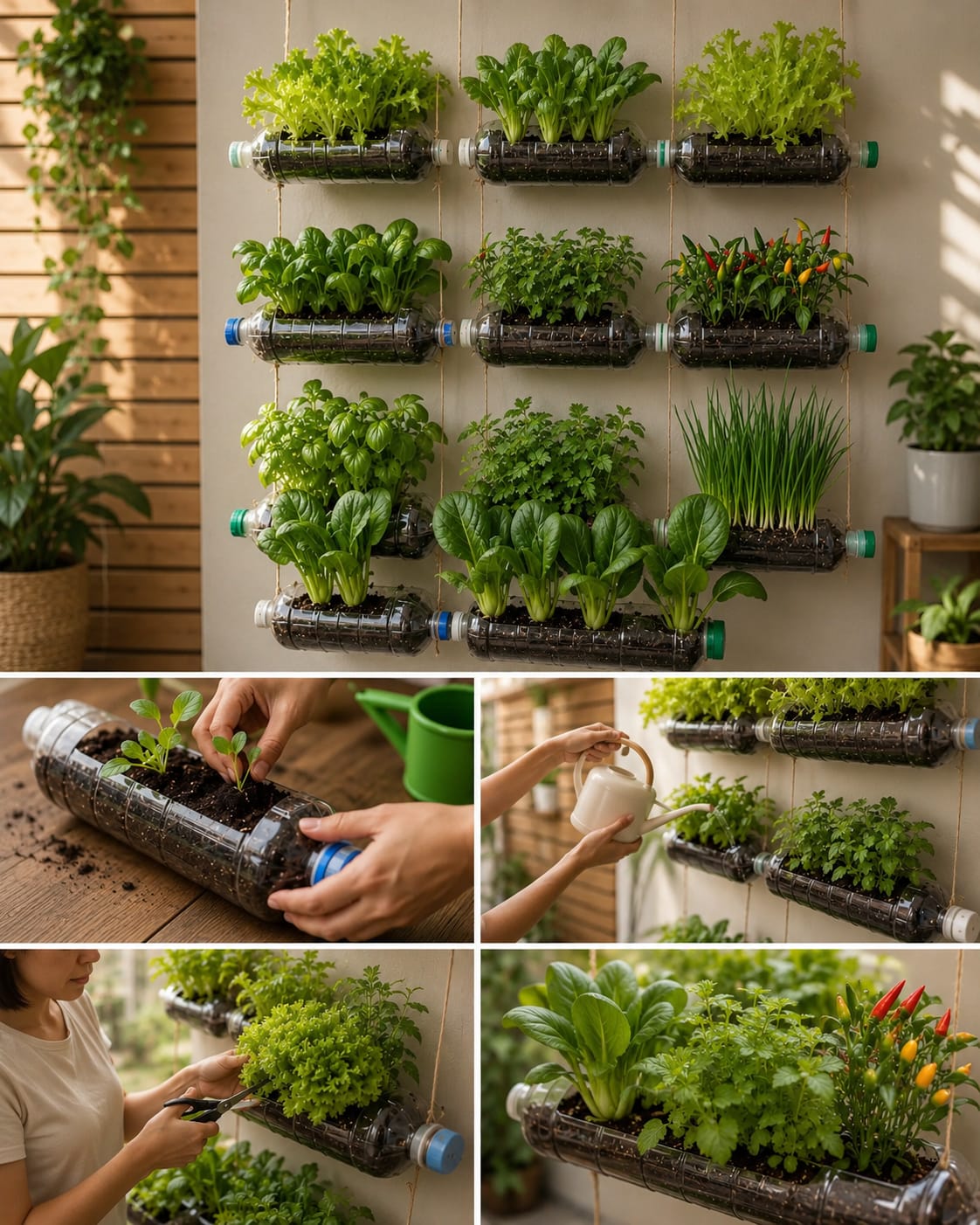
Growing fresh vegetables at home does not require a large backyard or an expensive greenhouse. In fact, one of the most creative and space-saving gardening ideas is right in front of us: transforming ordinary plastic bottles into a beautiful vertical garden. This simple gardening method allows people living in apartments, small homes, balconies, patios, and urban spaces to enjoy fresh vegetables, herbs, and leafy greens without needing traditional garden beds.
A vertical bottle garden combines recycling, gardening, and smart design into one practical project. Instead of throwing away empty plastic bottles, they can be transformed into productive growing containers that support healthy vegetables while maximizing available wall space. The result is a living green wall that produces food, improves aesthetics, and creates a relaxing natural atmosphere.
This gardening approach has become increasingly popular among urban gardeners because it makes fresh produce accessible even when space is limited. Whether you want to grow lettuce, spinach, basil, parsley, green onions, peppers, or other compact crops, a vertical bottle garden can provide impressive harvests throughout the growing season.
Why Vertical Gardening Is Becoming So Popular
Traditional gardens require significant ground space. Many people living in apartments, condominiums, or densely populated neighborhoods simply do not have access to large outdoor areas. Vertical gardening solves this challenge by using walls and vertical structures instead of horizontal planting beds.
By growing upward rather than outward, gardeners can dramatically increase planting capacity without sacrificing valuable floor space. A single wall can hold dozens of plants while remaining attractive and organized.
Vertical gardens also bring greenery closer to eye level, making plant care, harvesting, and maintenance easier and more enjoyable.
The Benefits of Using Recycled Plastic Bottles
Plastic bottles are often discarded after a single use, contributing to environmental waste. Repurposing them as planters gives these materials a second life while reducing household waste.
Using recycled bottles offers numerous advantages:
- Low-cost gardening solution.
- Easy availability of materials.
- Reduced environmental impact.
- Lightweight growing containers.
- Suitable for balconies and patios.
- Simple installation and maintenance.
- Creative decorative possibilities.
Many gardeners appreciate the opportunity to combine sustainability with food production.
Choosing the Best Location
The success of a vertical vegetable garden depends largely on proper placement. Most vegetables require adequate sunlight to produce healthy growth.
Look for a location that receives several hours of bright light daily. Balconies, patio walls, fences, terrace railings, and sunny exterior walls are often ideal locations.
Before installing your garden, observe sunlight patterns throughout the day to determine the most suitable growing area.
Vegetables That Thrive in Vertical Bottle Gardens
Not every vegetable is equally suited to bottle gardening. Compact crops generally perform best because they have moderate root systems and manageable growth habits.
Popular choices include:
- Lettuce.
- Spinach.
- Arugula.
- Pak choi.
- Green onions.
- Basil.
- Parsley.
- Cilantro.
- Mint.
- Small chili peppers.
- Baby kale.
- Swiss chard.
These crops grow efficiently in limited soil volumes while providing frequent harvests.
Creating a Productive Green Wall
A vertical garden can become much more than a collection of containers. When arranged thoughtfully, it transforms into a living wall that enhances both functionality and visual appeal.
Alternating different vegetable varieties creates texture, color, and contrast. Bright green lettuces, dark leafy greens, herbs, and colorful peppers can combine to produce a stunning display.
The result is a productive garden that doubles as decorative outdoor art.
The Importance of Good Soil
Healthy plants begin with healthy soil.
Since bottle containers hold a limited amount of growing medium, choosing a high-quality potting mix is especially important. The soil should provide good drainage while retaining enough moisture to support consistent growth.
Many successful gardeners use mixes that contain:
- Potting soil.
- Compost.
- Coco coir.
- Perlite.
- Organic matter.
This combination supports root development and encourages vigorous plant growth.
Why Drainage Matters
Proper drainage is essential for container-grown vegetables.
Excess water trapped around roots can lead to poor growth and root-related problems. Small drainage openings allow excess moisture to escape while helping maintain healthy root conditions.
Balancing moisture retention and drainage is one of the keys to successful container gardening.
Watering a Vertical Garden
Because bottle containers have relatively small soil volumes, they tend to dry out more quickly than traditional garden beds.
Regular watering is often necessary, especially during warm weather.
The goal is to keep the soil consistently moist without allowing it to become waterlogged.
Monitoring moisture levels regularly helps prevent plant stress and supports continuous growth.
Benefits of Growing Your Own Food
Home-grown vegetables offer numerous rewards beyond simple food production.
Gardening can:
- Reduce grocery expenses.
- Provide fresher produce.
- Encourage healthy eating.
- Create a relaxing hobby.
- Support environmental sustainability.
- Improve outdoor living spaces.
- Increase appreciation for nature.
Many gardeners find immense satisfaction in harvesting vegetables they have grown themselves.
Harvesting Leafy Greens
Leafy vegetables are particularly well suited for vertical bottle systems because they can often be harvested repeatedly.
Rather than removing entire plants, gardeners can harvest outer leaves while allowing the center of the plant to continue growing.
This approach extends productivity and provides multiple harvests from a single planting.
Growing Fresh Herbs at Home
Herbs are among the easiest and most rewarding crops for bottle gardens.
Basil, parsley, cilantro, mint, oregano, thyme, and chives thrive in containers and can be harvested frequently.
Fresh herbs add flavor to meals while eliminating the need for frequent grocery store purchases.
Their pleasant fragrances also contribute to a more enjoyable garden environment.
Making the Most of Small Balconies
Apartment dwellers often assume they cannot grow substantial amounts of food because of limited space.
A vertical bottle garden challenges that assumption by turning unused wall areas into productive growing zones.
Even a narrow balcony wall can support multiple rows of vegetables and herbs.
This efficient use of space can dramatically increase growing capacity.
Creating a Family Gardening Project
Building a bottle garden can become an enjoyable activity for the entire family.
Children often enjoy helping plant seeds, water vegetables, and observe growth progress.
The project introduces valuable lessons about sustainability, food production, recycling, and environmental responsibility.
Gardening together also creates meaningful opportunities for family bonding.
Maintaining Healthy Plant Growth
Regular maintenance keeps vertical gardens productive and attractive.
Important tasks include:
- Checking moisture levels.
- Removing damaged leaves.
- Monitoring for pests.
- Harvesting mature crops.
- Replacing spent plants.
- Adding nutrients when necessary.
Consistent attention helps maintain vigorous growth throughout the season.
Understanding Sunlight Requirements
Different crops have different light needs.
Leafy greens generally tolerate partial sun better than fruiting vegetables, while peppers often appreciate brighter conditions.
Matching plant varieties to available light improves overall productivity and plant health.
Observing plant performance helps determine whether adjustments are needed.
Companion Planting in Vertical Gardens
Thoughtful plant combinations can improve both productivity and appearance.
Pairing herbs with vegetables often creates beneficial growing environments while maximizing space efficiency.
For example, basil and leafy greens frequently grow well together because they share similar environmental preferences.
These combinations also create visually appealing arrangements.
Decorative Benefits of Vertical Gardens
Beyond food production, vertical gardens significantly enhance outdoor aesthetics.
The lush greenery softens walls, fences, and balcony spaces while creating a refreshing natural atmosphere.
A living wall of vegetables and herbs can transform a plain area into a vibrant garden feature.
The visual impact often exceeds expectations.
Continue to Page 2
Continue to page 2 for more details about this article and the key points many readers miss on the first page.