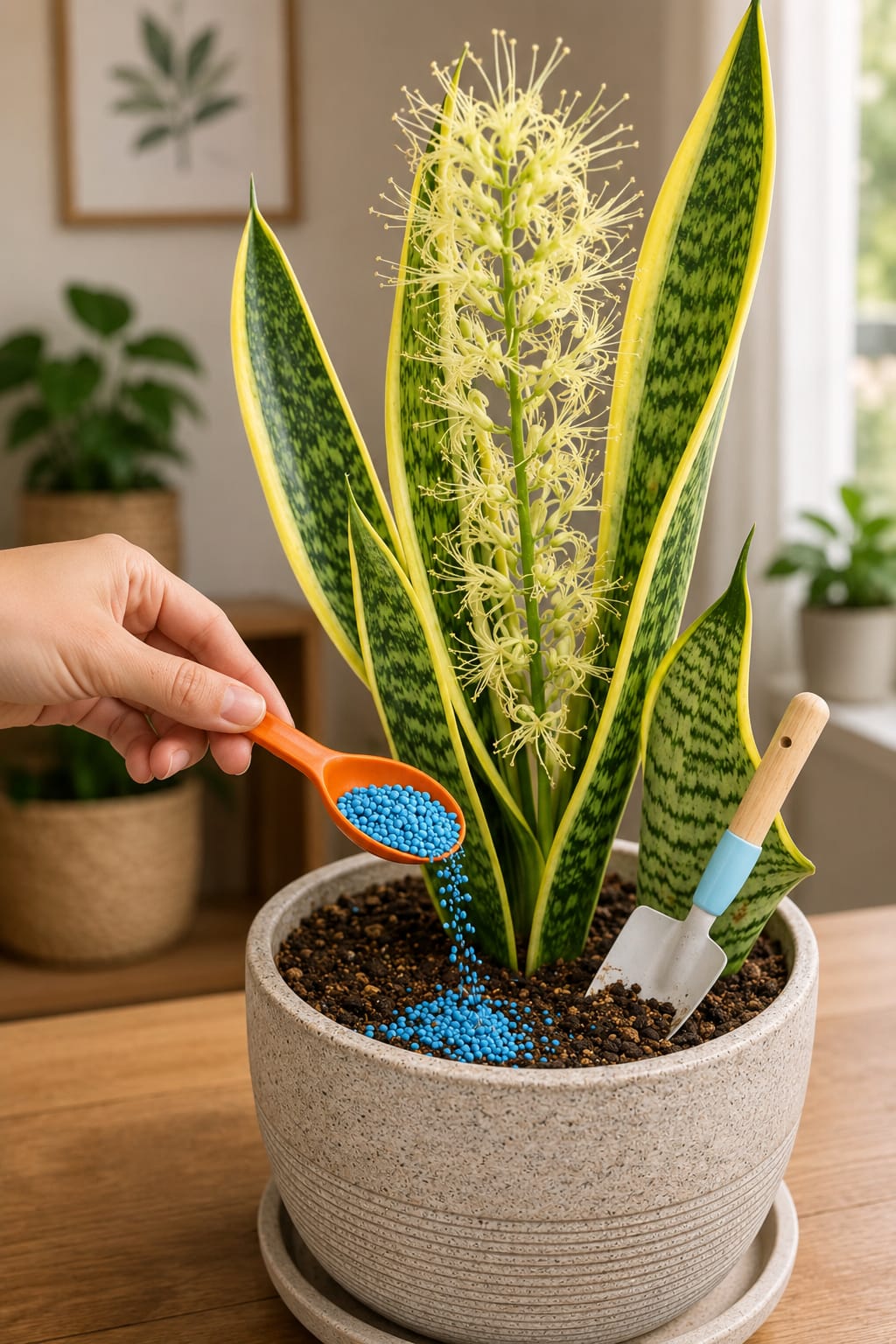
Snake plants are among the most popular houseplants in the world, and it is easy to understand why. Their upright architectural leaves, remarkable drought tolerance, and ability to thrive in a wide range of indoor environments make them a favorite choice for beginners and experienced plant lovers alike. Whether displayed in a modern living room, office, bedroom, or entryway, snake plants bring beauty, structure, and greenery to any space.
One of the biggest questions many indoor gardeners ask is how to encourage stronger growth, healthier foliage, and more vigorous development from their snake plants. While proper light, watering, and soil are essential, a consistent feeding routine can also play an important role in supporting overall plant health.
Like all plants, snake plants use nutrients to build leaves, strengthen roots, and maintain healthy growth. When grown in containers, the available nutrients within the potting mix gradually become depleted over time. Replenishing those nutrients through appropriate fertilization helps keep the plant thriving and looking its best.
Understanding how to fertilize correctly can make a noticeable difference in the appearance and performance of your snake plant while helping prevent common growth problems associated with nutrient deficiencies.
Why Snake Plants Are So Popular
Snake plants have earned a reputation as one of the easiest indoor plants to care for. Their ability to tolerate occasional neglect makes them ideal for busy households and beginner gardeners.
Some of the reasons people love snake plants include:
- Low water requirements.
- Attractive upright growth.
- Excellent adaptability.
- Long lifespan.
- Minimal maintenance needs.
- Modern decorative appeal.
- Suitability for various lighting conditions.
These qualities make snake plants one of the most dependable additions to indoor plant collections.
Understanding Snake Plant Growth
Snake plants grow from underground rhizomes that gradually produce new shoots and leaves. Over time, healthy plants often expand outward and create additional growth points known as pups.
These new offsets eventually mature into full-sized plants, creating a fuller and more impressive display.
Healthy nutrition supports this natural growth cycle by providing the building blocks needed for root development and leaf production.
The Importance of Nutrients
Plants rely on nutrients to perform essential biological processes. In nature, nutrients are continually replenished through the decomposition of organic matter and natural soil activity.
Container-grown plants, however, depend entirely on the nutrients available within their limited growing medium.
As watering occurs over time, some nutrients gradually wash away or become depleted through plant growth.
This is why periodic feeding can be beneficial for long-term container plant health.
Key Nutrients Snake Plants Need
Several nutrients play especially important roles in supporting healthy snake plant growth.
Nitrogen contributes to leaf development and vibrant green coloration. Phosphorus supports root growth and energy transfer within the plant. Potassium helps strengthen overall plant structure and supports stress tolerance.
Together, these nutrients contribute to balanced growth and healthy foliage.
Signs Your Snake Plant May Need Feeding
Although snake plants are not heavy feeders, they occasionally benefit from nutrient replenishment.
Some common indicators include:
- Slower than expected growth.
- Reduced production of new leaves.
- Pale foliage coloration.
- Smaller emerging leaves.
- Declining overall vigor.
It is important to remember that lighting, watering, and root conditions can also affect growth, so fertilization should be viewed as part of a complete care routine.
Choosing the Right Fertilizer
A balanced fertilizer is often suitable for snake plants because it provides a broad range of nutrients in appropriate proportions.
Many indoor gardeners prefer fertilizers formulated specifically for houseplants, succulents, or foliage plants.
The goal is to provide gentle, consistent nutrition rather than excessive feeding.
Moderation is usually the key to success.
Why Over-Fertilization Can Be Harmful
One of the most common mistakes in indoor plant care is applying too much fertilizer.
Excess nutrients can accumulate in container soil and potentially stress plant roots.
Symptoms may include:
- Leaf discoloration.
- Brown leaf tips.
- Reduced growth.
- Root stress.
- Salt buildup in the soil.
Applying fertilizer according to product directions helps minimize these risks.
Timing Matters
Snake plants typically grow most actively during warmer months when light levels and temperatures are favorable.
Many gardeners choose to fertilize during active growth periods rather than during slower seasonal growth phases.
This approach aligns nutrient availability with the plant’s natural growth cycle.
Providing nutrients when the plant is actively growing often yields the best results.
The Role of Proper Watering
Fertilization alone cannot compensate for poor watering practices.
Snake plants prefer allowing the soil to dry between waterings. Overwatering remains one of the leading causes of snake plant problems.
Healthy roots absorb nutrients more effectively when moisture levels are balanced appropriately.
Proper watering and proper feeding work together to support plant health.
Why Soil Quality Matters
The growing medium serves as the foundation for root health.
Snake plants generally perform best in well-draining mixes that provide both airflow and moisture control.
Common ingredients include:
- Potting soil.
- Perlite.
- Pumice.
- Coarse sand.
- Cactus or succulent mix.
Well-draining soil helps prevent excess moisture accumulation around roots.
Encouraging Strong Root Systems
Healthy roots are essential for nutrient uptake.
When roots are strong and vigorous, the plant can efficiently absorb water and nutrients while supporting healthy leaf production.
Proper drainage, appropriate watering, and balanced nutrition all contribute to robust root development.
Healthy roots ultimately lead to healthier foliage.
Light Requirements for Snake Plants
Although snake plants tolerate lower light conditions, they generally grow more actively in bright indirect light.
Improved lighting often leads to:
- Faster growth.
- Stronger leaves.
- More vibrant coloration.
- Improved overall vigor.
When combined with proper nutrition, good lighting creates ideal conditions for development.
Supporting New Pup Production
Many snake plant owners are excited when new pups emerge from the soil.
These young shoots indicate that the underground rhizome system is healthy and expanding.
Balanced growing conditions—including appropriate nutrition—can support the plant’s natural tendency to produce offsets.
Over time, these pups contribute to a fuller, more impressive display.
Maintaining Attractive Foliage
The distinctive foliage of snake plants is their greatest decorative feature.
Healthy leaves appear firm, upright, and richly colored.
Consistent care helps preserve these qualities while minimizing stress-related issues.
Regular dust removal can also improve appearance and support efficient photosynthesis.
Decorating With Snake Plants
Snake plants fit beautifully into a variety of interior design styles.
Their vertical growth habit makes them particularly useful in:
- Modern interiors.
- Minimalist spaces.
- Office environments.
- Entryways.
- Bedrooms.
- Living rooms.
- Contemporary apartments.
Even a single well-maintained specimen can become a striking focal point.
Continue to Page 2
Continue to page 2 for more details about this article and the key points many readers miss on the first page.