Orchids are among the most admired houseplants in the world. Their elegant flowers, graceful stems, and exotic appearance make them a favorite choice for indoor gardeners who want to add beauty and sophistication to their homes. While orchids may look delicate, many varieties are surprisingly resilient when given the proper growing conditions.
One topic that often attracts attention among orchid enthusiasts is the use of natural plant-care ingredients. Many gardeners enjoy experimenting with kitchen leftovers and household materials to support healthy plant growth while reducing waste. Among these natural materials, onion peels have become increasingly popular as a simple addition to plant-care routines.
Rich in naturally occurring compounds and organic matter, onion peels can be transformed into a homemade plant solution that many gardeners use as part of their overall orchid maintenance program. When combined with proper watering, lighting, humidity, and air circulation, this simple practice can help create a healthier environment for orchids to thrive.
Why Orchids Require Special Care
Unlike many common houseplants, orchids have unique growing habits. Most popular indoor orchids are epiphytes, meaning they naturally grow attached to trees in tropical environments rather than directly in garden soil.
Because of this natural adaptation, orchid roots require excellent airflow and drainage. Their roots are designed to absorb moisture quickly and then dry out gradually. This is one reason why orchids are typically grown in bark-based mixes rather than traditional potting soil.
Understanding this natural growth pattern helps explain why orchids benefit from gentle, balanced care rather than excessive watering or heavy fertilization.
The Appeal of Natural Plant Care
Many indoor gardeners appreciate natural gardening practices because they allow household materials to be reused rather than discarded. Kitchen scraps often contain organic compounds that can be repurposed in creative ways.
Natural plant-care routines may help:
- Reduce household waste.
- Encourage sustainable gardening habits.
- Support long-term soil health.
- Provide gentle plant nourishment.
- Create cost-effective care solutions.
When used responsibly, these practices can become part of a balanced indoor gardening routine.
What Makes Onion Peels Interesting for Gardeners?
Onion peels contain naturally occurring minerals and organic compounds that remain present even after the edible portion of the onion has been removed.
Gardeners often use onion peels in compost piles, homemade garden teas, and organic gardening projects because they contribute organic matter that can eventually break down and enrich growing environments.
While onion peels should never be viewed as a complete replacement for proper plant nutrition, they can be incorporated into a broader care routine.
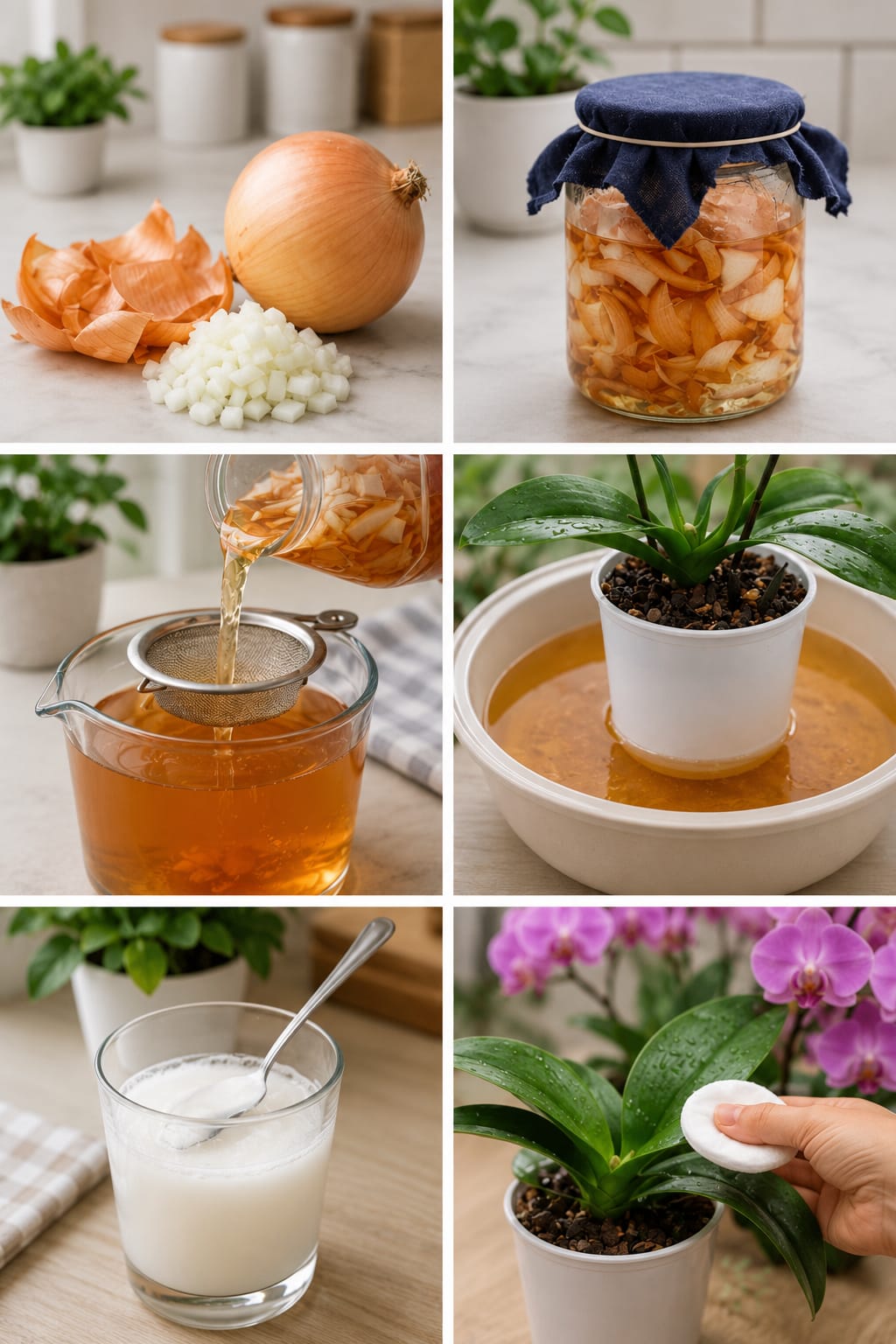
Preparing an Onion Peel Infusion
A common gardening practice involves soaking clean onion peels in water for a period of time to create a diluted infusion.
This process typically involves:
- Collecting clean onion peels.
- Placing them into a clean container.
- Adding water.
- Allowing the mixture to steep.
- Straining before use.
The resulting liquid is often used by gardeners as a gentle plant-care supplement.
Why Moderation Is Important
One of the most important principles of orchid care is moderation. Orchids generally prefer gentle treatment rather than excessive applications of any product, whether natural or commercial.
Overuse of homemade plant solutions can create unwanted conditions around sensitive orchid roots.
Successful orchid growers typically focus on balance rather than quantity.
The Importance of Healthy Roots
Orchid roots play a central role in overall plant health. Healthy roots absorb moisture, nutrients, and oxygen while supporting flower production and leaf development.
Signs of healthy orchid roots often include:
- Firm texture.
- Silvery-green coloration.
- Active growing tips.
- Good root branching.
- Strong attachment within the potting medium.
Protecting root health should always remain a top priority.
Creating the Ideal Orchid Environment
Even the best plant-care routine cannot compensate for poor growing conditions.
Orchids generally thrive when provided with:
- Bright indirect light.
- Good air circulation.
- Moderate humidity.
- Excellent drainage.
- Appropriate watering practices.
When these conditions are present, orchids are better able to support healthy growth and flowering.
Understanding Orchid Watering Needs
Overwatering remains one of the most common causes of orchid decline.
Many orchid roots suffer when they remain constantly wet. Excess moisture can reduce oxygen availability around the roots and create stressful conditions for the plant.
Most orchids benefit from allowing the growing medium to approach dryness between waterings.
Learning proper watering techniques often produces better results than any fertilizer or plant supplement.
The Relationship Between Roots and Blooms
Beautiful orchid flowers begin with healthy root systems.
Strong roots provide the energy and resources needed for flower spike development, bud formation, and bloom longevity.
When roots remain healthy, the plant is better equipped to support repeated flowering cycles.
This is why experienced growers focus heavily on root care.
How Airflow Benefits Orchids
In their natural environment, orchids experience constant airflow around their roots and foliage.
Good air movement helps:
- Reduce excess moisture.
- Support root health.
- Improve growing conditions.
- Promote stronger overall development.
Indoor growers can mimic these conditions by avoiding overcrowding and maintaining adequate ventilation.
The Role of Orchid Bark
Most orchids are grown in bark-based mixes specifically designed to provide airflow and drainage.
Unlike traditional potting soil, bark particles create spaces that allow roots to breathe.
These growing media gradually break down over time and may require replacement through periodic repotting.
Fresh bark often improves growing conditions significantly.
Supporting Long-Term Flowering Success
Many orchid enthusiasts focus on flower production, but successful blooming begins long before flower spikes appear.
Healthy vegetative growth provides the foundation for future blooms.
This includes:
- Strong roots.
- Healthy leaves.
- Balanced nutrition.
- Proper lighting.
- Consistent care.
When these factors work together, flowering becomes more reliable.
Humidity and Orchid Health
Many orchids originate from tropical regions where humidity levels remain relatively high.
Although indoor environments are often drier, maintaining moderate humidity can help support healthy growth.
Humidity trays, grouped plants, and appropriate room conditions may contribute to a more favorable environment.
Balanced humidity often helps orchids maintain attractive foliage.
Why Light Is Essential
Light serves as the energy source that powers plant growth.
Orchids generally perform best when placed near bright windows where they receive abundant indirect light.
Insufficient light can limit growth and reduce flowering potential.
Excessive direct sunlight, however, may damage leaves.
Finding the right balance is important.
Cleaning Orchid Leaves
Dust accumulation can reduce the efficiency of photosynthesis.
Occasionally wiping orchid leaves with a soft cloth helps maintain their natural shine while allowing them to capture light more effectively.
Clean foliage also enhances the plant’s decorative appearance.
Simple maintenance can make a noticeable difference.
The Beauty of Healthy Orchid Foliage
While flowers receive most of the attention, healthy leaves are equally important indicators of orchid health.
Strong leaves typically appear:
- Firm.
- Smooth.
- Bright green.
- Free from major blemishes.
- Properly hydrated.
Maintaining foliage health supports overall plant performance.
Repotting for Continued Growth
Over time, orchid bark decomposes and becomes less effective at providing airflow.
Repotting allows growers to refresh the growing medium while inspecting root health.
Many orchids benefit from periodic repotting as part of their long-term maintenance routine.
Fresh growing media often encourages renewed vigor.
Combining Natural and Traditional Care Methods
Many successful orchid growers combine natural gardening practices with proven horticultural techniques.
This balanced approach often includes:
- Proper watering.
- Quality potting media.
- Adequate lighting.
- Good airflow.
- Responsible fertilization.
- Natural supplemental practices.
Combining these elements helps create a comprehensive care strategy.
Decorating With Orchids Indoors
Orchids bring elegance and sophistication to interior spaces.
They work beautifully in:
- Living rooms.
- Bedrooms.
- Dining rooms.
- Home offices.
- Entryways.
- Kitchen spaces.
Their long-lasting blooms provide color and visual interest while complementing a wide variety of decorating styles.
Choosing the Right Orchid Location
Placement can significantly influence orchid performance.
Ideal locations often provide:
- Bright filtered sunlight.
- Stable temperatures.
- Protection from drafts.
- Good airflow.
- Easy access for maintenance.
Carefully selecting a location helps reduce stress and supports healthier growth.
Building a Consistent Routine
Consistency is one of the most valuable aspects of orchid care.
Rather than frequently changing growing conditions, successful growers establish routines that allow plants to adapt and thrive.
This includes maintaining regular watering schedules, monitoring light levels, and observing plant responses over time.
Patience often produces the best results.
Continue to Page 2
Continue to page 2 for more details about this article and the key points many readers miss on the first page.