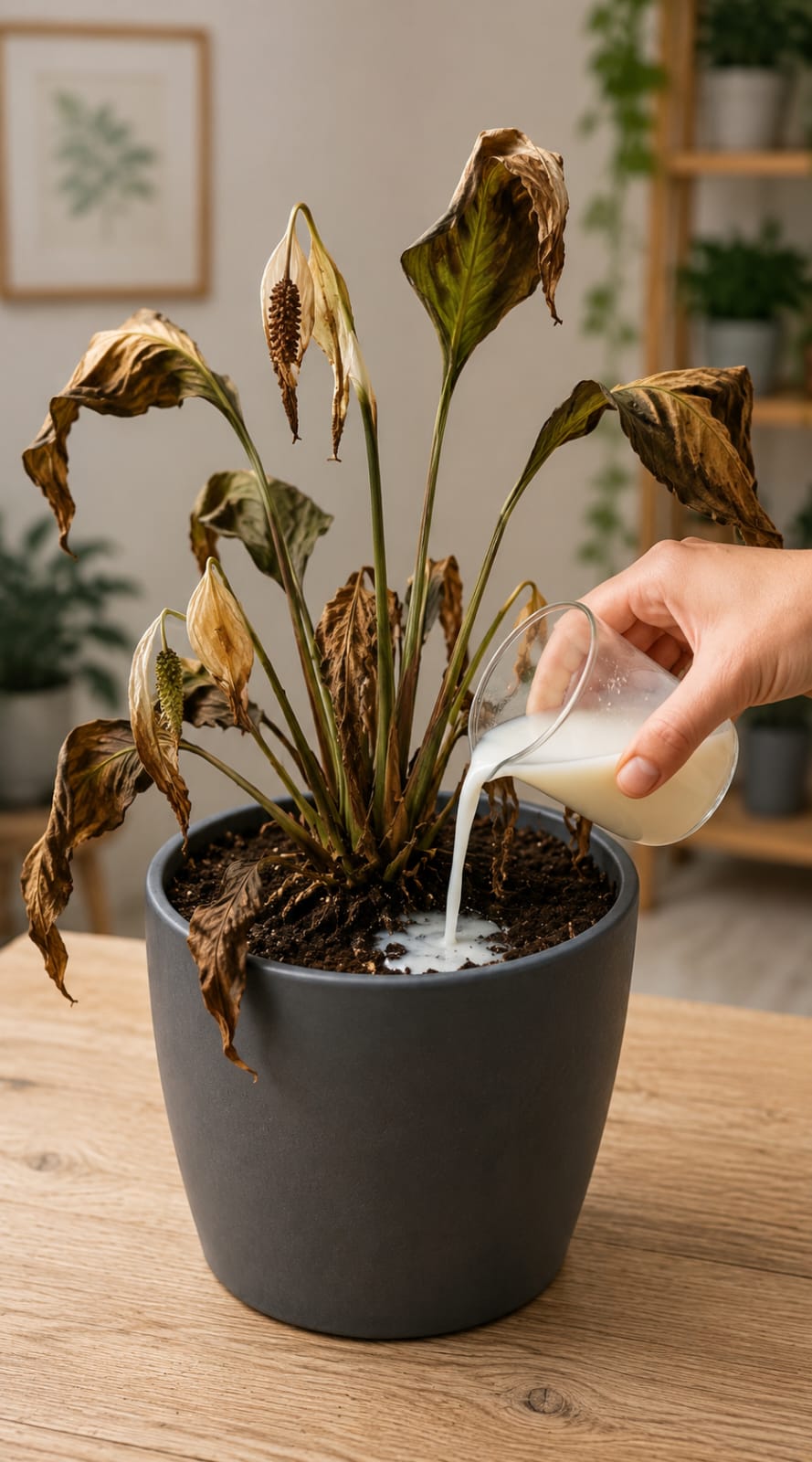
Peace lilies are loved for their glossy green leaves and elegant white blooms, but they can also be dramatic when something goes wrong. One week the plant looks fresh and full, and the next it may appear wilted, brown, crispy, or almost lifeless. A struggling peace lily can make any plant lover feel worried, especially when the leaves collapse and the flowers dry out.
One natural plant-care idea often shared among indoor gardeners is using diluted milk water as a gentle soil-supporting routine. Milk contains water, small amounts of calcium, proteins, sugars, and minerals, so some gardeners use it in very weak dilution as an occasional plant tonic. However, it must be used carefully. Thick milk, frequent use, or pouring it into already wet soil can create odor, mold, fungus gnats, and root problems.
This article explains how to approach the diluted milk routine safely, when to avoid it, and—most importantly—how to actually help a tired peace lily recover. The real secret is not one ingredient. It is diagnosing the problem, correcting watering, improving light, checking roots, refreshing soil, and giving the plant time to grow again.
Why Peace Lilies Wilt So Easily
Peace lilies are tropical plants with soft, moisture-loving foliage. They naturally grow in warm, humid environments with filtered light and consistently moist, airy soil. Indoors, they react quickly when conditions change. If the soil dries too much, the leaves droop. If the soil stays too wet, the roots suffer and the leaves may also droop. This is why peace lilies can look thirsty even when they are actually overwatered.
Before adding any homemade tonic, always check the soil and roots. A plant with brown, collapsed leaves may be suffering from underwatering, overwatering, root rot, low humidity, cold drafts, too much fertilizer, or old compacted soil.
What Diluted Milk Water Is Meant to Do
Diluted milk water is sometimes used as a very mild natural supplement. The goal is not to “bring a dead plant back instantly.” Instead, it is used occasionally around healthy or recovering plants as part of a broader care routine.
Milk is not a complete fertilizer. It cannot replace balanced plant food, fresh soil, light, or correct watering. It should also never be poured thickly onto the soil. Undiluted milk can sour, smell unpleasant, attract insects, and encourage mold growth.
If you use this method, it must be diluted heavily and applied rarely.
A Safer Diluted Milk Recipe
For peace lilies, use a very weak mixture:
- 1 tablespoon plain milk
- 1 liter clean water
- Mix well
- Use only a small amount around the soil
Do not use sweetened milk, flavored milk, condensed milk, cream, or thick dairy products. These can create serious soil problems. Plain milk diluted in plenty of water is the only version that should be considered.
How Often to Use It
Use diluted milk water no more than once every 6 to 8 weeks, and only during active growth. If the plant is severely stressed, root-damaged, or sitting in soggy soil, do not use milk water at all. Fix the root and soil problem first.
Many peace lilies never need milk water. They can grow beautifully with normal water, bright indirect light, humidity, fresh soil, and balanced fertilizer.
When Not to Use Milk Water
Avoid this routine if your peace lily has:
- Soggy soil
- Root rot
- Bad smell from the pot
- Fungus gnats
- Mold on the soil
- Soft black stems
- Recently repotted roots
- No drainage holes
Adding milk water to unhealthy soil can make the situation worse. If the pot already smells bad, the plant needs fresh soil and root inspection, not more organic liquid.
Step One: Remove Dead Leaves and Flowers
When a peace lily has many brown leaves and dry flowers, the first step is cleaning the plant. Dead leaves will not turn green again. Remove them with clean scissors near the base of each stem.
Also cut off dry flower stalks. Old blooms drain energy and make the plant look worse. A clean plant can focus on producing new leaves from the crown.
Do not remove every leaf if some are still partly green. Green tissue can still help the plant photosynthesize while it recovers.
Step Two: Check the Soil Moisture
Push your finger into the soil. If the soil is bone dry and pulling away from the pot edges, the plant may be severely dehydrated. In that case, water slowly with plain water until the soil is evenly moist and water drains from the bottom.
If the soil is wet, heavy, and the plant is still drooping, the problem may be overwatering or root rot. Do not add more liquid. Let the soil dry slightly and inspect the roots if the plant continues to decline.
Step Three: Inspect the Roots
If the peace lily looks severely damaged, gently remove it from the pot and inspect the roots. Healthy roots are usually firm and pale cream, white, or light tan. Rotten roots are mushy, dark brown, black, hollow, or smelly.
Trim away rotten roots with clean scissors. If many roots are damaged, the plant may recover slowly, but removing rot gives it a better chance.
After trimming, repot into fresh, airy potting mix.
Step Four: Refresh the Soil
Old compacted soil can suffocate peace lily roots. A good peace lily mix should hold moisture while still draining well.
A helpful mix can include:
- Quality indoor potting soil
- Perlite
- Coco coir
- Fine bark chips
- A small amount of compost
The soil should not feel like heavy mud. Roots need air as much as moisture.
Step Five: Use a Pot With Drainage
Peace lilies should always be grown in pots with drainage holes. Without drainage, water collects at the bottom and roots may rot.
If you love decorative pots, use them as cover pots. Keep the peace lily in a nursery pot with holes, then place it inside the decorative container. After watering, remove extra water from the bottom.
Step Six: Place It in Bright Indirect Light
A recovering peace lily needs gentle light. Too much direct sun can burn weak leaves, while a dark corner slows recovery.
Place it near a bright window with filtered light. Morning light is helpful. Avoid harsh afternoon sun. Bright indirect light helps the plant create energy for new roots and leaves.
Step Seven: Improve Humidity
Peace lilies appreciate humidity. Dry air can make leaf edges brown and crispy.
To increase humidity, group plants together, place the pot on a pebble tray, or use a small humidifier. Avoid misting heavily if the room has poor airflow, because wet leaves can encourage fungal spots.
How to Apply Diluted Milk Water Safely
Only use diluted milk water after the plant is stable. The soil should be slightly dry on top but not bone dry. Pour a small amount around the outer soil area, away from the crown.
Do not flood the pot. Do not let the plant sit in runoff. If any liquid drains out, empty the saucer quickly.
After using milk water, wait and observe. Do not repeat the routine soon.
Signs the Peace Lily Is Recovering
Recovery is not instant. Look for small improvements such as:
- New green shoots from the base
- Leaves standing more firmly
- No bad smell from the soil
- Less wilting after watering
- Fresh roots forming
- New leaves opening cleanly
A badly stressed peace lily may take weeks or months to look full again.
Will Brown Leaves Turn Green Again?
No. Brown, crispy, or dead leaves will not turn green again. Recovery comes from new growth. This is why pruning dead material is important. It improves appearance and helps you monitor fresh progress.
Be patient. Peace lilies can regrow beautifully when the crown and roots are still alive.
Should You Fertilize a Weak Peace Lily?
Do not fertilize a severely stressed peace lily immediately. Fertilizer can burn damaged roots. Wait until you see new growth, then feed lightly with a balanced houseplant fertilizer at half strength.
During active growth, monthly light feeding may help. During winter or low-light months, reduce feeding.
Continue to Page 2
Continue to page 2 for more details about this article and the key points many readers miss on the first page.