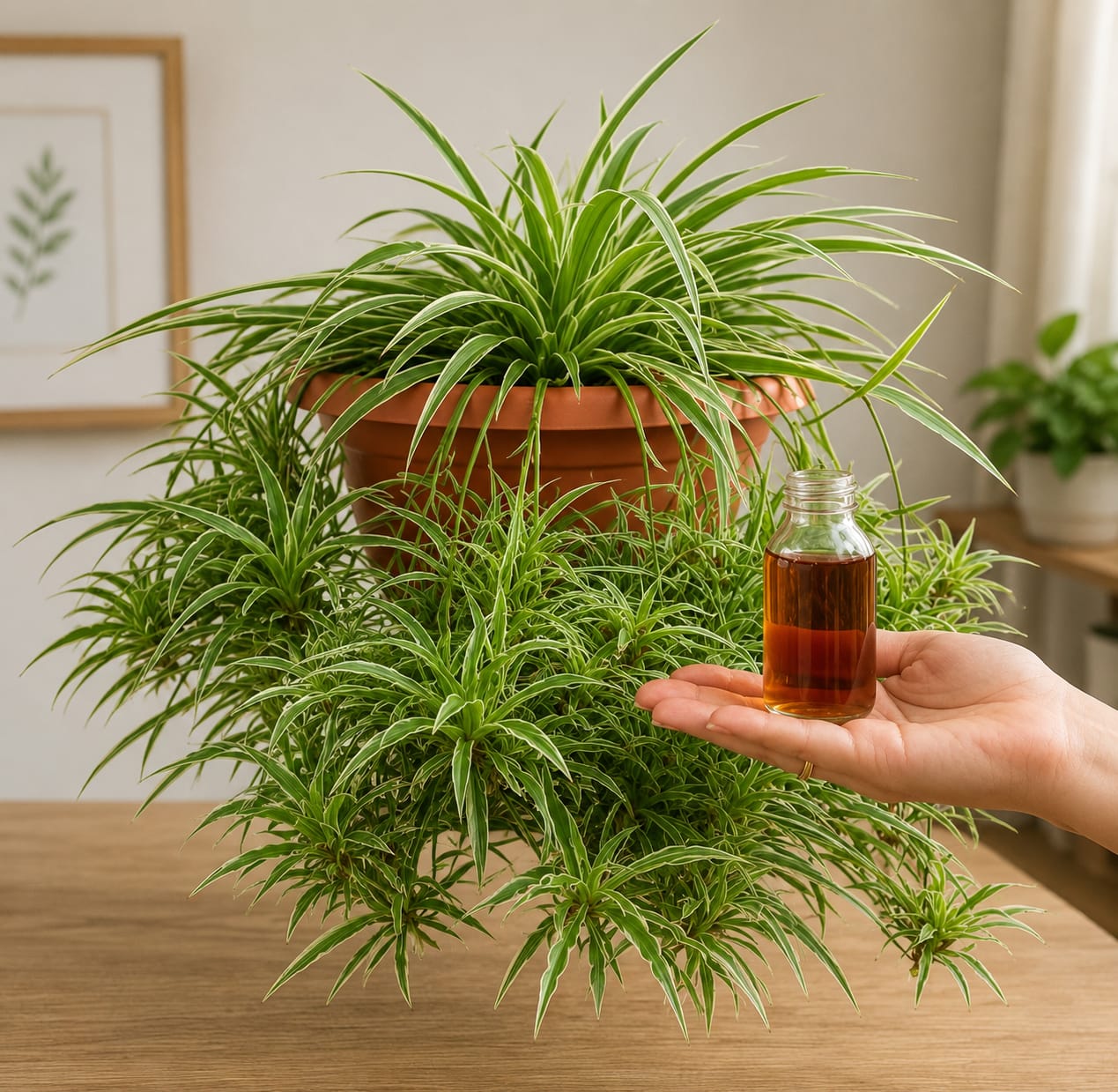
Spider plants are some of the most cheerful and reliable houseplants you can grow. Their long arching leaves, soft green-and-white stripes, and cascading baby plantlets make them perfect for hanging baskets, wall planters, shelves, balcony corners, and bright indoor spaces. A healthy spider plant can quickly turn one simple pot into a lush fountain of foliage, especially when the plant is given the right light, watering rhythm, soil, and gentle feeding.
One natural plant-care idea that many gardeners enjoy is using a mild brown liquid tonic for spider plants. This type of liquid is usually made from gentle organic ingredients such as compost tea, diluted worm casting tea, banana peel water, onion skin tea, or a very weak natural fertilizer solution. When prepared safely and used in moderation, a brown liquid plant tonic can support stronger roots, greener leaves, and more active growth.
However, this routine must be used carefully. Spider plants do not need heavy feeding, and too much homemade liquid can cause sour soil, fungus gnats, salt buildup, or weak growth. The real secret to a beautiful spider plant is not one bottle of liquid. It is a balanced routine: bright indirect light, airy soil, correct watering, occasional feeding, pruning, and enough space for the plantlets to grow.
Why Spider Plants Are So Popular
Spider plants are loved because they are forgiving, decorative, and easy to multiply. Their leaves grow in a graceful fountain shape, and mature plants often produce long stems with tiny baby plants at the ends. These baby plants are called offsets, pups, or spiderettes.
This makes spider plants ideal for people who enjoy propagation. One healthy mother plant can produce many new plants over time. You can leave the babies hanging for a dramatic look, root them in water, plant them in small pots, or share them with friends.
Spider plants also fit many home styles. They look fresh in terracotta pots, modern in white ceramic planters, natural in woven baskets, and dramatic in hanging containers.
What Is the Brown Liquid Routine?
The brown liquid routine is a gentle feeding method using a diluted natural plant tonic. The liquid should be light, clean, and watery, not thick or sticky. It should support the soil without overwhelming the roots.
Some safe mild options include:
- Very diluted compost tea
- Worm casting tea
- Banana peel water that has been strained well
- Onion skin tea diluted heavily
- Commercial organic liquid fertilizer diluted to half or quarter strength
The key is dilution. Spider plants respond better to light feeding than strong feeding.
A Gentle Brown Liquid Recipe for Spider Plants
For a simple homemade plant tonic, worm casting tea is one of the gentlest options:
- 1 tablespoon worm castings
- 1 liter clean water
- Let it sit for several hours
- Stir well
- Strain before using
- Apply only to moist soil
If you do not have worm castings, you can use a balanced liquid houseplant fertilizer diluted to half strength. This is often safer and more predictable than random homemade mixtures.
How Often to Use the Brown Liquid
Use a mild brown liquid tonic once every 4 to 6 weeks during active growth. Spring and summer are the best times because the plant is naturally producing more leaves and baby plants.
During winter or low-light months, reduce feeding or stop completely. When growth slows, the plant uses fewer nutrients, and extra feeding may build up in the soil.
Spider plants are not heavy feeders. A little support is enough.
How to Apply It Safely
Apply the liquid only when the soil is slightly moist. Pour slowly around the outer edge of the pot, not directly into the center crown. The crown should stay clean and not remain wet for long periods.
Use just enough to moisten the root zone. If liquid drains into the saucer, empty it after a few minutes. Standing water can damage roots.
Never pour thick, fermented, sour-smelling, or sticky liquid into a spider plant pot.
Why Straining Matters
If your brown liquid is homemade from organic material, strain it well. Small pieces of banana peel, compost, onion skin, or plant matter can rot in the soil. This can attract fungus gnats and create unpleasant smells.
The final liquid should pass through the soil easily like water. If it looks thick, dilute it more.
The Best Light for Spider Plants
Spider plants grow best in bright indirect light. They can tolerate lower light, but they may grow more slowly and produce fewer baby plants.
A bright window with filtered light is ideal. Morning sun is usually safe. Harsh afternoon sun can burn the leaves, especially the white-striped varieties.
If your spider plant looks pale, weak, or stretched, it may need more light. If the leaves turn crispy or scorched, it may be receiving too much direct sun.
Watering Spider Plants Correctly
Spider plants like evenly moist soil but do not enjoy soggy roots. Water when the top inch of soil feels dry. Water thoroughly, then let the excess drain away.
Avoid small daily splashes. Frequent shallow watering keeps the surface damp but may leave deeper roots dry or create fungus gnat problems.
Deep watering followed by a drying period is healthier.
Signs Your Spider Plant Needs Water
A thirsty spider plant may show:
- Slightly drooping leaves
- Dry soil
- Curled leaf edges
- Pot feeling very light
- Brown crispy tips
Water well, then allow the plant to recover. Most spider plants perk up quickly after proper watering.
Signs of Overwatering
Overwatering can cause serious problems. Watch for:
- Yellow leaves
- Soft crown
- Sour soil smell
- Fungus gnats
- Leaves collapsing from the base
- Soil staying wet too long
If these signs appear, stop feeding and reduce watering. Check the roots and repot if the soil is compacted or rotten.
Best Soil for Spider Plants
Spider plants prefer a light, well-draining potting mix. Standard indoor potting soil can work, but it becomes better when mixed with materials that improve airflow.
A good mix may include:
- Indoor potting soil
- Perlite
- Coco coir
- Fine bark chips
- A small amount of compost
The mix should hold some moisture but not stay wet for too long.
Drainage Is Essential
Spider plants should grow in pots with drainage holes. Without drainage, water collects at the bottom and can rot the roots.
If you use a decorative hanging pot without holes, keep the plant in a nursery pot with drainage and place it inside the decorative container. Remove extra water after watering.
Good drainage is more important than any plant tonic.
How to Encourage More Baby Plants
Spider plants produce baby plants when they are mature and healthy. To encourage spiderettes, provide bright indirect light, steady watering, and light feeding during active growth.
A slightly snug pot may also encourage babies. If the pot is too large, the plant may focus on root growth instead of producing long stems.
Do not overfeed. Too much nitrogen can produce lots of leaves but fewer baby plants.
Should You Cut Off Spider Plant Babies?
You can leave the babies attached for a full cascading look, or you can cut and propagate them. Leaving them attached creates a beautiful hanging display. Cutting some off can help the mother plant conserve energy.
If the plant looks tired or crowded, remove a few babies and root them separately.
How to Propagate Spider Plant Babies
Spider plant babies are very easy to propagate. Choose a baby plant with small root bumps at the base. Place it in water or directly into moist potting mix.
If rooting in water, change the water every few days. Once roots grow, plant it in soil. If planting directly in soil, keep the mix lightly moist until the baby becomes established.
This is one of the easiest ways to grow more houseplants for free.
Brown Leaf Tips: What They Mean
Brown tips are common on spider plants. They can happen because of dry air, underwatering, too much fertilizer, mineral-heavy tap water, or inconsistent care.
Trim brown tips with clean scissors if they bother you. Cut at an angle to match the natural leaf shape.
To reduce brown tips, use filtered water if possible, avoid overfeeding, and keep watering consistent.
Continue to Page 2
Continue to page 2 for more details about this article and the key points many readers miss on the first page.