Peace lilies are among the most elegant houseplants you can grow indoors. Their deep green leaves, soft upright stems, and clean white blooms bring a calm, fresh, and refined feeling to any space. A healthy peace lily can make a living room corner look peaceful, brighten a bedroom, soften an office desk, or add a spa-like touch to a bathroom with natural light.
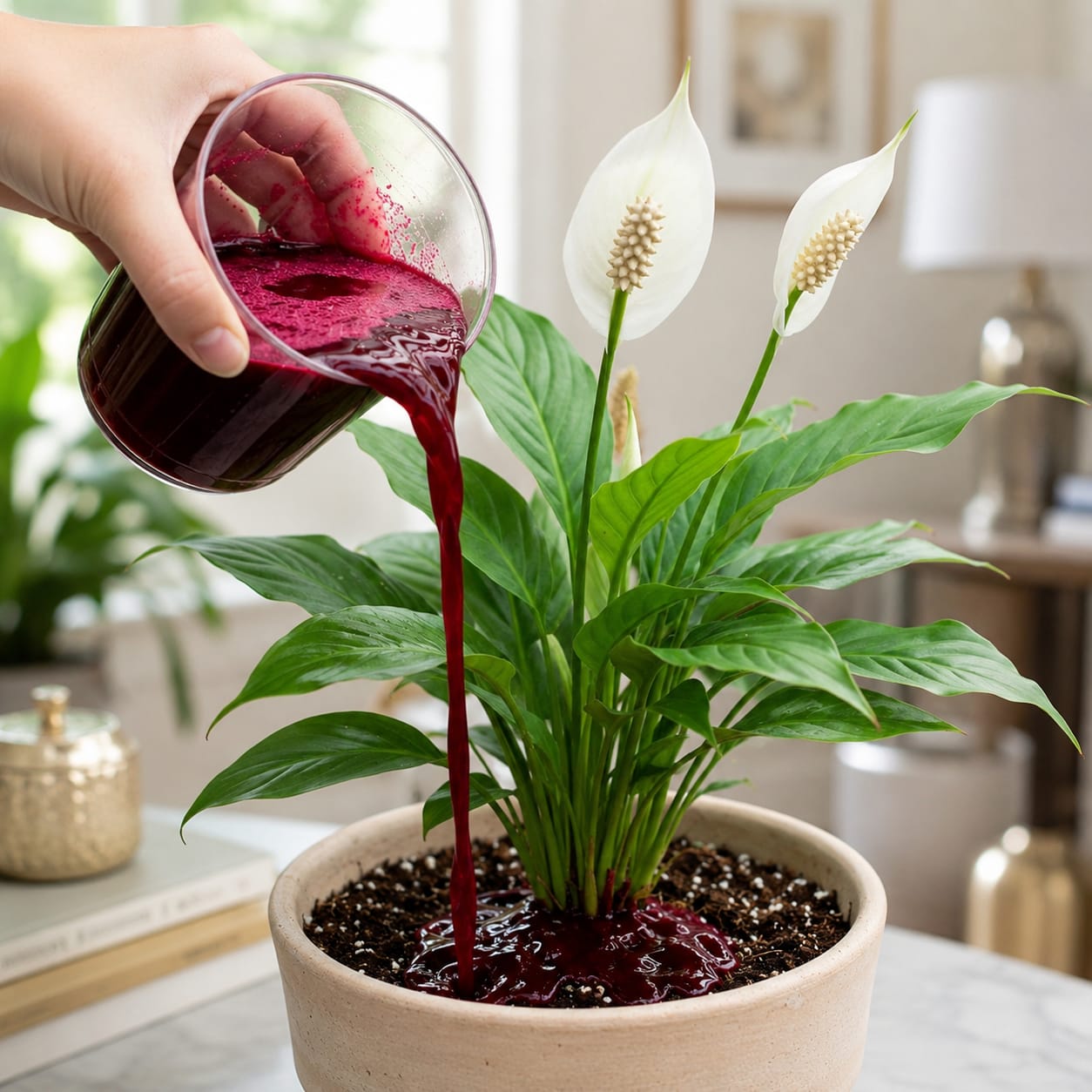
Many plant lovers search for natural ways to help peace lilies look fuller, greener, and more likely to bloom. One gentle homemade idea is using a diluted beetroot tonic as an occasional plant-care supplement. Beetroot is rich in color, moisture, and plant-based organic compounds, and when prepared correctly, strained well, and diluted heavily, it can be used as a mild soil-supporting routine for certain houseplants.
However, this routine must be used carefully. Beetroot liquid is not a miracle fertilizer, and it should never be poured thickly onto the soil. If the mixture is too strong, sticky, or used too often, it can attract fungus gnats, create sour smells, stain surfaces, or disturb the soil balance. The safest method is always a weak, watery, well-strained tonic used only occasionally.
The true secret to a beautiful peace lily is still the basics: bright indirect light, proper watering, drainage, humidity, fresh soil, clean leaves, and gentle feeding. Beetroot tonic can be a small supportive step inside that routine, not the main solution.
Why Peace Lilies Need Balanced Care
Peace lilies are tropical plants. They naturally prefer warm conditions, filtered light, and soil that stays lightly moist without becoming soggy. Their leaves are soft and expressive, which means they react quickly when something is wrong. If the plant is thirsty, it may droop. If the roots are too wet, it may also droop. This is why peace lilies can sometimes confuse beginners.
A peace lily that looks tired does not always need more water. Sometimes it needs less water, better drainage, fresher soil, or brighter light. Before using any natural tonic, it is important to check the plant’s real condition. A homemade mixture should never be used to cover up root rot, soggy soil, or poor lighting.
When the plant’s basic needs are met, gentle natural care can support healthier-looking growth. But when the basics are wrong, no kitchen ingredient will fix the problem alone.
What Is Beetroot Tonic for Plants?
Beetroot tonic is a diluted liquid made from beetroot and water. It may be prepared by blending a small piece of beetroot with water, then straining it very well. The final mixture should be thin and watery, not thick like juice or puree.
Beetroot contains natural pigments, moisture, and organic matter. In plant-care routines, it is sometimes used as a mild homemade soil drink. But because it contains sugars and organic compounds, it must be diluted heavily. A strong beetroot mixture can ferment, smell bad, or attract insects.
For peace lilies, the goal is not to feed heavily. The goal is to offer a very mild occasional tonic while maintaining excellent soil and watering habits.
A Safe Beetroot Tonic Recipe for Peace Lilies
Use a very weak recipe. Strong mixtures are not recommended for indoor pots.
- 1 small slice of fresh beetroot
- 2 cups clean water
- Blend for a few seconds
- Strain through a fine cloth or coffee filter
- Dilute the strained liquid with 4 to 6 more cups of water
The final liquid should look lightly tinted, not thick, dark, or syrupy. If it looks like strong beet juice, dilute it more. Peace lily roots do not need concentrated beetroot liquid.
Never add sugar, honey, milk, oil, salt, or other kitchen ingredients to this tonic. Keep it simple and clean.
Why Straining Matters
Straining is one of the most important steps. Small pieces of beetroot pulp can rot inside the soil. This may attract fungus gnats, create mold, or cause an unpleasant smell in the pot.
Use a fine sieve, coffee filter, cheesecloth, or clean cotton cloth. The liquid should be smooth and watery after straining. If pulp remains, strain again.
Indoor plant pots are small environments. Any organic material added to the soil can change that environment quickly, so cleanliness matters.
How Often to Use Beetroot Tonic
Use beetroot tonic rarely. Once every 6 to 8 weeks during active growth is enough. Spring and summer are the best times because the plant is naturally producing new leaves and possibly flowers.
Do not use it every week. Frequent use can overload the soil with organic residue. During winter or low-light months, avoid homemade tonics because the plant grows more slowly and the soil dries more slowly.
Peace lilies respond better to gentle consistency than frequent experiments.
How to Apply It Correctly
Apply the diluted beetroot tonic only when the peace lily is already due for watering. The soil should be slightly dry on top, not soaked.
Pour a small amount around the outer edge of the pot. Avoid pouring directly into the center crown where the stems emerge. The crown should stay clean and not remain wet for long periods.
Use only enough liquid to lightly moisten the soil. If excess drains into the saucer, empty it after a few minutes. Never let a peace lily sit in standing liquid.
When Not to Use Beetroot Tonic
Do not use beetroot tonic if the peace lily has soggy soil, root rot, fungus gnats, mold, soft stems, yellowing from overwatering, or a sour smell coming from the pot.
Also avoid using it right after repotting if roots were disturbed. Give the plant time to settle first.
If the plant is stressed, fix the basic problem before adding any homemade routine. A weak plant needs stable care, not extra organic moisture.
Can Beetroot Tonic Make Peace Lilies Bloom?
Beetroot tonic will not force instant blooms. Peace lily flowers depend mostly on plant maturity, bright indirect light, healthy roots, proper watering, and balanced nutrition.
If a peace lily is not blooming, the first thing to check is usually light. Many peace lilies survive in low light but bloom poorly. Moving the plant to a brighter location with filtered light often makes a bigger difference than any homemade tonic.
Beetroot tonic may support the care routine in a small way, but blooms come from overall plant health.
The Real Bloom Secret: Bright Indirect Light
Peace lilies need bright indirect light for best growth and flowering. They can tolerate low light, but low light often leads to fewer blooms and slower growth.
Place the plant near a bright window where it receives filtered sunlight. Morning light is usually gentle and helpful. Avoid harsh direct afternoon sun because it can scorch the leaves.
If your peace lily has healthy green leaves but no flowers, try gradually moving it to a brighter spot. Do not move it from deep shade into strong direct sun suddenly.
Watering Peace Lilies the Right Way
Peace lilies like soil that is lightly moist, but they do not like soggy roots. Water when the top inch of soil begins to feel dry.
When watering, water thoroughly until excess drains from the bottom. Then empty the saucer. This gives the roots a proper drink while preventing standing water.
If the leaves droop and the soil is dry, the plant needs water. If the leaves droop and the soil is wet, the roots may be struggling from overwatering.
Why Drainage Is Essential
Every peace lily pot should have drainage holes. Without drainage, water collects at the bottom of the pot and can cause root rot.
If you use a decorative pot without holes, keep the peace lily in a nursery pot with drainage and place that inside the decorative container. After watering, remove any extra water from the bottom.
Good drainage is more important than any natural tonic.
The Best Soil for Peace Lilies
Peace lilies need soil that holds some moisture but still allows air to reach the roots. Heavy compact soil can suffocate roots and stay wet too long.
A good peace lily mix may include:
- Quality indoor potting mix
- Perlite
- Coco coir
- Fine orchid bark
- A small amount of compost
The soil should feel soft and airy, not muddy. If water sits on the surface for a long time before soaking in, the mix may be too dense.
Signs of Healthy Peace Lily Roots
Healthy roots are usually firm and pale, cream, white, or light tan. They should not smell rotten. Strong roots support firm leaves and new growth.
If roots are mushy, black, hollow, or foul-smelling, the plant may have root rot. In that case, remove the plant from the pot, trim damaged roots, and repot into fresh airy soil.
Never add beetroot tonic or any homemade liquid to rotting roots.
Humidity for Glossy Leaves
Peace lilies appreciate humidity. Dry air may cause brown leaf tips or curled edges. This is common in rooms with heating, air conditioning, or very dry climates.
To increase humidity, group plants together, place the pot near other tropical plants, use a pebble tray, or run a small humidifier nearby.
Avoid heavy misting if the room has poor airflow. Wet leaves that stay damp for too long may develop spots.
Cleaning Peace Lily Leaves
Peace lily leaves are broad and glossy, which means they collect dust easily. Dust blocks light and makes the plant look dull.
Wipe the leaves every few weeks with a soft damp cloth. Support each leaf with one hand while wiping with the other. This helps prevent tearing.
Clean leaves look fresher and help the plant use light more efficiently.
Removing Old Flowers
Peace lily flowers eventually fade. They may turn green, brown, or dry. Removing old blooms keeps the plant tidy and helps it direct energy toward new growth.
Use clean scissors to cut the flower stem near the base. Do not pull old blooms by hand because this can damage the crown.
A clean plant looks healthier and more decorative.
Continue to Page 2
Continue to page 2 for more details about this article and the key points many readers miss on the first page.