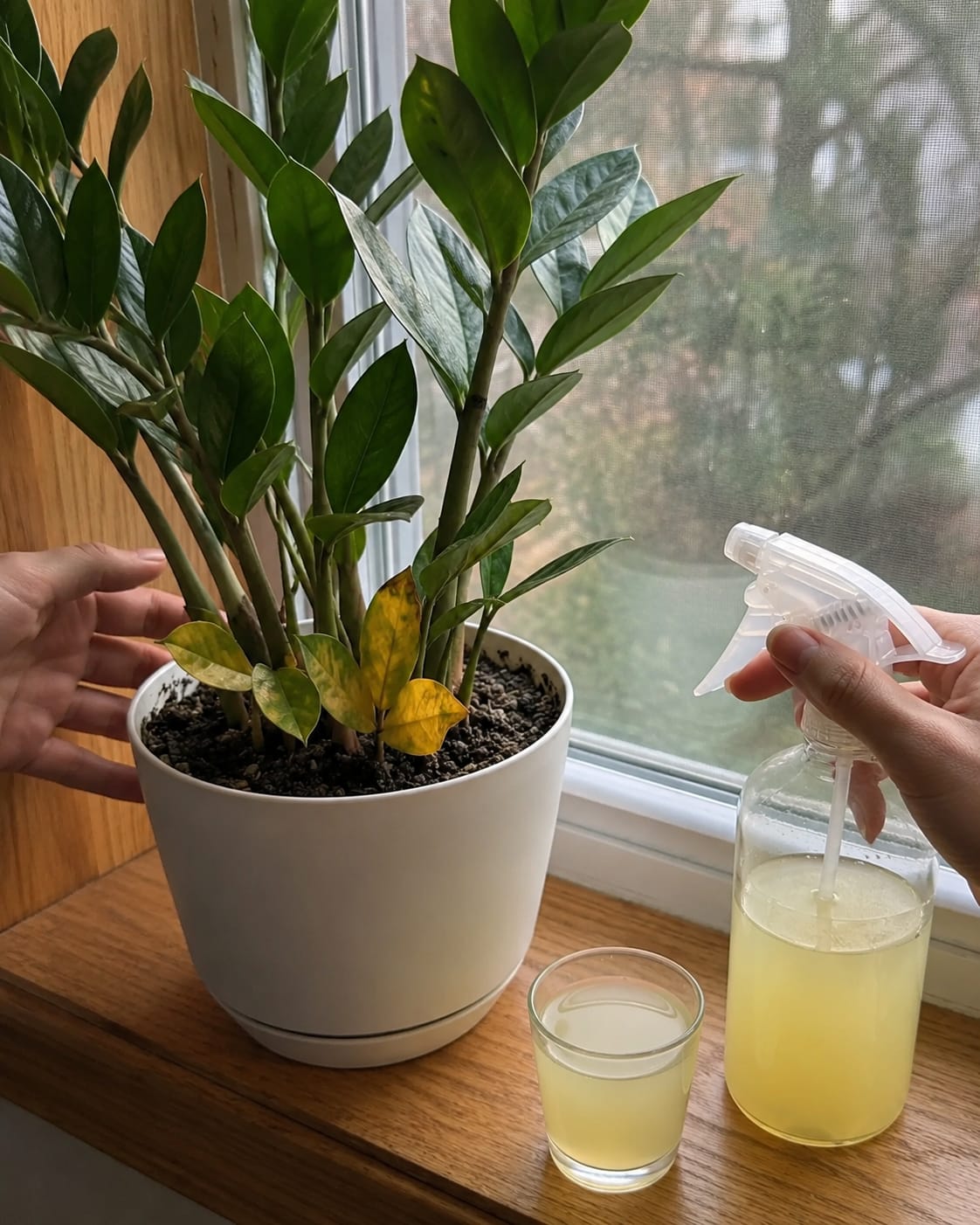
ZZ plants are famous for being strong, glossy, and almost impossible to ignore in a beautiful indoor space. Their upright stems, deep green leaves, and clean sculptural shape make them one of the best houseplants for living rooms, bedrooms, offices, entryways, and cozy plant corners. A healthy ZZ plant looks polished with very little effort, which is why so many plant lovers choose it for low-maintenance indoor greenery.
But even a tough ZZ plant can show stress. Yellow leaves, brown tips, dull growth, weak stems, and tired-looking soil are signs that something in the care routine needs attention. Many people reach for a homemade yellow plant spray or natural leaf refresh mixture when their ZZ plant begins to look faded. A gentle spray can help clean leaves, refresh the plant’s appearance, and support a simple rescue routine, but it cannot fix the plant alone if the roots are sitting in wet soil or the pot has poor drainage.
This guide explains how to use a mild yellow rescue spray safely, how to understand yellow leaves on ZZ plants, how to check the roots, how to water correctly, how to prevent root rot, how to keep leaves glossy, and how to style your ZZ plant indoors after it recovers. The goal is to treat the plant gently and fix the real cause of stress instead of covering the problem with a quick trick.
What Is a ZZ Plant Yellow Leaves Rescue Spray?
A ZZ plant yellow leaves rescue spray is usually a mild homemade liquid used to clean or refresh leaves. It may be made from diluted lemon water, diluted orange peel water, aloe water, or a very weak natural plant tonic. The liquid is placed in a spray bottle and used carefully on leaves or around the plant area as part of a care routine.
The safest use is leaf cleaning, not heavy soil soaking. ZZ plants have thick underground rhizomes that store water. These rhizomes can rot when the soil stays wet too long. Any liquid, even a natural one, can become a problem if it is used too often or poured into already wet soil.
A rescue spray can make leaves look cleaner and fresher, but it does not replace proper watering, drainage, light, and root care.
Why ZZ Plant Leaves Turn Yellow
Yellow leaves are one of the most common ZZ plant problems. The biggest cause is overwatering. ZZ plants do not need frequent watering because they store moisture in their rhizomes. When the soil stays wet, roots lose oxygen and begin to rot. Once roots are stressed, leaves often turn yellow.
Other causes include low light, cold drafts, poor drainage, compacted soil, old leaves naturally aging, fertilizer burn, pest stress, or sudden environmental change. One or two old yellow leaves near the bottom may be normal. Many yellow leaves at once usually means the plant is stressed.
Before using any spray, check the soil. If the soil is wet, heavy, sour, or compacted, the real solution is better root care, not more liquid.
Important Safety Notes Before Using Any Spray
- Do not spray a ZZ plant every day.
- Do not spray leaves in direct sun.
- Do not soak the soil with homemade liquid.
- Do not use strong lemon juice, vinegar, alcohol, or soap on leaves.
- Do not use a spray on a plant with soft rotten stems.
- Do not use homemade sprays if fungus gnats or mold are already present.
- Always test on one leaf first.
- Use room-temperature liquid only.
ZZ plants are strong, but their leaves can still be damaged by harsh mixtures. Gentle care is always better.
Safe Mild Yellow Leaf Spray Recipe
This gentle spray is designed mainly for leaf cleaning and light refreshment. It should not be treated as fertilizer.
Ingredients
- 1 cup clean water
- 1 teaspoon cooled orange peel water or aloe water
- Optional: 1 drop mild liquid soap for cleaning only
- Clean spray bottle
- Soft cloth
How to Use
- Mix the liquid well.
- Spray lightly onto a soft cloth, not directly into the soil.
- Wipe the ZZ leaves gently.
- Support each stem while wiping.
- Keep liquid away from the soil surface if the soil is already wet.
- Let the leaves dry in bright indirect light.
This method cleans dust and refreshes leaves without flooding the pot. Clean leaves can absorb light better and look naturally glossy.
When to Avoid the Spray
- When the plant has many yellow leaves
- When the soil is wet
- When the pot has no drainage holes
- When stems are soft or mushy
- When roots smell rotten
- When leaves have sunburn patches
- When pests are spreading fast
- During cold winter conditions
If the plant is seriously stressed, inspect the roots first. A spray cannot save rotten rhizomes.
How to Check ZZ Plant Roots
Healthy ZZ plant rhizomes are firm, thick, and pale tan or light brown. They may look like small potatoes under the soil. Healthy roots should be firm, not mushy. Rotten rhizomes feel soft, wet, dark, or smelly.
If your ZZ plant has yellow leaves and wet soil, remove it from the pot and inspect the roots. Trim away rotten sections with clean tools. Repot only the healthy firm parts into fresh dry, well-draining soil.
Do not water immediately after heavy root trimming. Let the plant settle first.
Best Soil for ZZ Plant Recovery
ZZ plants need airy soil. Dense soil keeps the roots wet for too long. A good recovery mix should drain quickly and allow air around the rhizomes.
Simple ZZ Plant Soil Mix
- 2 parts indoor potting mix
- 1 part cactus or succulent mix
- 1 part perlite
- A small amount of orchid bark, optional
This mix holds enough moisture for the plant but drains faster than regular potting soil alone.
Best Pot for ZZ Plants
A ZZ plant must have drainage holes. Decorative pots are fine only if they do not trap water around the inner pot. Terracotta pots are helpful because they dry faster. Plastic pots hold moisture longer and require less frequent watering.
Do not move a small ZZ plant into a huge pot. Extra soil stays wet and can cause root rot. Choose a pot only slightly larger than the root ball.
Correct Watering Routine
Water a ZZ plant only when the soil is dry several inches deep. In many homes, this may be every 2 to 4 weeks in warm weather and every 4 to 8 weeks in winter. The exact timing depends on light, pot size, temperature, and soil mix.
When watering, water deeply until excess drains out. Then empty the saucer. Do not give small daily sips. ZZ plants prefer a full drink followed by a dry period.
Signs Your ZZ Plant Needs Water
- The soil is dry deep down.
- The pot feels light.
- Leaves look slightly dull.
- Stems lean slightly from dryness.
- The plant has gone many weeks without watering.
Even when the plant needs water, avoid soaking it repeatedly. One deep watering is enough.
Signs of Overwatering
- Yellow leaves
- Soft stems
- Mushy rhizomes
- Sour soil smell
- Wet soil for many days
- Black roots
- Fungus gnats
- Sudden collapse
Overwatering is the main reason ZZ plants decline. If the soil is wet and leaves are yellow, stop watering and inspect the roots.
How to Rescue an Overwatered ZZ Plant
- Remove the plant from the pot.
- Shake away wet soil gently.
- Inspect roots and rhizomes.
- Cut away soft or rotten parts.
- Let healthy pieces dry briefly.
- Repot into fresh dry airy soil.
- Use a pot with drainage holes.
- Wait before watering again.
- Keep in bright indirect light.
After repotting, avoid tonics, sprays on soil, and fertilizer until the plant shows stable growth.
Best Light for ZZ Plants
ZZ plants tolerate low light, but they grow better in bright indirect light. Low light slows growth and makes soil stay wet longer. If your plant is yellowing, move it to a brighter spot without direct harsh sun.
A bright room near a window is ideal. Avoid strong afternoon sun, which can scorch leaves. Rotate the pot every few weeks so all sides receive light evenly.
How to Keep Leaves Glossy
ZZ plant leaves naturally shine when clean. Dust makes them look dull and reduces light absorption. Wipe each leaflet with a damp cloth every few weeks. You can use plain water or a very mild leaf refresh spray on the cloth.
Do not use oily leaf shine products. They can clog leaf surfaces and collect dust. Natural cleaning is safer and looks better.
Should You Remove Yellow Leaves?
Yes, fully yellow leaves can be removed. They will not turn green again. Use clean scissors or pruners and cut the yellow leaf or stem close to the base. Do not rip leaves roughly because this can damage the plant.
If only one old lower leaf yellows, it may be natural. If many leaves yellow, check the roots and watering routine.
Feeding ZZ Plants After Recovery
ZZ plants do not need heavy feeding. Once the plant is healthy, you can feed during spring and summer with a balanced houseplant fertilizer diluted to half strength once every 6 to 8 weeks.
Do not fertilize a stressed ZZ plant. Fertilizer can burn weak roots. Wait until the plant is stable and showing new growth.
Natural Tonics for ZZ Plants
Natural tonics can be used rarely, but they should always be diluted. Orange peel water, rice water, banana peel water, or aloe water can become sour if stored too long or used too strong.
- Use only fresh, strained liquid.
- Dilute heavily.
- Apply only to dry soil if using as watering.
- Use no more than once every 6 to 8 weeks.
- Stop if mold, gnats, or sour smell appears.
Plain water should still be the main watering source.
Common ZZ Plant Mistakes
- Watering every week without checking soil
- Using a pot without drainage
- Keeping the plant in dense soil
- Using homemade sprays too often
- Spraying leaves in direct sun
- Fertilizing a stressed plant
- Ignoring soft stems
- Repotting into a huge pot
- Leaving water in the saucer
- Assuming yellow leaves need more water
Indoor Styling With ZZ Plants
ZZ plants are perfect for indoor styling because they look neat, upright, and modern. Their glossy leaves work with almost any decor style.
- Use a white pot for modern rooms.
- Use terracotta for warm natural decor.
- Place beside a sofa for height and greenery.
- Style on a wooden table for a cozy look.
- Use a black ceramic pot for dramatic contrast.
- Place in a woven basket cover for boho style.
- Group with snake plants and pothos.
- Use in an office corner for calm greenery.
Continue to Page 2
Continue to page 2 for more details about this article and the key points many readers miss on the first page.