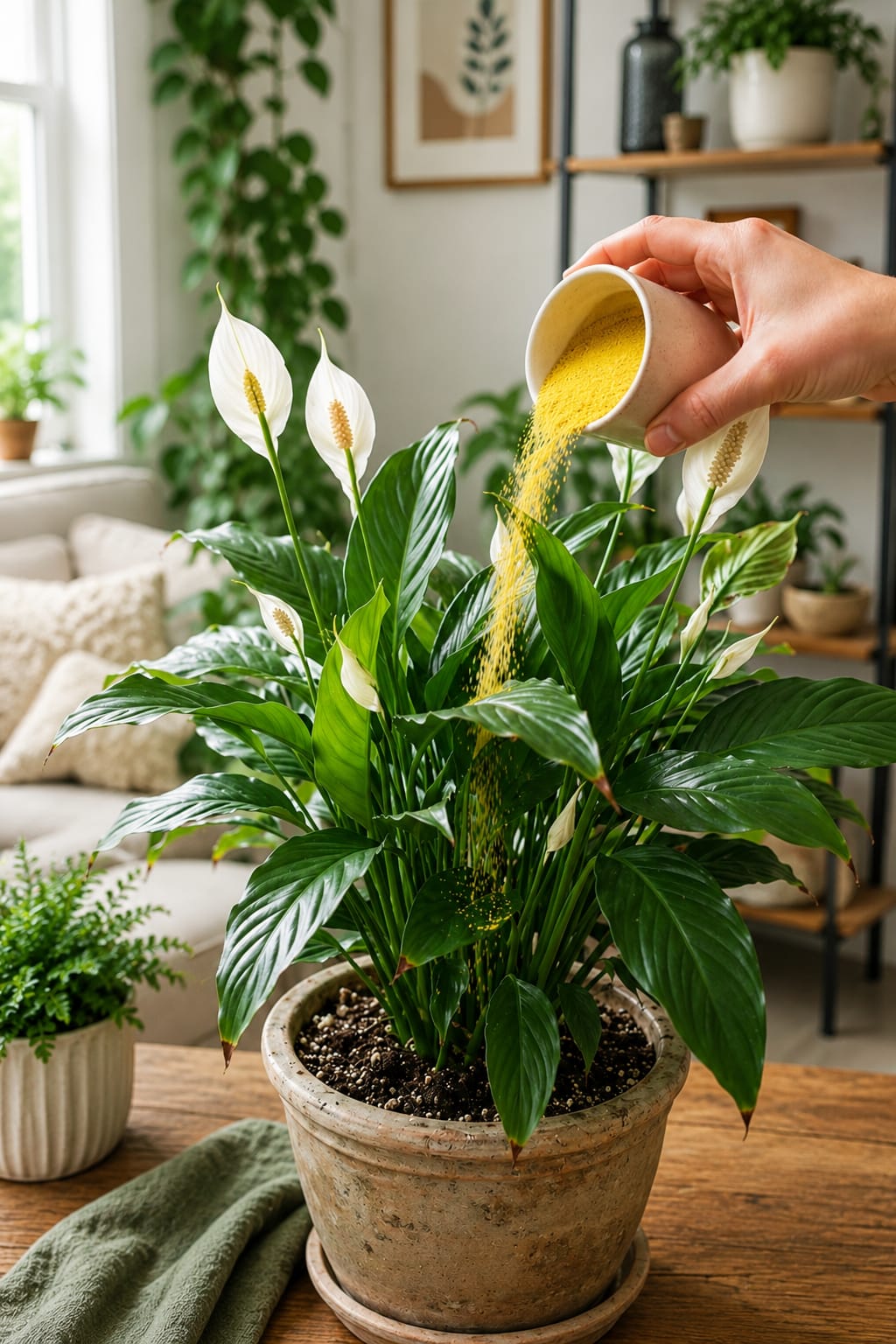
Peace lilies are among the most beautiful indoor plants because they bring a calm, fresh, elegant feeling into any home. Their deep green leaves, clean white blooms, and soft tropical shape make them perfect for living rooms, bedrooms, offices, plant shelves, bright corners, bathrooms with natural light, and cozy home decor. A healthy peace lily can make a room feel cleaner, softer, and more peaceful without needing complicated care.
One natural plant-care idea that many indoor gardeners enjoy is using a yellow powder around the soil of a peace lily. This yellow powder is often made from dried banana peel powder, a mild organic plant booster that can slowly add nutrients to the potting mix. Banana peel powder is popular because banana peels contain potassium, and potassium is connected with flower support, strong stems, and overall plant function. But like all homemade plant tricks, it must be used carefully.
A peace lily does not need heavy feeding every week. It also does not like sour soil, soggy roots, or thick layers of organic powder sitting on the surface. Too much banana peel powder can attract fungus gnats, create mold, smell bad, or disturb the soil balance. The trick works best when the powder is fully dried, finely ground, used in a small amount, and mixed lightly into the top soil instead of dumped heavily around the plant.
This full guide explains how to use yellow banana peel powder safely for peace lilies, how much to apply, how often to use it, what mistakes to avoid, how to encourage white blooms, how to keep leaves glossy, how to water correctly, how to prevent root rot, and how to style peace lilies beautifully indoors. The goal is simple: use the yellow powder as a gentle natural support, while keeping the real foundation of peace lily care strong.
What Is the Peace Lily Yellow Powder Trick?
The peace lily yellow powder trick is a gentle soil-feeding method that uses a small amount of dried banana peel powder. Banana peels are dried until crisp, then ground into a fine powder. This powder is sprinkled lightly on the soil surface or mixed into the top layer of the potting mix.
The idea is to give the peace lily a mild organic boost. Banana peel powder is often used because it can slowly break down in soil and release small amounts of nutrients. It is not an instant fertilizer, and it should not be treated like a miracle bloom-maker. A peace lily still needs bright indirect light, proper watering, drainage, healthy roots, and balanced feeding to bloom well.
The safest approach is to use the powder lightly. A thin sprinkle can be helpful. A thick pile can create problems.
Why Peace Lilies Need Balanced Care
Peace lilies are tropical plants. They like consistent moisture, warm indoor temperatures, moderate humidity, and bright indirect light. They are more moisture-loving than succulents or snake plants, but they still do not like sitting in soggy soil. Their roots need both water and air.
Many peace lily problems come from imbalance. Too much water can cause yellow leaves and root rot. Too little water can make the plant droop dramatically. Too little light can reduce blooms. Too much direct sun can burn leaves. Too much fertilizer can damage roots and brown the leaf tips.
Yellow banana peel powder can support the plant only when the basic care routine is already healthy.
Why Banana Peel Powder Is Popular for Peace Lilies
Banana peel powder is popular because it is simple, affordable, and easy to make at home. Many plant owners like using kitchen scraps in the garden or indoor plant routine. When dried properly, banana peels can become a light organic powder that is easier to store and apply than fresh peels.
Fresh banana peels should not be buried directly in small indoor pots. They can rot, smell, and attract pests. Dried powder is safer because it breaks down more slowly and creates less mess when used correctly.
The main reason people connect banana peels with flowering plants is potassium. Potassium is one of the major plant nutrients that supports many plant functions, including water movement, stem strength, and flower development. Still, peace lilies need more than potassium. They also need nitrogen, phosphorus, micronutrients, healthy roots, and good light.
What Yellow Powder Can and Cannot Do
What It May Help With
- Supporting a gentle organic feeding routine
- Adding small amounts of slow-release nutrients
- Refreshing the top layer of soil when used lightly
- Encouraging a more natural plant-care schedule
- Reducing the need for frequent strong fertilizer
- Supporting healthy growth when combined with good light and watering
What It Cannot Do
- It cannot force instant blooms.
- It cannot save rotten roots.
- It cannot fix a peace lily kept in deep shade.
- It cannot repair severe yellow leaves overnight.
- It cannot replace proper drainage.
- It cannot replace a complete fertilizer forever.
- It cannot solve pest problems by itself.
- It cannot correct overwatering.
If your peace lily is not blooming, the first thing to check is light. Many peace lilies grow leaves but fail to bloom because they are placed too far from bright indirect light.
How to Make Safe Banana Peel Powder
The safest yellow powder for peace lilies is made from fully dried banana peels. The peels must be dry enough to snap or crumble. If they are soft, sticky, or moist, they can mold in storage or in the pot.
Simple Drying Method
- Wash the banana peels well.
- Remove stickers and any dirty spots.
- Cut the peels into small strips.
- Place them in a sunny dry place, food dehydrator, or low oven.
- Dry until they become crisp.
- Let them cool completely.
- Grind into a fine powder.
- Store in a clean dry jar.
The powder should smell mild and dry. If it smells sour, fermented, or rotten, do not use it.
How Much Yellow Powder to Use
Use only a small amount. Indoor pots are limited spaces, and too much organic material can cause problems.
- Small pot: 1/4 teaspoon
- Medium pot: 1/2 teaspoon
- Large pot: 1 teaspoon
Do not cover the whole soil surface with a thick yellow layer. Sprinkle lightly and mix it gently into the top inch of soil. Keeping the powder mixed into the surface helps reduce mold and pests.
How Often to Use Banana Peel Powder
Use banana peel powder once every 6 to 8 weeks during active growth. Spring and summer are the best times. Avoid using it too often because peace lilies can suffer from soil buildup and pest problems.
In fall and winter, use less or stop completely unless the plant is actively growing in a warm bright room. A plant that is resting does not need extra feeding.
Safe Application Method
- Check that the soil is lightly moist or close to watering time.
- Remove dead leaves or debris from the soil surface.
- Sprinkle a tiny amount of banana peel powder around the outer soil area.
- Keep it away from direct contact with stems and the crown.
- Mix gently into the top inch of soil.
- Water lightly if the plant needs water.
- Let excess water drain fully.
- Watch for mold, gnats, or sour smell over the next few days.
Do not pile powder around the base of the plant. The peace lily crown should stay clean and airy.
When Not to Use Yellow Powder
- Do not use it if the soil smells sour.
- Do not use it if fungus gnats are present.
- Do not use it if the plant has root rot.
- Do not use it right after repotting.
- Do not use it on wet soggy soil.
- Do not use it during cold winter dormancy.
- Do not use it if mold is already growing on the soil.
- Do not use it as a thick surface layer.
If your peace lily is struggling, fix the main issue first. Extra powder can make a weak root system worse.
How to Encourage Peace Lily Blooms
Peace lilies bloom best when they receive bright indirect light. Low light may keep the leaves alive, but it often reduces flowering. If your peace lily has not bloomed for months, move it closer to a bright window with filtered light.
A peace lily also needs healthy roots and balanced feeding. Too much nitrogen can encourage leaves without many flowers. Too little feeding can make the plant weak. A small amount of banana peel powder may support bloom care, but it works best with a complete diluted houseplant fertilizer used occasionally.
Bloom Support Checklist
- Bright indirect light
- Warm indoor temperatures
- Moderate humidity
- Even watering
- Good drainage
- Healthy roots
- Light feeding during growth
- No heavy powder buildup
Best Light for Peace Lilies
Peace lilies prefer bright indirect light. They can tolerate lower light, but blooms may become fewer. Harsh direct sun can burn the leaves, especially through hot windows. A bright room with filtered sunlight is ideal.
An east-facing window often works well. A north-facing window can work if it is bright. South or west windows may need a sheer curtain to soften the sun.
Better light is one of the strongest ways to encourage more white blooms.
How to Water Peace Lilies Correctly
Peace lilies like soil that stays lightly moist, but not soggy. Water when the top inch of soil feels dry. Pour water slowly until it drains from the bottom. Empty the saucer after watering.
Do not let the pot sit in standing water. Constant wetness can suffocate roots. On the other hand, do not let the plant stay bone dry for too long. Peace lilies droop quickly when thirsty.
The best routine is steady and balanced.
Signs Your Peace Lily Needs Water
- Leaves begin to droop.
- The top inch of soil feels dry.
- The pot feels lighter.
- Leaf edges look slightly soft.
- The plant perks up after watering.
Peace lilies are dramatic when thirsty. They can droop heavily, then recover after proper watering. Try not to let this happen too often, because repeated wilting can stress the plant.
Signs of Overwatering
- Yellow leaves
- Soft stems
- Sour soil smell
- Fungus gnats
- Black or mushy roots
- Brown leaf tips with wet soil
- Plant droops even when soil is wet
If the soil is wet and the plant is drooping, do not water again. Check the roots. Wet drooping often means root trouble.
Best Soil for Peace Lilies
Peace lilies need soil that holds moisture but still drains well. Heavy compacted soil can stay wet too long. A light indoor potting mix with added perlite is a good choice.
Simple Peace Lily Soil Mix
- 2 parts indoor potting mix
- 1 part perlite
- 1 part coco coir or peat moss
- A small amount of orchid bark, optional
This mix keeps moisture available while allowing air to reach the roots. Healthy roots are essential for blooms and glossy leaves.
Best Pot for Peace Lilies
Use a pot with drainage holes. A decorative pot is fine as a cover pot, but the inner pot must drain. Peace lilies do not like standing water.
Choose a pot only slightly larger than the root ball. A pot that is too large holds extra wet soil. This can increase the risk of root rot.
Terracotta pots dry faster. Ceramic and plastic pots hold moisture longer. Adjust watering based on the pot type.
How to Repot a Peace Lily
Repot a peace lily when the roots are crowded, the soil stays dry too quickly, the plant is pushing out of the pot, or the soil has become compacted. Spring is the best time.
- Water lightly the day before repotting.
- Remove the plant gently from the pot.
- Loosen crowded roots.
- Trim rotten or dead roots.
- Prepare fresh well-draining soil.
- Place the plant at the same depth.
- Fill around roots with soil.
- Water lightly and let drain.
Do not add banana peel powder immediately after repotting. Let the plant settle for a few weeks first.
How to Keep Peace Lily Leaves Glossy
Peace lily leaves collect dust easily because they are broad and smooth. Dust can block light and make the plant look dull. Wipe leaves with a soft damp cloth every few weeks.
Support each leaf gently while wiping. Do not use oily leaf shine products. Natural clean leaves look healthier and allow the plant to breathe better.
Clean leaves also make the white blooms stand out more beautifully.
Brown Tips on Peace Lily Leaves
Brown tips are common. They may come from inconsistent watering, low humidity, fertilizer buildup, hard tap water, or too much direct sun. Yellow powder will not automatically fix brown tips.
How to Reduce Brown Tips
- Use filtered water if tap water is harsh.
- Keep soil evenly moist.
- Avoid overfertilizing.
- Increase humidity slightly.
- Keep the plant away from hot direct sun.
- Flush soil occasionally with plain water.
- Trim brown tips with clean scissors.
When trimming brown tips, follow the natural leaf shape. Do not cut deep into healthy green tissue.
Yellow Leaves on Peace Lilies
Yellow leaves can happen for many reasons. Older lower leaves naturally yellow and die. But several yellow leaves at once may signal overwatering, poor drainage, low light, cold stress, or root problems.
Before adding powder or fertilizer, check the soil. If it is wet and smells sour, the plant may need fresh soil and less water.
A healthy peace lily should have firm stems and fresh green leaves.
Using Banana Peel Powder With Fertilizer
Banana peel powder is mild and slow. A complete houseplant fertilizer provides measured nutrients. Peace lilies usually benefit from a diluted balanced fertilizer during spring and summer.
Do not use banana peel powder and fertilizer heavily at the same time. Too much feeding can burn roots and brown leaf tips.
A safe routine is to use diluted fertilizer one month and a tiny amount of banana peel powder another month, not both together.
How to Prevent Fungus Gnats
Fungus gnats are small flying pests that love damp organic soil. Too much banana peel powder can make the problem worse if it stays wet on the surface.
Prevention Tips
- Use only a tiny amount of powder.
- Mix it into the top layer of soil.
- Do not leave wet organic material on the surface.
- Let the top inch of soil dry between waterings.
- Remove dead leaves from the soil.
- Use yellow sticky traps if gnats appear.
If gnats become a problem, stop using homemade powders until the soil is clean and stable.
How to Fix Mold on Soil
A little white mold on the soil surface usually means too much moisture and poor airflow. It can also happen when organic material sits on top of the pot.
- Remove the moldy top layer of soil.
- Improve airflow around the plant.
- Water less often.
- Make sure the pot drains well.
- Avoid adding more powder.
- Replace with fresh dry potting mix if needed.
Mold is a sign to slow down feeding and improve the soil environment.
Indoor Styling With Peace Lilies
Peace lilies are elegant decor plants because they combine lush green leaves with soft white blooms. They look beautiful in many home styles.
- Use a natural terracotta pot for warm earthy decor.
- Use a white ceramic pot for clean modern styling.
- Place a peace lily on a wooden table for cozy contrast.
- Style it near framed botanical prints.
- Use a woven basket cover for boho decor.
- Place it in a bright bathroom for spa-like freshness.
- Set it beside a reading chair for a calming corner.
- Group with ferns, pothos, and snake plants.
A peace lily with white blooms can become the soft centerpiece of an indoor plant display.
Continue to Page 2
Continue to page 2 for more details about this article and the key points many readers miss on the first page.