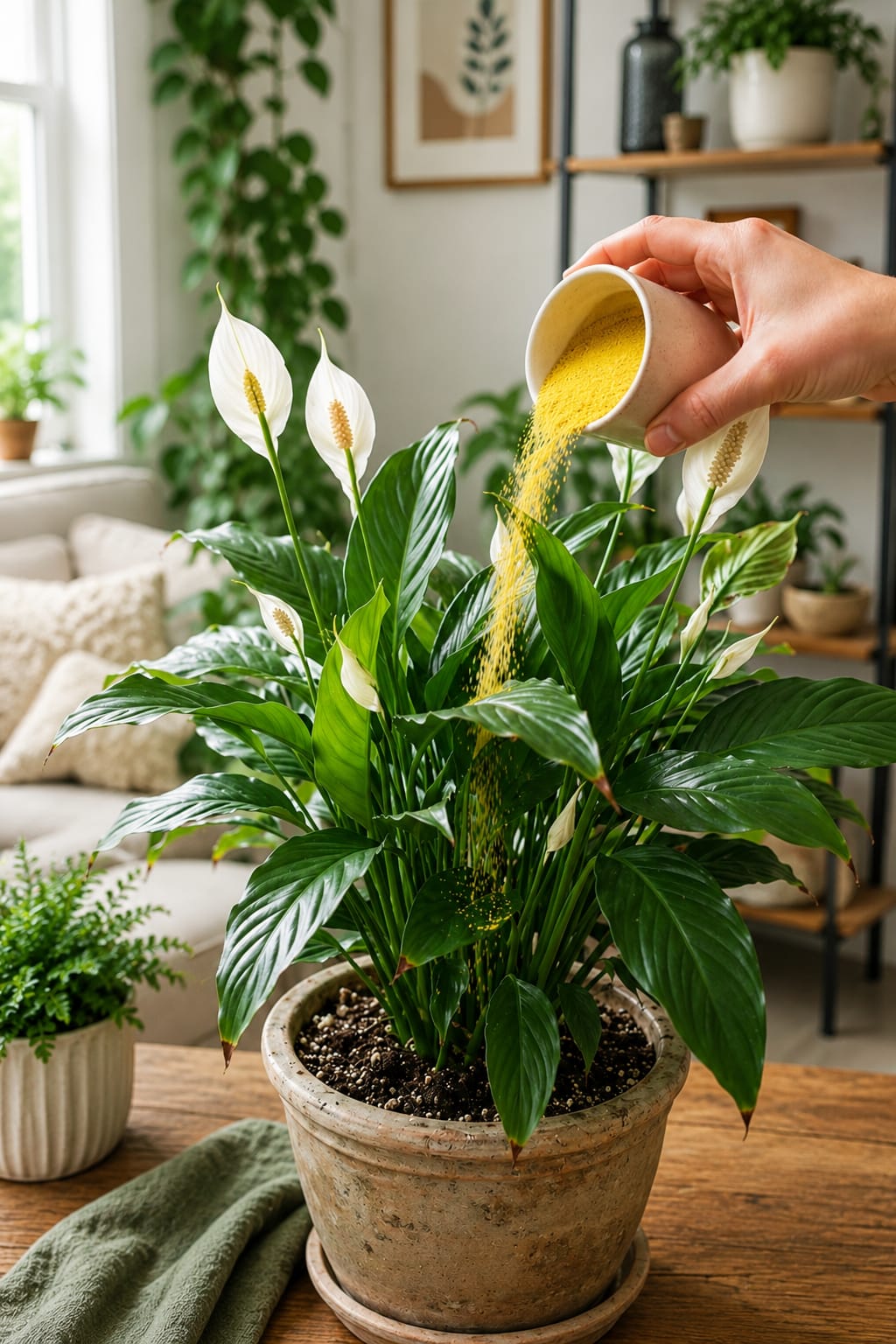
Best Rooms for Peace Lilies
- Bright living room
- Bedroom with filtered light
- Home office
- Bathroom with a window
- Dining room corner
- Entryway with indirect light
- Kitchen area away from heat
- Plant shelf near a bright window
A peace lily can tolerate many indoor spaces, but it blooms better when the room has bright indirect light.
Outdoor Styling in Warm Weather
Peace lilies can enjoy outdoor time in warm weather if they are kept in shade or filtered light. A covered patio, shaded porch, or balcony can work well. Direct outdoor sun can burn the leaves quickly.
Bring the plant indoors before temperatures drop. Peace lilies are tropical plants and do not like cold drafts or chilly nights.
Seasonal Peace Lily Care
Spring
Spring is a good time for repotting, light feeding, and using a tiny amount of banana peel powder if the plant is healthy.
Summer
Water more often if the plant dries quickly. Keep it away from harsh sun and maintain humidity.
Fall
Reduce feeding as growth slows. Move the plant closer to light if days become darker.
Winter
Water carefully and avoid heavy feeding. Do not use banana peel powder if the plant is not actively growing.
Weekly Peace Lily Care Routine
- Check soil moisture.
- Remove dead leaves.
- Look for yellowing or brown tips.
- Rotate the pot for even light.
- Empty the saucer after watering.
- Check for gnats or mold.
- Wipe dust from leaves if needed.
Monthly Peace Lily Care Routine
- Clean leaves with a damp cloth.
- Check if roots are crowded.
- Review light conditions.
- Flush soil if fertilizer buildup is likely.
- Feed lightly during active growth.
- Use banana peel powder only rarely.
- Inspect blooms and remove spent flowers.
Common Mistakes to Avoid
- Using too much yellow powder
- Leaving fresh banana peels in the pot
- Adding powder to wet sour soil
- Sprinkling powder directly into the crown
- Using powder every week
- Overwatering after feeding
- Keeping the plant in deep shade
- Using a pot without drainage
- Ignoring fungus gnats
- Expecting instant blooms
Safe Yellow Powder Routine Summary
- Use fully dried banana peel powder.
- Grind it finely.
- Apply only a tiny amount.
- Keep it away from the plant crown.
- Mix gently into the top inch of soil.
- Water only when the plant needs water.
- Use once every 6 to 8 weeks during active growth.
- Stop if mold, gnats, or sour smell appears.
Frequently Asked Questions
Is banana peel powder good for peace lilies?
It can be used lightly as a gentle organic soil booster, but it should not replace proper care or balanced fertilizer.
Can banana peel powder make peace lilies bloom?
It may support bloom care, but bright indirect light, healthy roots, and balanced feeding are more important for flowering.
How often should I use yellow powder?
Use it once every 6 to 8 weeks during spring or summer. Avoid frequent use.
Can I put fresh banana peels in the pot?
No. Fresh peels can rot, smell, attract pests, and create mold in indoor pots.
Why is my peace lily not blooming?
The most common reason is not enough bright indirect light. Low light can keep the plant alive but reduce flowers.
Why are my peace lily leaves turning yellow?
Yellow leaves may come from overwatering, poor drainage, low light, cold stress, or natural aging.
Final Thoughts
The peace lily yellow powder trick can be a helpful natural care idea when used gently. Finely dried banana peel powder may offer mild organic support, especially during spring and summer when the plant is actively growing. But the powder must be used in small amounts and mixed lightly into the soil. Too much can create mold, gnats, odor, and root stress.
The real secret to a blooming peace lily is not one ingredient. It is balanced care. Give the plant bright indirect light, steady watering, a pot with drainage, airy soil, moderate humidity, and gentle feeding. Keep the leaves clean, remove old blooms, and avoid overwatering.
With patience and proper care, your peace lily can grow glossy green leaves and beautiful white flowers that brighten your home. Use yellow banana peel powder only as a small extra step, and let healthy roots, good light, and consistent care do the real work.