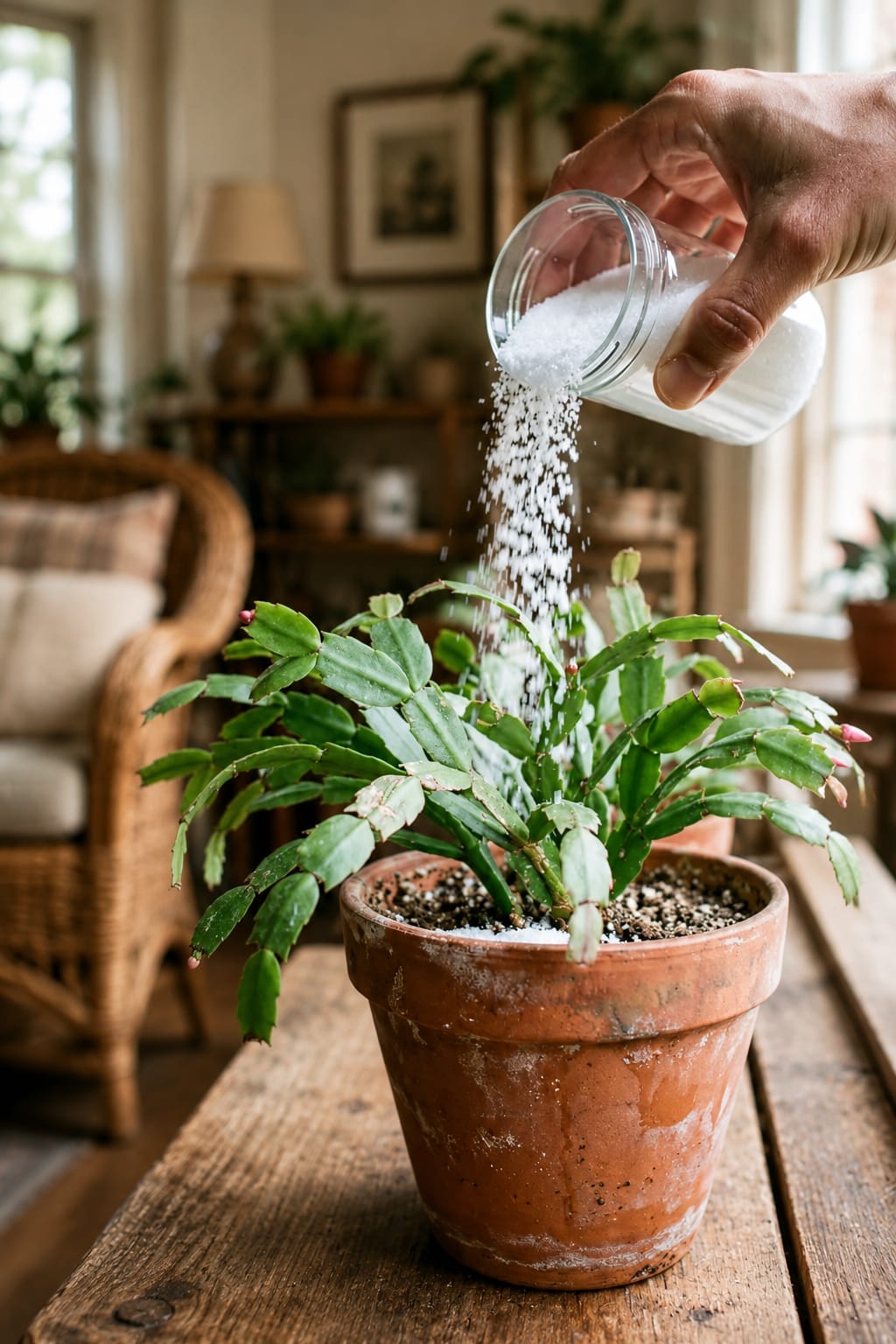
Christmas cactus is one of the most loved holiday houseplants because it can bring bright color into the home when many other plants are resting. Its flat green segmented stems, arching growth habit, and beautiful pink, red, white, purple, or coral flowers make it a favorite for windowsills, shelves, plant stands, holiday tables, and cozy indoor corners. A healthy Christmas cactus can live for many years, and in many homes it becomes a special plant passed from one person to another.
One plant-care idea that gets attention is sprinkling a small amount of white powder around a Christmas cactus. Many plant lovers use this type of trick when they want stronger growth, better blooming, cleaner soil, or a small mineral boost. The white powder is often described as Epsom salt, crushed eggshell powder, or a mild soil additive. But with Christmas cactus, this method must be handled carefully because the plant has sensitive roots and does not like heavy buildup in the soil.
Christmas cactus is not a desert cactus. It is a tropical forest cactus that naturally grows in pockets of organic matter on trees and rocks. This means it likes airy soil, gentle moisture, bright indirect light, and good humidity. It does not want dry desert sand all year, but it also does not want soggy soil. When using any powder or homemade plant trick, the goal should be gentle support, not harsh feeding.
This guide explains how to use a white powder trick safely for Christmas cactus, what type of white powder is safer, how much to apply, how often to use it, what mistakes to avoid, how to encourage blooming, how to water correctly, how to prevent root rot, and how to style Christmas cactus beautifully indoors. The main rule is simple: a small amount can support a healthy plant, but too much can cause stress.
What Is the Christmas Cactus White Powder Trick?
The Christmas cactus white powder trick usually means applying a small amount of powder to the top layer of soil. The most common options are Epsom salt, crushed eggshell powder, or a gentle mineral powder used in very small amounts. Some people use the powder dry, while others dissolve it in water first.
For Christmas cactus, the safest approach depends on the powder. Epsom salt is best used dissolved in water, not dumped heavily on top of the soil. Eggshell powder can be sprinkled lightly and mixed into the top soil, but it breaks down slowly. Unknown white powders should never be used.
This trick should not be treated as a miracle bloom booster. Christmas cactus blooms when it receives the right seasonal signals, proper light, correct watering, cool nights, and enough rest before flowering. White powder alone cannot force blooms if the plant is stressed or grown in poor conditions.
Best White Powder Options for Christmas Cactus
Not every white powder belongs in a plant pot. Some powders can damage roots, change soil balance too quickly, or attract pests. The safest plant-related options are mild and used in small amounts.
- Epsom salt: A magnesium sulfate product often used in diluted water for plants that may need magnesium support.
- Crushed eggshell powder: A slow-release calcium source when cleaned, dried, and finely ground.
- Diatomaceous earth: Sometimes used dry on soil surfaces for crawling pests, but it must stay dry to work.
- Perlite: A white soil amendment that improves drainage, not a fertilizer.
For Christmas cactus care, Epsom salt should be used very lightly and only occasionally. Crushed eggshell powder can be used sparingly, but it is slow and should not be piled around the stems.
White Powders to Avoid
Never use random household powders on a Christmas cactus. Many white powders are not safe for roots or leaves.
- Do not use laundry detergent.
- Do not use cleaning powder.
- Do not use borax.
- Do not use table salt.
- Do not use powdered sugar.
- Do not use flour.
- Do not use baking soda heavily.
- Do not use unknown powders.
- Do not use powdered chemicals meant for cleaning.
Christmas cactus roots are fine and sensitive. If you do not know exactly what a powder is, do not place it in the pot.
Safe Epsom Salt Method for Christmas Cactus
Epsom salt is one of the most common white powders used in plant care. It contains magnesium and sulfur. Magnesium is part of chlorophyll, which helps leaves and stems stay green. However, Christmas cactus does not need frequent Epsom salt. Too much can create mineral buildup and stress the roots.
Safe Dilution
- Use 1/4 teaspoon Epsom salt.
- Mix into 1 liter of clean water.
- Stir until fully dissolved.
- Use only when the plant actually needs water.
- Apply no more than once every 6 to 8 weeks during active growth.
Never pour dry piles of Epsom salt around the base of the plant. A dissolved, weak solution is safer and more even.
Safe Eggshell Powder Method
Eggshell powder is gentler than Epsom salt because it breaks down slowly. It may add small amounts of calcium over time, but it is not an instant fertilizer.
How to Prepare Eggshell Powder
- Rinse eggshells well.
- Remove any egg residue.
- Let shells dry completely.
- Bake briefly on low heat if desired.
- Grind into a fine powder.
- Store in a clean dry jar.
How to Apply
- Use 1/4 teaspoon for a small pot.
- Use 1/2 teaspoon for a medium pot.
- Sprinkle lightly around the outer soil surface.
- Keep away from direct stem contact.
- Mix gently into the top layer of soil.
- Use only every few months.
Do not create a thick white crust. The powder should be light and barely visible after mixing.
When to Use the White Powder Trick
The best time to use a mild white powder method is during active growth, usually spring or early summer. This is when the plant is producing new stem segments and can use gentle support. Avoid heavy feeding right before bud formation or during blooming, unless the plant is already on a stable care routine.
If the plant is healthy, green, and growing, a tiny occasional boost may be fine. If the plant is weak, yellowing, rotting, or dropping segments, fix the care problem first.
When Not to Use White Powder
- Do not use it if the soil is wet and sour.
- Do not use it if the plant has root rot.
- Do not use it if fungus gnats are present.
- Do not use it during heavy blooming.
- Do not use it right after repotting.
- Do not use it on a stressed plant.
- Do not use it in winter dormancy unless needed.
- Do not use it as a thick surface layer.
A struggling Christmas cactus needs basic care correction before any supplement.
Why Christmas Cactus Needs Special Care
Christmas cactus is different from desert cacti. It naturally grows in humid forest environments where its roots cling to loose organic material. This means it likes moisture more than a desert cactus, but it still needs air around the roots.
Heavy wet soil can damage it. Very dry soil for too long can also stress it. The plant prefers a balanced routine: water well, let excess drain, then allow the top layer to dry before watering again.
This balance is more important than any powder trick.
Best Soil for Christmas Cactus
Christmas cactus grows best in loose, airy soil. The mix should hold some moisture but drain well. Regular potting soil alone can be too dense, especially in plastic pots.
Simple Christmas Cactus Soil Mix
- 2 parts indoor potting mix
- 1 part perlite
- 1 part orchid bark
- A small amount of coco coir or peat moss
This mix copies the loose forest material Christmas cactus prefers. It keeps roots from sitting in wet compacted soil.
Best Pot for Christmas Cactus
Use a pot with drainage holes. This is essential. A decorative outer pot is fine, but the inner pot must drain. Christmas cactus roots can rot if water collects at the bottom.
Terracotta pots dry faster and can be helpful for overwaterers. Plastic pots hold moisture longer, so watering should be less frequent. Ceramic pots can work well if they drain properly.
Choose a pot only slightly larger than the root ball. A huge pot holds too much soil and stays wet too long.
How to Water Christmas Cactus Correctly
Water when the top inch of soil feels dry. Pour water slowly until it drains from the bottom. Empty the saucer after watering. Do not let the plant sit in water.
During active growth, the plant may need water more often. During cooler months or rest periods, water less. The plant should never stay soggy, but it should not be left bone dry for long periods either.
Consistent moisture with good drainage is the key.
Signs Your Christmas Cactus Needs Water
- Top inch of soil feels dry.
- Stem segments look slightly thinner.
- Plant looks less firm.
- Pot feels lighter than usual.
- Soil pulls slightly from the pot edge.
Water thoroughly when needed, then let the plant drain well.
Signs of Overwatering
- Soft limp stems
- Yellowing segments
- Black or mushy roots
- Sour soil smell
- Fungus gnats
- Segments dropping
- Soil staying wet for many days
If these signs appear, stop watering and check the roots. Do not add powder or fertilizer to an overwatered plant.
How to Rescue an Overwatered Christmas Cactus
- Remove the plant from the pot.
- Shake off wet soil gently.
- Inspect the roots.
- Trim black, mushy, or rotten roots.
- Let the plant dry briefly.
- Repot in fresh airy soil.
- Use a pot with drainage.
- Water lightly after it settles.
If many stems are healthy, you can also take cuttings as backup. Christmas cactus roots easily from stem segments.
How to Encourage More Blooms
Christmas cactus blooms when it receives the right seasonal conditions. The most important triggers are shorter days, cooler nights, and a rest period before blooming.
Bloom Trigger Routine
- Give bright indirect light during the day.
- Provide cooler nights for several weeks.
- Keep the plant away from artificial light at night.
- Water slightly less during bud formation.
- Avoid moving the plant once buds form.
- Do not overfeed before blooming.
A white powder trick cannot replace these bloom signals. If the plant does not bloom, light and temperature are usually the first things to adjust.
Best Light for Christmas Cactus
Christmas cactus likes bright indirect light. It can handle gentle morning sun, but harsh afternoon sun can burn the stems. A bright east-facing window is often ideal. A south or west window may need a sheer curtain.
Too little light can reduce blooming. Too much direct sun can make the segments red, dry, or scorched.
The best light keeps the stems firm, green, and full.
Humidity and Airflow
Christmas cactus appreciates moderate humidity. Dry indoor air can make the plant stressed, especially in winter when heaters are running. A pebble tray, plant grouping, or humidifier can help.
Good airflow is also important. Humidity should not mean stagnant dampness. Keep the plant in a fresh, bright spot where the soil can dry at a normal pace.
Fertilizing Christmas Cactus
Feed Christmas cactus during active growth, usually spring through summer. Use a balanced houseplant fertilizer diluted to half strength once every 4 to 6 weeks. Stop or reduce feeding as the plant prepares to bloom.
If using Epsom salt water, do not use it at the same time as fertilizer. Alternate gently and avoid buildup.
White Powder vs Fertilizer
White powder tricks are not complete fertilizer. Epsom salt provides magnesium and sulfur, but not a full nutrient profile. Eggshell powder provides slow calcium, but not balanced feeding. A complete diluted fertilizer is more predictable for regular plant nutrition.
Use powders only as occasional support, not as the entire feeding plan.
How to Repot Christmas Cactus
Christmas cactus does not need frequent repotting. It often blooms better when slightly snug in its pot. Repot every 2 to 3 years or when the soil becomes old, compacted, or poorly draining.
- Choose a pot only slightly larger.
- Prepare fresh airy soil.
- Remove the plant gently.
- Loosen old soil around roots.
- Trim rotten roots if needed.
- Place at the same depth.
- Fill with fresh mix.
- Water lightly and let drain.
Do not apply white powder right after repotting. Let the roots settle first.
How to Propagate Christmas Cactus
Christmas cactus is easy to propagate from stem cuttings.
- Choose a healthy stem with 2 to 4 segments.
- Twist or cut it cleanly.
- Let the cut end dry for 1 to 2 days.
- Place in lightly moist airy soil.
- Keep in bright indirect light.
- Water lightly until roots form.
Do not feed or use powder on fresh cuttings. Young roots need gentle conditions.
Common Christmas Cactus Problems
Dropping Buds
Bud drop can happen from sudden movement, temperature changes, underwatering, overwatering, or dry air.
Wrinkled Stems
Wrinkled stems can mean underwatering or root damage. Check the soil and roots before watering heavily.
Red or Purple Stems
This can come from too much sun, stress, or nutrient imbalance.
No Blooms
The plant may need shorter days, cooler nights, and brighter indirect light.
Soft Stems
Soft stems often mean overwatering or rot.
Indoor Styling With Christmas Cactus
Christmas cactus is beautiful for home decor because it has a soft trailing shape and seasonal flowers. It works well in cozy, rustic, modern, farmhouse, and holiday interiors.
- Place it on a bright windowsill.
- Use a terracotta pot for warm natural style.
- Use a white ceramic pot for clean modern decor.
- Place it on a wooden side table.
- Use a hanging basket for arching stems.
- Group with ferns and peace lilies for a lush look.
- Style blooming plants on a holiday table.
- Place near botanical artwork for a soft green corner.
During blooming season, Christmas cactus can become a natural centerpiece.
Continue to Page 2
Continue to page 2 for more details about this article and the key points many readers miss on the first page.