Growing a lemon tree from seed is one of the most exciting gardening projects you can try at home. It feels almost magical to take seeds from a fresh lemon, plant them in a small cup of soil, watch tiny green sprouts appear, and slowly turn them into a glossy little citrus tree. With patience, warmth, bright light, and the right care, a simple lemon seed can become a beautiful potted plant with fragrant leaves, white blossoms, and eventually fruit.
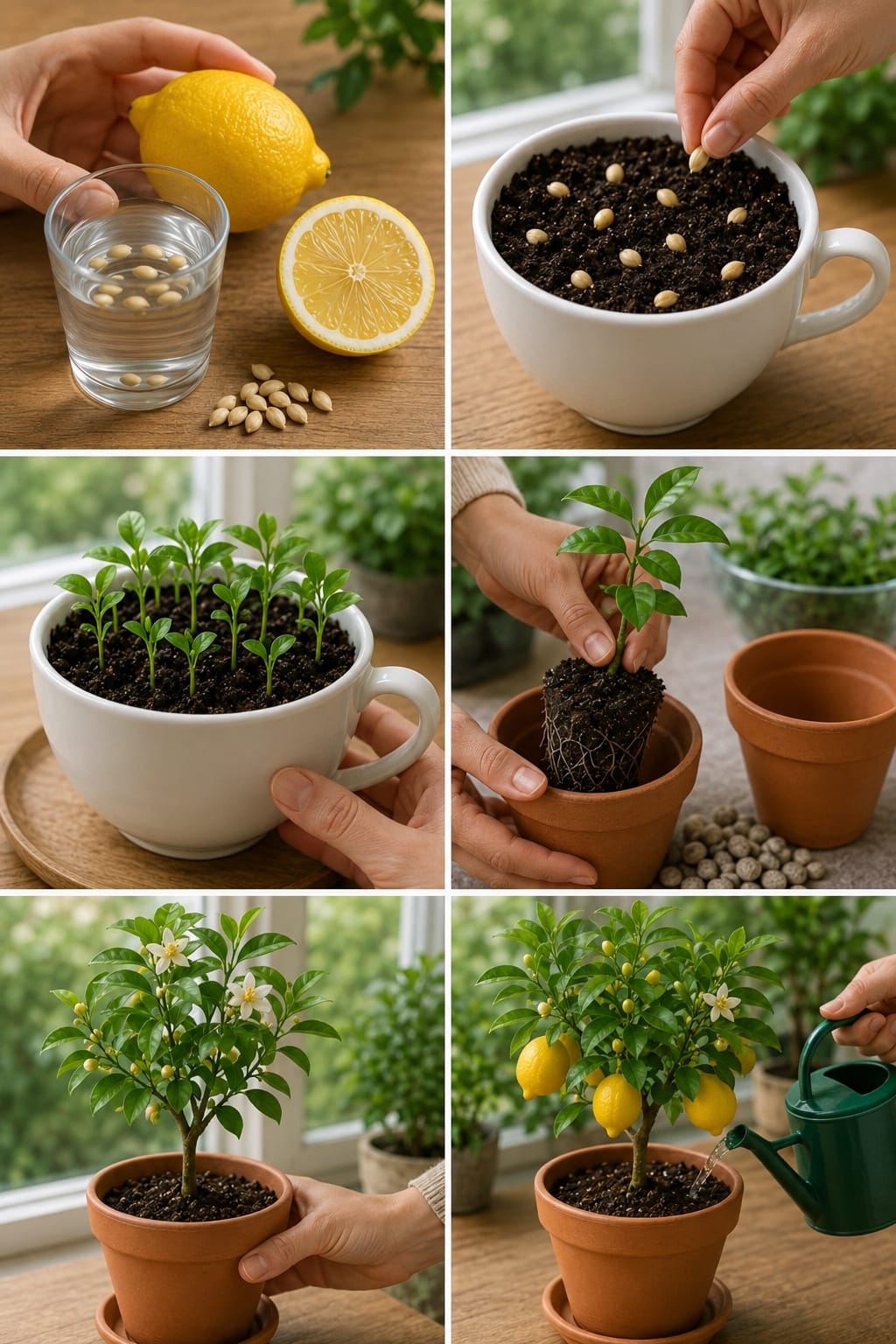
The image shows a simple step-by-step lemon-growing method. First, lemon seeds are soaked in water. Then the seeds are planted in moist soil inside a cup. After some time, small green sprouts appear. When the seedlings grow stronger, they are moved into a terracotta pot. Later, the young lemon tree grows glossy leaves, produces white citrus flowers, and finally develops bright yellow lemons.
This method is perfect for indoor gardeners, beginners, balcony gardeners, and anyone who loves fresh citrus plants. You do not need a large garden to start. A sunny windowsill, a small container, good soil, and a little patience are enough to begin. Lemon trees love warmth and light, so they can grow beautifully in pots when their needs are met.
Can You Really Grow a Lemon Tree From Store-Bought Lemon Seeds?
Yes, you can grow a lemon tree from seeds taken from a fresh lemon. The seeds inside lemons are alive if they are mature and not dried out. When planted correctly, they can sprout and grow into small citrus plants.
However, there is one important thing to know. A lemon tree grown from seed may not produce fruit that is exactly like the lemon it came from. Many grocery store lemons come from hybrid trees. This means the seedling may grow differently from the parent plant. It may still be beautiful and healthy, but the fruit quality can vary.
Also, lemon trees grown from seed can take several years to bloom and fruit. Some may take 5 to 10 years or more. If you want fruit quickly, buying a grafted lemon tree is faster. But if you enjoy the process and want a fun plant project, growing from seed is very rewarding.
Why Grow Lemon Trees in Pots?
Pots make lemon trees easier to manage. You can move the plant to the best light, protect it from cold weather, and control the soil more easily. A potted lemon tree can grow on a balcony, patio, sunny porch, or indoor windowsill.
Terracotta pots are especially popular because they breathe well and help excess moisture dry faster. Citrus roots do not like sitting in soggy soil. A pot with drainage holes is very important.
What You Need
- Fresh lemon
- Lemon seeds
- Glass of clean water
- Small cup or seed tray
- Seed-starting mix or light potting soil
- Terracotta pot
- Well-draining citrus soil
- Small pebbles, optional
- Spray bottle or watering can
- Bright sunny window
- Warm indoor spot
- Plant label, optional
Step 1: Choose a Fresh Lemon
Start with a fresh, ripe lemon. Choose one that feels firm, heavy, and juicy. Cut it open and remove several seeds. It is better to plant more than one seed because not every seed will sprout.
Choose seeds that are full, plump, and pale cream in color. Avoid seeds that look flat, cracked, dark, or dry. Healthy seeds have a better chance of germinating.
Step 2: Clean the Seeds
Lemon seeds are covered with slippery pulp. Remove this pulp before planting. If the pulp stays on the seed, it may encourage mold in the soil.
Rinse the seeds under clean water and rub them gently between your fingers. Do not damage the seed. Some gardeners peel the outer seed coat to speed germination, but this is optional. Beginners can plant the seeds without peeling.
Step 3: Soak the Seeds
Place the cleaned seeds in a glass of water for a few hours. Soaking helps hydrate the seeds and can encourage germination. Do not leave them soaking for several days because they may rot.
After soaking, plant the seeds while they are still fresh and moist. Lemon seeds should not be allowed to dry out completely before planting.
Step 4: Prepare the Cup or Small Container
Use a small cup, seed tray, or nursery pot. Make sure it has drainage holes. If the cup has no holes, water can collect at the bottom and rot the seeds.
Fill the cup with light, moist soil. A seed-starting mix is ideal because it is soft and drains well. You can also use indoor potting mix with extra perlite.
Simple Seed Soil Mix
- 2 parts potting mix
- 1 part perlite
- 1 part coco coir or peat moss
The soil should feel moist but not muddy. If you squeeze it, it should hold lightly but not drip water.
Step 5: Plant the Lemon Seeds
Place the seeds about 1/2 inch deep in the soil. Space them apart so the seedlings have room to grow. Cover lightly with soil and press gently.
Do not bury the seeds too deeply. If they are too deep, they may struggle to sprout. Keep the surface moist but not soaked.
Step 6: Keep the Seeds Warm
Lemon seeds germinate best in warmth. Place the cup in a warm bright spot, but avoid harsh direct sun while the seeds are still germinating. A warm windowsill with indirect light works well.
You can cover the cup loosely with plastic wrap to hold humidity, but open it daily for fresh air. If you see mold, remove the cover and improve airflow.
How Long Do Lemon Seeds Take to Sprout?
Lemon seeds usually sprout in 2 to 6 weeks. Some sprout faster, and some take longer. Warmth and moisture make a big difference.
Be patient. Keep the soil lightly moist. Do not dig up the seeds every few days to check them. Disturbing them can damage new roots.
Step 7: Care for the New Sprouts
Once the seedlings appear, move them to a bright spot. Lemon seedlings need strong light to grow thick stems and healthy leaves. If they grow tall, thin, and weak, they are reaching for more light.
Turn the cup every few days so the seedlings grow evenly. Keep the soil slightly moist, but never soggy.
Step 8: Thin the Seedlings
If many seeds sprout in the same cup, you may need to thin them. Choose the strongest seedlings and remove the weaker ones. This gives the best plants more space and nutrients.
You can also separate seedlings carefully when they are a few inches tall, but their roots are delicate. Work slowly and keep the roots moist.
Step 9: Move the Young Lemon Tree to a Pot
When the seedling has several sets of leaves and a stronger stem, move it into a small terracotta pot. Do not place a tiny seedling in a huge pot. A large pot holds too much wet soil and can cause root problems.
Choose a pot with drainage holes. Add well-draining citrus soil. Place the seedling at the same depth it was growing before. Water lightly after planting.
Best Soil for Potted Lemon Trees
Lemon trees need soil that drains well but still holds some moisture. Citrus roots need oxygen. Heavy garden soil can stay too wet in pots and cause root rot.
Simple Citrus Potting Mix
- 2 parts potting mix
- 1 part perlite or pumice
- 1 part coarse sand or bark
- A small amount of compost, optional
The soil should feel loose, not sticky. Water should pass through easily.
Best Pot for Lemon Trees
Terracotta pots are excellent for citrus because they allow moisture to escape through the sides. This helps prevent soggy soil. Plastic pots also work, but they hold moisture longer.
Always use a pot with drainage holes. A decorative outer pot is fine, but do not let the inner pot sit in water.
How Much Sun Does a Lemon Tree Need?
Lemon trees need a lot of light. For strong growth, they need at least 6 hours of bright sunlight each day. Indoors, place them near the sunniest window you have.
A south-facing window is often best. East or west windows can work if they are bright. If your home does not get enough sunlight, use a grow light.
Signs Your Lemon Tree Needs More Light
- Long weak stems
- Small pale leaves
- Slow growth
- Leaf drop
- Plant leaning toward the window
- No flowers after maturity
If your lemon tree looks weak, light is often the first thing to improve.
How to Water Lemon Seedlings
Water when the top inch of soil begins to dry. Do not keep the soil constantly wet. Young seedlings need moisture, but their roots also need air.
Water slowly until moisture reaches the roots. Let extra water drain away. Empty the saucer after watering.
Signs Your Lemon Tree Needs Water
- Top inch of soil feels dry
- Leaves curl slightly
- Pot feels lighter
- Soil pulls away from the pot edge
- Leaves look less firm
Signs of Overwatering
- Yellow leaves
- Wet soil for many days
- Sour smell from soil
- Fungus gnats
- Soft roots
- Leaf drop while soil is wet
If the soil is wet and leaves are yellowing, do not water again. Let the soil dry and check drainage.
How to Feed a Lemon Tree in a Pot
Lemon trees need nutrients as they grow. Use a citrus fertilizer or balanced houseplant fertilizer during active growth. Start feeding only after the seedling has several true leaves and is growing well.
Use a weak dose at first. Young seedlings can burn if fertilizer is too strong. Feed during spring and summer, then reduce feeding in fall and winter.
Safe Feeding Schedule
- Seedlings: very weak fertilizer once a month during active growth
- Young trees: diluted citrus fertilizer every 4 to 6 weeks
- Mature potted trees: follow citrus fertilizer label carefully
- Winter: reduce or stop feeding if growth slows
When Will a Seed-Grown Lemon Tree Produce Lemons?
A lemon tree grown from seed can take many years to produce fruit. Some may take 5 to 10 years. Some may never produce good fruit indoors. This is normal.
Even if it does not fruit quickly, the tree is still valuable as a beautiful houseplant. Lemon leaves are glossy and fragrant, and the plant adds a fresh citrus look to your home.
How to Encourage Flowers
Flowers appear when a lemon tree is mature, healthy, and receives enough light. Bright sun is essential. A young seedling will not bloom right away.
- Give strong sunlight.
- Keep the tree warm.
- Use well-draining soil.
- Feed with citrus fertilizer during growth.
- Avoid overwatering.
- Prune lightly for shape.
- Move outdoors in warm seasons if possible.
Do Indoor Lemon Trees Need Pollination?
If your lemon tree flowers indoors, it may need help with pollination. Outdoors, bees and insects do this naturally. Indoors, you can use a small paintbrush or cotton swab.
Gently touch the center of one flower, then touch another flower. This moves pollen and may help fruit form.
Can You Grow Lemon Trees Indoors All Year?
Yes, you can grow lemon trees indoors, but they need strong light. The biggest indoor problem is not enough sun. A sunny window or grow light is very important.
Indoor air can also be dry, especially in winter. Keep the tree away from heaters and cold drafts.
Moving Lemon Trees Outdoors
If the weather is warm, you can move your lemon tree outdoors for stronger light. Do this slowly. A plant grown indoors can burn if placed directly in harsh sun.
- Move it outdoors to shade for a few days.
- Give morning sun gradually.
- Increase sunlight over 1 to 2 weeks.
- Bring it indoors before cold weather returns.
Temperature for Lemon Trees
Lemon trees love warmth. They do not like frost. Keep potted lemon trees in a warm location. Indoors, protect them from cold windows, winter drafts, and air conditioning vents.
Stable warmth helps seedlings grow faster and mature trees flower better.
Humidity for Lemon Trees
Lemon trees can tolerate average indoor humidity, but very dry air can cause leaf drop or crispy edges. You can increase humidity by grouping plants, using a pebble tray, or placing a humidifier nearby.
Good airflow is also important. Avoid placing the tree in a closed damp corner.
How to Prune a Potted Lemon Tree
Pruning helps shape the tree and encourage branching. Do not prune tiny seedlings too early. Wait until the plant is stronger.
Remove dead, weak, or crossing branches. Pinch the top lightly if you want a bushier shape. Always use clean scissors or pruning shears.
How to Repot a Lemon Tree
Repot when the roots fill the pot or the plant dries out too quickly. Young lemon trees may need repotting every year. Mature potted trees may need repotting every 2 to 3 years.
- Choose a pot one size larger.
- Use fresh citrus soil.
- Remove the plant gently.
- Loosen crowded roots slightly.
- Place at the same depth.
- Fill with fresh soil.
- Water well and let drain.
Continue to Page 2
Continue to page 2 for more details about this article and the key points many readers miss on the first page.