Snake plants are among the easiest and most stylish houseplants you can grow indoors. Their tall sword-like leaves, bold green patterns, yellow edges, and strong upright shape make them perfect for living rooms, bedrooms, offices, hallways, shelves, sunny windowsills, and modern plant corners. They are famous for being low-maintenance, drought-tolerant, and beginner-friendly.
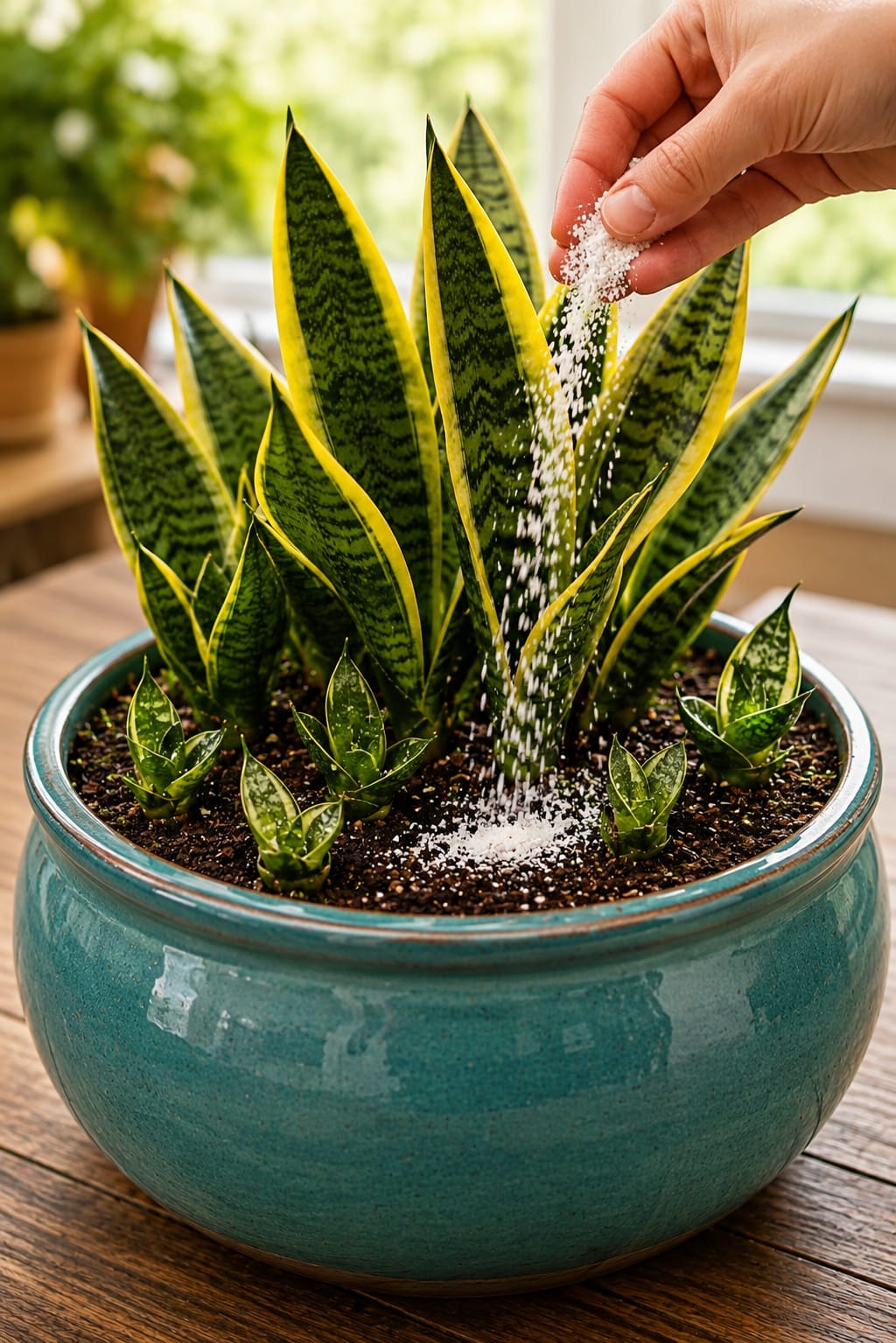
The image shows a beautiful snake plant in a wide blue ceramic pot. A hand is sprinkling a white powder over the soil and leaves. This kind of plant-care idea is very popular because many home gardeners want one simple ingredient that can make their snake plant grow faster, stay greener, produce baby shoots, and look healthier. But with snake plants, white powder must be used very carefully. Not every white powder is safe, and using too much can damage the plant.
Some common white powders used in plant care include perlite, eggshell powder, Epsom salt, baking soda, diatomaceous earth, or slow-release fertilizer granules. Each one has a different purpose. Some help drainage. Some add minerals. Some help with pests. Some can harm roots if used too heavily. The real secret is knowing what the powder is, why you are using it, and how much is safe.
This guide explains the safest ways to use white powder around snake plants, what ingredients to avoid, how to improve soil, how to encourage new pups, how to prevent root rot, how to water correctly, and how to keep your snake plant full, upright, and healthy for years.
What Is the White Powder on Snake Plants?
The white powder in the image could represent several different plant-care materials. It may be Epsom salt, crushed eggshell powder, perlite, diatomaceous earth, or a powdered fertilizer. Because the image does not show a label, you should never copy the method blindly. Snake plants are tough, but their roots can still be damaged by too much salt, too much fertilizer, or alkaline ingredients used incorrectly.
The safest interpretation is this: use a small amount of a plant-safe powder only when there is a clear reason. Do not sprinkle random white powder onto your snake plant just because it looks like a viral trick. Healthy snake plants need fast-draining soil, careful watering, good light, and a pot with drainage holes more than they need miracle powders.
Important Safety Warning
Never use unknown white powder on a houseplant. Many white powders can harm plants. Table salt, laundry detergent, cleaning powder, borax, bleach powder, sugar, flour, and strong fertilizer can damage roots or kill the plant. Snake plants do not need heavy feeding, and they hate soggy soil. Too much powder can create salt buildup, leaf burn, soil imbalance, mold, or root stress.
Use only plant-safe materials, and always use small amounts. With snake plants, less is almost always better.
Best White Powders That May Be Safe for Snake Plants
- Perlite: Best for improving drainage and soil airflow.
- Pumice: Helps keep soil loose and prevents soggy roots.
- Crushed eggshell powder: Adds slow calcium support when used lightly.
- Diatomaceous earth: Can help with some crawling pests when kept dry.
- Epsom salt: May provide magnesium, but only in a very diluted solution.
- Slow-release fertilizer granules: Useful only if applied according to label directions.
White Powders to Avoid
- Table salt
- Large amounts of baking soda
- Laundry detergent powder
- Cleaning powder
- Borax
- Bleach powder
- Flour
- Sugar
- Undiluted powdered fertilizer
- Unknown homemade mixtures
The Best “White Powder” for Snake Plant Soil: Perlite
If your goal is to make a snake plant healthier, the best white ingredient is usually perlite. Perlite is a lightweight volcanic material often found in potting mixes. It looks like small white pieces. It does not feed the plant, but it improves soil structure. It helps the soil drain faster and keeps air around the roots.
This is extremely important for snake plants because they are prone to root rot when the soil stays wet too long. A snake plant in dense, heavy soil may look fine for a while, then suddenly yellow, soften, and collapse. Perlite helps prevent that by keeping the mix light and breathable.
Simple Snake Plant Soil Mix
- 2 parts cactus or succulent mix
- 1 part perlite
- 1 part pumice or coarse sand
- A small amount of orchid bark, optional
This type of soil allows water to pass through quickly while still giving the roots support. It is much safer than adding random powder to the top of the soil.
Can You Use Epsom Salt on Snake Plants?
Epsom salt is sometimes used for houseplants because it contains magnesium and sulfur. Magnesium can support chlorophyll production in some plants, but snake plants do not need frequent Epsom salt treatments. Too much can create salt buildup in the soil and stress the roots.
If you want to use Epsom salt, do not sprinkle it dry in a thick pile. It is safer to dissolve a very small amount in water.
Safe Epsom Salt Mix for Snake Plants
- 1 liter clean water
- 1/4 teaspoon Epsom salt
Mix until fully dissolved. Use only once every 2 to 3 months during active growth, and only if the plant is healthy. Do not use it on a snake plant with root rot, wet soil, yellow mushy leaves, or soft stems.
Can You Use Eggshell Powder on Snake Plants?
Crushed eggshell powder is another white powder used by some gardeners. It contains calcium, but it breaks down slowly. It is not a fast fertilizer. It can be used lightly, but it should not be piled heavily on the soil.
To use eggshell powder safely, wash eggshells, dry them completely, grind them into a fine powder, and sprinkle only a small pinch over the soil. Mix it gently into the top layer. Do not use wet eggshells because they can smell and attract pests.
Can You Use Baking Soda on Snake Plants?
Baking soda is not a fertilizer. It is alkaline and can change the soil balance if used too much. Some people use it for fungal issues, but snake plants usually do not need it. If your plant has white spots, powdery mildew, or fungal problems, first improve airflow and avoid wet leaves.
Do not sprinkle heavy baking soda directly into the soil. It can harm roots. If used at all, it should be extremely diluted and used rarely. For most snake plant owners, baking soda is unnecessary.
Can You Use Diatomaceous Earth?
Diatomaceous earth is a fine white powder sometimes used for pest control. It works best when dry. It can help with some crawling insects, but it does not work well if it becomes wet. Since houseplant soil is watered, its effect may be temporary.
Use only food-grade diatomaceous earth, not pool-grade. Apply a thin dusting to dry soil if needed. Avoid breathing the dust. Keep it away from your face and use it carefully.
Why Snake Plants Need Fast-Draining Soil
Snake plants store water in their thick leaves and underground rhizomes. This means they do not need frequent watering. When the soil stays wet for too long, the roots can suffocate and rot. Fast-draining soil is one of the most important parts of snake plant care.
If your snake plant is in regular heavy potting soil, adding perlite or repotting into a cactus mix can make a huge difference. The plant will be less likely to suffer from overwatering, especially indoors where light and airflow may be limited.
How to Apply White Powder Safely
Before adding any powder, identify what the plant actually needs. A healthy snake plant does not need constant treatments. If you are using perlite, mix it into the soil during repotting. If you are using eggshell powder, use only a tiny amount. If you are using Epsom salt, dissolve it in water first. If you are using diatomaceous earth, apply a thin layer to dry soil only for pest control.
Safe Application Rules
- Use only known plant-safe powder.
- Apply small amounts.
- Do not pile powder against leaf bases.
- Do not use powder on wet, rotting soil.
- Do not combine many powders at once.
- Water carefully afterward only if needed.
- Stop using it if leaves yellow or soften.
Never Pile Powder at the Base of the Leaves
Snake plant leaf bases are sensitive. If powder collects in the center of the plant or between leaves, it can hold moisture and cause rot. This is especially risky if the powder gets wet. Always keep the crown and leaf bases clean and dry.
If you accidentally sprinkle powder onto the leaves, gently brush it off or wipe the leaves with a dry soft cloth.
How to Encourage Baby Snake Plant Shoots
Many snake plant owners want baby shoots, also called pups. These small new plants grow from underground rhizomes. A healthy snake plant with good light, proper watering, and enough root space is more likely to produce pups.
Tips for More Snake Plant Pups
- Give bright indirect light.
- Use fast-draining soil.
- Water only when soil is dry.
- Use a pot with drainage holes.
- Avoid oversized pots.
- Feed lightly during spring and summer.
- Keep the plant warm.
- Do not disturb the roots too often.
Snake plants often produce pups when they are slightly snug in their pot. A huge pot can slow pup production because the plant spends more energy filling the soil with roots.
Best Light for Snake Plants
Snake plants can survive in low light, but they grow better in bright indirect light. Better light supports stronger leaves, richer color, and more pups. A bright window with filtered light is ideal.
Snake plants can handle some gentle morning sun, but harsh afternoon sun may burn leaves, especially variegated types with yellow edges.
Signs Your Snake Plant Needs More Light
- Slow growth
- Weak thin leaves
- Leaves leaning toward the window
- Faded patterns
- No new pups
- Soil stays wet too long
How Often to Water Snake Plants
Water only when the soil is completely dry or almost dry. Snake plants do not like constant moisture. In many homes, watering every 2 to 4 weeks is enough during warm months. In winter, watering may be needed only once every 4 to 8 weeks.
Always check the soil before watering. Do not water on a fixed schedule if the soil is still damp.
Signs Your Snake Plant Needs Water
- Soil is dry all the way down.
- Pot feels light.
- Leaves look slightly wrinkled.
- Leaf edges curl inward.
- Several weeks have passed since watering.
Signs of Overwatering
- Yellow leaves
- Soft mushy leaf bases
- Leaves falling over
- Sour soil smell
- Wet soil for many days
- Black mushy roots
- Brown soft spots on leaves
If you see these signs, stop watering immediately and inspect the roots.
How to Prevent Root Rot
- Use cactus or succulent soil.
- Add perlite or pumice for drainage.
- Use a pot with drainage holes.
- Water only when dry.
- Do not let the pot sit in water.
- Keep the plant in brighter light.
- Avoid oversized pots.
- Keep the leaf bases dry.
Best Pot for Snake Plants
A pot with drainage holes is essential. Terracotta is excellent because it dries faster and helps prevent overwatering. Ceramic pots can also work if they have drainage. Plastic pots hold moisture longer, so you must water less often.
Wide shallow pots can work well for snake plant clusters because the plant spreads through rhizomes. Make sure the pot is stable because tall snake plants can become top-heavy.
Should You Use a Wide Bowl Pot?
The image shows a wide bowl-style pot. This can look beautiful and give pups room to appear. But wide pots can also hold more soil and moisture. To make a wide pot safer, use a very fast-draining mix and avoid overwatering.
Check that the pot has drainage holes. If it does not, use it only as a decorative cover pot and place the snake plant in a smaller nursery pot inside it.
How to Repot a Snake Plant
Repotting is the best time to improve soil with white materials like perlite or pumice. Do not just sprinkle drainage ingredients on top. Mix them into the root zone.
- Remove the snake plant from its old pot.
- Shake away old compacted soil.
- Inspect roots and rhizomes.
- Trim rotten roots with clean scissors.
- Prepare cactus mix with perlite or pumice.
- Place plant at the same depth.
- Fill around roots gently.
- Wait a few days before watering if roots were damaged.
When to Repot Snake Plants
- Roots are circling tightly.
- The pot is cracking or bulging.
- Soil stays wet too long.
- The plant becomes unstable.
- Many pups crowd the pot.
- Roots come out of drainage holes.
Spring and early summer are the best times to repot. The plant recovers faster during active growth.
How to Divide Snake Plant Pups
If your snake plant has many pups, you can divide them. Each pup should have roots attached. Use a clean knife if the rhizome is thick.
- Remove the plant from the pot.
- Find the pup and its rhizome connection.
- Separate it carefully with roots attached.
- Let cut areas dry for one day if needed.
- Plant in dry fast-draining soil.
- Wait several days before watering lightly.
Do not divide very tiny pups too early. Let them grow strong first.
How to Feed Snake Plants
Snake plants need very little fertilizer. Feed lightly during spring and summer only. Use a cactus fertilizer or balanced houseplant fertilizer diluted to half strength.
Do not fertilize every week. Once every 6 to 8 weeks during active growth is enough. Do not fertilize in winter if the plant is not actively growing.
Can White Fertilizer Granules Help?
Slow-release fertilizer granules can help if used correctly. Follow the label and use a small amount. Do not sprinkle a heavy layer over the soil. Too much fertilizer can burn roots and cause brown leaf tips.
If you are unsure, use diluted liquid fertilizer instead. It is easier to control.
How to Clean Snake Plant Leaves
Snake plant leaves collect dust. Dust blocks light and makes the plant look dull. Wipe leaves with a soft damp cloth every few weeks. Do not leave white powder sitting on the leaves.
Clean leaves look brighter and help the plant absorb more light.
Common Snake Plant Problems
Yellow Leaves
Yellow leaves often mean overwatering, poor drainage, or root rot. Check the soil and roots before adding any powder or fertilizer.
Soft Leaves
Soft leaves usually mean too much water. Remove the plant from the pot and inspect for mushy roots.
Wrinkled Leaves
Wrinkled leaves can mean underwatering. Check if the soil is completely dry.
Brown Tips
Brown tips may come from dry air, underwatering, fertilizer burn, or physical damage.
No New Growth
No new growth can come from low light, cold temperatures, or a plant that is still settling.
Continue to Page 2
Continue to page 2 for more details about this article and the key points many readers miss on the first page.