Anthuriums are some of the most beautiful tropical plants you can grow indoors. Their glossy heart-shaped leaves, colorful spathes, and elegant upright flowers can make any room feel fresh, bright, and luxurious. Red, pink, white, purple, and orange Anthuriums are often used as living decorations because they can bloom for a long time when the care routine is right.
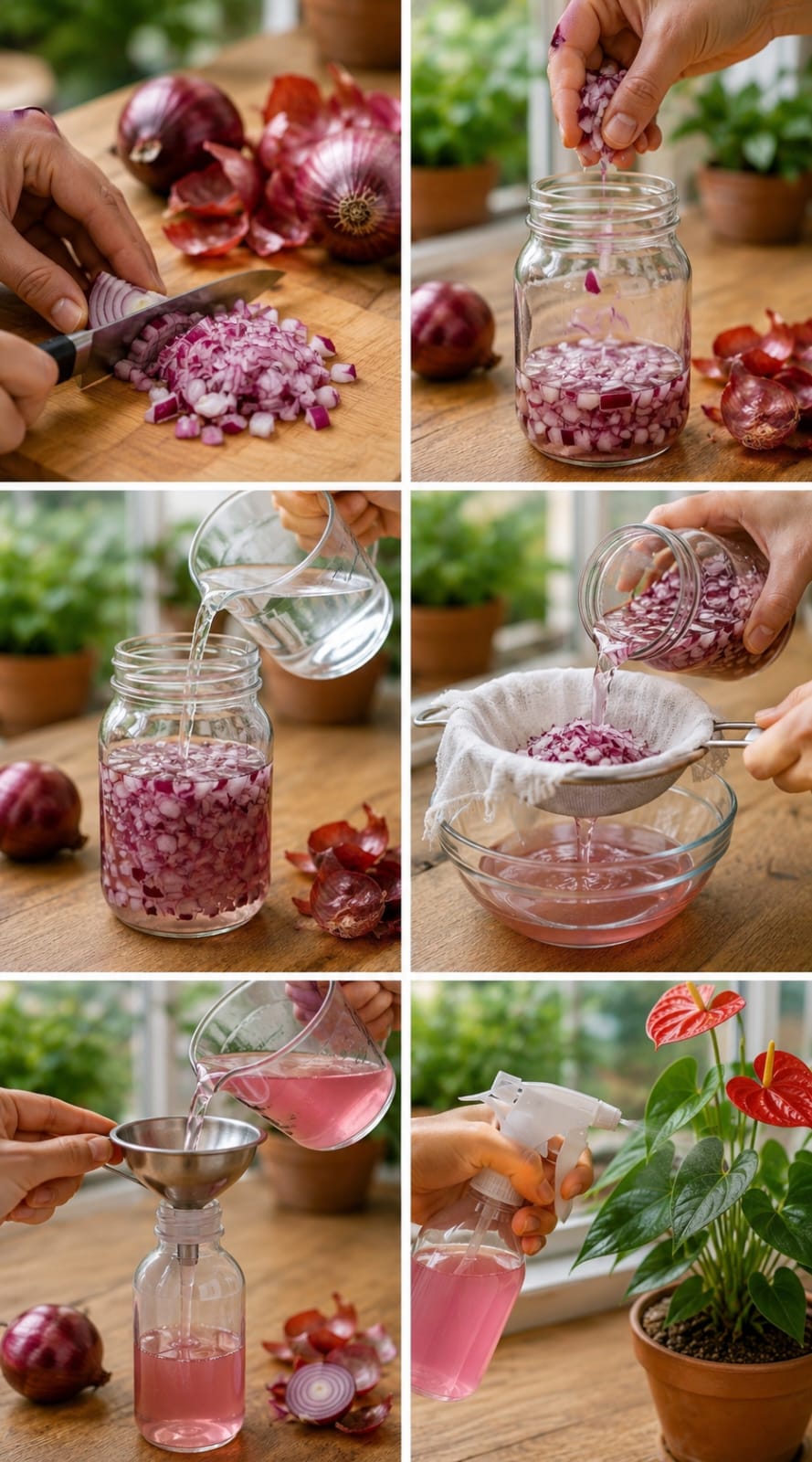
The image shows a simple homemade onion-water method. Red onions are chopped, placed in a jar, soaked with water, strained through a cloth, poured into a spray bottle, and then used near an Anthurium plant. This kind of natural plant-care trick is popular because many gardeners believe onion water can support plant strength, help leaves look fresher, and reduce mild pest or fungal problems. But like all homemade plant liquids, onion water must be used carefully. Strong onion water can smell, attract pests, irritate sensitive leaves, and create problems if sprayed too often.
The real secret to a healthy Anthurium is not one liquid. Anthuriums need bright indirect light, warm temperatures, humidity, airy soil, careful watering, good drainage, clean leaves, and gentle feeding. Onion water can be used as an occasional mild spray or soil-support rinse, but it should never replace proper Anthurium care.
What Is Onion Water for Anthuriums?
Onion water is a homemade liquid made by soaking chopped onion or onion skins in clean water. After soaking, the liquid is strained and used as a mild plant spray or diluted soil rinse. Red onions are often used because their skins and flesh release a pink-purple color into the water.
Onions contain sulfur compounds and natural plant materials. Some gardeners use onion water because they believe it can help support plant resistance and discourage small pests. However, indoor plants are sensitive, and onion water can become too strong if it is concentrated or left to ferment.
Can Onion Water Make Anthuriums Bloom?
Onion water alone cannot force an Anthurium to bloom. Anthuriums produce flowers when the plant has enough energy. That energy comes mainly from bright indirect light, healthy roots, proper watering, warmth, humidity, and balanced nutrients.
If your Anthurium is not blooming, the first thing to check is light. A plant in a dark corner may grow leaves but produce very few flowers. Onion water will not fix low light, soggy soil, root rot, or cold stress.
The Real Bloom Formula for Anthuriums
- Bright indirect light every day
- Loose chunky soil around the roots
- A pot with drainage holes
- Watering only when the top layer begins to dry
- Warm indoor temperatures
- Moderate to high humidity
- Light feeding during active growth
- Clean dust-free leaves
- Removal of old faded flowers
- No strong direct sun or cold drafts
Possible Benefits of Onion Water
When used weakly and occasionally, onion water may offer mild support for houseplants. It may help freshen the leaf surface, gently discourage some small insects, and support a natural care routine. It can also be useful as a short-term homemade spray when you want to clean and refresh leaves without using strong chemical products.
Possible Benefits
- May help refresh dusty leaves when diluted
- May discourage mild pest activity
- May provide a small amount of natural plant compounds
- May support a natural indoor plant-care routine
- Can be made easily from kitchen scraps
These possible benefits only apply when the mixture is fresh, strained, diluted, and used rarely. Strong onion water can do more harm than good.
Risks of Onion Water on Anthuriums
Anthuriums have glossy leaves, sensitive roots, and tropical growth habits. They do not like strong homemade liquids. Onion water can become smelly or irritating if used too often. If pieces of onion remain in the spray bottle or soil, they can rot and attract fungus gnats.
Possible Problems
- Strong onion smell indoors
- Sticky leaf residue
- Leaf spotting if sprayed too strong
- Fungus gnats if onion pieces enter soil
- Mold if liquid ferments
- Root stress if poured into wet soil
- Clogged spray bottle from onion particles
- Yellow leaves from overuse
For this reason, onion water should be treated as a light occasional spray, not a daily care product.
Safe Onion Water Recipe for Anthuriums
The image shows chopped red onion being soaked and strained. This is a good basic method, but the final liquid should be diluted before use on Anthuriums.
Ingredients
- 1 small piece of red onion or 2 tablespoons chopped onion
- 1 liter clean water
- Clean glass jar
- Fine cloth or strainer
- Clean spray bottle
Instructions
- Chop a small amount of red onion into tiny pieces.
- Place the onion pieces into a clean glass jar.
- Add 1 liter of clean water.
- Let it soak for 2 to 4 hours.
- Do not leave it for several days.
- Strain the liquid through a cloth.
- Dilute the strained liquid with equal parts fresh water.
- Pour into a clean spray bottle.
- Use the same day.
The liquid should smell mild. If it smells sour, rotten, or fermented, throw it away and make a fresh batch.
Why You Should Strain It Well
Straining is very important. Tiny onion pieces can clog the spray bottle. They can also stick to leaves or fall into the soil and rot. Use a fine cloth, coffee filter, or very fine strainer to remove all solids.
The cleaner the liquid, the safer it is for indoor use.
How to Use Onion Water as a Leaf Spray
- Test the spray on one leaf first.
- Wait 24 hours and check for spots or damage.
- If the leaf looks fine, spray lightly on the plant.
- Spray the top and underside of leaves lightly.
- Do not soak the flowers.
- Do not spray until liquid drips heavily into the soil.
- Use in the morning so leaves dry during the day.
- Wipe leaves gently after 30 to 60 minutes if residue remains.
Never spray Anthurium flowers heavily. The colorful spathes can spot or age faster if they stay wet too long.
How Often Should You Use Onion Water?
Use onion water no more than once every 3 to 4 weeks. If your Anthurium is healthy and pest-free, you may not need it at all. Clean water and a soft cloth are usually enough for regular leaf cleaning.
Do not spray onion water every day. Do not use it every time you water. Overuse can cause smell, residue, and leaf stress.
When Not to Use Onion Water
- When the plant is in direct hot sun
- When leaves are already damaged
- When flowers are newly opened and delicate
- When the room has poor airflow
- When fungus gnats are already present
- When the liquid smells strong or sour
- When the plant has root rot
- During cold winter conditions
- On a stressed plant with yellowing leaves
Can You Pour Onion Water Into the Soil?
You can use a very diluted onion-water rinse on the soil, but it is not usually necessary. If you pour it into soil, use only a small amount and only when the plant is ready for watering. Never pour onion water into wet soil.
For Anthuriums, a leaf spray is usually safer than a soil drench. Anthurium roots need airflow and can be sensitive to organic liquids sitting in the pot.
Safe Soil Use Method
- Make a weak onion-water mix.
- Strain it very well.
- Dilute with equal parts fresh water.
- Check that the top inch of soil is slightly dry.
- Pour a small amount around the outer soil.
- Avoid the crown of the plant.
- Let excess water drain fully.
- Use plain water for the next several waterings.
Best Light for Anthuriums
Light is one of the most important parts of Anthurium care. Anthuriums need bright indirect light to grow strong leaves and produce flowers. Low light can keep the plant alive, but blooming may slow down or stop.
Place the plant near a bright window with filtered light. Avoid harsh afternoon sun because it can burn the leaves. Morning sun is usually gentler.
Best Light Locations
- Near an east-facing window
- Near a bright north-facing window
- A few feet from a south-facing window with sheer curtains
- A bright bathroom with filtered light
- A plant shelf with grow lights
- A bright living room corner
Signs Your Anthurium Needs More Light
- No new flowers
- Small leaves
- Long weak stems
- Slow growth
- Dark green leaves but no blooms
- Plant leaning toward the window
Signs of Too Much Light
- Brown dry patches
- Yellow scorched areas
- Faded flowers
- Crispy leaf edges
- Leaves curling away from the sun
Best Soil for Anthuriums
Anthuriums need airy soil. Their roots do not like heavy, compact, wet potting mix. A chunky mix allows oxygen to reach the roots and helps prevent root rot.
Simple Anthurium Soil Mix
- 1 part indoor potting mix
- 1 part orchid bark
- 1 part perlite
- 1 part coco coir or peat moss
- A small amount of horticultural charcoal, optional
This mix keeps moisture around the roots while allowing air to move through the pot.
Best Pot for Anthuriums
Use a pot with drainage holes. This is essential. A decorative pot is fine, but it must allow excess water to drain. If your decorative pot has no holes, use it as a cover pot only.
Choose a pot only slightly larger than the root ball. A very large pot holds too much wet soil and can cause root problems.
How to Water Anthuriums Correctly
Water when the top inch of soil feels slightly dry. Pour slowly until water drains from the bottom. Empty the saucer after watering. The soil should be lightly moist, not soggy.
Do not water on a strict schedule. Always check the soil first.
Signs Your Anthurium Needs Water
- Top inch of soil feels dry
- Pot feels lighter
- Leaves look slightly limp
- Soil pulls slightly from the pot edge
- Leaves lose some shine
Signs of Overwatering
- Yellow leaves
- Soft stems
- Wet soil for many days
- Sour smell from the pot
- Black mushy roots
- Fungus gnats
- Drooping while soil is wet
If the soil is wet and the plant is drooping, do not add onion water, fertilizer, or more water. Check the roots first.
Humidity for Anthuriums
Anthuriums are tropical plants and enjoy moderate to high humidity. Dry air can cause brown tips, curling leaves, and slower growth. A humidity level around 50 percent or higher is helpful.
Easy Humidity Tips
- Group plants together
- Use a pebble tray
- Place near a humidifier
- Keep in a bright bathroom
- Avoid heaters and dry vents
- Keep gentle airflow
Humidity supports leaf health, but it does not mean the soil should stay wet. Roots still need drainage.
Temperature for Anthuriums
Anthuriums prefer warm, stable indoor temperatures. Keep them away from cold drafts, open windows in winter, air conditioners, heaters, and fireplaces. Sudden temperature changes can cause stress and reduce blooms.
A warm bright room helps Anthuriums grow stronger and flower more often.
How to Keep Anthurium Leaves Glossy
Glossy leaves make Anthuriums look fresh and luxurious. Dust can dull the leaves and block light. Clean the leaves every few weeks using a soft damp cloth.
Onion water should not replace basic cleaning. For regular care, plain water and a cloth are safer. Use onion water only occasionally if you want a natural mild spray.
Continue to Page 2
Continue to page 2 for more details about this article and the key points many readers miss on the first page.