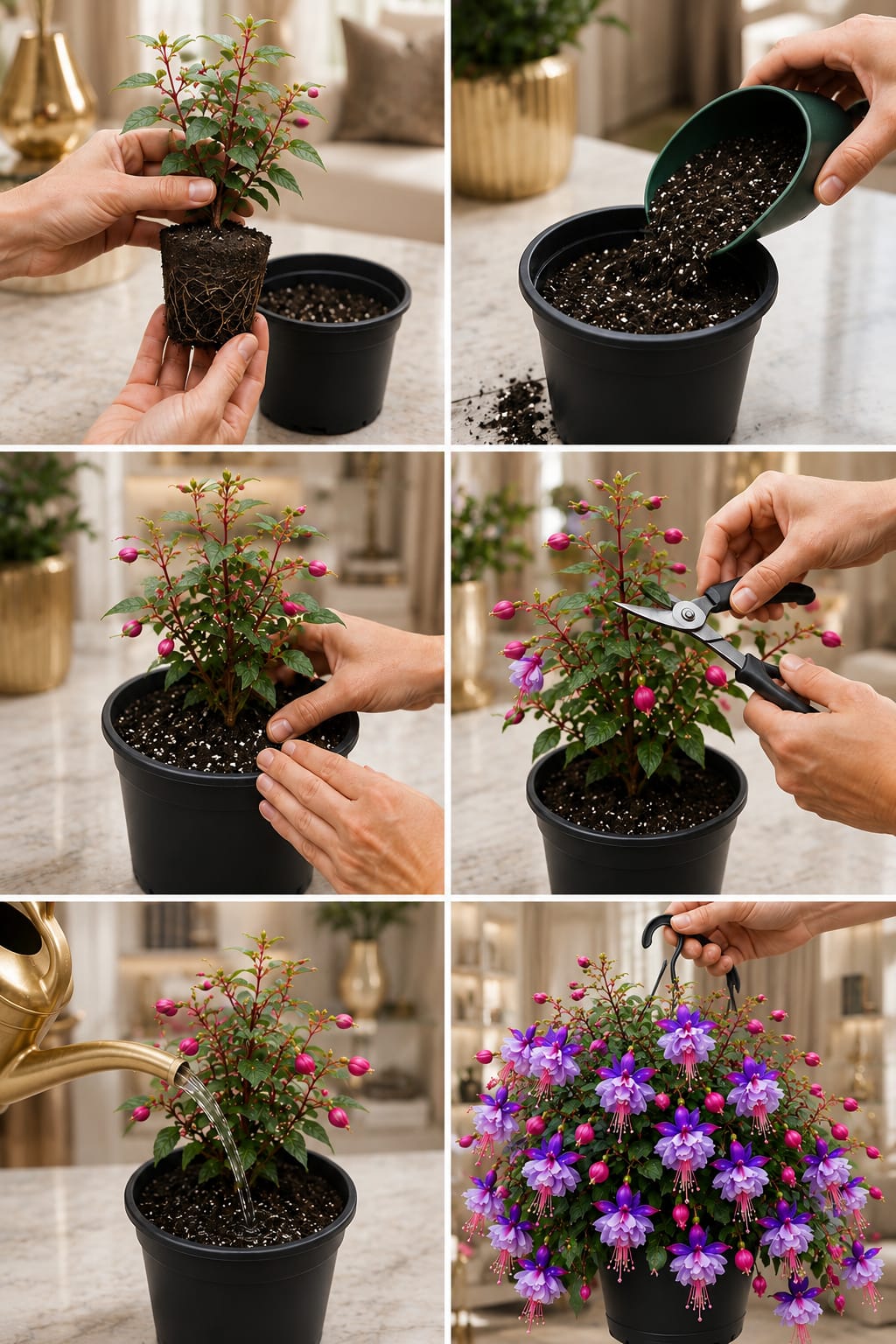
Fuchsia is one of the most charming flowering plants for people who love colorful blooms, soft trailing growth, and a decorative plant that can brighten patios, balconies, windowsills, shaded porches, and elegant indoor plant corners. Its delicate flowers often hang like small lanterns, with rich shades of pink, purple, red, violet, white, and magenta. When the plant is healthy, it can create a premium floral display that looks beautiful in hanging baskets, decorative containers, garden rooms, shaded terraces, and home entryway styling.
This plant is loved because it can produce many blooms over a long season when its roots, soil, watering, and pruning routine are handled correctly. Many people focus only on the flowers, but the real secret of a strong fuchsia begins inside the pot. A fuchsia plant needs a fresh, breathable potting mix, enough root space, careful moisture control, and light pruning that encourages branching instead of weak stretched stems. When these foundations are right, the plant has a much better chance of becoming fuller, greener, and covered with more buds.
Repotting and pruning are two of the most important care steps for a fuchsia plant. Repotting helps refresh old soil, improve root health, increase drainage, and give the plant room to continue growing. Pruning helps shape the plant, remove weak growth, encourage side shoots, and improve the final flower display. These steps should be done gently because fuchsia stems can be soft, and the root system should not be handled roughly. The goal is not to shock the plant. The goal is to move it into better conditions and guide it toward stronger growth.
This guide explains how to repot a fuchsia plant safely, what kind of soil it needs, how to prune it without damaging future blooms, how to water after repotting, what warning signs to watch for, and how to keep the plant looking clean, healthy, and suitable for patio styling, balcony gardening, indoor flowering plant care, container gardening, shaded garden decor, and premium home plant presentation.
Quick Answer
A fuchsia plant grows best when it is placed in a pot with drainage holes, planted in a light but moisture-retentive potting mix, watered consistently without being left soggy, and pruned carefully to encourage bushier growth. Repotting is useful when the plant is root-bound, the soil has become compacted, or the plant needs a fresh start for the growing season. Pruning should remove weak, dry, crowded, or overly long stems while keeping enough healthy growth for new buds. Fuchsia plants like bright indirect light, morning sun, or partial shade. They should be protected from intense afternoon heat, dry soil, and waterlogged roots.
What Plant This Is
The plant is a fuchsia, a decorative flowering plant known for its hanging blooms and soft branching stems. Fuchsia plants are especially popular in hanging baskets, patio containers, shaded balcony gardens, and cool outdoor spaces where the flowers can cascade naturally. Many varieties produce two-toned flowers, often with bright outer sepals and a contrasting inner corolla. This gives the plant a layered, ornamental look that feels more delicate than many common bedding plants.
Fuchsia is often treated as a seasonal flowering plant in many climates, but with proper care it can continue to grow beautifully for a long time. Some types are more tender and need protection from cold weather, while hardy types can tolerate outdoor conditions better. In containers, the plant depends heavily on the quality of the potting mix and the watering routine. This is why repotting is not just a decorative step. It directly affects root health, moisture balance, and flower production.
The plant can look compact and bushy when pinched and pruned correctly. Without pruning, many fuchsia plants become leggy, uneven, and less attractive. Their flowers may appear mostly at the ends of long stems instead of covering the plant evenly. A careful pruning routine helps the plant create more side branches, and more branches can lead to more flowering points when the plant is growing actively.
Why Repotting Matters for Fuchsia
Repotting matters because container soil does not stay fresh forever. Over time, potting mix can become compacted, dry out unevenly, hold too much water, or lose the airy texture that roots need. Fuchsia roots need moisture, but they also need oxygen. When the potting mix becomes dense, the roots may struggle to breathe. This can lead to slow growth, yellowing leaves, weak stems, fewer buds, and a plant that dries out too fast on top while staying wet near the bottom.
A fresh potting mix helps create a better balance between water retention and drainage. Fuchsia does not like to dry completely for long periods, but it also dislikes sitting in stagnant water. A good container mix should hold gentle moisture around the roots while allowing extra water to drain away. This balance is especially important for hanging baskets and black plastic nursery pots, which can heat up quickly and dry unevenly during warm weather.
Repotting also gives the gardener a chance to inspect the root system. Healthy roots are usually firm and light-colored. Stressed roots may appear dark, mushy, dry, or tangled tightly around the pot. If the root ball is packed and circling, the plant may need a slightly larger container and fresh soil around the roots. If the roots are rotten, the plant needs a more careful rescue approach with better drainage and reduced watering.
When to Repot a Fuchsia Plant
The best time to repot a fuchsia plant is usually during the active growing season, especially in spring or early summer when the plant is ready to produce fresh roots and new shoots. Repotting during this time allows the plant to recover more quickly and settle into the new pot before heavy blooming begins. A plant that is already pushing new growth often responds well to fresh soil and light shaping.
Repotting may also be needed when the plant dries out extremely fast, roots are visible at the drainage holes, the potting mix has pulled away from the sides of the pot, the plant looks unstable, or the soil smells sour. If water runs straight through the pot without moistening the root ball, the old mix may have become too dry and compacted. If water sits on top and drains slowly, the mix may be too dense. Both conditions can stress fuchsia roots.
It is better to avoid repotting during extreme heat, severe cold, or heavy bloom stress unless the plant truly needs emergency help. A plant covered in flowers can be sensitive to disturbance. If repotting is necessary while the plant is blooming, it should be done gently, with minimal root damage and careful aftercare. The plant may drop a few buds after repotting, but it can recover if the roots are protected and the watering routine is steady.
Choosing the Right Pot
A fuchsia plant needs a pot that supports both root health and decorative value. Drainage holes are essential because excess water must be able to escape. A beautiful planter without drainage may look attractive, but it can quickly create root problems. If a decorative outer pot is used, the fuchsia should sit inside a nursery pot with drainage holes, and any extra water should be emptied after watering.
The new pot should usually be only slightly larger than the old one. Moving a small fuchsia into a very large container can create too much wet soil around the roots. When the plant cannot use that moisture quickly, the soil may stay damp for too long. A modest size increase is safer and encourages the roots to expand gradually.
Black nursery pots are practical and lightweight, but they can heat up in strong sun. Decorative ceramic pots, terracotta containers, hanging baskets, and premium patio planters can all work well if drainage is managed properly. Terracotta can help soil dry faster, which may be useful in humid conditions, while plastic holds moisture longer, which may help in warm dry areas. The best choice depends on the climate, light exposure, and watering habits.
Best Soil Mix for Fuchsia
Fuchsia grows best in a potting mix that is light, fertile, and able to hold consistent moisture without becoming heavy. A high-quality indoor and outdoor container mix can work well when improved with drainage materials. Perlite is useful because it keeps the mix open and airy. Fine bark can add structure. Coco coir or peat-based potting mix can help hold moisture, but it should not become soggy or compacted.
The soil should feel soft and breathable rather than dense and muddy. When watered, it should absorb moisture evenly and then allow extra water to drain from the bottom of the pot. This is important because fuchsia roots like steady moisture but dislike waterlogged conditions. A mix that stays wet for too long can cause root rot, while a mix that dries too fast can cause wilting and bud drop.
A good fuchsia soil routine supports both flowering and root strength. Organic matter can help, but it should be balanced. Too much rich compost in a small pot may hold excessive moisture, especially indoors or in shaded areas. A clean premium potting mix with perlite and light organic content is often safer than heavy garden soil. Garden soil should not be used alone in containers because it can compact, drain poorly, and carry pests or disease.
How to Repot Fuchsia Safely
Repotting should begin with a healthy setup. The new pot should be clean, the drainage holes should be open, and the fresh potting mix should be ready before the plant is removed from its old container. This prevents the roots from drying out while the plant is waiting. The root ball should be handled gently because fuchsia roots can be fine and sensitive.
The plant should be removed from the old pot by holding the root ball rather than pulling hard on the stems. If the plant is stuck, the sides of the pot can be squeezed gently or tapped to loosen the soil. Once the root ball is out, the roots can be inspected. A healthy root ball may be lightly loosened around the edges. If the roots are circling tightly, the outer layer can be teased apart carefully so new roots can grow into the fresh mix.
The plant should be placed at the same depth it was growing before. Planting too deeply can bury the stem base and increase rot risk. Fresh soil should be added around the root ball and pressed gently, not packed tightly. The goal is to remove large air gaps while keeping the mix breathable. After repotting, the plant should be watered carefully to settle the soil. Extra water should drain freely from the bottom of the pot.
Why Pruning Helps Fuchsia Bloom Better
Pruning is important because fuchsia blooms on fresh, healthy growth. When the plant is allowed to grow without shaping, it may become long, thin, and uneven. The stems may stretch toward light, and flowering may become concentrated at the tips. Light pruning encourages the plant to branch. More branching creates a fuller shape and gives the plant more places to form buds.
Pruning also removes weak, dry, damaged, or crowded stems that reduce the plant’s clean appearance. A crowded plant can have poor airflow inside the canopy, which may increase the risk of pests and fungal problems. A carefully shaped plant looks healthier and performs better because light and air can reach more of the growth.
The pruning should be gentle and thoughtful. Cutting too much at once can shock the plant, especially if it is already stressed. A light trim is often enough to encourage new growth. If the plant is young, pinching the growing tips can help create a bushier form. If the plant is mature, selective pruning can control size and improve flower distribution.
How to Prune Without Damaging the Plant
Clean pruning tools are important. Small snips, pruning scissors, or sharp plant shears should be cleaned before use. Dirty tools can spread disease from one plant to another. Each cut should be made above a healthy leaf node, which is the point where leaves or side shoots grow from the stem. Cutting above a node encourages new branching from that area.
Weak stems, dry stems, crossing stems, and overly long stems can be shortened carefully. The plant should not be stripped bare. Enough leaves must remain so the plant can continue producing energy. If the fuchsia already has many buds, pruning should be more selective because heavy cutting can remove future flowers. A few long stems can be trimmed while leaving the rest of the plant to bloom.
Deadheading is also useful during the flowering season. Removing faded blooms can keep the plant looking clean and may help redirect energy toward more flowering. The small seed pods that form after flowers fade can be removed if the goal is continuous display. A neat fuchsia with regular deadheading often looks more premium in hanging baskets, porch planters, and balcony displays.
Watering After Repotting
After repotting, watering should be steady but not excessive. The first watering helps settle the soil around the roots. After that, the plant should be checked regularly rather than watered automatically every day. Fuchsia usually prefers evenly moist soil, but the pot should not stay soaked. The top layer may dry slightly between watering, while the deeper root zone should remain lightly moist during active growth.
Warm weather, small pots, hanging baskets, and windy balconies can make fuchsia dry faster. Shaded indoor corners and cool rooms can make soil dry more slowly. This is why the watering routine must be adjusted to the environment. A moisture meter can help, but the finger test and pot weight are also useful. If the pot feels very light and the top soil is dry, the plant may need water. If it feels heavy and damp, it should be left alone.
Overwatering after repotting is a common mistake. Many people water repeatedly because they want the plant to recover faster. However, roots recover best when they have both moisture and oxygen. A pot that stays wet can slow recovery and increase rot risk. Good drainage and careful watering are more valuable than constant attention.
Light Conditions for Healthy Fuchsia
Fuchsia usually grows best in bright indirect light, filtered light, morning sun, or partial shade. It often struggles in harsh afternoon sun, especially in hot climates. Strong heat can cause wilting, leaf scorch, bud drop, and dry soil stress. A location with gentle morning light and protection from intense midday heat is often ideal.
Indoors, fuchsia needs a bright window but should not be pressed against hot glass. A cool bright room can work well, especially if the air is not too dry. If the room is dark, the plant may stretch and produce fewer flowers. In that case, a grow light may help support stronger growth and better blooming.
Outdoor fuchsia plants often perform beautifully on shaded patios, covered balconies, north-facing or east-facing areas, and garden spaces that receive filtered light. The plant should be protected from drying winds and extreme heat. A fuchsia that receives the right light will usually have better leaf color, stronger stems, and more reliable bud development.
Feeding for More Flowers
Fuchsia is a flowering plant, so it benefits from regular but gentle feeding during active growth. A balanced liquid fertilizer or a bloom-support fertilizer can be used at reduced strength. The plant should not be overfed because too much fertilizer can burn roots, create weak growth, or cause salt buildup in the potting mix.
Feeding is most useful when the plant is actively growing and receiving enough light. Fertilizer cannot replace sunlight, good soil, or proper watering. If a fuchsia is in poor light or suffering from root stress, feeding heavily will not solve the problem. It may make the plant weaker. The safest approach is to feed lightly after the plant has settled into its pot and is showing healthy new growth.
Organic fertilizer can also be used, but it should be clean and suitable for containers. Heavy homemade mixtures, kitchen scraps, and strong teas can attract pests or create odor. For premium indoor plant care and patio container gardening, a controlled liquid fertilizer is usually more predictable and cleaner than random homemade feeding.
Possible Damage If Repotting Is Done Incorrectly
Repotting can harm a fuchsia plant if it is done roughly or at the wrong time. Pulling the plant by the stems can break soft growth. Removing too much root mass can cause wilting. Planting too deeply can lead to stem rot. Using heavy soil can create waterlogging. Moving the plant into a pot that is too large can keep the roots surrounded by wet unused soil.
Pruning can also cause problems if too much growth is removed at once. A fuchsia needs leaves to recover and produce energy. If the plant is cut back severely while it is stressed, it may pause growth or drop buds. Heavy pruning is better reserved for the right season and a healthy plant. During bloom time, light shaping is usually safer than aggressive cutting.
Water stress after repotting is another common issue. If the plant is allowed to dry severely right after repotting, the roots may struggle to reconnect with the new soil. If it is kept constantly soaked, the roots may suffocate. The best recovery comes from gentle moisture, bright indirect light, and protection from extreme heat.
Warning Signs to Watch For
A newly repotted fuchsia should be watched for wilting, yellowing leaves, drooping stems, bud drop, mold on soil, sour smell, or blackened stem bases. Mild temporary wilting can happen after repotting, especially if the roots were disturbed, but the plant should begin to stabilize when placed in a suitable environment. Persistent wilting while the soil is wet may indicate root stress or poor drainage.
Bud drop may happen when the plant experiences sudden changes in light, moisture, temperature, or root conditions. This does not always mean the plant is dying. It may simply be adjusting. However, repeated bud drop usually means the care routine needs correction. The soil may be too dry, too wet, too hot, or the plant may not be receiving enough gentle light.
If the lower stems become soft or black, the plant should be inspected quickly. Stem rot and root rot can spread if the pot remains too wet. The plant may need to be removed from the pot, damaged roots trimmed, and replanted in a cleaner, better-draining mix. Watering should be reduced until the plant begins to recover.
Common Mistakes with Fuchsia Care
One common mistake is using a pot without drainage because it looks more decorative. Fuchsia needs moisture, but it cannot sit in stagnant water. Another mistake is using dense garden soil in a container. Garden soil can become compacted and heavy, which makes root problems more likely. A proper potting mix is much safer.
Another mistake is placing fuchsia in strong afternoon sun and then watering more to compensate. Heat stress and dry wind can damage the plant even when water is available. A better solution is to move the plant to bright filtered light or morning sun. Fuchsia usually performs better in cooler, protected conditions than in harsh exposed heat.
Pruning at the wrong time or cutting too much can also reduce blooms. Since fuchsia flowers on fresh growth, thoughtful pruning helps, but careless pruning can remove too many buds. The best approach is to shape gradually, pinch young growth when needed, remove faded flowers, and keep the plant balanced.
Indoor Decor Value
Fuchsia can bring a soft and colorful look to indoor and sheltered spaces. Its flowers have a graceful hanging shape that works beautifully in decorative plant stands, bright windows, sunrooms, covered balconies, and garden-style interiors. While snake plant gives a clean architectural look, fuchsia gives a romantic floral look. It softens a room and adds movement, color, and charm.
For indoor styling, fuchsia looks best when the pot surface is clean, the plant is evenly shaped, and faded flowers are removed. A black nursery pot can be placed inside a premium ceramic cachepot for a more polished look. White, cream, green, terracotta, brass-effect, and stone-style planters can all pair nicely with the rich colors of fuchsia blooms.
Because the flowers hang downward, the plant often looks best when raised slightly. A plant stand, hanging basket, shelf, or balcony rail planter can show the blooms more clearly. The plant should still be easy to water and inspect. Decorative placement should never make care difficult, because fuchsia needs regular moisture checks during active growth.
Patio and Balcony Styling
Fuchsia is especially valuable for patios and balconies because it can brighten shaded areas where many sun-loving flowers struggle. A covered balcony with morning light can be a perfect place. The plant can be used in hanging baskets, tall planters, window boxes, and decorative pots near outdoor seating areas. Its flowers create a soft cottage-garden feeling even in a small apartment space.
On a patio, fuchsia pairs well with other shade-friendly plants such as begonias, coleus, impatiens, ferns, caladiums, and trailing greenery. The mix can create a lush container garden with color, texture, and movement. Fuchsia can act as the floral centerpiece while foliage plants fill the surrounding space.
For premium outdoor styling, the pot should match the surrounding decor. A black or dark green container can make pink and purple blooms look dramatic. A white or cream planter can create a fresh elegant look. A terracotta planter gives a warmer garden feel. The most important detail is still drainage, because outdoor containers can quickly become too wet after rain.
Continue to Page 2
Continue to page 2 for more details about this article and the key points many readers miss on the first page.