Christmas cactus is one of the most charming flowering houseplants because it brings color at a time when many other indoor plants are quiet. Its flat green segments, arching shape, and bright flowers make it perfect for windowsills, shelves, hanging baskets, and cozy rooms. When the plant is healthy, the tips can fill with buds that open into soft pink, red, white, orange, purple, or yellow blooms. A mature Christmas cactus can live for many years and become a treasured plant that returns with flowers every season.
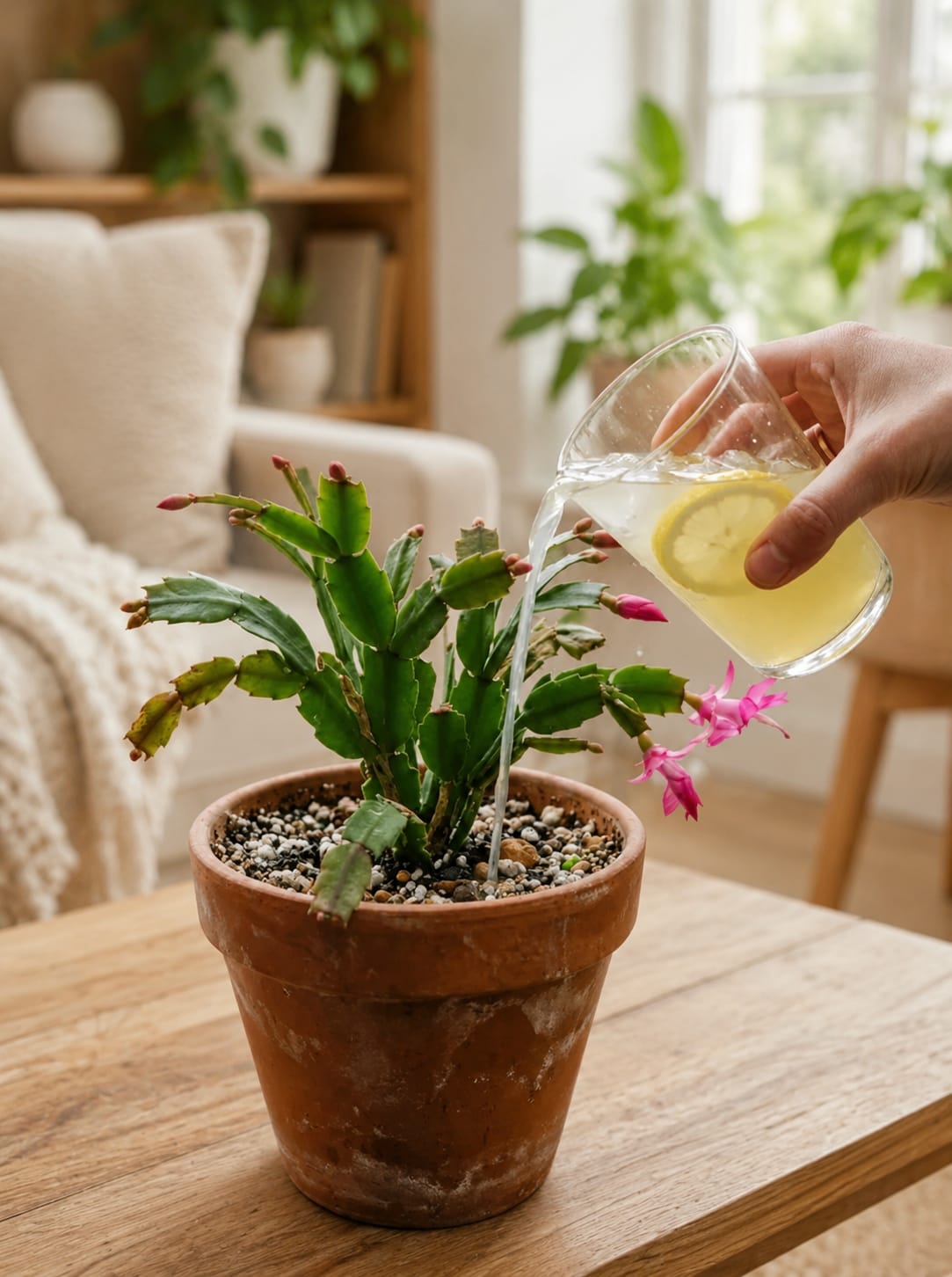
The image shows a Christmas cactus sitting near a window while a pale yellow liquid with a lemon slice is being poured into the pot. This kind of image suggests a simple homemade trick for stronger growth or more flowers. Lemon water looks fresh, natural, and harmless, so it is easy to believe it might be a secret bloom booster. But Christmas cactus roots are sensitive, and lemon water must be treated very carefully. A small amount of mild acidity may not instantly kill a plant, but strong or repeated lemon water can disturb the soil, burn roots, weaken buds, and create long-term problems.
The safest message is simple. Christmas cactus does not need lemon water to bloom. It needs bright indirect light, airy soil, careful watering, a mild feeding routine, and the right seasonal rhythm of shorter days and cooler nights. If lemon water is used at all, it should be extremely diluted and used rarely, not poured regularly as a main fertilizer. Most of the time, plain water is safer and better.
Understanding Christmas Cactus
Christmas cactus is not a desert cactus. This is one of the most important things to understand. Many people hear the word cactus and think the plant wants hot sun, dry soil, and neglect. Christmas cactus is different. It belongs to the Schlumbergera group, which grows naturally in forest environments where roots receive filtered light, moisture, and air. The roots are not designed for heavy wet soil, but they also do not want months of complete dryness.
The green parts that look like leaves are actually flattened stem segments. These segments store some moisture, but they are not as drought-proof as the thick stems of desert cactus. The flowers usually form at the tips of the segments when the plant receives the correct seasonal signals. This is why good light, proper watering, and nighttime darkness matter more than any homemade liquid trick.
A healthy Christmas cactus should have firm green segments. They may arch gently over the pot, especially as the plant matures. Some older segments can become woody near the base, which is normal. New growth appears at the tips and looks fresh, firm, and smooth. When buds form, they usually begin as small colored points at the segment ends before swelling and opening into flowers.
What the Lemon Water Image Suggests
The image shows a pale yellow liquid with a lemon slice being poured into the soil. This makes the care idea feel natural and simple. Many plant posts use lemon, banana peel water, coffee, onion water, garlic water, or tea-colored liquids to create the feeling of a secret plant recipe. These images are attractive, but they can be misleading if the details are missing.
Lemon juice is acidic. Soil pH matters because roots absorb nutrients best within a suitable range. Christmas cactus generally prefers a slightly acidic to mildly neutral potting mix, but this does not mean it needs lemon juice poured into the pot. There is a big difference between a naturally slightly acidic potting mix and repeated applications of lemon water. Lemon juice can lower pH too quickly, irritate roots, and change the balance of the soil.
If lemon water is strong, it can damage fine roots. If used too often, it can create stress that shows up as yellowing, shriveled segments, weak buds, or poor growth. If it contains sugar or pulp, it may attract fungus gnats or encourage microbial problems. The plant does not need citrus juice to flower. It needs stable care.
Can Lemon Water Help Christmas Cactus Bloom?
Lemon water is not a reliable bloom booster. Blooming in Christmas cactus is controlled mostly by maturity, light, temperature, and night length. The plant usually sets buds when nights become longer and cooler. This is why many Christmas cactus plants bloom around late fall or winter. The plant receives seasonal signals and begins producing buds at the ends of its segments.
A mild feeding routine can support the plant’s energy before the bloom season, but lemon water does not provide balanced nutrition. It does not replace a proper houseplant fertilizer. It does not provide the full range of nutrients needed for healthy growth. It may slightly affect acidity, but this is not the same as feeding the plant.
If a Christmas cactus is not blooming, the first thing to check is not lemon water. Check whether the plant gets bright indirect light during the day. Check whether it receives long uninterrupted darkness at night during the bud-setting period. Check whether it is exposed to cooler nights, but not cold drafts. Check whether the soil drains well and the roots are healthy. These things have a much stronger effect on flowering than lemon water.
Why Strong Lemon Water Can Be Risky
Strong lemon water can be risky because roots are living tissue. They can be burned or stressed by sudden acidity. Christmas cactus roots are relatively fine and prefer a light, airy environment. When acidic liquid is poured into a pot, it does not disappear immediately. It moves through the soil, touches the roots, and can change the root zone. If the pot drains poorly or the soil is compacted, the liquid may remain around the roots longer than expected.
Another risk is overwatering. People often pour homemade liquids in addition to their normal watering routine. This means the plant may receive extra moisture it does not need. A Christmas cactus can rot if the soil stays wet for too long. Adding lemon water to already moist soil can create the same danger as overwatering with plain water.
Lemon pulp and sugar residues can also create problems. Even a small amount of organic residue can encourage fungus gnats, mold, or sour soil in an indoor pot. A garden bed outdoors has more soil volume, airflow, and microbial balance. A small indoor pot is much more sensitive. What seems harmless in a glass can become stressful in a pot.
If You Use Lemon Water, Keep It Very Weak
The safest choice is to skip lemon water and use plain water. But if you want to try a lemon-water style trick, it must be very weak and rare. The liquid should not taste strongly sour. It should not contain pulp, sugar, peel pieces, or concentrated juice. It should never be used on a dry, stressed, newly repotted, or sick plant. It should never be used every week.
A better approach is to use plain water for regular care and reserve any acidity adjustment for cases where you actually know your water or soil is too alkaline. Most home growers do not test soil pH, so using lemon water becomes guesswork. Guesswork is not ideal for a plant that is already forming buds.
If your Christmas cactus is healthy and blooming, do not disturb it with experiments. Budding plants can be sensitive. A sudden change in watering, location, temperature, or soil chemistry can cause buds to drop. During blooming, stability is more valuable than any homemade booster.
Best Water for Christmas Cactus
Christmas cactus usually does well with room-temperature water. Cold water can shock roots, especially if the plant sits near a cool window. Very hard tap water may contribute to mineral buildup over time. If your water leaves white crust on pots or soil, filtered water or rainwater may be gentler.
When watering, pour slowly over the soil until water reaches the root zone and drains from the bottom. Then let the pot drain fully. Never let the plant sit in standing water. If the pot has a saucer, empty it after watering. If the plant is inside a decorative cover pot, remove the inner pot to water and let it drain before putting it back.
The goal is even moisture, not constant wetness. Water again when the top part of the soil begins to dry. The plant should not be left bone dry for too long during bud formation, but it should not stay soggy either. Balance is the key.
Choosing the Right Soil
Christmas cactus grows best in a light, airy potting mix. Heavy soil can hold too much water and suffocate roots. A good mix should hold some moisture but drain quickly. A regular houseplant potting mix can be improved with perlite, pumice, orchid bark, or coco chips. These materials create air pockets and help the roots breathe.
If your plant is in old soil, lemon water will not fix it. Old potting mix can become compact, sour, or mineral-heavy. Water may run down the sides without soaking the root ball, or it may stay wet for too long. Repotting into fresh airy soil is often more helpful than adding any liquid trick.
Christmas cactus does not need a huge pot. A slightly snug pot is usually fine. A pot that is too large holds extra soil, and extra soil holds extra moisture. This can increase the risk of root rot. Choose a pot only slightly larger than the root ball when repotting.
Light for Strong Growth and Flowers
Light is one of the most important parts of Christmas cactus care. The plant likes bright indirect light. A window with gentle morning sun can be ideal. Too little light can lead to weak growth and few flowers. Too much direct hot sun can scorch the segments or turn them reddish and stressed.
The plant in the image is sitting by a window, which can be a good spot if the light is soft. An east-facing window is often excellent. A bright north-facing window may work if the room is not too dim. A south or west-facing window may need a sheer curtain, especially during hot parts of the year.
During the bud-setting season, daylight and darkness both matter. The plant needs bright indirect light during the day, but it also benefits from long dark nights. If it sits in a room where lamps stay on late every evening, bud formation may be reduced. Natural evening darkness helps the plant understand the season.
How to Encourage Buds Naturally
To encourage buds, focus on seasonal rhythm. Many Christmas cactus plants begin bud formation when nights become longer and temperatures become slightly cooler. This usually means giving the plant long uninterrupted darkness for several weeks and keeping it away from hot, dry air. A cool bright room with natural night darkness can help.
The plant should not be moved constantly once buds appear. Buds can drop when the plant experiences sudden changes. Moving it from one room to another, changing watering dramatically, placing it near heat, or exposing it to cold drafts can all cause bud loss.
Watering should remain steady. Letting the plant dry severely during bud formation can cause buds to shrivel or fall. Keeping the soil soggy can damage roots and also cause bud drop. Good bloom care is calm care.
Feeding Christmas Cactus Safely
Christmas cactus can benefit from gentle fertilizer during active growth. Spring and summer are usually the best times to feed. A balanced houseplant fertilizer diluted to half strength or less is usually enough. The plant does not need strong fertilizer, and it does not need constant feeding.
Stop or reduce feeding when the plant is preparing to bloom, unless you are using a very mild routine and the plant is actively growing. Do not fertilize dry soil. Do not fertilize a sick plant. Do not fertilize a plant with root rot. Fertilizer supports healthy growth, but it does not repair damaged roots.
Organic feeding can be useful when mild, but avoid strong homemade liquids. Coffee, lemon juice, vinegar, milk, sugar water, and fermented kitchen mixtures can cause more harm than good. A small amount of worm castings in the soil is usually safer than pouring acidic or sugary liquids into the pot.
Continue to Page 2
Continue to page 2 for more details about this article and the key points many readers miss on the first page.