Christmas cactus is one of the most loved flowering houseplants because it can turn a quiet indoor corner into a bright display of color. Its soft green segmented stems hang gracefully over the edge of a pot, and when the plant is happy, the tips fill with buds that open into beautiful flowers. Many people grow Christmas cactus because it feels nostalgic, easy to share, and perfect for windowsills, shelves, and hanging baskets. A mature plant can live for many years and become fuller every season when it receives the right care.
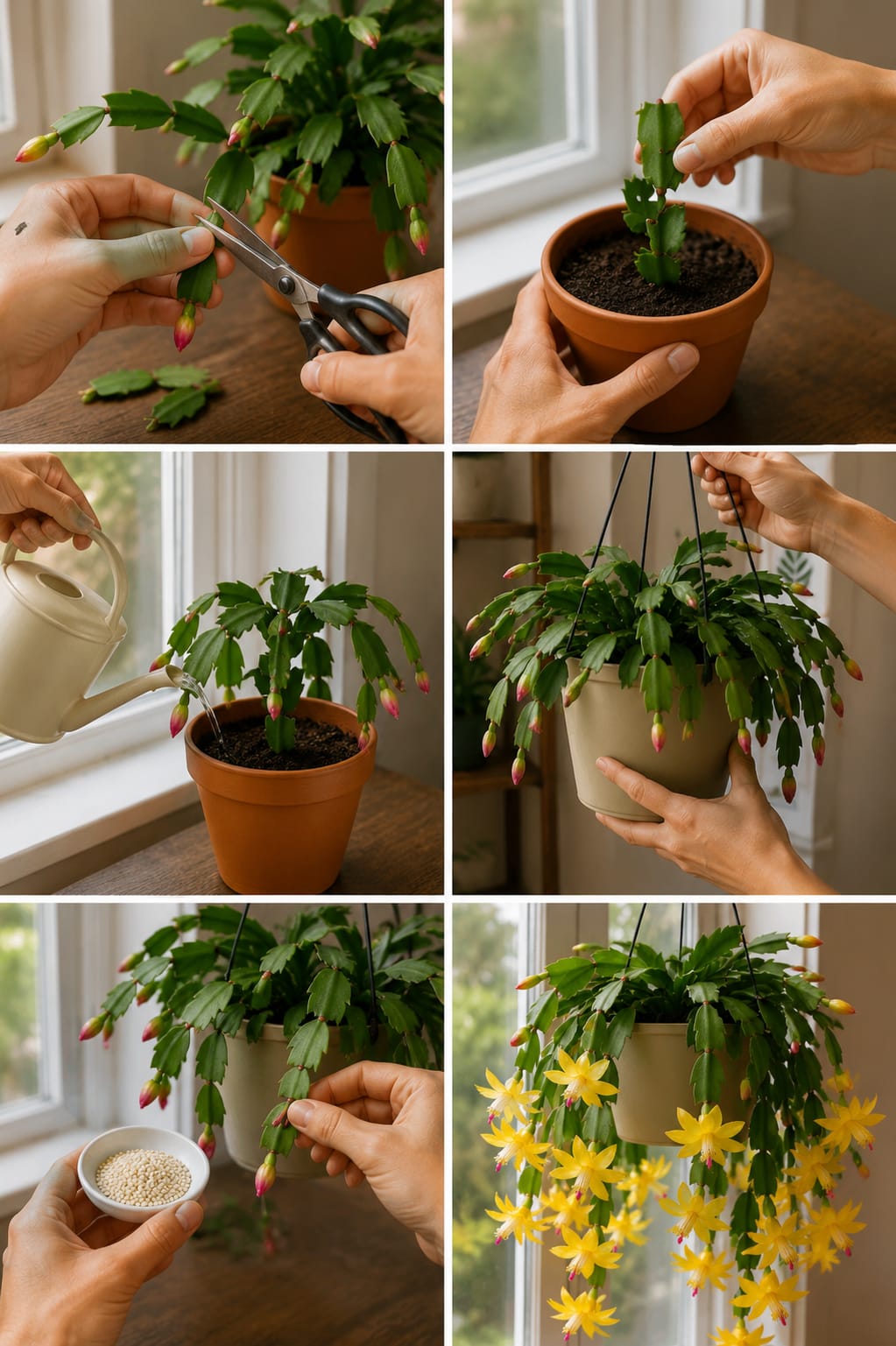
The image shows a clear Christmas cactus growing process. A healthy segment is cut from the mother plant, planted into soil, watered gently, placed into a hanging pot, supported with regular care, and finally shown covered in glowing yellow flowers. This kind of step-by-step image is popular because Christmas cactus is very easy to propagate from cuttings. One small piece can become a new plant if it is handled correctly. The secret is not a strong fertilizer or a miracle liquid. The real secret is choosing healthy segments, letting the cutting settle, using airy soil, watering carefully, and giving the plant the right light and seasonal rhythm.
Christmas cactus is different from desert cactus. It does not want hot dry desert conditions all the time. It is an epiphytic forest cactus, which means it naturally grows in places where roots receive air, filtered light, and periods of moisture followed by good drainage. This is why it does best in a light potting mix, not heavy wet soil. It likes more moisture than a snake plant, but it still does not like soggy roots. Once you understand this balance, the plant becomes much easier to grow.
Understanding Christmas Cactus
Christmas cactus belongs to the Schlumbergera group. It grows with flat green stem segments that connect like a chain. These segments are often mistaken for leaves, but they are actually modified stems. New growth appears at the ends, and flower buds usually form on the tips when conditions are right. The plant can become bushy, trailing, and full when it receives steady care.
Many plants sold as Christmas cactus may actually be Thanksgiving cactus or related holiday cactus hybrids. The care is very similar. The main difference is usually the shape of the segments and the timing of bloom. Thanksgiving cactus often has more pointed edges on the segments, while true Christmas cactus has softer rounded edges. Both can be grown in hanging baskets and both can bloom beautifully indoors.
The plant in the image has many healthy green segments and colorful buds. This shows that the plant has enough energy to flower. Flowers can appear in several colors, including pink, red, purple, white, orange, salmon, and yellow. Yellow-flowering types look especially bright near a window because the petals glow in soft indoor light.
Propagating From Cuttings
The first part of the image shows a cutting being taken from the plant. This is one of the easiest ways to multiply Christmas cactus. A good cutting should have several healthy segments. It should be firm, green, and free from rot or pests. Avoid taking cuttings from weak, shriveled, yellow, or diseased stems because they may fail before rooting.
The best cuttings are usually taken by gently twisting or cutting between segments. A clean separation helps the cutting heal. If you use scissors, clean them first. Dirty tools can spread disease into the plant tissue. After taking the cutting, many growers allow it to dry for a short time before planting. This helps the cut end callus slightly and reduces the risk of rot.
Do not place a fresh cutting into soaking wet soil immediately. Christmas cactus cuttings can rot if the base stays too wet before roots form. A short rest period, airy soil, and light moisture are safer. The cutting does not need deep planting. Only the lower part should be inserted into the mix so it can stand upright and begin rooting.
Choosing the Right Soil
Christmas cactus needs soil that holds light moisture but drains well. Heavy garden soil is not suitable for indoor pots because it compacts and holds too much water. A regular houseplant potting mix can work if it is improved with perlite, orchid bark, or pumice. These ingredients help air reach the roots and prevent the mix from becoming muddy.
The plant naturally prefers an airy root environment. In the wild, related holiday cacti often grow in organic debris on trees or rocky places where water drains quickly. Their roots are not designed to sit in dense wet soil. This is why a light mix gives much better results than rich heavy compost alone.
If your Christmas cactus is struggling, old soil may be part of the problem. Over time, potting mix breaks down. It becomes compact, holds water unevenly, and may collect minerals from tap water or fertilizer. Repotting into fresh airy mix can help the plant recover and grow new roots.
Planting the Cutting
The image shows a cutting being placed into a small terracotta pot. This is a good approach because a small cutting does not need a large pot. A pot that is too big holds too much moisture around the unrooted base. A smaller pot dries more evenly and reduces the chance of rot.
Plant the cutting just deep enough to stand. Press the soil gently around the base. Do not bury too much of the segment. If the cutting falls over, you can support it lightly until roots develop. The pot must have drainage holes so excess water can escape.
After planting, keep the soil slightly moist but never soggy. The cutting needs humidity and moisture to root, but it also needs oxygen. If the soil is soaked, the base may turn soft and fail. If the soil is bone dry for too long, rooting slows. The best condition is gentle, even moisture with good air around the base.
Watering a Christmas Cactus
Christmas cactus watering should be steady but careful. Unlike desert cactus, it does not want to be dry for months. Unlike peace lily, it does not want constantly wet soil. The best method is to water when the top part of the soil begins to feel dry. When you water, moisten the soil thoroughly and let the extra water drain away.
Do not leave the pot sitting in water. Standing water can damage the roots. If the plant is in a decorative hanging basket with no drainage, use an inner pot with drainage and remove it when watering. Let it drain before returning it to the basket.
During active growth and bloom development, the plant may need more regular moisture. During cooler months or rest periods, it may need less. The watering rhythm changes with light, temperature, pot size, and season. Always check the soil instead of watering by a fixed calendar.
Best Light for Growth and Blooms
Christmas cactus grows best in bright indirect light. A window with soft morning sun can be excellent. Bright filtered light helps the plant produce strong segments and flower buds. Too little light can make the plant weak and reduce blooming. Too much direct hot sun can scorch the segments and make them turn reddish, yellow, or shriveled.
The image shows the plant near a window, which is a good location if the light is gentle. Indoors, an east-facing window is often ideal. A north-facing window can work if it is bright. A south or west-facing window may need a sheer curtain or some distance from the glass to protect the plant from harsh sun.
If the plant grows long, thin, and pale, it may need more light. If the segments become red or sunburned, the light may be too strong. A healthy Christmas cactus should have firm green segments and compact new growth.
Turning a Small Plant Into a Hanging Basket
Christmas cactus looks beautiful in a hanging basket because the stems naturally arch and trail. The image shows the plant being moved into a hanging pot once it has become fuller. This is a great way to display a mature plant, but it is better to wait until the plant has enough roots and growth. A tiny cutting in a large hanging basket may stay too wet and struggle.
As the plant grows, the stems begin to spill over the sides. The hanging shape allows buds and flowers to show clearly. A basket near a bright window can become a beautiful seasonal display. Rotate the basket occasionally so all sides receive light. This helps the plant grow evenly instead of leaning strongly toward the window.
Hanging baskets can dry faster than regular pots because air moves around them. Check the soil regularly. If the plant is in a warm bright window, it may need water more often. If the room is cool, it may need less.
Feeding Christmas Cactus Safely
Christmas cactus can benefit from gentle feeding during active growth. Use a balanced houseplant fertilizer diluted to half strength or less. Feed when the plant is growing new segments, usually in spring and summer. Avoid heavy fertilizer when the plant is resting or when the soil is dry.
Strong feeding does not force flowers. Too much fertilizer can burn roots, cause weak growth, or create salt buildup in the soil. A plant with damaged roots should not be fertilized until it recovers. Freshly rooted cuttings also do not need strong feeding. Let roots develop first.
If you prefer organic feeding, use mild options only. Worm casting tea or a small amount of worm castings can support growth, but avoid smelly compost teas, sugary liquids, coffee, milk, vinegar, or fermented kitchen mixtures. Indoor pots can become sour quickly if organic liquids are too strong.
How to Encourage Buds
Christmas cactus usually forms buds when it receives the right combination of light, temperature, and season. Many holiday cacti need shorter days and cooler nights to trigger blooming. This is why they often bloom in fall or winter. Bright indirect light during the day and long uninterrupted darkness at night can help buds form.
Evening light can interfere with bud formation. If the plant sits in a room where lights stay on late every night, it may not receive enough darkness. Moving it to a room with natural evening darkness during the bud-setting period can help. Cooler night temperatures can also support blooming, as long as the plant is protected from cold drafts.
Once buds appear, keep care stable. Sudden changes can cause bud drop. Do not move the plant repeatedly, let it dry severely, soak it heavily, or place it near heat vents. Buds are sensitive. Stable moisture and stable light help them continue developing.
Why Buds Drop Before Opening
Bud drop is one of the most frustrating Christmas cactus problems. Buds may fall if the plant is moved suddenly, exposed to dry air, underwatered, overwatered, kept too warm, or placed near drafts. A plant full of buds can be sensitive because it is using a lot of energy.
If buds are falling, check the soil first. Dry soil can make the plant drop buds to conserve moisture. Wet soil can damage roots and cause the same result. Also check the location. A plant near a heater, cold window, or frequently opened door may be stressed.
Do not try to fix bud drop with strong fertilizer. The plant usually needs stable care, not a sudden feeding boost. Keep the soil lightly moist, provide bright indirect light, and protect the plant from temperature swings.
Pruning for a Fuller Plant
Pruning Christmas cactus helps create a fuller shape. If the plant becomes uneven or too long, you can remove some segments after blooming. This encourages branching and gives you cuttings to grow more plants. The best time to prune is usually after flowering, when the plant is beginning a new growth cycle.
Remove segments by twisting gently at the joint or cutting with clean scissors. Do not remove too much at once from a weak plant. Healthy pruning improves shape, but heavy pruning can stress the plant if it is already struggling.
The pieces you remove can be propagated. Let the cut ends rest briefly, then plant them in airy soil. Over time, this gives you more Christmas cactus plants or a fuller pot if you plant several rooted cuttings together.
Repotting a Mature Christmas Cactus
Christmas cactus does not need frequent repotting. It often blooms well when slightly snug in its pot. Repotting too often or moving into a much larger pot can reduce flowering and increase the risk of wet soil. Repot only when the plant is root-bound, the soil is old, or water is no longer absorbing properly.
When repotting, choose a pot only slightly larger than the old one. Use fresh airy mix and keep the plant at the same depth. Water gently after repotting and keep it in bright indirect light. Avoid strong fertilizer for a few weeks while the roots adjust.
A mature plant in a hanging basket may be heavy, so handle it carefully. Support the stems while repotting so they do not snap. Broken stems can be rooted, but it is better to avoid unnecessary damage.
Common Leaf Segment Problems
Shriveled segments can mean the plant is too dry, but they can also mean the roots are damaged and cannot absorb water. Check the soil before watering again. If the soil is dry, water thoroughly. If the soil is wet and the plant is shriveled, root rot may be present.
Red or purple segments often mean the plant is receiving strong light or experiencing stress. Some color change can be harmless, but if segments become thin, dry, or scorched, move the plant to softer light. Yellow segments can come from overwatering, poor drainage, low nutrients, or root problems.
Soft mushy segments are a warning sign. They usually mean rot or severe overwatering. Remove damaged parts and check the roots. Healthy segments should feel firm and slightly flexible.
Continue to Page 2
Continue to page 2 for more details about this article and the key points many readers miss on the first page.