Why Buds Drop
Bud drop is common with Christmas cactus. It can happen when the plant is moved, watered unevenly, exposed to heat, exposed to cold drafts, kept too dry, kept too wet, or placed in changing light. Buds are sensitive because they require steady energy and moisture.
If buds are falling, do not immediately add lemon water or fertilizer. First check the basics. Feel the soil. Look at the window temperature. Check for heating vents. Make sure the plant is not being touched or bumped often. Look for pests near the buds and segment joints.
The best response to bud drop is stability. Keep the plant in bright indirect light, water when the top soil begins to dry, avoid drafts, and do not move it unless the current location is clearly stressful.
Signs of Root Trouble
Root trouble often shows in the segments. If the segments are wrinkled and the soil is dry, the plant likely needs water. If the segments are wrinkled and the soil is wet, the roots may be damaged. This difference matters. A wet plant that looks thirsty should not receive more water or lemon water. It should be checked for root rot.
Soft, mushy segments can signal rot. Yellowing segments can come from overwatering, poor drainage, low light, or old soil. Red or purple segments can indicate strong light or stress. A few older segments may age naturally, but widespread changes mean the plant needs attention.
If root rot is suspected, remove the plant from the pot and inspect the roots. Healthy roots should be firm. Rotten roots are dark, soft, and may smell bad. Remove damaged roots, repot into fresh airy soil, and water carefully. Do not feed during recovery.
Repotting Christmas Cactus
Christmas cactus does not need frequent repotting. It often blooms better when slightly snug. Repotting every few years is usually enough, especially when the soil becomes old or the roots fill the pot. The best time to repot is after flowering or during active growth, not when the plant is full of buds.
When repotting, choose a pot with drainage and use an airy mix. Keep the plant at the same depth. Do not bury the base too deeply. After repotting, water lightly and keep the plant in bright indirect light. Let it adjust before feeding.
A plant that has been overwatered or treated with too much lemon water may benefit from repotting if the soil has become sour. Fresh soil can reset the root environment and reduce stress.
Pruning and Shaping
Pruning helps keep Christmas cactus full and balanced. After blooming, you can remove a few segments from long stems. This encourages branching and gives the plant a bushier shape. The removed pieces can be used for propagation.
To prune, twist segments gently at the joint or cut with clean scissors. Do not remove too much from a weak plant. A healthy plant can handle light pruning and often responds with fresh growth.
Regular shaping is better than severe cutting. Over time, light pruning after the bloom season can create a fuller plant with more tips, and more tips can mean more potential flower buds next season.
Propagating Christmas Cactus
Christmas cactus is easy to propagate from stem segments. Choose a healthy piece with several segments. Let the cut end dry briefly, then plant it in a small pot with airy soil. Keep the soil lightly moist but not wet. Roots usually develop with time, especially in warm bright conditions.
Do not root cuttings in heavy wet soil. They can rot before roots form. A small pot is better than a large pot because it dries more evenly. Once the cutting grows roots and new segments, it can be treated like a young plant.
Propagation is a better way to make more plants than trying to force one plant with strong treatments. A healthy mother plant can provide cuttings after flowering, and those cuttings can become beautiful gifts or new hanging baskets.
Final Thoughts
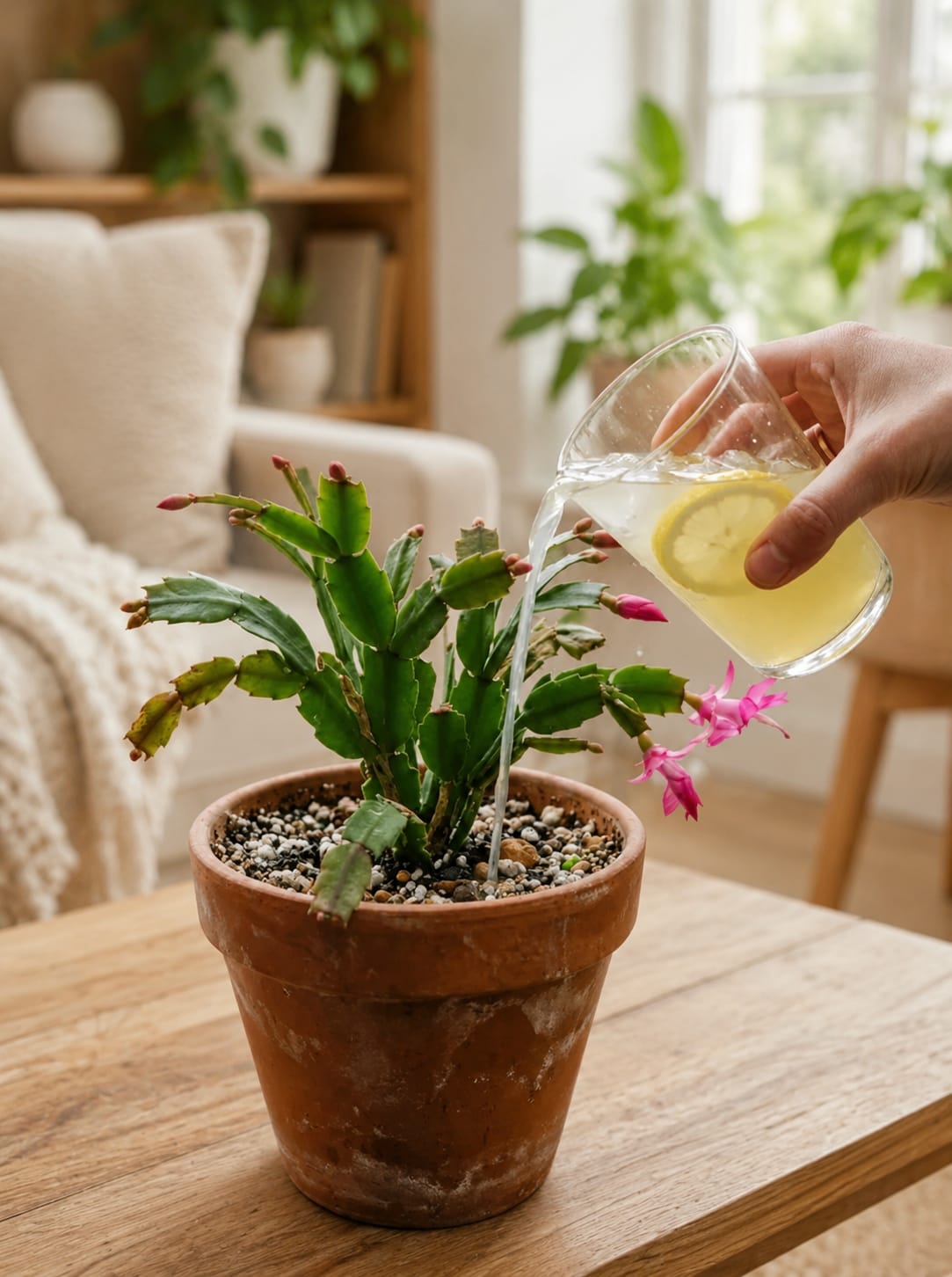
The lemon water in the image looks like a simple secret, but Christmas cactus care should stay gentle and balanced. Lemon water is not a true fertilizer, and it is not required for blooming. Strong or frequent lemon water can stress roots, change soil conditions, and increase the risk of bud drop. Plain water is safer for regular care.
To grow a healthy Christmas cactus, focus on what the plant truly needs. Give it bright indirect light, airy soil, a pot with drainage, steady but careful watering, and a mild feeding routine during active growth. For flowers, provide long dark nights and cooler conditions during the bud-setting period. Once buds form, keep the plant stable and avoid sudden changes.
A Christmas cactus can reward patient care with beautiful blooms year after year. The real secret is not sour water or a dramatic homemade trick. The real secret is healthy roots, clean soil, gentle moisture, good light, and seasonal timing. Treat the plant with calm consistency, and it can become a long-lived flowering treasure in your home.