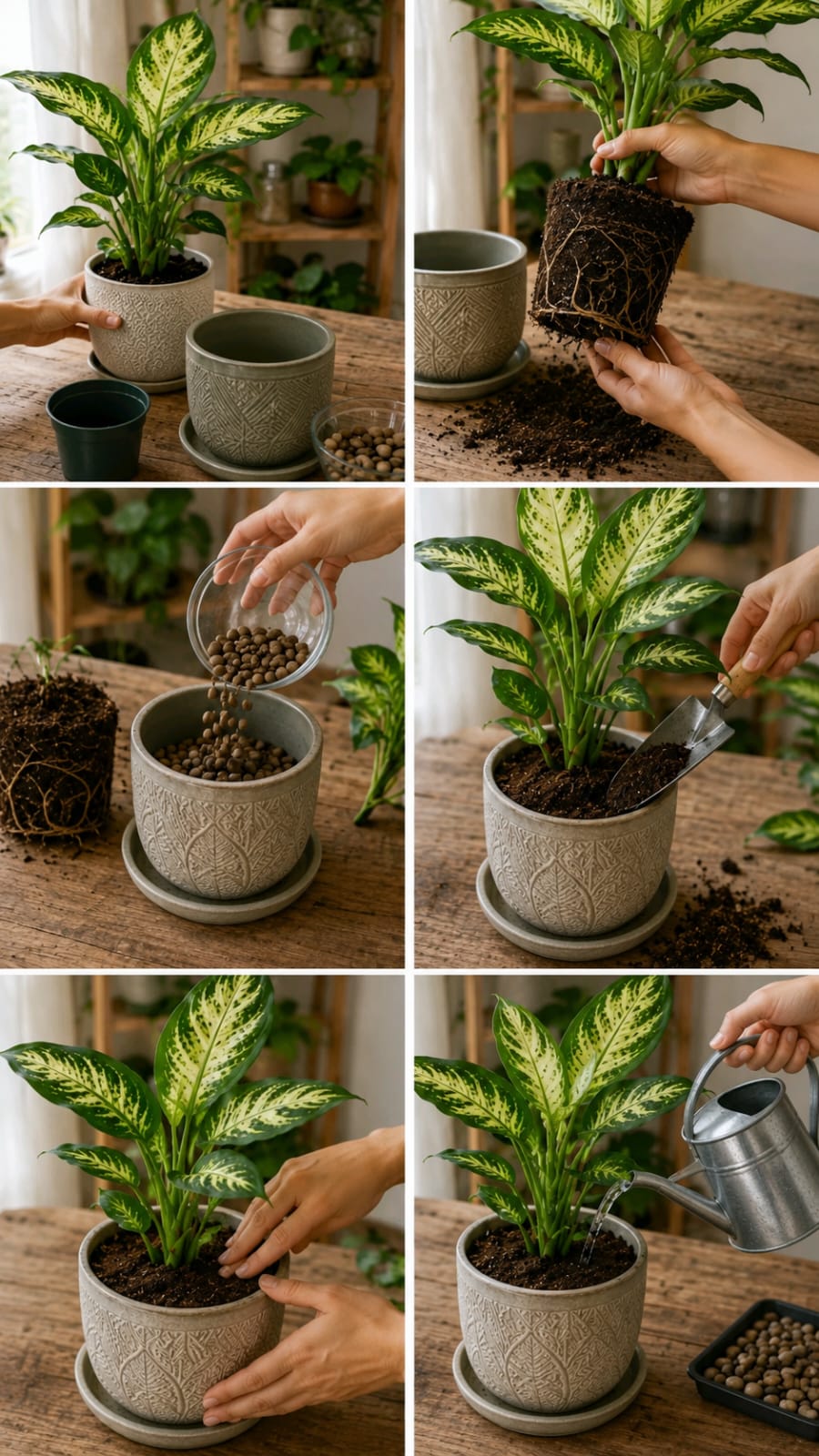
Dieffenbachia is one of the most attractive indoor plants for people who want large patterned leaves, bold green and cream variegation, and a tropical look that can make a room feel fresh, calm, and more designed. Its broad leaves, upright stems, and soft decorative color pattern make it a favorite for living room styling, bedroom decor, home office decor, modern apartment plant care, indoor jungle displays, and premium indoor plant presentation. When the plant is healthy, it can become a beautiful focal point in a ceramic planter, especially when placed near soft natural light and surrounded by clean home decor.
Dieffenbachia is often called dumb cane, and it is popular because it grows faster than many slow indoor plants when the conditions are right. It can produce lush leaves and a full tropical shape, but it also has clear care needs. It does not like compacted old soil, it can suffer from soggy roots, and it may decline when kept in a pot that is too small or poorly drained. Repotting is one of the best ways to refresh the plant, support new growth, and improve the root environment before problems become serious.
Fresh soil and clay pebbles can be useful in a Dieffenbachia care routine when they are used correctly. Fresh potting mix gives the roots better access to air, moisture, and nutrients. Clay pebbles can help improve drainage, create a cleaner pot base, and support better moisture balance when they are placed properly. However, this method should be explained carefully. Clay pebbles should not be treated like a magic growth booster, and they should not be used to hide poor watering habits or a pot without proper drainage. Dieffenbachia still needs a breathable potting mix, a stable watering routine, bright indirect light, and a planter that allows excess water to escape.
This guide explains how to repot Dieffenbachia safely, how clay pebbles may help, what soil mix works best, how to protect the roots from waterlogging, what mistakes to avoid, and how to keep the plant clean, healthy, and suitable for indoor plant styling, commercial interior landscaping, premium ceramic planters, luxury home staging, and polished property presentation.
Quick Answer
Dieffenbachia can be repotted safely by removing it gently from the old container, checking the root ball, choosing a pot with drainage holes, adding a breathable indoor potting mix, and watering carefully after planting. Clay pebbles can be used as a drainage support layer only when the pot also has drainage holes, or they can be mixed lightly with other materials to improve airflow. They should not replace real drainage, and they should not sit in stagnant water below the roots. Dieffenbachia grows best in bright indirect light, evenly moist but not soggy soil, moderate humidity, and a clean indoor environment. After repotting, the plant should be monitored for wilting, yellow leaves, soft stems, root rot signs, and soil that stays wet too long.
What Plant This Is
The plant is Dieffenbachia, a tropical indoor plant known for its large variegated leaves. The leaves usually have a mix of deep green edges, pale green centers, cream markings, speckled patterns, or yellow-green tones depending on the variety. This leaf pattern is the main reason Dieffenbachia is loved in indoor plant decor. It gives the room a soft tropical feeling without needing flowers.
Dieffenbachia grows from thick green stems and can become full and upright when it receives enough light and proper root care. It is often used in living rooms, plant shelves, home offices, apartment corners, and bright indoor spaces where a bold leafy plant is needed. It can also be used in commercial spaces because its leaves are large, decorative, and easy to notice from a distance.
Even though Dieffenbachia looks lush and tropical, it should not be kept in heavy wet soil. It likes a soil mix that holds some moisture but still allows oxygen to reach the roots. This balance is very important during repotting because new soil can either improve the plant’s health or create new problems if it is too dense, too wet, or packed too tightly around the roots.
Why Repotting Matters for Dieffenbachia
Repotting matters because indoor plant soil changes over time. A potting mix that was once light and airy can become compacted. Old soil can hold water unevenly, dry in hard clumps, or stay wet near the bottom of the pot. Dieffenbachia roots need moisture, but they also need air. When the soil becomes dense, roots may become stressed, and the plant may start showing yellow leaves, weak growth, drooping stems, or brown leaf edges.
Repotting refreshes the growing environment. It gives the roots a new mix that drains better, supports better oxygen flow, and provides a cleaner foundation for growth. It also gives the gardener a chance to check the root ball. Healthy roots are usually firm and light in color. Stressed roots may look dark, mushy, dry, tangled, or tightly wrapped around the inside of the pot.
A Dieffenbachia plant that has been sitting in the same pot for a long time may become root-bound. This means the roots have filled the container and have little space left to grow. A root-bound plant may dry out quickly, grow slowly, or become unstable in the pot. Repotting into a slightly larger container can give the roots more room and help the plant produce healthier leaves.
Why Clay Pebbles Are Used
Clay pebbles, often called LECA, are lightweight expanded clay balls that are used in indoor gardening, hydroponics, semi-hydroponic setups, and decorative plant care. They can help create air pockets, reduce soil compaction, and support drainage when used correctly. They are also clean-looking, which makes them popular for premium indoor plant care and modern plant styling.
For Dieffenbachia, clay pebbles may be used at the bottom of a pot with drainage holes to reduce soil sitting directly against the base, or they may be used in a cachepot system to lift the nursery pot above collected water. Some growers also mix a small amount into the potting mix to improve airflow. The safest use depends on the pot and the watering routine.
Clay pebbles should not be misunderstood as a solution for a pot without drainage. If a decorative pot has no hole and water collects at the bottom, a layer of clay pebbles does not remove the water. It simply creates a hidden reservoir. If the roots grow down into that wet layer, they can still rot. For Dieffenbachia, the most important rule is that extra water must have a way to leave the root zone.
What This Method Should Not Be Misunderstood As
This repotting method should not be misunderstood as a guarantee of instant growth or overnight leaf improvement. Repotting gives the roots a better environment, but the plant still needs time to adjust. New growth may appear after the plant settles, but older damaged leaves may not become perfect again. The purpose of repotting is to protect the root system and support future growth.
Clay pebbles should not be seen as a replacement for high-quality potting mix. Dieffenbachia still needs an indoor plant soil blend that can hold some moisture and nutrients. Clay pebbles alone are not the same as soil unless the plant is being grown in a controlled semi-hydroponic system with proper nutrient solution. For standard indoor care, they are a support material, not the full growing medium.
This method should also not be used to justify overwatering. Many people add drainage materials and then water too often because they believe the plant is protected. However, even a well-draining pot can stay too wet if water is added before the soil has had time to breathe. Dieffenbachia prefers consistent moisture, but consistent moisture does not mean constant saturation.
When Dieffenbachia Needs Repotting
Dieffenbachia may need repotting when roots are visible at the drainage holes, when the plant dries out very quickly, when the soil has become compacted, when water sits on the surface too long, or when the plant looks unstable in its pot. It may also need repotting if the soil smells sour, if fungus gnats keep appearing, or if the plant has stopped growing during the normal active season.
A plant with yellowing lower leaves may also need a root check, but yellow leaves do not always mean repotting is required. They can be caused by overwatering, underwatering, low light, cold drafts, old age, or stress. Before repotting, the plant should be checked carefully. If the soil is wet and smells bad, repotting into a cleaner, better-draining mix may help. If the plant is only losing one old lower leaf while the rest looks healthy, that may be normal aging.
The best time to repot Dieffenbachia is usually spring or early summer, when the plant is entering active growth. Repotting during active growth helps the plant recover faster. Emergency repotting can be done at other times if the soil is rotten, the roots are suffocating, or the pot has serious drainage problems. In that case, saving the roots is more important than waiting for the perfect season.
Choosing the Right Pot
The best pot for Dieffenbachia is one with drainage holes. This allows excess water to leave after watering and protects the roots from sitting in stagnant moisture. A decorative ceramic planter can still be used, but it should either have drainage or be used as an outer cachepot with a nursery pot inside. After watering, extra water should be removed from the saucer or cachepot.
The new pot should usually be only slightly larger than the old pot. Moving Dieffenbachia into a very large container can create too much unused wet soil around the roots. When a plant’s roots cannot absorb water from all that extra soil, the mix can stay damp for too long. This increases the risk of root rot, especially indoors where light and airflow are limited.
A textured ceramic pot can make Dieffenbachia look more premium and decorative, especially because the plant’s leaves already have strong patterns. Neutral planters such as cream, stone, beige, gray, black, terracotta, or soft green can pair well with the variegated foliage. The pot should match the room, but function matters first. Good drainage is more important than the decorative surface.
Best Soil Mix for Dieffenbachia
Dieffenbachia needs a soil mix that can hold light moisture while still draining well. A standard indoor potting mix can be improved with perlite, orchid bark, coco coir, fine pumice, or a small amount of clay pebbles. The goal is to create a mix that is soft, airy, and stable. It should not become muddy or packed after watering.
A good mix allows water to move through the pot while still leaving enough moisture for the roots. Dieffenbachia is not a cactus, so it should not be kept bone dry for long periods. At the same time, it is not a swamp plant. The roots should never be trapped in heavy wet soil. The best soil feels evenly moist after watering but begins to dry gradually from the top.
Garden soil should not be used alone in a container. It can compact heavily, drain poorly, and bring pests indoors. Very rich compost-heavy mixes should also be used with caution because they can hold too much water in a decorative pot. A clean, high-quality indoor potting mix with added drainage material is more reliable for long-term indoor plant maintenance.
How to Use Clay Pebbles Safely
Clay pebbles can be useful when they are rinsed before use. Dust from clay pebbles can cloud water and settle into the soil, so rinsing helps keep the setup cleaner. If they are used at the bottom of a pot, the pot should still have drainage holes. The layer should not be used as an excuse to let water collect under the roots.
When clay pebbles are used inside a decorative cachepot, they can help raise the inner nursery pot slightly above any small amount of leftover water. This can be useful, but the collected water should still be emptied. The pebbles should not become a permanent standing-water reservoir unless the plant is being grown in a proper semi-hydro system with measured nutrients and careful root adaptation.
A small amount of clay pebbles may also be mixed with potting soil to improve structure. This can help reduce compaction and support airflow, but it should not make the mix too coarse or dry. Dieffenbachia roots still need contact with moisture-retentive soil. The best approach is balanced, not extreme.
How to Repot Dieffenbachia Safely
Before repotting, the new pot, fresh soil, clay pebbles, and tools should be ready. The plant should be handled gently by the root ball and lower stems, not by pulling on the leaves. Large Dieffenbachia leaves can tear, and stems can bruise if the plant is handled roughly. If the old pot is tight, the sides can be squeezed or tapped to loosen the root ball.
Once the plant is out of the old pot, the roots should be inspected. If the root ball is healthy but slightly tight, the outer roots can be loosened gently. If there are dark mushy roots, they should be trimmed with clean tools. Old compacted soil can be removed carefully, especially if it smells sour or stays wet. The goal is to disturb the roots only as much as needed.
A small amount of fresh mix can be placed at the bottom of the new pot, with clay pebbles used only in a controlled way if needed. The plant should be positioned at the same depth it was growing before. The stem base should not be buried too deeply. Fresh soil should be added around the root ball and pressed gently to support the plant. The soil should be firm enough to hold the plant upright but not packed so tightly that air is pushed out.
Watering After Repotting
After repotting, Dieffenbachia should usually be watered enough to settle the soil around the roots. Water should flow through the drainage holes, and extra water should be discarded. This first watering helps remove dry pockets and helps the roots connect with the fresh potting mix. After that, watering should be based on soil moisture, not on a fixed calendar.
The top layer of soil can dry slightly before watering again. The deeper soil should not stay soggy. A moisture meter, finger test, or lifting the pot to feel its weight can help. If the pot feels heavy and the top soil is still damp, the plant should not be watered yet. If the pot feels lighter and the top layer is drying, it may be time to water.
Overwatering after repotting is a common mistake. Many people try to help the plant recover by giving it more water, but roots also need oxygen. If the soil stays wet for too long, recovery can slow down and root rot can begin. Careful moisture control is the safest way to help the plant settle into its new pot.
Light Conditions After Repotting
Dieffenbachia grows best in bright indirect light. After repotting, it should be protected from harsh direct sun because stressed roots may not support the leaves as efficiently. Strong sun can cause leaf scorch, drooping, or extra water loss. A bright room with filtered light is usually ideal.
Low light can keep the plant alive, but it may slow growth and reduce the strength of new leaves. Variegated plants often need good indirect light to maintain attractive patterns. If the plant is placed too far from a window, the stems may stretch and the leaves may become smaller. A grow light can help in darker rooms, especially during winter.
The plant should also be protected from cold drafts, heating vents, air-conditioning blasts, and sudden temperature changes. Dieffenbachia is tropical and prefers stable indoor conditions. A comfortable room temperature and steady light are better than constant moving from place to place.
Feeding After Repotting
Dieffenbachia should not be fertilized heavily immediately after repotting. Fresh potting mix often contains enough starter nutrition, and the roots may need time to recover from being disturbed. Heavy fertilizer right after repotting can stress the plant. It is better to wait until the plant shows fresh growth before feeding lightly.
During spring and summer, a diluted balanced indoor plant fertilizer can support healthy leaves and steady growth. The fertilizer should be used at reduced strength if the plant is indoors or growing in moderate light. Too much fertilizer can cause brown tips, salt buildup, and root irritation. A gentle routine is safer than strong feeding.
Homemade fertilizers should be used carefully. Dieffenbachia is grown mainly for its leaves, so stable nutrition matters, but kitchen scraps and strong organic liquids can attract pests or create smell indoors. A clean liquid houseplant fertilizer, slow-release indoor plant food, or controlled organic plant feed is usually more predictable for premium indoor plant care.
Possible Damage If Repotting Is Done Incorrectly
Repotting can damage Dieffenbachia if the roots are torn aggressively, if the plant is buried too deeply, or if it is moved into heavy wet soil. Root damage may cause temporary wilting, yellow leaves, or slowed growth. Some stress after repotting is normal, but severe drooping or soft stems can suggest a deeper problem.
Using too many clay pebbles in the wrong way can also create issues. If a thick layer of clay pebbles sits below soil in a pot without drainage, water can collect there and become stagnant. If the roots grow into that layer, they may rot. If too many pebbles are mixed into the soil, the mix may dry unevenly or fail to hold enough moisture for the plant.
Another mistake is packing the soil too tightly. The plant may feel more stable at first, but compressed soil limits oxygen and drainage. Dieffenbachia roots need a breathable environment. The soil should support the plant while still allowing air and water to move through it.
Warning Signs After Repotting
After repotting, the plant should be watched for yellowing leaves, drooping stems, soft stem bases, brown leaf tips, mold on the soil, fungus gnats, bad smell, or soil that stays wet for many days. One or two older leaves may yellow after stress, but widespread yellowing suggests that the plant is unhappy with the new conditions.
If the soil smells sour or rotten, the roots may be sitting in too much moisture. If the stem base becomes soft, the plant may be developing rot. If fungus gnats appear, the soil may be staying too wet or contain decaying organic material. These signs should not be ignored because root problems are easier to correct early.
If the plant wilts while the soil is dry, it may need water. If it wilts while the soil is wet, watering more will not help. Wet-soil wilting often means roots are stressed and cannot absorb water properly. In that case, drainage, soil structure, and root health should be checked.
Common Mistakes to Avoid
The biggest mistake is using a decorative pot with no drainage and assuming clay pebbles will solve the problem. Clay pebbles can help manage moisture only when water is not trapped around the roots. Another common mistake is placing the plant too deep in the pot. The base of the stems should remain at the proper soil level so moisture does not collect around them.
Another mistake is watering too often after repotting. Dieffenbachia likes moisture, but it does not want constantly soaked soil. Overwatering can cause yellow leaves and root rot. Underwatering can also cause stress, especially if the plant is in a bright warm room. The best routine is consistent and observant rather than extreme.
Using old compacted soil again is also a problem. Repotting should refresh the root environment. If the same exhausted soil is placed back around the roots, the plant may not improve. Fresh, clean, breathable potting mix is one of the most important parts of the method.
Safety Note for Dieffenbachia
Dieffenbachia should be handled with care because its sap can irritate the skin and mouth. It is called dumb cane because chewing the plant can cause serious irritation. The plant should be kept away from pets and children who may bite or touch the leaves. When repotting or pruning, it is better to wash hands afterward and avoid touching the face or eyes.
If leaves or stems are cut during care, the sap should be treated carefully. Gloves can help protect sensitive skin. Plant debris should not be left where pets can reach it. This safety note does not make Dieffenbachia a bad plant, but it does mean the plant should be placed and handled responsibly.
For homes with curious cats, dogs, or small children, Dieffenbachia may be better placed on a higher plant stand, shelf, or protected corner. A safe display is part of good indoor plant care. Decorative value should always be balanced with practical household safety.
Indoor Decor Value
Dieffenbachia has strong decorative value because its leaves are large, patterned, and bright. It can make a room feel greener without needing flowers. The cream and green variegation can soften dark furniture, brighten neutral rooms, and add a fresh tropical feeling to modern interiors. It works well in living rooms, bedrooms, home offices, reading corners, and indoor plant shelves.
A textured ceramic planter can make the plant look more refined. Beige, stone, ivory, gray, or soft green pots pair well with Dieffenbachia because they do not compete with the leaf pattern. A simple planter lets the foliage become the main decorative feature. The plant can look especially beautiful on a wooden table, near a bright curtain, or beside other tropical houseplants.
For a cleaner look, the soil surface should be neat and free from loose debris. Clay pebbles can sometimes be used as a decorative top layer, but this should be done carefully. A thick top layer may slow soil drying, so it is better to keep the surface breathable if the plant is prone to staying wet. The healthiest decorative setup is always one that supports the roots first.
Continue to Page 2
Continue to page 2 for more details about this article and the key points many readers miss on the first page.