Room-by-Room Styling
In the living room, Dieffenbachia can be placed on a plant stand, side table, or near a bright window with filtered light. Its large leaves create a lush focal point and pair well with neutral furniture, wood textures, woven baskets, and soft curtains. It adds a tropical feeling without needing a complicated display.
In the bedroom, Dieffenbachia can create a calm green accent when placed safely away from pets and children. A ceramic planter in cream or stone tones can match bedding, natural textures, and soft lighting. The plant should receive enough light, so a bright bedroom window is better than a dark corner.
In a home office, Dieffenbachia works well near shelves, desks, and video-call backgrounds. Its patterned leaves make the space feel more finished and less plain. It should not sit directly beside heating vents, air-conditioning flow, or hot electronics. A stable bright position will help the plant stay full and attractive.
In an entryway or hallway, Dieffenbachia can make a strong first impression if there is enough light. If the space is too dark, the plant may decline over time. For low-light entryways, a grow light or rotation with a brighter space may be needed. A healthy plant always looks better than a plant placed only for decoration but kept in poor conditions.
Office and Commercial Styling
Dieffenbachia can be useful in commercial interior landscaping because it brings tropical foliage, strong color contrast, and a polished indoor plant look. It can work well in reception areas, boutique interiors, office corners, waiting rooms, wellness spaces, and property staging. The plant looks elegant when placed in a premium ceramic planter or a clean modern cachepot.
For professional spaces, the care routine must be clean and controlled. Soil should not spill over the pot edge, water should not collect in saucers, and clay pebbles should not be left scattered around the display area. A neat plant presentation matters in commercial design because messy plant care can reduce the luxury feeling of the space.
Dieffenbachia should also be placed where people and pets are unlikely to damage or chew the leaves. In public or shared spaces, plant selection should consider safety and maintenance. When placed responsibly, Dieffenbachia can add a high-end tropical look with strong visual impact.
Product and Tool Guide
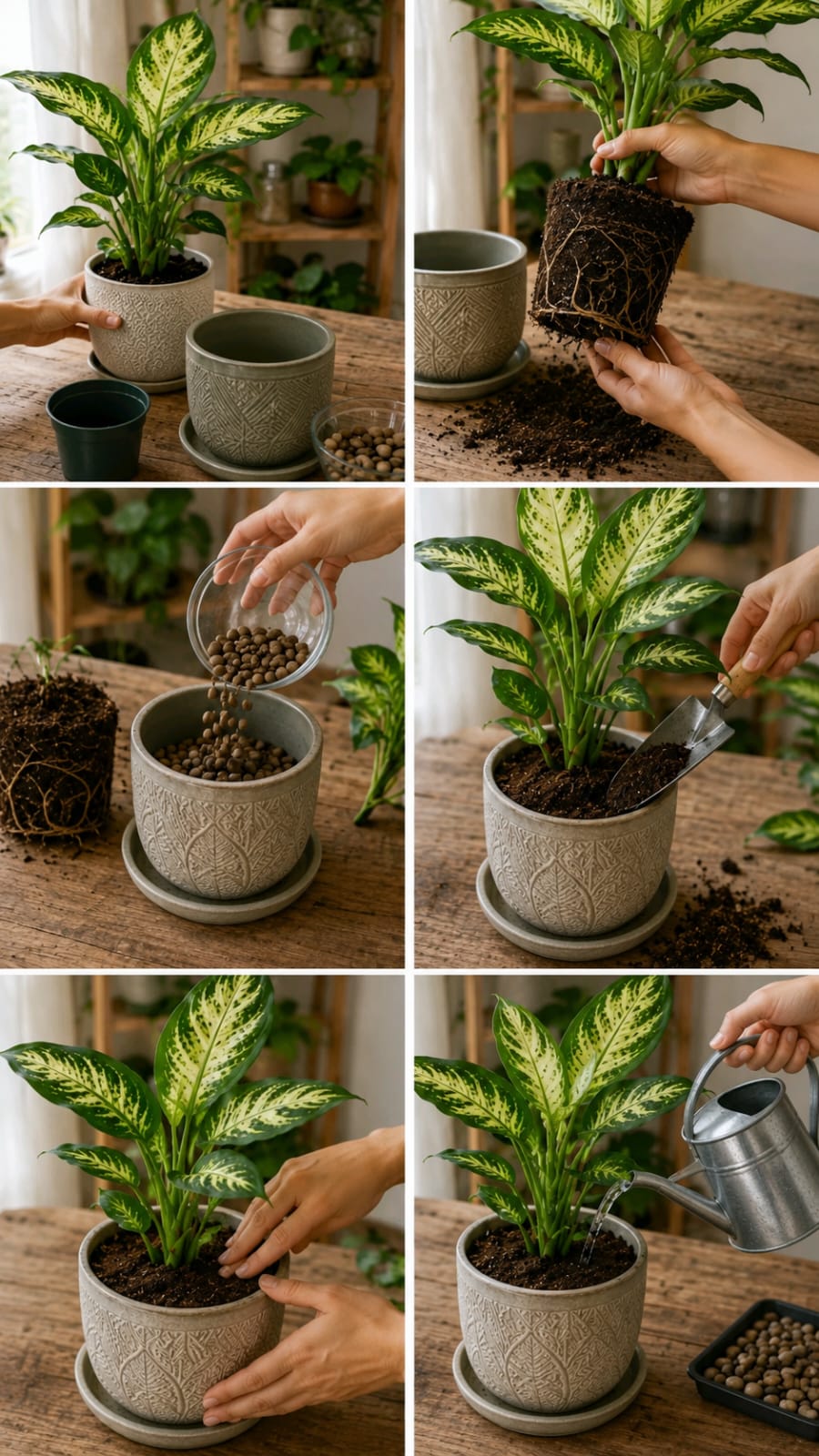
Helpful materials for Dieffenbachia repotting include a clean pot with drainage holes, high-quality indoor potting mix, perlite, orchid bark, clay pebbles, clean pruning scissors, a small hand trowel, a watering can with a narrow spout, and a moisture meter for beginners. A decorative ceramic planter or textured cachepot can improve the final look while still allowing practical care.
A balanced liquid indoor plant fertilizer can support growth after the plant has settled. A grow light can help in darker rooms. A soft cloth can be used to wipe dust from the leaves. Clean leaves improve the plant’s appearance and help it receive light more efficiently. Leaf shine products are usually unnecessary and may leave residue on the foliage.
These tools create a more reliable plant-care setup than guessing. Dieffenbachia can be forgiving when conditions are stable, but it does not respond well to soggy soil, harsh sun, cold drafts, or rough repotting. Good materials make the care routine cleaner, safer, and easier to maintain.
Care Timeline After Repotting
During the first 24 hours after repotting, the plant should be placed in bright indirect light and protected from strong sun. The soil should be watered once to settle the roots if the mix was dry, and extra water should drain away completely. The plant may look slightly stressed at first, but it should not be moved repeatedly.
During the first week, the soil should be checked carefully. It should remain lightly moist but not soggy. The plant should not be fertilized heavily. Any yellowing, wilting, or soft stems should be observed. Mild adjustment is normal, but bad smell or wet-soil drooping needs attention.
After two to four weeks, a healthy Dieffenbachia may begin to stabilize and push new growth. If the plant looks firm and the leaves are holding well, normal care can continue. During active growth, light feeding may begin. If the plant shows stress, the care routine should be simplified and the root environment checked again.
Professional Styling Note
In high-end indoor horticulture, Dieffenbachia is valued because it offers a lush tropical leaf pattern with strong decorative impact. It can make a plain room feel warmer, greener, and more intentional. Its large variegated leaves are excellent for luxury interior styling, premium home staging, modern apartment decor, and indoor plant design.
However, the plant only looks premium when it is clean and healthy. Yellow leaves, soggy soil, messy pot edges, and unstable stems can make the display look neglected. Repotting with fresh soil and careful drainage support helps maintain a polished look. Clay pebbles can be part of that system when they are used correctly and kept clean.
A beautiful Dieffenbachia display depends on both plant health and presentation. The pot should suit the room, the leaves should be dust-free, the soil should look tidy, and the watering routine should protect the roots. Simple, controlled care usually creates a better result than dramatic tricks or overcomplicated methods.
Final Thoughts
Dieffenbachia can become a strong, lush, and decorative indoor plant when it is repotted carefully and given the right root environment. Fresh potting mix helps improve airflow, moisture balance, and root health. Clay pebbles can support drainage and cleaner plant care when used properly, but they should never replace drainage holes or good watering habits.
The safest method is to choose a pot with drainage, use a breathable indoor potting mix, place the plant at the correct depth, water carefully after repotting, and keep the plant in bright indirect light. The roots should stay lightly moist but never trapped in stagnant water. After repotting, the plant should be watched for yellowing leaves, soft stems, bad smell, fungus gnats, and soil that stays wet too long.
With clean care and the right presentation, Dieffenbachia can remain a beautiful accent for living rooms, bedrooms, home offices, plant shelves, modern apartment interiors, commercial interior landscaping, luxury home staging, premium ceramic planters, and polished property presentation. A healthy root system, a breathable soil mix, careful watering, and a decorative planter can turn this tropical houseplant into a full and elegant indoor feature.