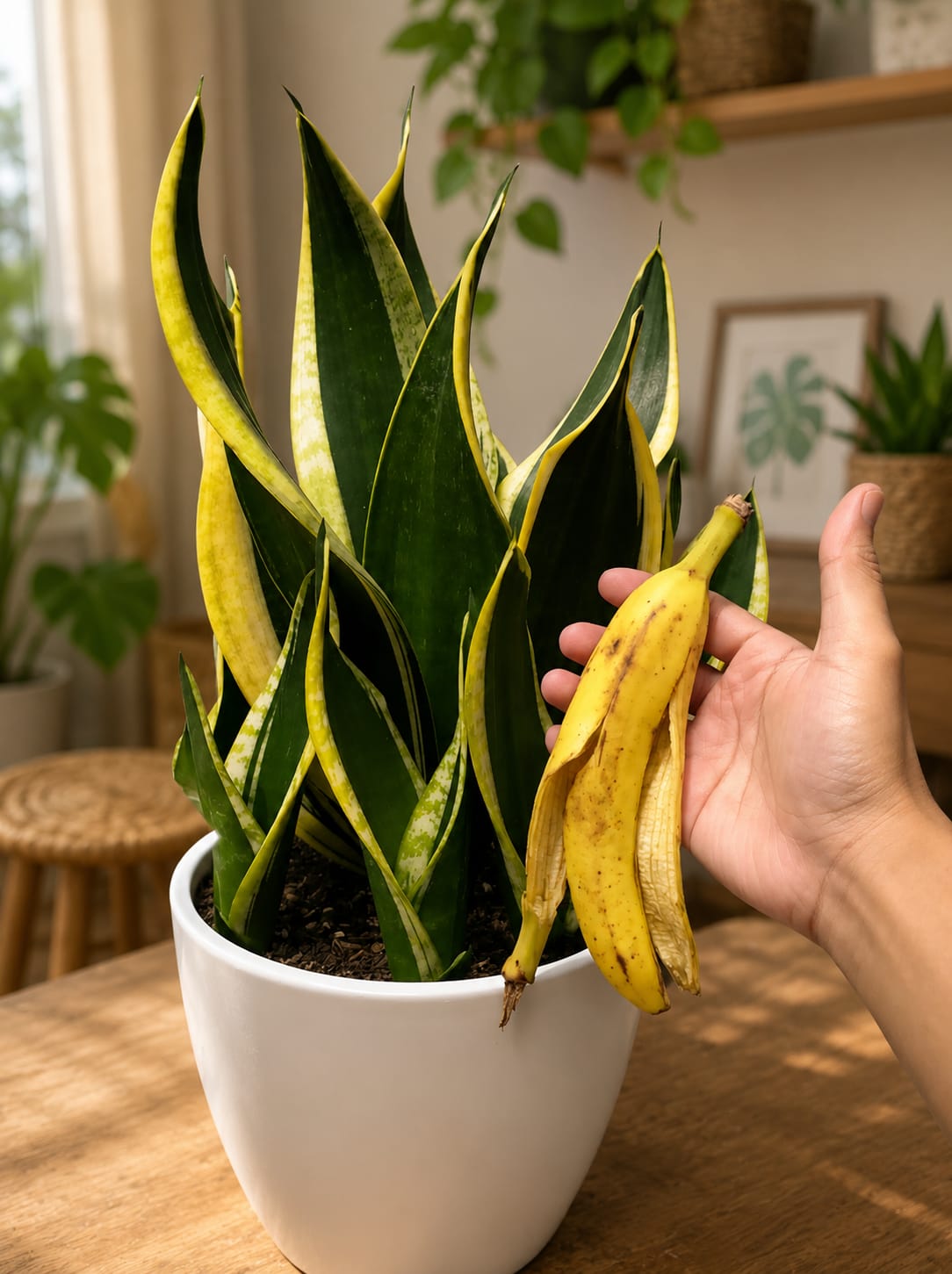
Snake plant is one of the most reliable indoor plants for people who want strong upright leaves, simple care, and a clean decorative look that fits almost any home. Its sword-shaped foliage, dark green centers, yellow-edged variegation, and bold vertical form make it a favorite for living room styling, bedroom decor, home office plant care, modern apartment interiors, premium indoor plant displays, and low-maintenance houseplant collections. It can look elegant in a white ceramic planter, a terracotta pot, a black modern container, or a simple decorative cachepot.
Because snake plant is known for being tough, many people like to try homemade plant-care methods around it. Banana peel is one of the most common natural fertilizer ideas because it is easy to find, low-cost, and often linked with potassium, organic matter, and gentle soil nutrition. The idea sounds simple, but it needs to be handled carefully. A banana peel should not be treated like a miracle ingredient that can be placed directly into any plant pot without risk. Snake plants are dry-loving, slow-feeding plants, and they can suffer when wet organic material decomposes around their roots.
Banana peel may support the soil only when it is prepared correctly and used in very small amounts. Fresh banana peel can attract fungus gnats, fruit flies, mold, and unpleasant odor if it is buried in the pot. It can also hold moisture around the roots, which is dangerous for a snake plant because the plant prefers a breathable, fast-draining potting mix. The safest approach is to use dried banana peel powder, fully composted banana peel, or a weak diluted banana peel water only occasionally. Even then, it should stay away from the crown and leaf bases.
This guide explains how banana peel may be used safely for a snake plant, what nutrients it may provide, why fresh peel can be risky, how to prepare it properly, how to protect the roots from rot, what mistakes to avoid, and how to keep the plant healthy, clean, and suitable for indoor plant styling, commercial interior landscaping, luxury home staging, modern apartment decor, and polished property presentation.
Quick Answer
Banana peel can be used for a snake plant only in a prepared and controlled form. Fresh banana peel should not be buried directly in the pot because it can rot, attract pests, create mold, hold too much moisture, and stress the roots. The safest method is to dry the banana peel completely, crush it into a fine powder, and use only a tiny amount on the outer soil surface. Fully composted banana peel may also be used lightly in a well-draining potting mix. A diluted banana peel water can be used rarely, but only if it smells clean and is strained well. Snake plants still need fast-draining soil, drainage holes, careful watering, bright indirect light, and light feeding rather than heavy organic scraps.
What Plant This Is
The plant is a snake plant, also known as Sansevieria or Dracaena trifasciata. It is easy to recognize because of its tall, firm, upright leaves and yellow-green edges. The leaves are thick and succulent-like, which means they can store water and survive dry periods better than many tropical houseplants. This is one of the reasons snake plant is often recommended for beginners, offices, apartments, and low-maintenance indoor plant displays.
Snake plant has a strong architectural shape. It grows upward instead of spreading widely, so it can add height to a room without taking up too much space. It is often placed beside sofas, entryway tables, desks, beds, reading chairs, shelves, and modern interior corners. Its clean vertical leaves make it suitable for minimal decor, luxury interior styling, biophilic office design, and premium ceramic planter displays.
Even though snake plant is tough, it has clear care preferences. It does not like sitting in soggy soil. It does not need rich compost-heavy soil. It does not need constant fertilizer. Its roots prefer air, drainage, and a dry-down period between watering. This is why any homemade method involving banana peel must be used with restraint. A natural ingredient can still cause damage if it makes the pot too wet or dirty.
Why Banana Peel Is Used in Plant Care
Banana peel is often used in homemade plant-care routines because it contains organic material that can break down over time. It is commonly associated with potassium, and potassium is an important nutrient involved in plant strength, water movement, and general plant function. Banana peel may also contain small amounts of phosphorus, calcium, magnesium, and other trace elements. However, these nutrients are not released instantly in a clean and predictable way.
This is important because many people expect banana peel to act like a fast fertilizer. In reality, banana peel must decompose before most of its nutrients become available to the soil. In an outdoor compost pile, this can work well because the peel breaks down with the help of microbes, worms, airflow, and surrounding organic matter. In a small indoor pot, the process is very different. The peel may stay wet, rot slowly, smell bad, and attract pests before it becomes useful.
For snake plants, banana peel should be seen as a mild soil-support ingredient, not as a complete fertilizer. It may help a little when dried, powdered, composted, or diluted, but it cannot replace balanced care. A snake plant grows best when its roots are healthy, its soil drains well, its pot has drainage holes, and its watering routine is controlled. Banana peel is only a small optional addition.
Why Fresh Banana Peel Can Be Dangerous
Fresh banana peel is soft, wet, sugary, and slow to decompose. When placed directly into a snake plant pot, it can create a damp organic pocket inside the soil. This pocket can hold moisture longer than the surrounding mix. Snake plant roots dislike that kind of wet, decaying environment. If the pot already dries slowly, fresh peel can make the problem worse.
One of the biggest risks is pest attraction. Fungus gnats love damp organic soil. Fruit flies may be attracted to the sweet decomposing peel. Mold can appear on the soil surface or around buried peel pieces. Once pests begin breeding in the pot, the plant becomes harder to keep clean indoors. This is especially unpleasant in bedrooms, living rooms, kitchens, offices, and decorative plant corners.
Fresh banana peel can also create odor. A healthy snake plant pot should smell neutral or lightly earthy. If the soil smells sour, rotten, or fermented, something is breaking down without enough oxygen. That kind of environment can stress roots and increase the risk of root rot. For a plant that is valued for its clean decorative look, visible food scraps and bad smell can ruin the indoor styling effect.
What Banana Peel Should Not Be Used For
Banana peel should not be used as a cure for root rot. If a snake plant has soft leaves, yellowing bases, mushy roots, or a bad smell from the soil, the problem is usually moisture and poor root health. Adding banana peel will not fix that. It may make the root zone wetter and more unstable. The first step should be to check the roots, remove rotten parts, improve drainage, and repot into a fresh dry-friendly mix.
Banana peel should not be used as a magic bloom or growth booster. Snake plants grow slowly, and their growth depends on light, root space, watering, temperature, and overall care. A banana peel will not make a snake plant grow overnight. It also will not repair old damaged leaves. Once a leaf is scarred, bent, mushy, or badly yellowed, it usually will not return to perfect condition.
Banana peel should not replace proper fertilizer either. It may contain some useful nutrients, but it is not balanced. A labeled cactus and succulent fertilizer or a diluted indoor plant fertilizer is more predictable when the plant truly needs feeding. Homemade methods should be used gently and occasionally, not as the main care plan.
Is Banana Peel Suitable for Snake Plants?
Banana peel can be suitable for snake plants only when it is used in a dry, composted, or diluted form. The plant is not a heavy feeder, so it does not need large amounts of organic matter. A small amount of prepared banana peel can be tolerated if the plant is healthy, the soil drains well, the pot has drainage holes, and the care routine is already stable.
It is not suitable when the peel is fresh and wet, when large pieces are buried in the pot, when the soil is already damp, when the pot has no drainage, when fungus gnats are already present, when the plant has root rot, or when the room is humid with poor airflow. In these conditions, banana peel can create more problems than benefits.
The safest rule is simple. If the snake plant is already healthy, banana peel should be used only as a light optional support. If the plant is sick, banana peel should be avoided until the root problem is solved. Feeding a stressed plant with organic scraps is rarely the right first step.
How to Use Dried Banana Peel Powder
Dried banana peel powder is usually the safest homemade method for a snake plant. The peel should be dried completely until it becomes crisp. It should not feel soft, sticky, or flexible. Once dry, it can be crushed or blended into a fine powder. The powder should be stored in a clean dry container and used sparingly.
Only a tiny amount is needed. A small pinch is enough for a small pot, and a light sprinkle is enough for a medium pot. The powder should be placed around the outer soil surface rather than directly against the plant crown. It can be mixed lightly into the top layer of the soil, but it should not be buried deeply around the roots. The leaf bases should stay clean and dry.
After applying banana peel powder, the plant should not be watered automatically. Watering should depend on soil dryness. If the soil is still damp, wait. If the soil is dry and the plant needs water, water normally and allow extra water to drain fully. More powder is not better. Too much organic material can still attract pests or create mold if the soil stays wet.
Using Composted Banana Peel
Fully composted banana peel is safer than fresh peel because the decomposition process has already happened before the material enters the plant pot. Finished compost should smell earthy, not sour or rotten. It should be dark, crumbly, and stable. If pieces of peel are still visible, sticky, or wet, the compost is not fully finished and should not be added to a snake plant pot.
Even finished compost should be used lightly. Snake plants do not need heavy compost-rich soil. Too much compost can hold moisture for too long and reduce airflow around the roots. If compost is added during repotting, it should be blended with cactus and succulent mix, perlite, pumice, coarse grit, or orchid bark to keep the soil open and breathable.
Composted banana peel may be useful when a plant is being repotted into a fresh mix, but it should never dominate the blend. A dry-friendly potting mix is still the foundation. The goal is to provide a small amount of organic support while keeping the root zone airy. For snake plants, drainage always matters more than richness.
Using Banana Peel Water Carefully
Banana peel water is another common homemade plant-care idea. It is usually made by soaking banana peel in water and using the liquid on plants. For snake plants, this method should be used carefully because it can become fermented, sour, or too rich if left too long. A bad-smelling liquid should never be poured into an indoor pot.
If banana peel water is used, it should be weak, strained well, and diluted. It should be applied only to the soil, not onto the leaves or into the crown. The plant should be watered with it only when the soil is dry enough to need moisture. It should not become part of every watering. Snake plants do not need constant liquid feeding.
If the liquid smells sour, alcoholic, rotten, or fermented, it should be discarded. Indoor plant care should stay clean and odor-free. A spoiled homemade liquid can attract flies, create soil smell, and disturb the root environment. A labeled diluted houseplant fertilizer is often safer and more predictable than strong homemade liquids.
Why Soil and Drainage Matter More
Snake plants fail more often from wet soil than from lack of fertilizer. This is why soil and drainage matter more than banana peel. A good snake plant setup includes a pot with drainage holes, a fast-draining potting mix, and a watering routine that allows the soil to dry between watering. Without these basics, banana peel will not help the plant.
If the soil is heavy and wet, adding banana peel can make the pot even more moisture-retentive. If the pot has no drainage holes, water can collect at the bottom and rot the roots. If the plant sits in a decorative cachepot, extra water must be emptied after watering. Standing water is one of the fastest ways to damage a snake plant.
A healthy root zone should have air. Roots need oxygen to function. When the soil is packed, soggy, and full of decomposing organic matter, oxygen becomes limited. The plant may then show yellow leaves, soft leaf bases, poor growth, and unstable stems. A clean breathable soil mix is the best protection.
Best Soil Mix for Snake Plant
The best soil mix for snake plant is dry-friendly and well-draining. A cactus and succulent mix is a good base. It can be improved with perlite, pumice, coarse grit, and a small amount of orchid bark. The mix should not feel heavy, muddy, or dense. When watered, it should allow excess water to drain through the pot and then dry gradually.
Dense garden soil should not be used alone in a container. It can compact, stay wet, and bring pests indoors. Heavy compost mixes should also be avoided because they may hold too much moisture for a snake plant. The plant does not need soil that feels rich like a vegetable garden. It needs soil that supports dry roots and steady growth.
If banana peel powder or compost is used, the potting mix should be even more carefully balanced. Organic amendments hold moisture, so they should be paired with drainage materials. The best result comes from a light, open mix that keeps roots stable but never soggy.
Best Fertilizer Routine
Snake plants benefit from light feeding during active growth, usually in spring and summer. A cactus and succulent fertilizer or a diluted balanced indoor plant fertilizer can be used at reduced strength. Feeding should be gentle because snake plants grow slowly and do not need heavy nutrition.
Banana peel is not a complete fertilizer. It may provide mild organic support, but it does not contain a full balanced nutrient profile. If the plant needs predictable feeding, a labeled fertilizer is better. If banana peel powder is used, it should not be combined with many other homemade fertilizers at the same time. Too many treatments can unbalance the soil.
During winter, feeding should usually be reduced or paused, especially if the plant is in lower light. A plant that is not actively growing will not use nutrients quickly. Extra fertilizer can build up in the soil and cause stress. With snake plants, simple care is often better than constant feeding.
Watering After Using Banana Peel
Watering should not change just because banana peel was added. Snake plants should be watered only when the soil has dried enough. The exact timing depends on light, temperature, humidity, pot size, and soil mix. A plant in bright indirect light may dry faster than one in a dim room. A terracotta pot may dry faster than a plastic or glazed ceramic pot.
After watering, extra water should drain out of the pot. The plant should never sit in a saucer full of water. If the pot is inside a decorative outer container, that container should be checked and emptied. Hidden water at the bottom can rot the roots even when the top of the soil looks dry.
If banana peel powder was used and mold appears after watering, too much powder may have been applied or the soil may be staying wet too long. The moldy material should be removed and the plant should be allowed to dry. If the smell becomes bad or gnats appear, the pot may need to be cleaned or repotted.
Possible Damage If Used Incorrectly
Banana peel can harm a snake plant when used incorrectly. The most common damage comes from burying fresh peel in the pot. This creates a wet decomposing area that can attract pests and reduce oxygen around the roots. Over time, the plant may become weak, yellow, soft, or unstable.
Fungus gnats are a major warning sign. They usually appear when soil is damp and rich in decomposing organic matter. Fruit flies may appear when fresh peel is exposed or not fully buried. Mold may grow on the soil surface when the pot stays wet. A bad smell means the organic material is breaking down in a poor way.
Root rot is the most serious risk. If the lower leaves become soft, the base turns mushy, or the soil smells rotten, the plant should be checked quickly. Rotten roots should be removed, and the plant should be placed in fresh, dry-friendly soil. Banana peel should be stopped completely until the plant is healthy again.
Warning Signs to Watch For
After using banana peel, the plant should be watched for mold, gnats, fruit flies, bad smell, wet soil, yellow lower leaves, soft leaf bases, brown mushy roots, or a crown that looks damp and dirty. These signs suggest that the method is not working safely. The sooner the problem is corrected, the easier it is to protect the plant.
If only a small amount of dried powder was used and the plant remains firm, clean, and pest-free, there may be no issue. However, no dramatic change should be expected. Snake plant growth is naturally slow. A healthy plant may stay stable for weeks before producing visible new growth or pups.
If the plant begins to decline, the care routine should be simplified. Remove organic scraps, reduce watering, improve light, check drainage, and inspect the roots if needed. The solution is usually better root care, not more homemade fertilizer.
Common Mistakes
The biggest mistake is burying fresh banana peel directly in the pot. Fresh peel can rot and attract pests. Another mistake is using too much dried powder. Even dry organic material can create problems when applied heavily. Snake plants do not need large amounts of food.
Another mistake is watering more after adding banana peel. More water increases the chance of decay and mold. The plant should be watered only when the soil is dry enough. Adding peel does not mean the plant needs extra moisture.
Using banana peel on a sick plant is also a mistake. If the plant has root rot, pests, yellowing leaves, or soft bases, banana peel should not be used. The root problem must be solved first. A stressed snake plant needs clean soil, drainage, and careful watering more than homemade feeding.
Repotting After Banana Peel Problems
If fresh banana peel was buried in the pot and the soil now smells bad, shows mold, or attracts insects, repotting may be needed. The plant should be removed gently from the pot, and the old soil should be checked. Any visible peel pieces should be removed completely. The roots should be inspected for damage.
Healthy roots are usually firm. Rotten roots may be dark, mushy, and unpleasant-smelling. Damaged roots should be trimmed with clean tools. The plant should then be repotted into a fresh cactus and succulent mix with added perlite or pumice. The crown should stay above the soil line, and no organic material should touch the leaf bases.
After repotting, watering should be careful. If the roots were damaged, the plant may need time to recover before receiving normal watering. The pot should have drainage holes, and the plant should be placed in bright indirect light. Banana peel should not be added again until the plant is fully stable, and even then it should only be used in a dry prepared form.
Indoor Decor Value
Snake plant has strong indoor decor value because it looks clean, upright, and structured. It can add height to a room without creating visual clutter. Its green and yellow leaves pair well with modern furniture, neutral walls, wood textures, stone surfaces, and minimalist spaces. A white planter can make the yellow edges look brighter, while a black or terracotta pot can create a more dramatic or earthy look.
The soil surface matters for decor. A snake plant in a clean planter looks polished. A snake plant with visible banana peels, mold, flies, or food scraps looks messy. For premium indoor plant styling, all homemade amendments should be invisible, controlled, and odor-free. The plant should look fresh and intentional, not like a compost experiment.
Snake plant works well in living rooms, bedrooms, home offices, entryways, apartment corners, commercial reception areas, property staging setups, and modern plant shelves. It is especially useful where a strong plant shape is needed but daily care is not possible. Its low-maintenance nature makes it one of the most dependable decorative indoor plants.
Continue to Page 2
Continue to page 2 for more details about this article and the key points many readers miss on the first page.