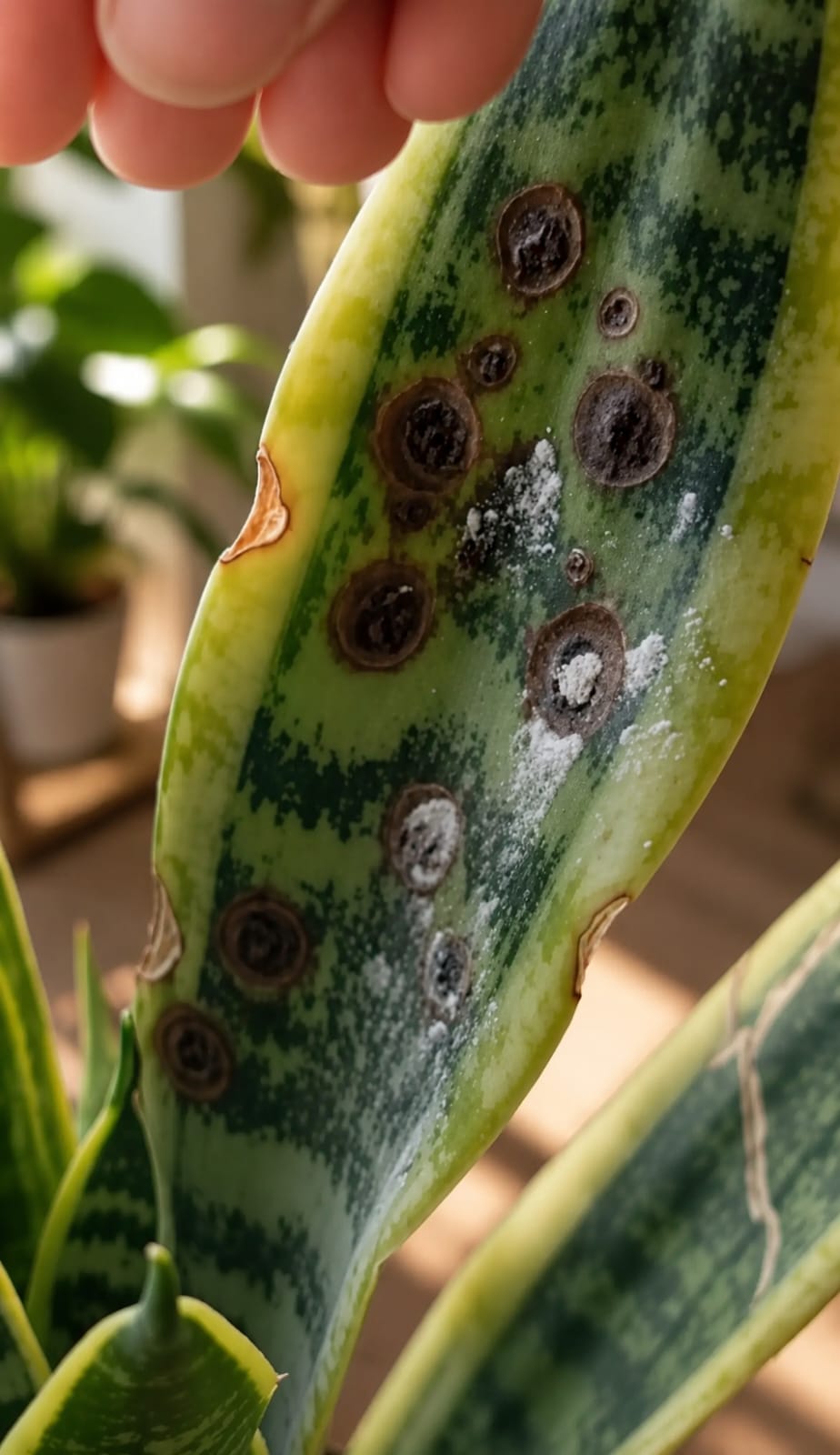
Snake plant is one of the most dependable indoor plants for people who want strong upright leaves, simple maintenance, and a clean modern look that fits almost any room. Its sword-shaped foliage, deep green markings, yellow-edged variegation, and sculptural vertical growth make it a favorite for living room styling, bedroom decor, home office greenery, modern apartment interiors, premium indoor plant care, and commercial interior landscaping. When the leaves are firm, clean, and glossy, the plant can look elegant in a white ceramic planter, a terracotta pot, a matte black container, or a minimalist indoor plant display.
However, snake plant leaves can sometimes develop brown circular spots, dry scabs, dark lesions, pale patches, or white powdery areas. These marks can be alarming because snake plants usually look strong and clean. When the leaf surface begins to show round brown damage and powdery residue, it is often a sign that the plant is dealing with stress. The cause may be fungal leaf spot, bacterial infection, pest residue, mineral buildup, physical damage, sunburn, excess moisture, poor airflow, or a combination of several problems.
Brown spots and white powder should not be ignored, especially when they appear on a living leaf and begin spreading. Snake plants are tough, but damaged tissue does not heal back to perfect green. The goal is to stop the problem from spreading, protect the healthy leaves, improve the growing conditions, and keep the plant clean enough for indoor plant styling. The treatment should be careful because harsh chemicals, too much water, or aggressive cutting can create more stress than the original problem.
This guide explains what brown spots and white powder on snake plant leaves may mean, how to identify the most likely causes, how to clean the plant safely, how to isolate the plant, when to remove damaged leaves, how to improve watering and airflow, what treatments may help, what mistakes to avoid, and how to restore a healthy decorative display for living rooms, bedrooms, home offices, luxury home staging, modern apartment decor, and polished property presentation.
Quick Answer
Brown circular spots and white powder on a snake plant leaf are usually signs of leaf damage caused by moisture stress, fungal or bacterial leaf spot, pest residue, mineral deposits, or poor airflow. The safest first step is to isolate the plant, stop misting the leaves, keep water off the foliage, improve airflow, check the soil moisture, and gently wipe the leaf surface with a clean damp cloth. If the spots are soft, spreading, sunken, wet-looking, or surrounded by yellow tissue, the damaged leaf may need to be removed with clean scissors. Snake plants recover best in bright indirect light, dry-friendly soil, a pot with drainage holes, and a careful watering routine. White powder should not be left on the leaves because it can block the surface, hide pests, and make the plant look unhealthy.
What Plant This Is
The plant is a snake plant, also known as Sansevieria or Dracaena trifasciata. It is easy to recognize because of its tall upright leaves, thick succulent-like structure, green patterned surface, and yellow leaf margins. This plant is often chosen by beginners because it tolerates missed watering, lower light, and normal indoor conditions better than many tropical houseplants.
Snake plant is valued for its clean shape. The leaves rise vertically from the pot and create a strong architectural effect. This makes it useful for interior design because it adds height without spreading widely. A healthy snake plant can sit beside a sofa, bed, entry table, desk, console, plant shelf, reception counter, or modern office corner and still look organized.
Even though snake plant is strong, its leaves can still become damaged. Once the leaf surface is injured by disease, pests, moisture, sun, or chemicals, the damaged spot usually remains visible. The plant can continue to live, but the marked leaf will not turn perfectly green again. This is why early correction matters. The goal is to protect new and healthy growth before the problem spreads.
What Brown Spots on Snake Plant Leaves May Mean
Brown spots on snake plant leaves can have several causes. Round dark lesions may suggest fungal leaf spot or bacterial leaf spot, especially if the spots are spreading or have darker edges. Dry brown patches may come from sunburn, physical injury, or chemical damage. Soft brown areas may indicate rot or moisture-related infection. Small raised brown bumps may sometimes be pests such as scale insects rather than leaf disease.
The shape and texture of the spot matter. A dry, flat, tan mark with no spreading may simply be old damage. A dark circular spot with a ring around it may be more suspicious. A wet-looking spot that feels soft or sunken can be more serious because it may involve bacterial or fungal activity. If the marks multiply quickly, the plant should be treated as a possible disease issue.
Snake plant leaves are thick, so problems can develop slowly. A leaf may look mostly healthy while damaged areas begin forming in patches. If the plant is kept wet, misted frequently, or placed in poor airflow, leaf problems can become worse. A snake plant should not have water sitting on its leaves for long periods. Its leaves prefer to stay dry and clean.
What White Powder on Snake Plant Leaves May Mean
White powder on a snake plant leaf may come from several different sources. It may be powdery mildew, mineral residue from hard water, dried fertilizer splash, dust, pest residue, or treatment powder that was applied to the leaf. It may also appear near damaged spots when the leaf surface has been treated with a homemade remedy or when residue has collected around injured tissue.
Powdery mildew is less common on snake plants than on some softer plants, but it can still appear when humidity is high, airflow is poor, and leaves remain damp. It often looks like pale powder sitting on the surface of the leaf. Mineral deposits can also look white and powdery, especially if the plant has been misted with hard tap water. When water droplets dry, they may leave behind calcium and mineral marks.
Pests can also leave pale residue. Mealybugs may appear as cottony white clusters, especially in leaf folds and near the base of the plant. Scale insects may appear as small brown bumps, sometimes surrounded by sticky residue. If the brown marks look raised and can be scraped off, pests should be considered. If the spots are sunken into the leaf, disease or tissue damage is more likely.
Why This Problem Should Be Handled Carefully
Snake plant problems should be handled carefully because the plant is slow to replace damaged leaves. A tropical plant with thin leaves may grow new foliage quickly, but snake plant growth can be slower indoors. Every leaf matters for the decorative appearance of the plant. Cutting too much at once can make the plant look thin, but leaving infected leaves can allow the problem to spread.
The safest approach is to separate the plant from other houseplants while the cause is being checked. This helps protect nearby plants if the issue is fungal, bacterial, or pest-related. The damaged leaf should be inspected closely. The soil should also be checked because leaf problems often begin with root or moisture stress. A snake plant in wet soil is more vulnerable to disease.
It is also important not to cover the problem with oils, powders, strong homemade mixtures, or repeated sprays before understanding what is happening. Some treatments can burn snake plant leaves or make moisture problems worse. A clean, simple care correction is usually safer than using many remedies at the same time.
Most Likely Causes
One likely cause is fungal leaf spot. This can appear when leaves are exposed to excess moisture, poor airflow, or contaminated tools. Fungal spots may look round, brown, dark-edged, or slightly sunken. They may spread slowly across a leaf, especially if the plant stays damp. Fungal issues often become worse when water is splashed on leaves or when plants are crowded together.
Another possible cause is bacterial leaf spot. Bacterial damage can look wet, dark, soft, or sunken. It may spread faster than dry injury and can sometimes have yellowing around the damaged area. If the spots look wet or mushy, the damaged leaf should be treated seriously. Bacterial problems are harder to reverse, and removing affected tissue may be necessary.
White powder and brown marks may also be linked to pests. Scale insects can look like small brown round shells attached to the leaf. Mealybugs can look white and cottony. Spider mites may create fine webbing and pale speckling, though they are less likely to create large round brown scabs. If pests are present, cleaning and repeated monitoring are necessary.
What This Should Not Be Misunderstood As
Brown spots should not be misunderstood as a normal part of healthy snake plant growth when they are spreading or multiplying. One old scar may not be serious, but many circular lesions suggest that the plant needs attention. A healthy snake plant leaf should be firm, clean, and stable in color. Large clusters of brown damage are a warning sign.
White powder should not automatically be treated as harmless dust. Dust can be wiped away easily, but powder that returns, spreads, clumps, or appears near damaged spots may suggest mildew, pest residue, or mineral buildup. The plant should be inspected instead of ignored.
This problem should also not be misunderstood as a reason to overwater, overfeed, or apply strong fertilizer. Leaf spots are not usually caused by lack of food. They are more often linked to moisture stress, poor airflow, leaf wetness, pests, sun damage, or root problems. Fertilizer will not repair infected tissue. In some cases, it can make a stressed plant worse.
First Step: Isolate the Plant
The first step is to move the affected snake plant away from other houseplants. This does not mean the plant is definitely contagious, but isolation is a smart safety step. If the issue is fungal, bacterial, or pest-related, separation helps prevent spreading. A bright area with indirect light and good airflow is best.
The plant should not be placed in direct harsh sun during isolation. Strong sun can stress damaged leaves and create additional burn marks. It should also not be moved to a dark damp corner. Low light slows drying and weakens the plant. A clean, bright, airy spot is the safest recovery area.
During isolation, the plant should be monitored every few days. New spots, spreading rings, sticky residue, insects, webbing, or powder returning after cleaning should be noted. This observation helps decide whether the plant needs simple cleaning, pruning, pest treatment, or stronger disease management.
Clean the Leaf Surface Safely
The leaf surface should be cleaned gently. A soft damp cloth can be used to wipe away loose white powder, dust, mineral residue, and surface dirt. The cloth should not be soaking wet. Water should not run down into the crown or collect at the base of the leaves. Snake plant crowns should stay dry to reduce rot risk.
If the powder wipes away easily and does not return, it may have been dust, hard water residue, or dried product residue. If it returns quickly or spreads, powdery mildew or pests may be involved. If the brown spots do not wipe away and are part of the leaf tissue, they are damage rather than surface dirt.
Cleaning should be done carefully around damaged areas. Rubbing too hard can tear the leaf surface and create new wounds. Damaged tissue is already weak. A gentle wipe is enough. After cleaning, the leaf should be allowed to dry in good airflow.
Check for Pests
Pests should be checked closely because some of them can look like leaf spots. Scale insects often appear as small brown, tan, or dark raised bumps attached to the leaf. They may look like circular scabs. If a spot can be lifted or scraped gently with a fingernail or cotton swab, it may be scale rather than a disease lesion. Sticky residue around the leaf can also suggest pests.
Mealybugs appear as white cottony clusters and may hide in tight spaces near the base of the leaves. They can also leave white residue that looks powdery. Spider mites are tiny and may cause pale speckling, fine webbing, and general leaf stress. Thrips can create silvery damage, dark specks, and distorted new growth.
If pests are found, the plant should be treated with a careful indoor plant pest routine. The leaves can be wiped with a cloth, and visible pests can be removed manually. Insecticidal soap or horticultural oil may be used according to label directions, but it should be tested carefully because snake plant leaves can react to heavy oils or repeated treatments. The plant should not be placed in strong sun after oil-based treatments.
Check the Soil and Roots
The soil should be checked because leaf problems are often connected to root conditions. If the soil is wet, heavy, sour-smelling, or compacted, the plant may be stressed from poor drainage. A stressed root system makes the plant less able to resist leaf disease. Snake plants should not sit in soggy soil for long periods.
The pot should have drainage holes. If it does not, the plant is at higher risk of hidden root rot. Water can collect at the bottom even when the top of the soil looks dry. A decorative pot without drainage may look beautiful, but it can be dangerous for snake plants. If the plant has leaf spots and wet soil, drainage should be corrected quickly.
If the soil smells bad or the leaf bases feel soft, the plant may need to be removed from the pot and inspected. Healthy roots are firm. Rotten roots are usually dark, mushy, and unpleasant-smelling. Damaged roots should be trimmed with clean tools, and the plant should be repotted into fresh, fast-draining soil.
When to Remove a Damaged Leaf
A damaged leaf should be removed when the spots are spreading, soft, wet-looking, sunken, moldy, or covering a large area. It should also be removed if the leaf is collapsing, yellowing from the base, or threatening to spread infection to nearby leaves. Removing one badly affected leaf can sometimes protect the rest of the plant.
The cut should be made with clean sharp scissors or pruning shears. The leaf can be cut near the base, but the crown should not be damaged. Tools should be cleaned before and after cutting. If disease is suspected, the removed leaf should not be composted with healthy indoor plant material. It is safer to discard it.
If only a few marks are present and they are dry, stable, and not spreading, the leaf can be left in place. The plant may still look acceptable, especially if the damaged side is turned away from view. However, the plant should still be monitored because old damage can sometimes hide an active issue.
How to Treat Fungal Leaf Spot
For suspected fungal leaf spot, the first treatment is environmental correction. Stop misting the plant. Keep water off the leaves. Improve airflow. Space plants apart. Remove heavily damaged leaves. Let the soil dry properly between watering. These steps are often more important than any spray.
A copper-based fungicide or a houseplant-safe fungicide may be used if the issue continues, but it should be applied according to the product label. The plant should not be drenched repeatedly with random mixtures. Snake plant leaves are thick and can be sensitive to residue. Strong homemade sprays can cause more leaf damage.
Fungal spots will not disappear from damaged tissue. Treatment is successful when new spots stop appearing and healthy leaves remain clean. Patience is needed because the plant’s appearance improves mainly through prevention and future growth, not by healing the old scars.
How to Handle Possible Bacterial Spots
Bacterial leaf spot can be more difficult because bacteria can spread through water, tools, and damaged tissue. If spots are wet-looking, soft, or spreading quickly, the affected leaf should be removed. Water should not touch the leaves, and the plant should be kept in a clean, dry, airy location.
Tools must be sanitized before and after cutting. The plant should not be misted. Any water that splashes from infected leaves to healthy leaves can spread the problem. The pot area should be cleaned, and fallen leaf pieces should be removed. Affected material should be discarded rather than reused.
If the problem continues spreading even after pruning and care correction, the plant may need stronger treatment or more affected leaves removed. Severe bacterial problems can be hard to reverse. The safest long-term strategy is prevention through dry leaves, clean tools, good airflow, and careful watering.
How to Manage White Powder Safely
White powder should first be wiped away gently with a clean damp cloth. After cleaning, the plant should be observed. If the powder was mineral residue, it may not return unless the plant is misted again with hard water. If it was dust, regular leaf cleaning will solve the issue. If it was pest residue or mildew, it may return and need additional treatment.
Hard water residue can be reduced by avoiding leaf misting. Snake plants do not need frequent misting. If the leaves need cleaning, wiping is better than spraying. If water is used, filtered or low-mineral water may reduce spots. Leaves should be dried afterward or placed where airflow is good.
If powdery mildew is suspected, airflow and dryness are the main corrections. The plant should not be crowded between other plants. The room should not be constantly humid and stagnant. A houseplant-safe fungicide may be used if needed, but the plant should be watched for sensitivity.
Watering Correction
Watering is one of the most important parts of recovery. Snake plants should be watered only when the soil has dried sufficiently. The exact timing depends on pot size, soil mix, light, humidity, and temperature. A plant in a bright warm room may dry faster than one in a cool dim space. Checking the soil is better than following a strict schedule.
When watering, water should be poured onto the soil, not over the leaves. Extra water should drain from the bottom of the pot. The plant should not sit in a saucer full of water. If a decorative cachepot is used, hidden water should be emptied after watering. This prevents root rot and reduces humidity around the base.
During recovery from leaf spots, it is better to keep the plant slightly on the dry side rather than constantly moist. This does not mean neglecting the plant completely. It means allowing a proper dry-down period so roots receive oxygen and leaves stay less vulnerable to disease.
Best Soil Mix for Recovery
A recovering snake plant needs a fast-draining potting mix. A cactus and succulent mix is a good base. Perlite, pumice, coarse grit, or orchid bark can be added to increase airflow. The mix should not stay wet for many days after watering. If it does, it is too heavy for a stressed snake plant.
Old compacted soil can make recovery harder. If the plant has leaf spots and the soil is dense, repotting may help. The plant should be moved gently and placed at the same depth. The crown should not be buried. Any mushy roots should be removed with clean tools before repotting.
Heavy compost, garden soil, and moisture-retentive mixes should be avoided. A snake plant does not need rich wet soil. It needs a dry-friendly root environment. Healthy roots are the foundation of clean leaves and strong growth.
Light and Airflow
Bright indirect light helps a snake plant recover. Good light supports stronger growth and helps the soil dry at a healthy pace. Low light slows growth and keeps soil wet longer. This can make fungal and bacterial issues worse. The plant should be placed near a bright window but protected from harsh direct sun that could burn damaged leaves.
Airflow is also important. Leaves should not stay damp or crowded. If the plant is packed tightly among many houseplants, it may need more space. A gentle airflow from normal room movement can help keep the foliage dry. Strong cold drafts or heating vents should be avoided because they can stress the plant.
A clean, bright, airy position is better than a humid corner. Snake plants can tolerate average indoor humidity and do not need tropical moisture. Too much humidity without airflow can make powdery and spot problems worse.
Feeding During Recovery
Fertilizer should be used carefully while the plant is recovering. A snake plant with leaf spots does not need heavy feeding. If roots are stressed, fertilizer can irritate them further. It is better to wait until the plant is stable and producing healthy growth before feeding lightly.
During active growth, a diluted cactus and succulent fertilizer or balanced indoor plant fertilizer can be used at reduced strength. Feeding should usually be reduced or paused during winter, low-light conditions, or active disease problems. A simple routine is safer than strong feeding.
Homemade fertilizers should also be avoided during recovery. Banana peel water, coffee grounds, strong compost teas, and random kitchen remedies can increase moisture, pests, and soil instability. The plant needs clean recovery conditions first. Once it is healthy again, any optional feeding should remain light and controlled.
Possible Damage If Treated Incorrectly
Incorrect treatment can make the problem worse. Spraying the plant repeatedly with water can increase leaf wetness and spread disease. Using strong homemade mixtures can burn the leaf surface. Applying oil and then placing the plant in direct sun can cause leaf damage. Cutting with dirty tools can spread infection.
Overwatering during treatment is another major mistake. Some people water more because the plant looks sick, but leaf spots are often linked to too much moisture rather than too little. If the roots are already stressed, extra water can push the plant toward rot.
Ignoring pests can also cause damage. If the brown spots are actually scale insects, the problem will continue until the pests are removed. A careful inspection is needed before assuming every spot is a disease lesion. The best treatment depends on the real cause.
Common Mistakes
One common mistake is leaving an infected leaf in place when the spots are clearly spreading. Another mistake is cutting too many healthy leaves at once. The plant needs a balanced approach. Remove what is dangerous, but keep healthy foliage when possible.
Another mistake is misting snake plants for humidity. Snake plants do not need frequent misting. Water sitting on thick leaves can encourage spotting, mineral residue, and fungal issues. Wiping leaves clean is safer than spraying them often.
Using a pot without drainage is also a serious mistake. Even if the leaf problem appears on the foliage, the root zone may be part of the cause. A dry-loving plant in a sealed pot is always at risk. Drainage holes and fast-draining soil protect the plant long term.
Warning Signs That Need Fast Action
Fast action is needed if the spots spread quickly, the leaf becomes soft, the base turns mushy, the soil smells rotten, pests are visible, or white powder returns after cleaning. These signs suggest that the issue is active. Waiting too long can allow the problem to reach more leaves.
If the damage is limited to one leaf, removing that leaf may protect the plant. If several leaves are affected, the whole care routine must be corrected. Soil, watering, light, airflow, and pest control should all be reviewed. A plant with repeated leaf spots is usually telling you that the environment needs adjustment.
If the plant has root rot, the priority becomes saving the root system. Leaf treatments will not help if the roots are dying. The plant should be removed from wet soil, rotten roots should be trimmed, and the plant should be placed in a fresh dry-friendly mix.
Indoor Decor Value
A healthy snake plant has strong indoor decor value because its leaves are upright, bold, and clean. Brown spots and powdery residue reduce that polished look. Even if the plant survives, damaged leaves can make the display feel neglected. Cleaning, pruning, and correcting the cause helps restore the plant’s decorative role.
Snake plant works beautifully in living rooms, bedrooms, home offices, entryways, apartments, plant shelves, reception spaces, and luxury interior styling. It adds height without taking much floor space. Its green and yellow leaves pair well with neutral walls, dark furniture, wood textures, stone surfaces, and modern planters.
For a premium look, the pot surface should be clean, the leaves should be dust-free, and the plant should be stable. A damaged leaf can be turned away temporarily if it is not spreading, but badly infected leaves should be removed. A clean plant always looks more intentional and expensive than a plant with visible disease or pest residue.
Room-by-Room Styling
In the living room, snake plant can stand beside a sofa, console table, accent chair, or window. A clean leaf surface is important because the plant is often close to eye level. If one leaf is damaged but stable, the plant can be rotated so the healthiest leaves face outward.
In the bedroom, snake plant should remain clean and odor-free. White powder, pests, or mold should not be left near sleeping areas. The plant can look calm and elegant in a white, cream, stone, or terracotta planter. Watering should be light if the bedroom has lower light.
In a home office, snake plant gives a professional look and can improve a video-call background. Brown spots and powdery leaves can reduce that clean effect. Keeping the leaves wiped, dry, and healthy helps the plant remain suitable for a workspace.
In an entryway, snake plant can create a strong first impression. The plant should be checked often because entryways may have changing temperatures and lower light. If the soil dries slowly in that location, watering should be reduced to prevent root and leaf stress.
Office and Commercial Styling
Snake plant is often used in commercial interior landscaping because it is structured, low-maintenance, and visually clean. It works well in reception areas, offices, meeting rooms, hotel-style interiors, wellness spaces, waiting rooms, and property presentation setups. A healthy snake plant can make a professional space feel calmer and more polished.
In commercial settings, leaf spots should be addressed quickly because damaged foliage can make the whole display look poorly maintained. White powder can look like dust or disease, even when the cause is harmless residue. Clean leaves matter in professional plant styling.
For office and property staging use, affected plants should be cleaned, treated, or replaced if the damage is severe. A premium plant display depends on healthy foliage, tidy soil, and a planter that matches the space. Snake plant is easy to style, but it must look clean to deliver its full decorative value.
Product and Tool Guide
Helpful materials for treating snake plant leaf spots include clean pruning scissors, a soft damp cloth, rubbing alcohol for tool cleaning, a fast-draining cactus and succulent mix, perlite or pumice, a pot with drainage holes, a moisture meter, sticky traps for fungus gnats, and a houseplant-safe fungicide or insecticidal soap if needed. Each product should be used carefully and only when it matches the suspected problem.
A magnifying glass can help check for pests such as scale, mealybugs, or mites. A watering can with a narrow spout helps keep water on the soil and away from the leaves. A grow light can support recovery in dark rooms. A premium ceramic planter can improve the display, but it must not trap water around the roots.
These tools help create a safer and cleaner care routine. The goal is not to use every product at once. The goal is to identify the cause, correct the environment, and use the simplest effective treatment.
Continue to Page 2
Continue to page 2 for more details about this article and the key points many readers miss on the first page.