Care Timeline After Treatment
During the first 24 hours, the plant should be isolated, wiped clean, checked for pests, and moved to bright indirect light with good airflow. Water should be kept off the leaves. If a leaf is badly damaged, it can be removed with clean tools.
During the first week, the plant should be watched for new spots, returning powder, pests, or worsening softness. The soil should not be watered unless it has dried enough. If the pot is wet or smells bad, the roots should be checked.
After two to four weeks, the problem should stop spreading if the cause has been corrected. Old brown spots will remain, but healthy leaves should stay clean. After one to two months, the plant may begin producing stable new growth if the roots are healthy and light conditions are good. Long-term success depends on preventing leaf wetness, overwatering, poor airflow, and pest buildup.
Professional Styling Note
In high-end indoor horticulture, snake plant is valued because it offers strong architectural structure with very little visual clutter. Its upright leaves make it ideal for luxury interior architecture, premium corporate workspace styling, modern apartment decor, and property presentation. However, the plant must look clean to keep that premium effect.
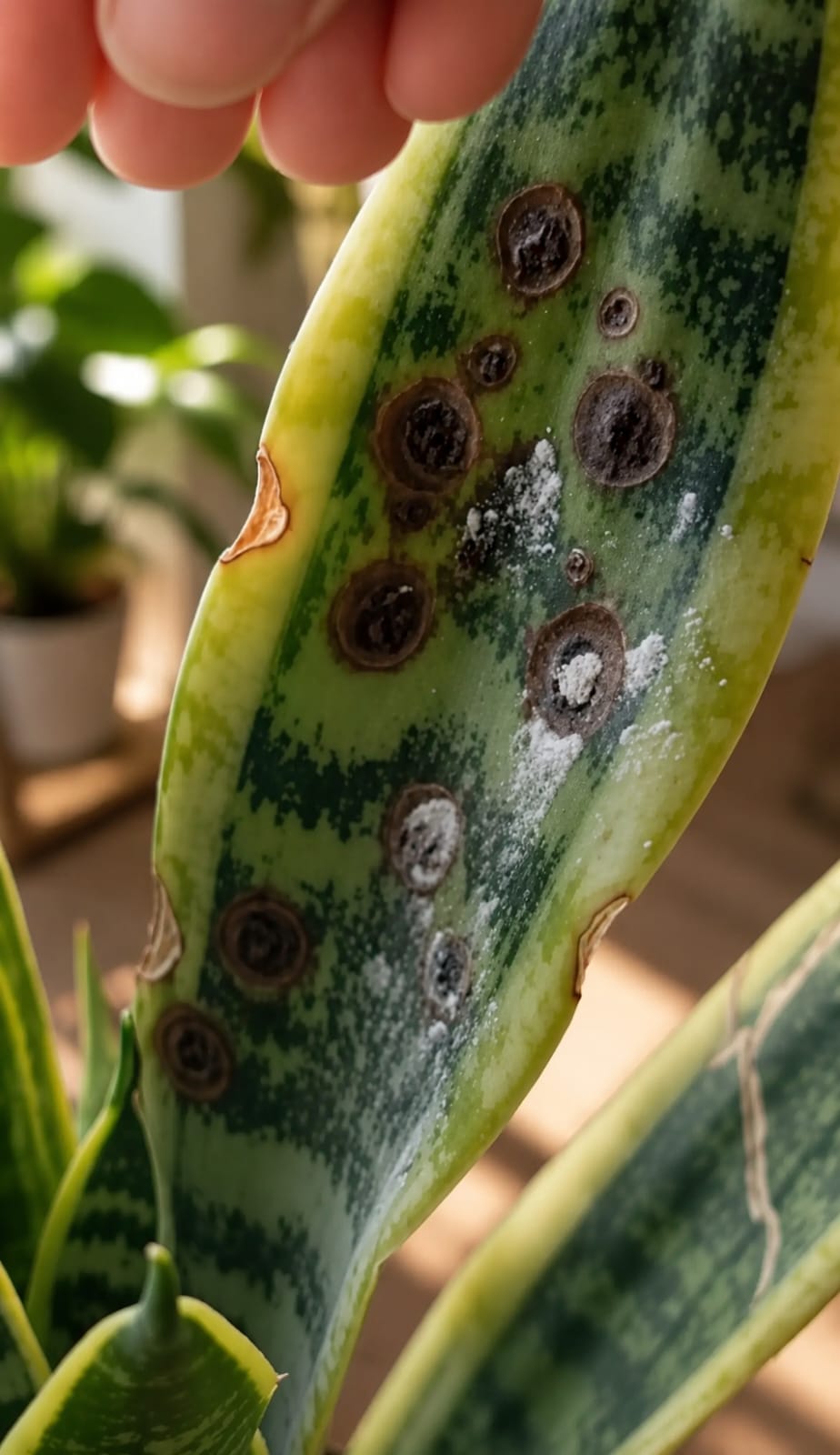
Brown spots and white powder should be treated as both a plant-health issue and a styling issue. Even when the plant is not dying, visible leaf damage can reduce the polished look of the space. Removing badly damaged leaves, cleaning residue, and correcting the care routine can help restore the display.
A premium-looking snake plant needs firm leaves, clean surfaces, breathable soil, controlled watering, and a planter that fits the room. Simple, consistent care is more effective than dramatic treatments. The best result comes from protecting the roots, keeping the leaves dry, and responding early when marks appear.
Final Thoughts
Brown spots and white powder on a snake plant should be handled carefully because they can point to moisture stress, fungal leaf spot, bacterial damage, pest residue, mineral buildup, or poor airflow. The safest first steps are to isolate the plant, clean the leaves gently, stop misting, check for pests, inspect soil moisture, and remove severely damaged leaves if needed.
The damaged spots will not turn green again, but the plant can remain healthy if the cause is corrected. Snake plants recover best with bright indirect light, fast-draining soil, drainage holes, careful watering, clean tools, and dry leaf surfaces. Heavy fertilizer, random homemade sprays, and constant moisture should be avoided while the plant is recovering.
With the right care, a snake plant can continue to be a strong decorative accent for living rooms, bedrooms, home offices, entryways, modern apartments, commercial interior landscaping, luxury home staging, premium ceramic planters, and polished property presentation. Clean leaves, healthy roots, and a stable routine will always protect the plant better than quick fixes or overcomplicated treatments.