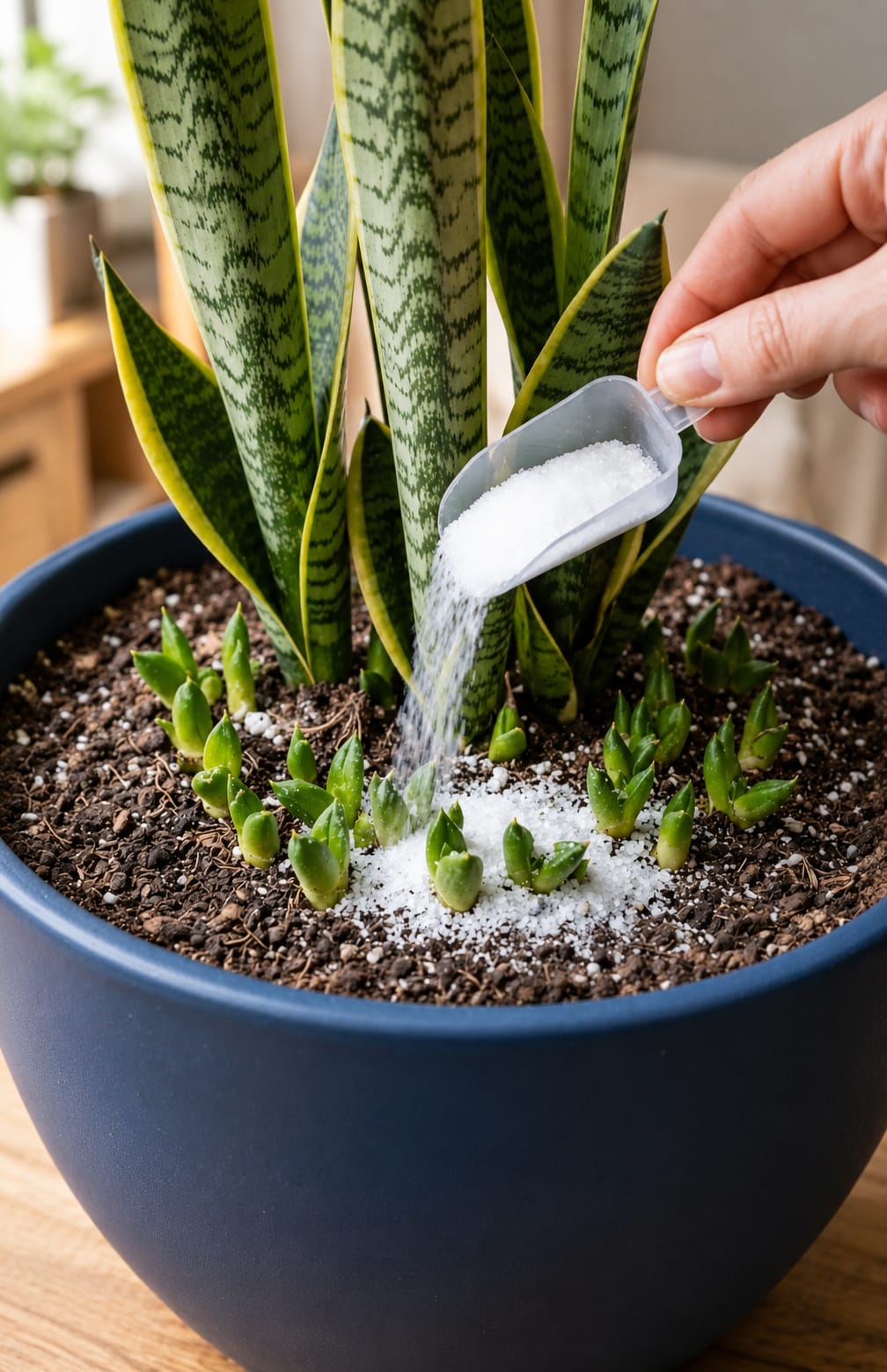
Snake plant is one of the most dependable indoor plants for people who want strong upright leaves, simple care, and a clean architectural look that fits almost any home. Its sword-shaped foliage, green patterned surface, yellow-edged variegation, and bold vertical structure make it a favorite for living room styling, bedroom decor, home office greenery, modern apartment interiors, premium indoor plant displays, commercial interior landscaping, and polished property presentation. When a snake plant is healthy, it looks structured, calm, and elegant with very little daily attention.
Snake plants can also produce small new shoots around the base. These baby growths are often called pups. They emerge from underground rhizomes and slowly grow into new upright leaves. Seeing many pups around a mature snake plant is exciting because it shows that the plant is actively growing and expanding. However, new pups are also tender compared with mature leaves, so any soil treatment around them should be used carefully. A heavy layer of powder, strong fertilizer, or wet amendment placed too close to the pups can damage the young growth instead of helping it.
A white powder used around snake plant pups may represent several different plant-care products or homemade amendments. It may be perlite dust, rooting powder, slow-release fertilizer, eggshell powder, baking soda, garden lime, diatomaceous earth, anti-fungal powder, or another soil-support ingredient. Some powders can be useful in small amounts when they are safe for houseplants. Others can burn roots, change soil chemistry, create crust, attract moisture, or harm the plant if used incorrectly. Because the exact powder matters, the safest approach is to treat any white powder as something that must be identified and applied with restraint.
This guide explains how to use white powder around snake plant pups safely, what the powder might be, what it should not be misunderstood as, why young pups need special protection, how to keep the crown and rhizomes healthy, what soil mix works best, when powder should be avoided, what warning signs to watch for, and how to keep the plant clean, healthy, and suitable for indoor plant styling, modern apartment decor, luxury home staging, commercial interior landscaping, and premium houseplant presentation.
Quick Answer
White powder should be used around snake plant pups only if it is known to be safe for houseplants and applied in a very small amount. It should never be poured heavily over young pups, packed against leaf bases, or used on wet soil without understanding what it contains. If the powder is perlite or a light soil amendment, it may help improve drainage when mixed into the potting mix. If it is fertilizer, it must be used according to label directions and kept away from the crown. If it is eggshell powder or diatomaceous earth, it should be used lightly and only on dry soil. Unknown white powder, baking soda, salt, strong lime, or harsh chemicals should not be added to a snake plant pot. Snake plants grow best with drainage holes, cactus and succulent mix, bright indirect light, and watering only when the soil dries.
What Plant This Is
The plant is a snake plant, also known as Sansevieria or Dracaena trifasciata. It is easy to recognize because of its tall upright leaves, thick succulent-like structure, green patterned centers, and yellow leaf edges. The mature leaves grow in strong vertical clusters, while small pups may appear around the base when the plant is healthy and actively growing.
Snake plant pups come from rhizomes under the soil. These rhizomes are thick underground stems that store energy and push out new growth. When a pup emerges, it may look like a small spear or folded green shoot. Over time, it opens and grows taller. A pot with several pups can eventually become a fuller, more impressive display. This is why many plant owners become interested in feeding or supporting the soil when pups appear.
Even though pups are a good sign, they should not be treated aggressively. New growth is sensitive at the base. If powder, water, fertilizer, or organic material collects around the young shoots, it can create stress. Snake plant pups need clean airflow, dry-friendly soil, and enough space to grow. The best support is usually stable care rather than heavy treatment.
Why Snake Plant Pups Appear
Snake plant pups usually appear when the plant has enough stored energy and a healthy root or rhizome system. A mature plant may produce pups after months or years of stable growth. Good light, careful watering, and a slightly snug pot can all support this process. Pups are not produced because of one single ingredient. They are the result of a plant that has enough strength to expand.
Bright indirect light is one of the most important factors. Snake plants can survive in low light, but they grow more slowly. In brighter filtered light, they are more likely to produce new leaves and pups. The potting mix also matters. If the roots are healthy and the soil dries properly, the plant can put energy into new growth instead of fighting rot.
Pups should be seen as a sign to maintain good conditions, not as a reason to suddenly change everything. If the plant is already producing new shoots, the routine is likely working. Adding too much powder or fertilizer at that moment can disturb the root zone. Gentle support is safer than dramatic intervention.
What the White Powder Might Be
White powder around a snake plant may be many different things. If it is perlite dust or crushed perlite, it may be related to drainage and soil aeration. Perlite is commonly used in cactus and succulent mixes because it helps keep the soil open and reduces compaction. It is generally safe when mixed into the potting medium, though dust should not be inhaled and should not be piled heavily around the crown.
If the powder is rooting hormone, it is usually meant for cuttings, not for sprinkling across established pups. Rooting powder may help cuttings form roots, but it is not usually needed for snake plant pups that are already attached to rhizomes. Heavy use around living crowns can create unnecessary residue. Rooting products should be used according to label directions.
If the powder is fertilizer, eggshell powder, lime, baking soda, diatomaceous earth, or anti-fungal powder, the risks vary. Fertilizer can burn roots if overused. Eggshell powder breaks down slowly and is not a complete fertilizer. Lime can change soil pH. Baking soda can damage plants if used incorrectly. Diatomaceous earth works only when dry and can clump when wet. Unknown powder should never be added casually to a snake plant pot.
What This Method Should Not Be Misunderstood As
White powder should not be misunderstood as a magic pup booster. Snake plant pups do not appear instantly because powder is added to the soil. They grow from rhizomes when the plant has the right conditions. If the root system is unhealthy, powder will not fix the problem. If the pot has no drainage, powder will not protect the plant from rot.
It should not be misunderstood as a reason to overfeed. Snake plants are not heavy feeders. They grow slowly and prefer mild nutrition. Too much fertilizer can cause brown leaf tips, root irritation, salt buildup, and stress around young pups. A plant with many pups may look like it needs extra food, but it still needs restraint.
The powder should also not be used to cover the base of the pups. Young shoots should not be buried under a thick layer. The crown area should stay clean and open. When powder is packed around tender growth, it can trap moisture and reduce airflow. This can create rot at the base of the pups, especially after watering.
Why Young Pups Need Protection
Young snake plant pups are connected to the mother plant through rhizomes. They are still developing their own structure and root support. The base of each pup should stay firm, clean, and dry enough to breathe. If the soil around the pups becomes wet, compacted, or coated with powder, the small shoots may soften or stop growing.
New pups can also be damaged by concentrated fertilizer. Mature roots may tolerate mild feeding, but tender new growth can react badly to strong products. If fertilizer granules or powder sit directly against the pup base, it can cause burn or irritation. Nutrients should be distributed lightly through the soil, not piled around one area.
Protection does not mean leaving the pups completely untouched. It means supporting the surrounding environment. The plant needs a well-draining mix, a pot with drainage holes, steady light, and careful watering. These conditions help pups mature into strong leaves naturally.
How to Apply White Powder Safely
The safest way to apply any known safe powder is to use a very small amount. It should be spread thinly on the outer soil surface or mixed gently into the top layer, away from the pup bases and the mature leaf crowns. The powder should not be poured in a thick mound. A small scoop can look harmless, but in a small pot it can be too concentrated.
If the powder is a soil amendment such as perlite powder or fine mineral support, it should be mixed into the soil rather than left as a thick surface pile. If the powder is fertilizer, label directions should be followed exactly. If the powder is eggshell powder, only a light dusting should be used because it breaks down slowly. If the powder is diatomaceous earth, it should be kept dry to remain useful, but snake plant watering can quickly reduce its effect.
After applying powder, watering should not be automatic. The soil should be checked first. If the soil is already moist, wait. If the plant is ready for water, water carefully around the soil and avoid washing powder into the crown. The pot should drain fully, and extra water should be removed from the saucer.
When White Powder Should Be Avoided
White powder should be avoided when the identity is unknown. Adding an unknown substance to a plant pot can be dangerous. Some white powders that look harmless can contain salt, baking soda, strong alkaline materials, cleaning products, or concentrated chemicals. These can damage roots and young pups quickly.
Powder should also be avoided when the soil is wet, sour-smelling, moldy, or full of fungus gnats. These signs suggest the root zone is already too damp or unstable. Adding powder can create clumps, crust, or further imbalance. The first step should be improving drainage, reducing watering, and checking the roots if needed.
It should also be avoided when pups are extremely young and just emerging. At that stage, the small shoots are delicate. A clean soil surface and careful watering are safer than amendments. Once pups are larger and the plant is stable, very light soil support may be considered if truly needed.
Best Soil Mix for Snake Plant Pups
Snake plant pups grow best in a fast-draining potting mix. A cactus and succulent mix is a good base because it is designed for plants that dislike soggy soil. Perlite, pumice, coarse grit, or orchid bark can be added to improve airflow. The mix should not feel dense or muddy after watering. It should allow water to pass through and dry gradually.
The soil around pups should be loose enough for new growth to push through. If the surface is hard, crusted, or compacted, pups may struggle. A light top layer helps the young shoots emerge cleanly. However, loose does not mean constantly wet. The soil should still dry between watering.
Garden soil should not be used alone in a snake plant container. It can compact, hold too much moisture, and bring pests indoors. Heavy compost mixes can also stay wet too long. Pups need a breathable environment, not rich soggy soil. The right soil mix is much more important than adding white powder.
Choosing the Right Pot
A snake plant pot should have drainage holes. This is essential for mature plants and even more important when pups are present. New growth will not thrive if the rhizomes are sitting in trapped water. A decorative pot without drainage may look attractive, but it can create hidden root rot.
The pot should be wide enough to allow pups to emerge without being pressed against the rim. If pups are crowded tightly or pushing against the pot wall, repotting may eventually be needed. However, snake plants can tolerate being somewhat snug. A pot that is too large can hold excess wet soil, so the size should be balanced.
A blue, white, terracotta, black, or stone-effect planter can all look beautiful with snake plant. The container should match the room style, but the plant’s health comes first. A premium-looking pot is useful only when the roots remain healthy and the soil surface stays clean.
Watering After Powder Application
Watering after powder application should be controlled. Snake plants should not be watered just because powder was added. The soil should be dry enough before water is applied. If the soil is damp, watering can turn the powder into a paste, create clumps, or wash concentrated material into the pup bases.
When watering is needed, water should be applied to the soil slowly. The crown and young shoots should not be flooded. A narrow-spout watering can helps direct water around the pot. Extra water should drain from the bottom. Any water in the saucer should be removed.
After watering, the soil should dry again before the next watering. This dry-down period protects the rhizomes and pups. If the soil stays wet for many days, the mix may be too heavy, the pot may be too large, or the room may be too dark. Powder will not fix slow-drying soil. The growing conditions need correction.
Light for Stronger Pup Growth
Bright indirect light supports stronger pup growth. Snake plants can tolerate lower light, but they grow more slowly in dim spaces. If a plant is producing pups, giving it brighter filtered light can help those pups mature into firm leaves. A bright window, balcony with shade, or grow light can support better growth.
Harsh direct sun should be introduced carefully. Snake plant leaves can scorch if moved suddenly from indoors to strong sun. Morning sun or filtered light is safer. Young pups can be especially sensitive to sudden heat. If the plant is outdoors or near a hot window, gradual acclimation is important.
Good light also helps the soil dry correctly. In low light, the plant uses less water, and the soil stays wet longer. This can increase the risk of rot around pups. Light and watering are connected. Better light often makes the entire care routine safer.
Feeding Snake Plant with Pups
A snake plant with pups may benefit from light feeding during active growth, but it does not need heavy fertilizer. A diluted cactus and succulent fertilizer or mild balanced houseplant fertilizer can be used in spring and summer. It should be applied at reduced strength. Strong feeding can damage roots and young shoots.
If the white powder is fertilizer, it should be used very carefully. More fertilizer does not mean more pups. Too much can create salt buildup, brown tips, root burn, and stress. Fertilizer should be spread evenly and kept away from direct contact with the pup bases.
Feeding should be reduced or avoided in winter, low light, or when the plant is stressed. A plant with root rot, soft bases, or wet soil should not be fed. It needs dry-friendly recovery conditions first. Fertilizer supports healthy plants, but it does not repair damaged roots.
Possible Damage If Powder Is Used Incorrectly
White powder can damage snake plant pups if it is applied too heavily, placed against young shoots, used on wet soil, or made from the wrong ingredient. Concentrated fertilizer can burn roots. Baking soda or salt-like substances can damage soil chemistry. Thick powder can form crust and block airflow. Organic powder can mold if it stays damp.
The pup bases may soften if powder traps moisture around them. This is especially risky when the powder is piled around the crown and then watered. Snake plant pups should emerge from clean, breathable soil. They should not be buried under a wet powder layer.
Powder can also reduce the decorative value of the plant. A clean snake plant display should look tidy and intentional. A heavy white pile on the soil may look messy, dusty, or unnatural. In premium indoor plant styling, amendments should be subtle and controlled.
Warning Signs to Watch For
After using white powder, watch for soft pups, yellowing shoots, brown leaf tips, white crust on the soil, mold, fungus gnats, sour smell, clumping powder, wet soil that does not dry, or mature leaf bases becoming soft. These warning signs suggest that the powder or watering routine may be causing stress.
If pups become soft at the base, the area should be checked immediately. Softness may indicate rot. Excess powder should be removed, the soil should be allowed to dry, and the plant should be inspected. If rot spreads, the plant may need to be repotted into fresh dry-friendly soil.
If the soil develops a hard white crust, the top layer may need to be loosened or replaced. Crust can interfere with water movement and airflow. If the crust came from fertilizer buildup, flushing may be needed only if the pot drains well. If the pot has poor drainage, repotting is safer.
Common Mistakes
One common mistake is pouring too much powder directly over the pups. Young shoots should not be buried or coated. Another mistake is assuming that any white powder is safe. Plant-safe products must be identified before use. Unknown powders should not go into a living pot.
Another mistake is watering heavily after adding powder. This can push concentrated material toward the roots and pup bases. Snake plants need dry periods. Water should always be based on soil dryness, not on the presence of an amendment.
Using powder as a substitute for proper soil is also a mistake. If the soil is heavy, wet, or compacted, sprinkling something on top will not solve the root problem. The plant may need a better mix, drainage holes, and corrected watering. The foundation matters more than the surface treatment.
What to Do If Too Much Powder Was Added
If too much powder was added, the excess should be removed gently from the soil surface. A small spoon, brush, or hand tool can help lift it away without damaging the pups. Powder should be cleared from around the young shoots and mature leaf bases. The crown should be open and clean.
The plant should not be watered heavily to wash the powder down. That may move the problem deeper into the root zone. If the soil is dry and only a little safe powder remains, the plant can be monitored. If the powder is unknown or strong fertilizer, removing the top layer of soil may be safer.
If warning signs appear, repotting may be necessary. The plant should be removed carefully, the roots and rhizomes inspected, and old contaminated soil discarded. Healthy pups should be preserved if possible. The plant should be reset into fresh cactus and succulent mix with drainage.
Repotting a Snake Plant with Pups
Repotting may be needed when pups are crowded, the pot is full, the soil is compacted, or the plant has drainage problems. The plant should be removed gently from the pot. The root ball and rhizomes should be handled carefully because pups are connected to the mother plant. Pulling too hard can break young growth.
If pups are well-developed and have their own roots, they can sometimes be separated from the mother plant. If they are still small, it may be better to leave them attached until they grow stronger. Dividing too early can slow growth or cause failure. Patience usually produces better divisions.
The plant should be repotted at the same depth. The crowns should not be buried. Fresh dry-friendly soil should be placed around the roots and pressed gently. After repotting, watering should be conservative. The plant should be placed in bright indirect light and allowed to settle.
How to Separate Pups Safely
Pups can be separated when they are large enough and have their own roots or rhizome section. The plant should be removed from the pot, and the connection between the pup and mother plant should be identified. A clean knife or scissors can be used to separate the rhizome if needed. The cut should be clean, not torn.
Each separated pup should have enough root support to survive. A tiny shoot with no roots is more risky. After separation, the pup can be planted in a small pot with cactus and succulent mix. The pot should have drainage holes. The crown should remain above the soil surface.
Freshly separated pups should not be fertilized heavily. They need time to settle. Bright indirect light and careful watering are safer. Once the pup begins growing, light feeding can be introduced during active growth. Strong powder treatments should be avoided during early establishment.
Cleaning the Plant and Soil Surface
A snake plant display looks best when the leaves and soil surface are clean. Dust can be wiped from the leaves with a soft cloth. Powder that lands on the leaves should be removed gently. White residue on green leaves can look messy and may attract moisture or dust.
The soil surface should remain tidy. If powder clumps, crust, or visible residue remains, it can reduce the premium look of the plant. A light top dressing may be attractive if it is clean and functional, but a messy pile of powder around pups does not look professional.
Cleaning also helps with inspection. When the plant is tidy, it is easier to notice pests, soft bases, new growth, and soil problems. Regular inspection is especially useful when many pups are emerging because crowded growth can hide moisture problems near the crown.
Indoor Decor Value
A snake plant with many pups has strong indoor decor value because it looks full, active, and sculptural. The mature leaves add height, while the small pups create interest around the base. This combination can make the plant look lush without losing its clean architectural style. It works well in living rooms, bedrooms, offices, apartments, and entryways.
A blue ceramic pot can create a modern contrast with the green and yellow foliage. White planters make the plant look clean and bright. Terracotta adds warmth and natural texture. Black or stone-effect planters create a more dramatic premium style. The pot should match the room, but it should also support drainage.
The soil surface matters in decorative styling. A healthy pot with clean pups looks intentional. A pot covered in too much white powder can look dusty or neglected. For a premium display, amendments should be hidden, minimal, and safe. The plant itself should be the focus.
Room-by-Room Styling
In the living room, a snake plant with pups can sit near a bright window, beside a sofa, on a plant stand, or in a decorative corner. The full base makes the plant look more established. The leaves should be wiped clean so the variegation stands out.
In the bedroom, snake plant creates a calm and organized look. The pot should remain clean and odor-free. Unknown powders or strong amendments should be avoided in bedroom plants because smell, mold, or dust can become unpleasant. Simple clean care is better for a resting space.
In a home office, snake plant works well because it looks professional and low-maintenance. Pups around the base can make the plant look healthier and more interesting. The pot should be placed where it receives enough bright indirect light, especially if new growth is desired.
In an entryway or hallway, snake plant can create a strong first impression. A full pot with pups looks mature and valuable. If the space is dark, the plant may survive but produce slower growth. A brighter location or grow light may help keep the pups developing.
Continue to Page 2
Continue to page 2 for more details about this article and the key points many readers miss on the first page.