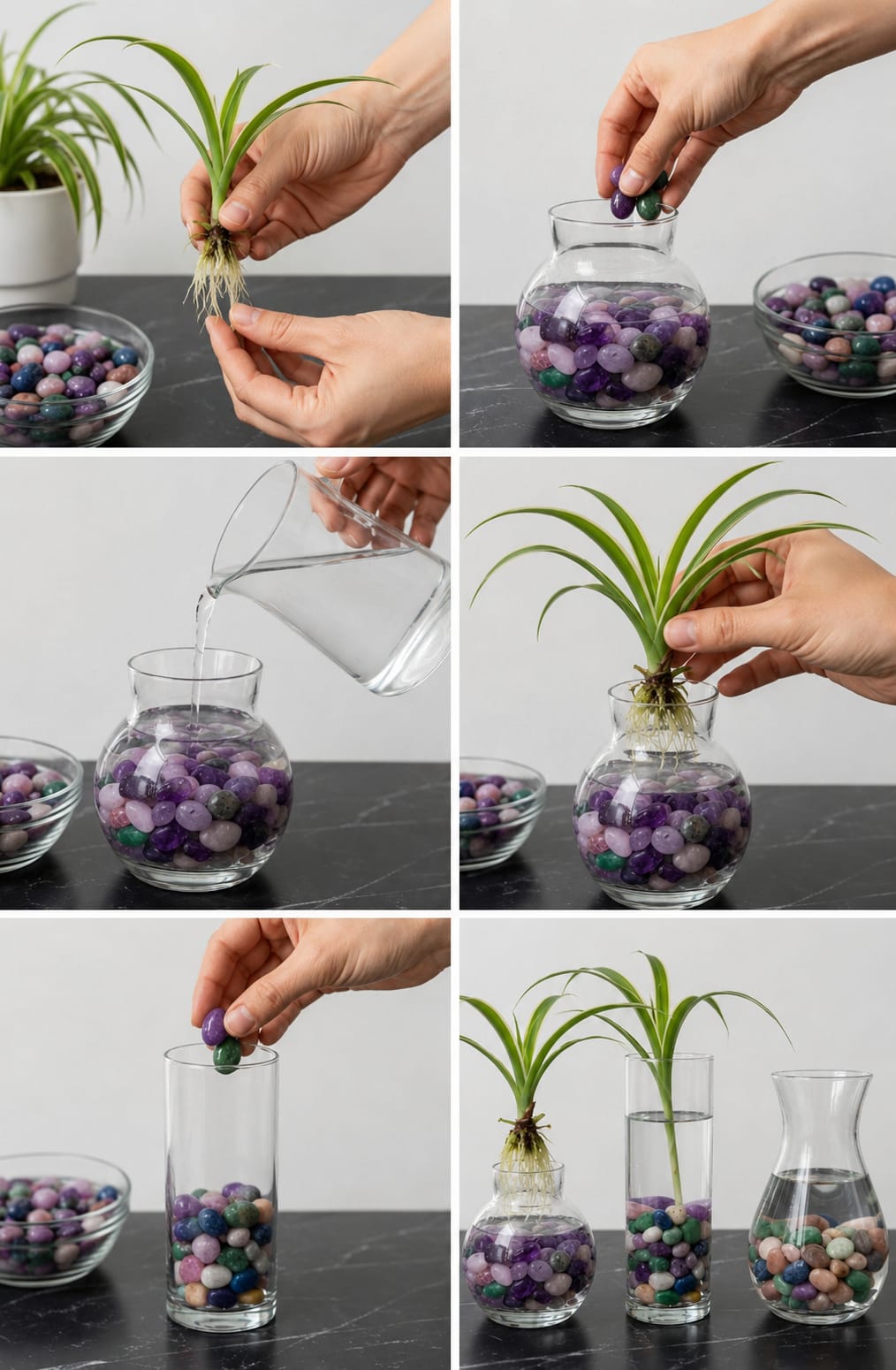
Spider plant is one of the most cheerful and dependable indoor plants for people who want fresh green leaves, easy propagation, and a clean decorative look that works beautifully in modern homes, apartments, offices, windowsills, plant shelves, and tabletop displays. Its arching narrow leaves, bright green color, soft fountain shape, and ability to produce baby plantlets make it a favorite for indoor plant styling, home office greenery, living room decor, bedroom plant displays, modern apartment interiors, premium indoor plant care, and polished property presentation. When grown well, a spider plant can look fresh, light, and lively without needing complicated maintenance.
One of the most attractive ways to display spider plant babies is in clear glass vessels with clean water and colorful decorative pebbles. This method turns simple rooted plantlets into a small indoor water garden. The roots remain visible, the pebbles add color and stability, and the glass container creates a clean modern look. This type of display can work on a windowsill, coffee table, desk, kitchen counter, bathroom shelf with bright light, plant stand, or decorative tray. It is especially useful for people who want a low-soil plant arrangement that looks polished and easy to refresh.
However, a spider plant water display should still be handled carefully. Spider plants can root in water, but they are still living plants that need clean water, enough oxygen, proper light, and healthy roots. The pebbles should be decorative and supportive, not dirty, sharp, or packed so tightly that roots cannot breathe. The plant crown should stay above the water line, and the leaves should not sit in water. If the water becomes cloudy, smelly, or stagnant, the roots can decline. A beautiful glass display only works when the water remains clean and the roots stay healthy.
This guide explains how to create a decorative spider plant water display safely, how to choose healthy baby plantlets, how to prepare colorful pebbles, how to select the right glass vessels, how much water to use, how to prevent rot, how to keep roots clean, when to move plantlets into soil, and how to style the display for living rooms, bedrooms, home offices, windowsills, modern apartment decor, commercial interior landscaping, luxury home staging, and premium houseplant presentation.
Quick Answer
A spider plant water display can be created by using healthy rooted baby spider plants, clean clear glass vessels, rinsed decorative pebbles, and fresh room-temperature water. The pebbles should sit at the bottom of the vessel to support the roots and add color, while the plant crown must remain above the water. Only the roots should touch the water. Leaves should stay dry, and the water should be changed regularly to prevent cloudiness, algae, odor, and root rot. The display should be placed in bright indirect light, away from harsh direct sun that can heat the glass. Spider plants can live in water for a while, but long-term growth is usually stronger if they are eventually planted into light well-draining soil or maintained carefully with clean water and very mild nutrients.
What Plant This Is
The plant is a spider plant, known botanically as Chlorophytum comosum. It is recognized by its long narrow leaves that arch outward from a central crown. Many spider plant varieties have green leaves with cream or white stripes, while others may be mostly green. Mature spider plants often produce long trailing stems with baby plantlets, sometimes called spiderettes or pups. These small plantlets are one of the main reasons spider plant is so popular for propagation and decorative indoor displays.
Baby spider plants are small versions of the mother plant. They often develop tiny roots while still attached to the long runner. Once they have a clear crown and visible roots, they can be separated and rooted in water or soil. Their natural ability to root makes them ideal for glass jar displays, propagation stations, water vases, decorative pebble arrangements, and beginner-friendly plant projects.
Spider plant is forgiving, but it still has basic needs. It prefers bright indirect light, clean roots, moderate moisture, and a stable environment. In soil, it likes a light potting mix and a pot with drainage holes. In water, it needs fresh water and an open crown. The plant can adapt to water display conditions, but it should not be left in dirty water or placed where leaves and crown stay wet.
Why This Water Display Works
This water display works because spider plant babies can produce roots directly in water. Their young roots can absorb moisture while the plant continues to grow leaves above the surface. Clear glass makes the root system visible, which creates a clean and interesting decorative effect. Colorful pebbles add support and make the arrangement look finished instead of like a plain cutting jar.
The pebbles help anchor the plantlet so it does not fall into the water. They also add weight to the vessel, making the display more stable. In a wide vase, pebbles can help hold the roots in place. In a tall cylinder, they can create a decorative base that lifts the plant and improves the shape of the display. This is especially helpful when styling several vessels together as a small indoor water garden.
The display also works well because spider plants have a soft fountain shape that looks attractive above glass. The leaves arch outward naturally, creating height and movement. When paired with transparent water and colorful stones, the plant looks fresh, modern, and playful. It can brighten a neutral room without needing a large planter or heavy soil arrangement.
What This Method Should Not Be Misunderstood As
This method should not be misunderstood as a completely maintenance-free plant setup. Water displays still need care. The water must be changed, the vessel must be cleaned, and the roots must be checked. A plant in water can decline if the water becomes stagnant. Clear glass can also grow algae if it receives too much direct sun. Clean presentation requires regular attention.
It should not be misunderstood as a reason to submerge the whole baby plant. Only the roots should be in water. The crown, where the leaves emerge, should remain above the water line. If the crown sits in water, it can rot. Leaves that stay underwater will break down and make the water cloudy. The plant should look like it is resting above the vessel, not drowning inside it.
This method should also not be misunderstood as a permanent fertilizer-free system for fast growth. Spider plants can survive in clean water for some time, but water contains limited nutrients. Long-term water culture may require very mild plant nutrients used carefully, or the plant may eventually grow better when moved to soil. A water display is beautiful, but it must be managed realistically.
Choosing Healthy Baby Spider Plants
The best baby spider plants for this display should have a clear crown, firm leaves, and visible roots or root nubs. A plantlet with small white roots is easier to establish in water than one with no root growth at all. The leaves should be bright and firm, not yellow, mushy, or dried out. A strong baby plant creates a cleaner and longer-lasting display.
The plantlet should be separated from the mother plant with clean scissors. The cut should be made on the runner stem, not through the crown. A clean cut reduces stress and prevents tearing. If the plantlet is still very tiny, it may be better to wait until it is larger. Stronger plantlets handle separation and water display conditions more easily.
If the roots are long, they can be arranged gently between the pebbles. They should not be forced or crushed. If the roots are short, the plantlet may need support from the neck of the vessel or a small layer of pebbles near the opening. The main goal is to keep the crown above water while the roots reach moisture.
Preparing the Colorful Pebbles
Colorful pebbles should be rinsed thoroughly before use. Decorative stones often carry dust, powder, or residue from packaging. If placed directly into water without rinsing, they can make the water cloudy. Rinsing helps keep the display clear and more polished. The cleaner the pebbles are at the beginning, the easier the display will be to maintain.
The pebbles should be smooth enough that they do not cut or crush the roots. Sharp stones can damage tender roots, especially when the plant is moved or adjusted. Rounded glass stones, polished pebbles, smooth river stones, or aquarium-safe decorative stones are better than rough gravel. The size should be large enough to allow water movement between stones but small enough to hold the plant in place.
Not all decorative stones are safe for water plant displays. Some dyed stones may leach color, and some minerals may change the water quality. Stones intended for aquariums or indoor water displays are usually safer. If water changes color, smells strange, or becomes cloudy quickly, the pebbles may need to be removed, rinsed again, or replaced.
Choosing the Right Glass Vessel
Clear glass vessels are ideal because they show the pebbles, water, and roots. A rounded vase creates a soft decorative look. A tall cylinder creates a more modern vertical display. A narrow-neck vessel can help hold the plant above the water, while a wide-mouth vessel gives roots more space. Different shapes can be grouped together for a more interesting arrangement.
The vessel should be stable. Spider plant leaves can arch outward, and a top-heavy plantlet may tip a lightweight container. Pebbles help add weight, but the vessel itself should still be balanced. A wide base is safer for tabletops and desks. A narrow tall vase should have enough stones at the bottom to prevent tipping.
The opening should allow the roots to enter without squeezing the crown. If the opening is too narrow, the plant may be difficult to remove later. If it is too wide, the plantlet may fall too deep unless supported by pebbles. The best vessel holds the plant gently while allowing easy cleaning and water changes.
How Much Water to Use
The water level should reach the roots but stay below the crown. This is the most important rule. The crown must remain above water so it can stay dry and healthy. If the plantlet is placed in a round vessel, the water may sit just high enough for the roots to hang into it. If the plant is in a tall cylinder, the pebbles may lift the roots so the crown remains safely above the surface.
Room-temperature water is safest. Very cold water can stress young roots. Very warm water can encourage bacterial growth and weaken the plant. Clean tap water may work in many homes, but filtered water can help if tap water is very hard or leaves heavy mineral residue on glass.
The vessel should not be filled to the top just for appearance. Too much water increases the chance that the crown or lower leaves become wet. A lower water line is safer and often looks cleaner because it leaves the plant visibly suspended above the pebbles. The arrangement should protect the plant first and decorate second.
Water Quality and Water Changes
Water quality is essential for a healthy spider plant display. Clear water allows oxygen to reach the roots and keeps the vessel attractive. If the water becomes cloudy, smells bad, or develops slime, it should be changed immediately. The roots can be rinsed gently, and the vessel should be cleaned before fresh water is added.
Regular water changes help prevent stagnation. In a bright warm room, water may need to be changed more often. In a cooler room, it may stay clear longer. The display should be checked visually. Clear glass makes this easy because changes in water quality can be seen quickly.
Algae may appear if the vessel receives too much direct sun. Algae is not always immediately deadly, but it makes the display look dirty and can reduce water quality. Moving the display to bright indirect light, cleaning the glass, and changing water regularly can help prevent algae buildup.
Keeping the Crown Above Water
The crown is the central base where the spider plant leaves emerge. It should stay above the water line at all times. If the crown remains wet, it can soften and rot. This is one of the most common mistakes in water displays. The roots need water, but the crown needs air.
Pebbles can help position the plant correctly. The roots can hang into the water while the crown rests above the vessel opening. If the plant slips down, more pebbles can be added or the vessel can be changed. A narrow-neck vase can help support the crown naturally, but it should not squeeze it tightly.
After adding water, the plant should be checked from the side. The water line should be below the crown. If water touches the base of the leaves, some water should be poured out. It is better to keep the water slightly lower and top it up when needed than to keep the plant too wet.
Light for a Healthy Water Display
Bright indirect light is best for spider plant water displays. Good light supports leaf growth and helps the plant remain fresh and green. A bright windowsill with filtered light, a desk near a window, or a shelf in a bright room can work well. Harsh direct sun should be avoided because it can heat the glass and water.
Direct sun can also encourage algae growth inside clear vessels. If the water becomes green quickly, the display may be receiving too much light on the glass. Moving it slightly away from the window or using filtered light can help. The plant needs brightness, but the water should not be cooked by sunlight.
Low light can cause slow growth and weaker leaves. The display may still survive for a while, but it may not look as fresh. If natural light is limited, a grow light can help. The plant should receive steady brightness without heat stress.
Can Spider Plants Live in Water Long Term?
Spider plants can live in water for a period of time, and many plantlets root beautifully this way. However, long-term water culture requires more care than short-term rooting. Plain water does not provide enough nutrients forever. Over time, the plant may grow slowly, produce paler leaves, or become less vigorous if no nutrients are available.
If the display is meant to last long term, very mild hydroponic or houseplant nutrients may be used carefully. The solution should be extremely diluted, and the water should still be changed regularly. Too much fertilizer in a glass vessel can burn roots or encourage algae. Less is safer than more.
Many people use water displays as a decorative propagation stage, then move the plantlets into soil once roots are strong. This is often the easiest way to grow a fuller spider plant. The water display can be enjoyed for weeks, and then the rooted plantlets can be planted into a pot or hanging basket for long-term growth.
When to Move the Plant Into Soil
A spider plant baby can be moved into soil when it has a healthy root system. The roots should be long enough to support the plant but not so tangled that they are difficult to handle. Roots that are white or pale and firm are usually healthier than roots that are brown, slimy, or mushy.
The transition should be gentle. Water roots are used to constant moisture, so the soil should be lightly moist at planting time. The plant should not be placed into dry compacted soil immediately. A light indoor potting mix with good drainage helps the roots adjust. The crown should remain above the soil surface, just as it stayed above the water.
After planting, the soil should stay lightly moist for the first adjustment period, but not soggy. Once the plant begins growing, normal spider plant care can continue. Several rooted babies can be planted together to create a fuller pot or hanging basket.
Best Soil Mix After Water Rooting
When moving spider plantlets from water to soil, the potting mix should be light, breathable, and moderately moisture-retentive. A standard indoor potting mix can work well if it is not too dense. Perlite, pumice, or fine orchid bark can be added to improve airflow and reduce the risk of soggy roots.
Heavy garden soil should not be used in indoor containers. It can compact and suffocate young roots. Water-rooted plantlets are especially sensitive during the transition. They need moisture, but they also need oxygen. A light mix gives them the best chance to adjust.
The pot should have drainage holes. A decorative outer pot can be used, but water should not collect at the bottom. Spider plants like more moisture than snake plants, but they still do not want stagnant wet soil. Balanced moisture helps the young plant grow into a strong full display.
Feeding a Water-Grown Spider Plant
A newly rooted spider plant in water does not need heavy feeding. The plantlet can survive at first using its stored energy and clean water. Adding fertilizer too early can create algae or root stress. If nutrients are used in a long-term water display, they should be very weak and used only after roots are established.
Once planted in soil and actively growing, spider plants can receive gentle feeding during spring and summer. A diluted balanced houseplant fertilizer can support new leaves and future baby plant production. Strong fertilizer is not necessary and may cause brown tips or root stress.
Homemade liquids such as milk, sugar water, juice, or thick organic teas should not be added to a glass water display. They can spoil, smell bad, attract insects, and cloud the water. Clean water and measured nutrients are safer for both plant health and decorative quality.
Possible Damage If the Display Is Done Incorrectly
Damage can happen if the crown sits in water, if leaves are submerged, if the pebbles are dirty, or if the water is not changed. Crown rot is one of the biggest risks. Once the center of the plant becomes soft, the plantlet may decline quickly. Keeping the crown dry prevents many problems.
Dirty pebbles can cloud the water and introduce residue. Sharp stones can damage roots. Too much direct sun can heat the vessel and encourage algae. A vessel that is too narrow can squeeze roots or make cleaning difficult. A vessel that is too unstable can tip over when the leaves grow longer.
Water displays also fail when they are forgotten. Even if the arrangement looks low-maintenance, the water still needs checking. Clean water is the root environment. If it becomes stale, the roots suffer. The display should be treated like a living aquarium for roots, not just a decoration.
Warning Signs to Watch For
Warning signs include cloudy water, green algae, bad smell, slimy roots, brown roots, yellowing leaves, soft crown tissue, leaves collapsing, or pebbles developing a dirty film. These signs mean the display needs cleaning or adjustment. Early correction can save the plantlet before rot spreads.
If roots become slimy, the plantlet should be removed and rinsed gently. The vessel and pebbles should be washed, and fresh water should be added. If some roots are brown and mushy, they can be trimmed with clean scissors. If the crown is still firm, the plant may recover.
If the crown becomes soft, the damage is more serious. The plantlet should be removed from water immediately and inspected. Sometimes a firm outer section can be saved, but severe crown rot may be fatal. Prevention is much easier than rescue.
Common Mistakes
One common mistake is placing the whole baby plant too deep in the vessel. The roots should be in water, but the crown should stay above it. Another mistake is using decorative stones without rinsing them. Dusty stones can make the water cloudy and reduce the clean effect.
Another mistake is placing the glass in direct hot sun. The display may look beautiful in sunlight, but the water can heat quickly and algae can grow. Bright indirect light is safer and more stable. The plant needs light, not overheated water.
Leaving the same water for too long is also common. Water may look acceptable at first, but roots use oxygen and organic material can build up. Fresh water keeps the display healthier. A clean water routine is part of the design.
What to Do If the Water Turns Cloudy
If the water turns cloudy, it should be changed immediately. The plantlet should be lifted gently, and the roots should be rinsed under room-temperature water. The vessel should be washed, and the pebbles should be rinsed until the water runs clear. Fresh water should be added before replacing the plant.
Cloudy water may come from dirty stones, decaying roots, submerged leaves, too much fertilizer, or bacterial growth. The cause should be corrected. Any leaves or crown tissue touching water should be adjusted. Any mushy roots should be removed. The display should be moved out of direct hot sun if algae is forming.
After cleaning, the water should be checked more often for a week. If it clouds again quickly, the pebbles or vessel may need deeper cleaning. If the roots keep rotting, the plantlet may be better moved into soil or replaced with a healthier baby plant.
Continue to Page 2
Continue to page 2 for more details about this article and the key points many readers miss on the first page.