Cleaning the Glass and Pebbles
Glass vessels should be cleaned regularly to maintain a clear polished look. Mineral deposits, algae, and root residue can collect on the inside. A soft bottle brush can help clean curved or narrow vessels. The glass should be rinsed well before the plant is returned.
Pebbles can be rinsed in a strainer or bowl. If algae builds up, they may need a more thorough cleaning. Any cleaning product must be rinsed away completely before the pebbles return to the plant display. Plant roots should not touch soap or chemical residue.
Cleaning is part of the decorative routine. A clear vessel with clean pebbles and healthy roots looks premium. A cloudy vessel with dirty stones makes the arrangement look neglected. The beauty of this display depends on transparency and cleanliness.
Indoor Decor Value
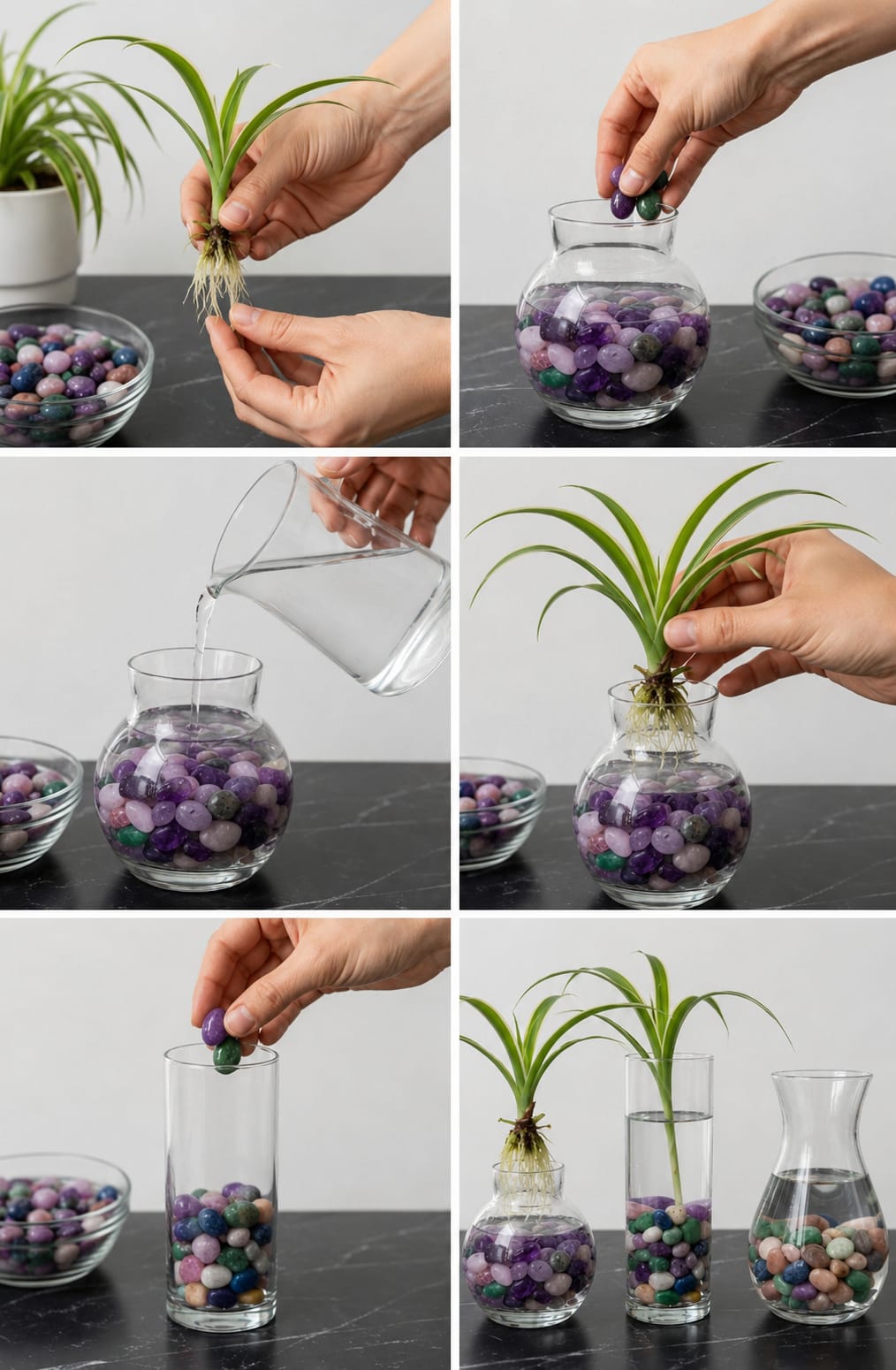
A spider plant water display has strong indoor decor value because it combines greenery, glass, water, and colorful stones. It feels fresh, playful, and modern. The clear vessel makes the roots part of the design, while the pebbles add color and texture. This creates a small living arrangement that can brighten many spaces.
The display works well on a black table, wooden tray, windowsill, desk, shelf, bathroom counter, or plant stand. Several vessels with different shapes can be grouped together for a more artistic look. A round vase, tall cylinder, and curved glass container can create a balanced trio. The plants do not need to be identical; the variety can make the display feel more natural.
Colorful pebbles can match the room style. Purple and green stones can create a calm botanical look. Pastel stones can feel soft and decorative. Neutral stones can make the display more minimal. The best design is one that looks clean while still supporting healthy roots.
Room-by-Room Styling
In the living room, a spider plant water display can sit on a coffee table, side table, console, or bright shelf. The glass and stones add a decorative detail without taking up much space. The display should be placed where it receives bright indirect light and where it will not be knocked over.
In the bedroom, the display can create a calm fresh accent. Clean water is especially important because bedroom plants should not smell or attract insects. A small glass vessel with one rooted plantlet can look peaceful on a dresser, nightstand, or window ledge if the light is suitable.
In a home office, the display can brighten a desk or shelf. It looks organized when the water is clear and the pebbles are clean. A tall vessel may fit well on a narrow desk, while a round vase can soften the look of a workspace. The plant should be kept away from electronics during water changes.
In a bathroom with bright natural light, a spider plant water display can look spa-like and fresh. However, a dark bathroom is not suitable. The plant still needs light. Humidity may help the leaves, but the water should still be changed and the crown should stay dry.
Office and Commercial Styling
Spider plant water displays can work well in commercial interior styling when maintained carefully. They can be used on reception counters, office shelves, salon stations, wellness spaces, boutique displays, and staged home interiors. The combination of glass, water, roots, and pebbles creates a clean decorative detail that feels more designed than a plain plant pot.
For professional spaces, maintenance is essential. Cloudy water, algae, dead roots, and dusty glass are not acceptable in a premium display. The vessels should be easy to access for cleaning. A display that looks fresh can add charm, but a neglected water vessel can quickly look unprofessional.
Commercial settings may be better suited to short-term rotating displays unless someone can maintain them regularly. Water displays need more visual cleaning than soil pots. If maintained well, they can create a memorable and polished plant feature.
Product and Tool Guide
Helpful materials for this display include healthy rooted spider plant babies, clear glass vessels, smooth decorative pebbles, room-temperature water, a small pitcher, a soft bottle brush, clean scissors, a strainer for rinsing stones, a soft cloth for wiping glass, and optional very diluted houseplant nutrients for long-term water culture. A bright windowsill or grow light can help if natural light is weak.
The best pebbles are smooth, clean, and water-safe. The best vessels are stable, easy to clean, and shaped so the crown can remain above the water. The best plantlets are firm, rooted, and healthy. Each part of the setup should support both decoration and plant health.
These tools keep the routine simple. The display does not need complicated products. It needs clean water, clean glass, safe stones, healthy roots, and bright indirect light. When these basics are correct, the arrangement can stay beautiful for a long time.
Care Timeline After Creating the Display
During the first 24 hours, the water line should be checked to make sure only roots are submerged. The crown should stay above the water, and leaves should remain dry. The vessel should be placed in bright indirect light. If the pebbles release dust, the water should be changed and the stones rinsed again.
During the first week, the water should be watched for cloudiness, smell, algae, or root slime. The plantlet may adjust to the new vessel, but the leaves should remain firm. If the water stays clear and roots look healthy, the setup is working. If the water turns cloudy quickly, cleaning is needed.
After two to four weeks, the roots may continue growing and wrapping around the pebbles. The display can remain in water or the plantlet can be moved into soil if stronger long-term growth is desired. After one to two months, the plant may need mild nutrients if staying in water, or it may be planted with other spider plant babies for a fuller pot. Long-term success depends on clean water and crown protection.
Professional Styling Note
In high-end indoor plant styling, spider plant water displays are valuable because they combine propagation with decoration. They show the root system, add color through pebbles, and create a fresh glass-based arrangement that works well in modern interiors, wellness spaces, office decor, apartment styling, and polished property presentation. The display feels light and clean when maintained properly.
However, the premium effect depends completely on cleanliness. Dirty water, algae, cloudy glass, or rotting roots will ruin the look quickly. The arrangement should be refreshed before it looks neglected. In professional styling, visible water must always look intentional and clean.
A beautiful display depends on healthy plantlets, clear glass, clean stones, fresh water, bright indirect light, and careful placement. The goal is to make the roots part of the design while still protecting the plant. Simple maintenance creates the best decorative result.
Final Thoughts
A decorative spider plant water display with colorful pebbles and clear glass vessels can be a beautiful way to show rooted baby plants indoors. The method works best when the plantlets are healthy, the pebbles are clean, the water is fresh, and the crown stays above the water line. Only the roots should sit in water. Leaves and crowns should remain dry to prevent rot.
The display should be placed in bright indirect light and cleaned regularly. Water should be changed before it becomes cloudy or smelly. Pebbles and glass should be rinsed when residue appears. Spider plants can live in water for a while, but long-term growth may be stronger if rooted plantlets are eventually planted into light well-draining soil or maintained carefully with very mild nutrients.
With clean care and the right presentation, a spider plant water display can become a beautiful accent for living rooms, bedrooms, home offices, bathrooms with bright light, windowsills, modern apartments, commercial interior landscaping, luxury home staging, decorative glass vessels, and polished property presentation. Healthy roots, clear water, colorful pebbles, and a dry crown will always create a stronger display than dirty water or overcrowded glass containers.