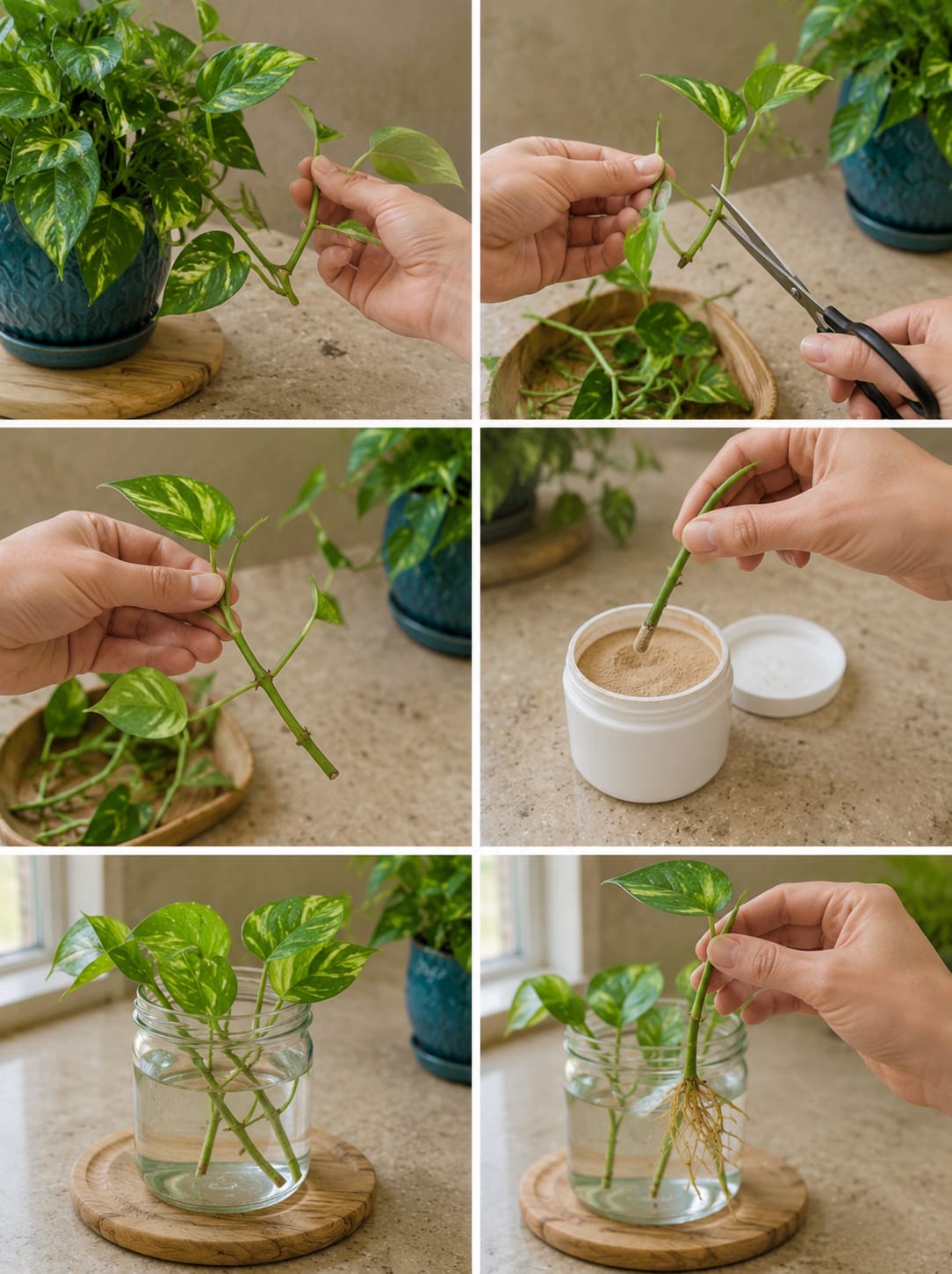
Pothos is one of the easiest and most rewarding indoor plants for people who want trailing vines, glossy green leaves, fast propagation, and a fresh decorative look that fits almost any home. Its heart-shaped foliage, bright green growth, golden variegation, flexible stems, and low-maintenance nature make it a favorite for living room styling, bedroom decor, home office greenery, kitchen windowsills, modern apartment interiors, plant shelf displays, hanging baskets, premium indoor plant care, and polished property presentation. When a pothos is healthy, it can trail beautifully from a pot, climb a support, fill a shelf, or create a lush indoor jungle effect with very simple care.
Many plant owners propagate pothos because a single long vine can become several new plants. Stem cuttings can root in water, soil, moss, or perlite when they are cut correctly and kept in the right conditions. This makes pothos one of the best plants for beginners who want quick results. A small cutting with the right node can produce roots in a jar of water, and once those roots are strong enough, the cutting can be planted into soil or combined with other cuttings to create a fuller pot.
Rooting powder is sometimes used to support faster or more reliable propagation. It may contain rooting hormone or a natural root-support powder designed to encourage root development. However, it should be used carefully. Too much powder can create residue, cloud water, encourage rot, or coat the cutting in a way that does not help. Pothos usually roots easily without any powder, so rooting powder should be treated as optional support rather than a required step. The most important details are still clean cuts, healthy nodes, fresh water, bright indirect light, and patience.
This guide explains how to propagate pothos cuttings safely, how to choose the right stem pieces, where to cut, how to use rooting powder without overdoing it, how to root cuttings in water, when to move them into soil, what warning signs to watch for, and how to keep the new plants healthy, clean, and suitable for indoor plant styling, hanging basket decor, modern apartment greenery, commercial interior landscaping, luxury home staging, and premium houseplant presentation.
Quick Answer
Pothos cuttings root best when each cutting has at least one healthy node, clean leaves above the water line, and a fresh cut made with clean scissors. Rooting powder can be used lightly on the cut end or node area if the product is safe for houseplant propagation, but it should not be applied in thick clumps or allowed to dirty the water. The cuttings should be placed in clean room-temperature water with the node submerged and the leaves kept dry. The water should be changed regularly, and the jar should sit in bright indirect light. Once roots are several centimeters long and look healthy, the cuttings can be planted into light well-draining potting mix. Pothos does not need heavy fertilizer during early rooting, and cuttings should never sit in cloudy, smelly, or stagnant water.
What Plant This Is
The plant is pothos, commonly known as Epipremnum aureum. It is one of the most popular indoor trailing plants because it grows easily, tolerates average home conditions, and roots quickly from stem cuttings. It is often called golden pothos when the leaves have yellow or cream variegation, though there are many other varieties such as marble queen, neon pothos, jade pothos, manjula pothos, and satin-style lookalikes that are often grouped with similar indoor vines.
Pothos is easy to recognize because of its heart-shaped leaves and flexible vines. The leaves may be solid green or patterned with yellow, white, lime, or cream depending on the variety and light conditions. The stems have visible nodes, which are small points where leaves, aerial roots, and new roots can form. These nodes are the most important part of propagation. A leaf without a node may stay alive for a while, but it will not grow into a new plant.
Pothos can trail from a hanging basket, climb a moss pole, wrap around a shelf, or fill a tabletop planter. It can be used in living rooms, bedrooms, kitchens, offices, bathrooms with bright light, and commercial plant displays. Its ability to grow from cuttings makes it easy to refresh a thin plant, create a fuller pot, or make new plants from trimmed vines.
Why Pothos Cuttings Root So Easily
Pothos roots easily because its stems naturally produce roots from nodes. In nature, the plant climbs and spreads by attaching to surfaces with aerial roots. Indoors, that same rooting ability makes stem cuttings very successful. When a node is placed in water or moist soil, it can begin producing new roots. This is why cutting location matters more than cutting length.
A healthy cutting usually needs a piece of stem with at least one node and one leaf. The leaf helps the cutting continue photosynthesis, while the node produces the roots. Some cuttings may have two or three nodes, which can make rooting stronger. Very long cuttings can root too, but they may use more energy to support their leaves and may be harder to manage in a jar.
Because pothos is naturally good at rooting, propagation does not need to be complicated. Clean water, clean tools, bright indirect light, and the right node placement are usually enough. Rooting powder may help in some cases, but it is not a replacement for choosing a proper cutting. A cutting without a node will not become a full plant no matter how much powder is used.
Why Rooting Powder Is Used
Rooting powder is used to encourage root development on cuttings. Some products contain synthetic rooting hormones, while others may contain natural plant-support ingredients. The purpose is to help the cutting begin root growth faster or more reliably. It is commonly used for plants that are harder to propagate, woody cuttings, or cuttings that need extra support.
For pothos, rooting powder is optional because the plant usually roots quickly on its own. However, some people still use it when cuttings are small, when the vine is weak, when they want more consistent results, or when they are propagating many cuttings at once. Used lightly, it may support the rooting process. Used heavily, it can make the water dirty or create an unnecessary coating around the stem.
The safest approach is to use only a very small amount. The cutting should not be buried in powder or covered in a thick paste unless the product specifically instructs that method. A light touch near the node or cut end is enough. More powder does not mean faster roots. Clean conditions matter more than excess product.
What Rooting Powder Should Not Be Misunderstood As
Rooting powder should not be misunderstood as a magic fix for bad cuttings. If a stem is rotten, leafless, pest-infested, or missing nodes, powder will not make it healthy. The cutting must be fresh and structurally correct. Rooting powder can support a good cutting, but it cannot turn poor plant material into a strong new plant.
It should not be misunderstood as a fertilizer. Rooting powder is not meant to feed the cutting like a complete plant food. Early cuttings do not need heavy fertilizer. They need clean water, oxygen, and time to produce roots. Fertilizer added too early can stress new roots or encourage algae in water propagation.
It should also not be used as a thick layer inside the water jar. Powder that falls into water can cloud the water, collect on the stem, and make the jar look dirty. If the water becomes cloudy, slimy, or smelly, the cutting may rot. Rooting powder should support the node, not pollute the rooting environment.
Choosing the Right Pothos Stem
The best stem for propagation is healthy, firm, and actively growing. It should have green leaves, visible nodes, and no signs of rot. A vine that is yellowing, mushy, or covered in pests should not be used. Cuttings taken from a strong mother plant usually root faster and produce healthier new growth.
The stem should not be too old and woody or too soft and weak. A fresh vine with medium thickness is usually ideal. Each cutting should include at least one node. If possible, a cutting with two nodes can be even better because one node can root while another supports new growth. The leaf should stay above the water line so it does not rot.
Before cutting, the mother plant should be checked for pests such as mealybugs, scale, spider mites, or fungus gnats. Propagating from a pest-infested plant can spread the problem to new jars and pots. Healthy propagation begins with healthy plant material.
Where to Cut the Vine
The cut should be made just below a node. This gives the node enough stem tissue and places the rooting area near the bottom of the cutting. Clean scissors or pruning shears should be used. Dirty tools can introduce bacteria and increase rot risk. The cut should be clean rather than crushed.
Leaves that would sit below the water line should be removed. A submerged leaf will break down and make the water cloudy. The node should be submerged, but the leaves should remain above the water. This is one of the most important rules for water propagation.
Long vines can be cut into several smaller sections. Each section should have at least one node and preferably one leaf. This is how one trailing pothos stem can become many new plants. Several rooted cuttings can later be planted together to make a fuller pot.
How to Use Rooting Powder Safely
The cut end or node area can be dipped lightly into rooting powder. The cutting should be gently tapped so excess powder falls away. A thick coating is not needed. If too much powder sticks to the stem, it may cloud the water or create residue. A thin dusting is safer and cleaner.
The powder container should stay clean. Wet stems should not be dipped directly into the main container if that could contaminate the product. A small amount can be poured into a separate clean lid or dish, and the cutting can be dipped there. This keeps the remaining powder dry and hygienic.
After applying powder, the cutting can be placed into clean water with the node submerged. The water may become slightly cloudy if powder falls off, but it should not become thick or dirty. If the water clouds quickly, it should be changed. Clean water is more important than keeping extra powder in the jar.
Rooting Pothos in Water
Water propagation is popular because it allows the roots to be seen as they grow. A clear jar or glass works well. The water should be room-temperature and clean. The node should be below the water surface, while the leaves should remain dry above the rim. Several cuttings can be placed in the same jar if they are not crowded.
The jar should be placed in bright indirect light. Harsh direct sun can heat the water and stress the cuttings. A bright windowsill with filtered light is usually ideal. If the room is dark, the cuttings may root more slowly or become weak. A grow light can help if natural light is limited.
The water should be changed regularly. Fresh water keeps oxygen available and reduces bacterial buildup. If the water smells bad, becomes slimy, or turns cloudy, it should be replaced immediately and the stems should be checked. Healthy water propagation should look clean, not stagnant.
How Long Roots Take to Grow
Pothos roots can appear quickly when conditions are good. Small white bumps may form first, followed by thin roots. In warm bright conditions, visible roots may begin within one to three weeks. In cooler or darker rooms, rooting may take longer. Some cuttings root faster than others even when they come from the same vine.
Root growth should be judged by health, not only speed. Healthy roots look pale, firm, and fresh. If roots turn brown, slimy, or smell bad, the water may be dirty or the stem may be rotting. A cutting with slow but healthy roots is better than one sitting in cloudy water with weak tissue.
The cutting can usually be planted when roots are several centimeters long and branching begins. Very tiny roots can be fragile, while extremely long water roots may struggle more during the move to soil. A moderate root length makes the transition easier.
When to Move Cuttings Into Soil
Cuttings should be moved into soil when they have enough roots to support themselves. A few strong roots are usually better than one tiny root. The new potting mix should be light and well-draining. A standard indoor potting mix with added perlite can work well. The soil should be moist at planting time but not soggy.
Water roots are used to constant moisture, so the transition into soil should be gentle. The soil should not dry out completely during the first adjustment period. At the same time, it should not stay soaked. A lightly moist routine helps the roots adapt. After the plant begins growing in soil, watering can become more normal.
Several rooted cuttings can be planted together in one pot. This creates a fuller display much faster than planting one cutting alone. Pothos looks best when multiple vines grow from the pot. A full pot can later trail, climb, or be trimmed again for more propagation.
Rooting Directly in Soil
Pothos can also be rooted directly in soil. This method avoids the transition from water roots to soil roots. A cutting with a node can be placed into light moist potting mix, with the node under the surface and the leaf above the soil. The soil should be kept lightly moist while roots form.
Rooting powder may be more useful in soil propagation than in water because the powder stays closer to the node instead of washing into water. Even then, only a small amount is needed. Too much powder can still create residue. The cutting should be planted gently and kept in bright indirect light.
Soil propagation may look slower because roots are hidden, but it can produce strong plants. New leaf growth is a good sign that the cutting has rooted. If the cutting wilts, turns black, or becomes mushy, the soil may be too wet or the cutting may not have been healthy.
Best Soil Mix for Pothos
Pothos grows best in a light, well-draining indoor potting mix. The mix should hold some moisture but allow extra water to drain away. A standard houseplant mix can be improved with perlite, orchid bark, coco chips, or pumice. The goal is to keep roots moist enough for growth but not trapped in dense wet soil.
Heavy garden soil should not be used alone in indoor pots. It can compact, drain poorly, and bring pests indoors. A dense mix may cause root rot, especially in a pot without strong drainage. New cuttings are especially sensitive because their roots are young and still adapting.
A clean soil mix is important for decorative displays. Pothos is often used on shelves, desks, hanging baskets, and living room tables. Soil that smells bad, grows mold, or attracts gnats reduces the premium look. Healthy roots and clean soil support both growth and presentation.
Choosing the Right Pot
A pothos pot should have drainage holes. This allows extra water to leave the root zone. Decorative pots without drainage can trap water and cause root rot. If a decorative outer pot is used, the plant should sit inside a draining nursery pot, and extra water should be emptied after watering.
The pot should not be too large for fresh cuttings. A huge pot holds more wet soil than young roots can use. A smaller pot with several cuttings is usually better. As the plant grows, it can be moved into a larger container. Starting small helps moisture stay easier to control.
Pothos can look beautiful in ceramic pots, terracotta pots, glass jars during propagation, hanging baskets, wall planters, and modern cachepots. A clear jar is useful during water rooting because the roots are visible. Once planted, a decorative pot can match the room style while still supporting drainage.
Light for Faster Rooting
Bright indirect light is best for pothos propagation. Good light helps the cutting produce energy and root more strongly. A bright windowsill with filtered light works well. Direct harsh sun should be avoided because it can burn leaves and heat the water jar, which may damage the cutting.
Low light slows rooting. Cuttings kept in dark corners may survive, but they may take much longer to produce roots. They may also become weak or pale. If natural light is limited, a grow light can help maintain steady brightness.
Light also affects water quality. A jar in hot direct sun may grow algae faster and become too warm. A jar in bright indirect light usually stays cleaner. The best location is bright, warm, and stable without direct heat.
Water Quality and Water Changes
Clean water is essential for successful pothos propagation. Room-temperature water is safest. If tap water is heavily chlorinated or mineral-rich, letting it sit for a while or using filtered water may help. The water should not contain sugar, milk, juice, fertilizer, or thick homemade mixtures during early rooting.
Water should be changed regularly to prevent stagnation. When water sits too long, it can lose oxygen and develop bacteria. Cloudy water, slimy stems, or bad smell are signs that the jar needs cleaning. The cutting should be rinsed gently if residue builds up.
If rooting powder clouds the water, the water can be changed after the cutting has had time to sit briefly. It is better to refresh the water than to leave a dirty jar. Rooting success depends more on clean conditions than on keeping powder floating around the stem.
Feeding During Propagation
Fresh pothos cuttings do not need heavy fertilizer. During early rooting, the cutting is focused on producing roots, not feeding heavily. Adding fertilizer to water too early can encourage algae, create buildup, and stress tender new roots. Clean water is enough at the beginning.
Once the cuttings are planted in soil and begin producing new growth, light feeding can begin during active growth. A diluted balanced houseplant fertilizer can support healthy vines and larger leaves. It should be used gently because pothos does not need strong feeding to grow well.
Rooting powder should not be confused with fertilizer. It is a propagation support, not a long-term nutrient routine. After the plant is established, normal pothos care becomes more important than rooting products.
Possible Damage If Propagation Is Done Incorrectly
Propagation can fail if the cutting has no node. A leaf and petiole alone may look alive in water for a while, but it will not produce a new vine without a node. Another common problem is leaving leaves underwater. Submerged leaves rot and make the water dirty. Dirty water can then rot the stem.
Too much rooting powder can also cause problems. A thick clump can collect at the cut end and make the water cloudy. If the water becomes stagnant, bacteria can grow. The stem may turn brown or mushy. Rooting powder should be used lightly or skipped if it causes mess.
Planting water-rooted cuttings into heavy soggy soil can also damage them. Water roots need gentle transition. If they are moved into dense wet soil, they may rot before adapting. A light potting mix and careful watering are safer.
Warning Signs to Watch For
Warning signs during propagation include cloudy water, bad smell, slimy stems, blackened nodes, yellow leaves, mushy cutting bases, mold, or roots turning brown and soft. These signs suggest that water quality, cutting health, or cleanliness needs correction. The faster the issue is addressed, the better the chance of saving the cutting.
If the bottom of the cutting becomes mushy, the damaged part can be trimmed away if there is still a healthy node above it. The cutting should then be placed in fresh clean water. If the entire stem is soft, it should be discarded so it does not contaminate other cuttings.
If leaves yellow while the stem remains firm, the cutting may be adjusting, or the leaf may be old. One yellow leaf does not always mean failure. However, if the node rots or the water smells bad, the problem is more serious. Healthy nodes are the key to successful propagation.
Common Mistakes
One common mistake is cutting between nodes and placing a bare stem section in water without a node. Another mistake is dipping the cutting in too much rooting powder. A light amount is enough. More powder does not guarantee faster roots and can make the process dirtier.
Another mistake is placing the jar in direct hot sun. The water can heat up, algae can grow faster, and the cutting can become stressed. Bright indirect light is much safer. Pothos likes brightness, but propagation jars should not be cooked in sunlight.
Waiting too long to move water-rooted cuttings into soil can also create adjustment problems. Very long water roots can tangle and become fragile. The cuttings can still be planted, but moderate roots are easier to manage. Planting at the right stage helps the new plant settle faster.
What to Do If Cuttings Are Not Rooting
If pothos cuttings are not rooting, the first thing to check is whether each cutting has a node under the water. Without a node, roots will not form properly. The next thing to check is light. A dark location can slow rooting significantly. Moving the jar to bright indirect light may help.
Water quality should also be checked. Stale water can slow or prevent rooting. The jar should be cleaned, and fresh water should be added. If the stems have become slimy, they should be rinsed gently. Any rotten sections should be removed.
Temperature matters too. Pothos roots faster in warm indoor conditions. Very cold rooms can slow the process. The cutting should be kept away from cold drafts, air conditioners, and cold windows. A stable warm spot supports faster root growth.
Continue to Page 2
Continue to page 2 for more details about this article and the key points many readers miss on the first page.