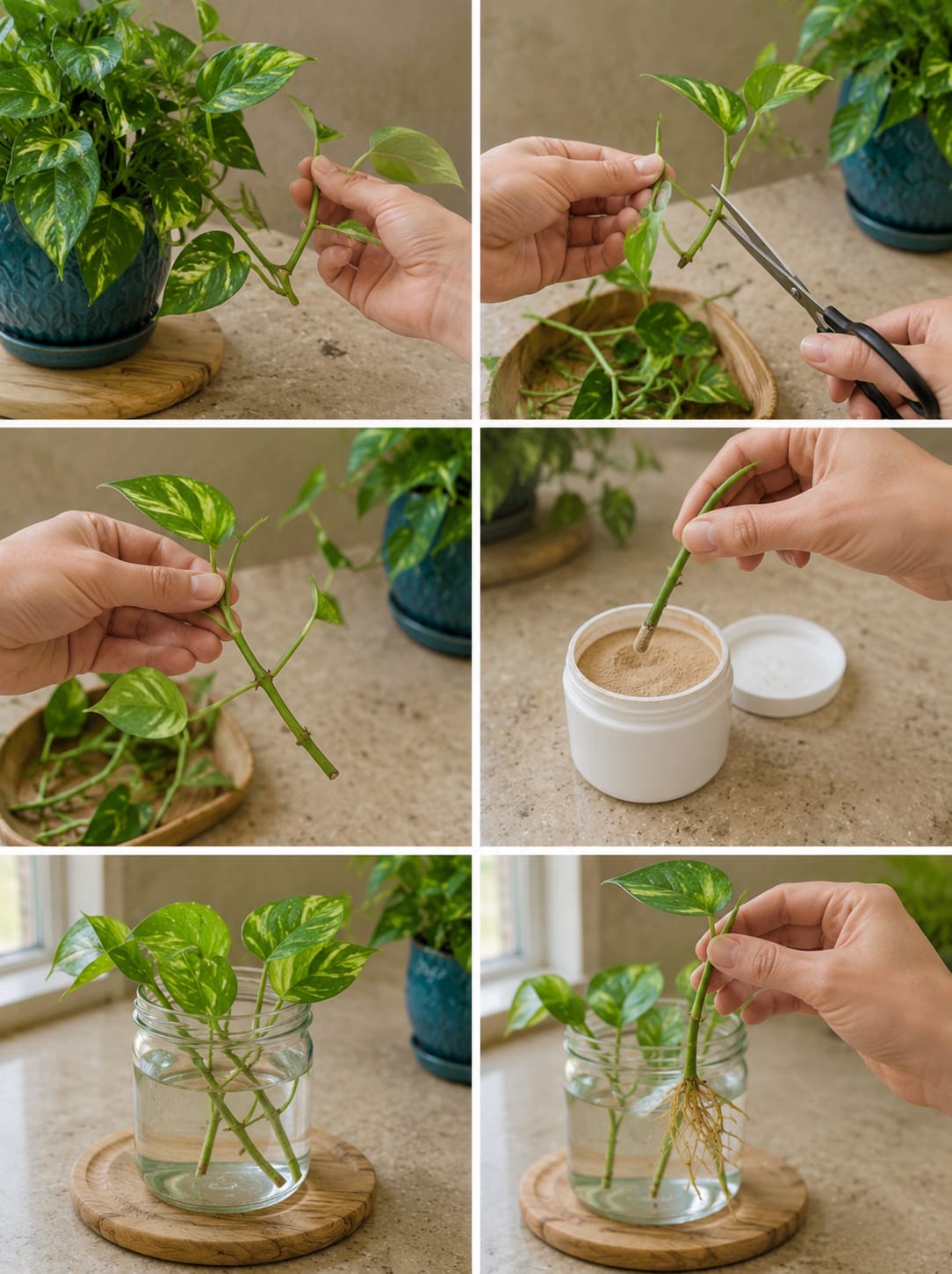
How to Make a Fuller Pothos Pot
A fuller pothos pot is made by planting several rooted cuttings together. One cutting will grow into one vine, but many cuttings create a lush plant faster. The cuttings should be spaced around the pot so the top looks full. This helps avoid the common problem of long vines with a bare soil surface.
After planting, the cuttings should be watered carefully and placed in bright indirect light. The soil should stay lightly moist while roots adjust, then the watering routine can become more normal. New growth may appear once the cuttings settle.
Regular pruning keeps the plant full. Long vines can be trimmed, and the new cuttings can be rooted and added back to the pot. This creates a cycle of growth and fullness. Pothos responds well to this simple maintenance routine.
Training New Pothos Growth
Once the cuttings are established, pothos can be trained to trail, climb, or wrap around a support. Trailing vines look beautiful from shelves, hanging baskets, and high plant stands. Climbing vines can be guided onto a moss pole, coco pole, wall hook, or trellis. Climbing may encourage larger leaves over time if the plant receives enough light and support.
Soft ties or clips can guide vines without damaging them. The stems should not be tied tightly. Pothos vines are flexible, but pressure can still bruise or restrict growth. The plant should look natural and relaxed.
Training is easier when vines are young and actively growing. Older long vines can still be arranged, but they may tangle. A newly propagated pothos is a good time to decide whether the plant will become a trailing display, climbing plant, or full tabletop pot.
Indoor Decor Value
Pothos has strong indoor decor value because it adds fresh greenery, movement, and softness to a room. Its trailing vines can make shelves look fuller, brighten a desk, soften a cabinet edge, or create a lush hanging basket. Golden pothos adds warm variegation that pairs well with wood, stone, ceramic, neutral decor, and modern interiors.
Propagation jars also have decorative value when kept clean. A clear jar with healthy green cuttings and white roots can look beautiful on a windowsill or countertop. However, the water must stay clear and fresh. Cloudy water or rotting stems reduce the clean look quickly.
Once planted, pothos can fit many styles. A blue ceramic pot can create a colorful accent. A white pot gives a clean modern look. A terracotta pot creates warmth. A hanging basket creates a relaxed indoor jungle style. The plant is flexible enough for almost any room.
Room-by-Room Styling
In the living room, pothos can trail from a shelf, climb a pole beside a sofa, or sit in a decorative pot near a bright window. Its vines soften hard furniture lines and make the room feel more natural. Rooted cuttings can be planted together for a fuller living room display.
In the kitchen, pothos propagation jars can look fresh near a window. The water should be changed regularly so the display stays clean. The plant should not be placed near heat, grease, or constant cold drafts. A bright kitchen counter can be a good propagation spot.
In the bedroom, pothos creates a calm green accent. A trailing plant on a shelf or dresser can make the room feel softer. Water jars should remain clean and odor-free. A bedroom plant display should feel fresh, not messy.
In a home office, pothos can improve a desk, shelf, or video-call background. It is easy to maintain and grows well with moderate care. A fuller pot made from several cuttings can look more professional than one thin vine.
Office and Commercial Styling
Pothos is useful in commercial interior landscaping because it is dependable, easy to propagate, and visually soft. It works well in offices, reception areas, waiting rooms, wellness spaces, cafes, shelves, creative studios, and property staging. Its trailing habit adds movement without requiring flowers.
For professional spaces, propagation should be kept tidy. Water jars should be clear, cuttings should be healthy, and any yellowing pieces should be removed. Once rooted, cuttings can be planted into polished containers for a cleaner display. A messy propagation station may look unfinished in a commercial environment.
A mature pothos display can be maintained by periodic trimming and replanting. This keeps the pot full and prevents bare vines. Professional plant styling depends on regular small care rather than waiting until the plant becomes thin and tangled.
Product and Tool Guide
Helpful materials for pothos propagation include clean scissors, a clear glass jar, room-temperature water, healthy pothos vines, optional rooting powder, a small clean dish for powder, light indoor potting mix, perlite, a pot with drainage holes, a narrow-spout watering can, and a soft cloth for leaf cleaning. A grow light can help if the propagation area is not bright enough.
A small brush or cloth can clean dust from mature pothos leaves. A decorative jar can make water propagation look more attractive, but it should still be easy to clean. A small pot is useful for planting several rooted cuttings together. The container should support drainage and match the final display style.
These tools make propagation easier and cleaner. Pothos does not need complicated products. Healthy cuttings, clean water, bright indirect light, and careful planting create the best results. Rooting powder is optional and should be used lightly.
Care Timeline After Taking Cuttings
During the first 24 hours, the cuttings should be placed in clean water with nodes submerged and leaves above the surface. The jar should be placed in bright indirect light. If rooting powder was used and the water becomes cloudy, it should be refreshed. The cuttings should look firm and clean.
During the first week, the water should be checked for clarity and smell. Any submerged leaves should be removed. If stems become slimy, they should be rinsed and trimmed if needed. Early root bumps may begin to appear if conditions are warm and bright.
After two to four weeks, many cuttings may have visible roots. Once roots are strong enough, the cuttings can be planted into light soil. After one to two months, planted cuttings may begin producing new growth and looking fuller. Long-term success comes from bright light, controlled watering, and occasional pruning.
Professional Styling Note
In high-end indoor plant styling, pothos is valued because it creates quick greenery, soft trailing lines, and easy fullness. It is useful for modern apartment decor, office shelves, hanging baskets, plant walls, kitchen windowsills, and polished property presentation. A full pothos pot looks much more premium than a thin vine with bare stems.
Propagation can be part of professional maintenance. Long vines can be trimmed, rooted, and replanted to refresh the pot. This keeps the plant dense and attractive. Rooting powder may be used for consistency, but clean cutting technique and proper light matter more.
A beautiful pothos display depends on healthy nodes, clean roots, clear water during propagation, fresh soil after planting, and a container that fits the room. Simple controlled care creates a stronger result than overusing products. The best pothos displays look effortless because the routine behind them is consistent.
Final Thoughts
Pothos is one of the easiest houseplants to propagate, and stem cuttings can root beautifully in water when they include healthy nodes. Rooting powder can be used lightly as optional support, but it is not required and should not be overapplied. Clean cuts, fresh water, bright indirect light, and correct node placement are the real keys to success.
The cuttings should be kept in clean room-temperature water with leaves above the water line. The water should be changed regularly, and any signs of rot should be corrected quickly. Once roots are strong enough, several cuttings can be planted together in a light well-draining potting mix to create a fuller indoor plant display. Heavy fertilizer is not needed during early rooting.
With clean propagation and the right presentation, pothos can become a beautiful accent for living rooms, bedrooms, kitchens, home offices, windowsills, hanging baskets, modern apartments, commercial interior landscaping, luxury home staging, decorative ceramic planters, and polished property presentation. Healthy nodes, clean roots, bright leaves, and a full pot will always create a stronger display than rushed cuttings or cloudy propagation water.