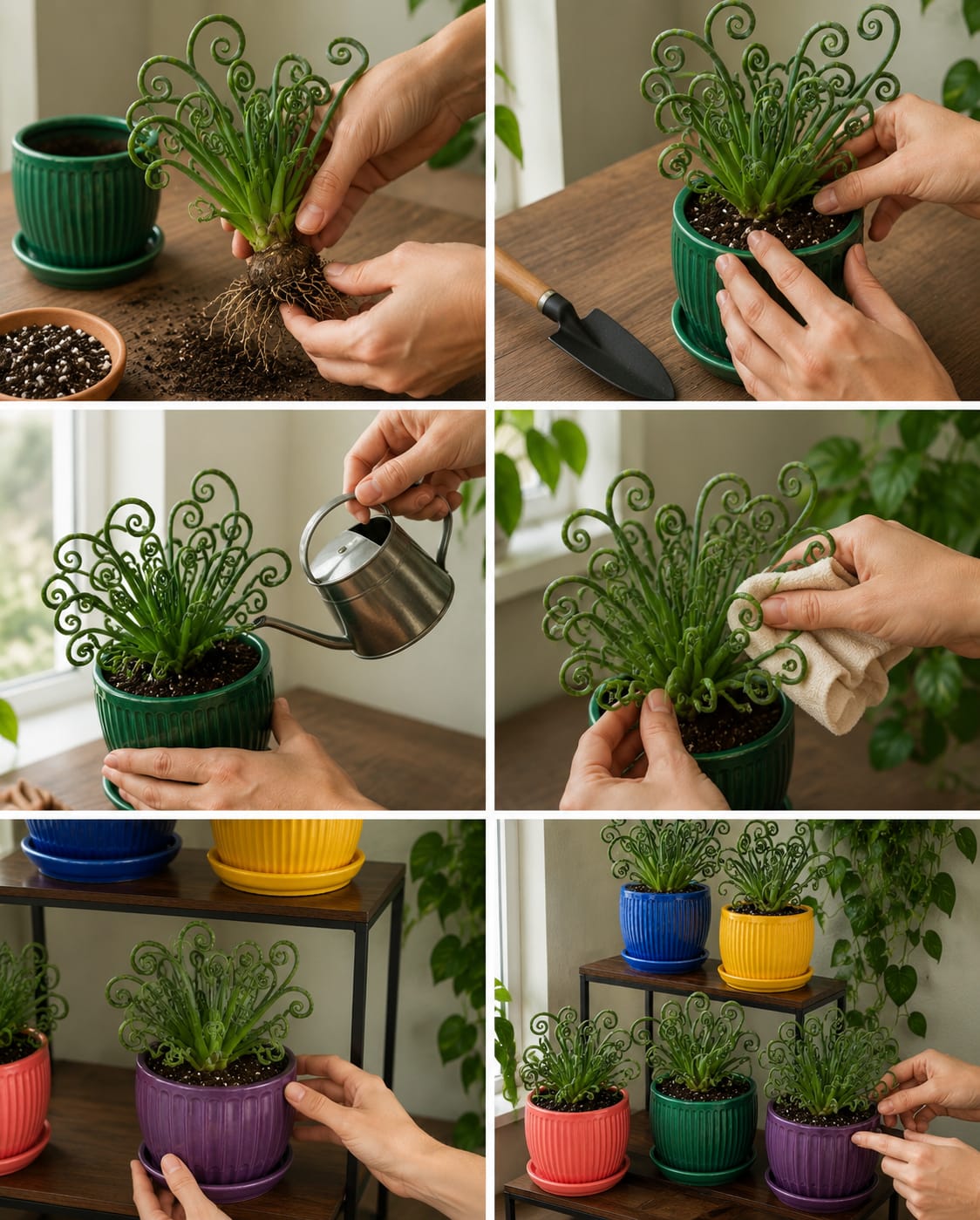
Frizzle Sizzle is one of the most unique indoor plants for people who want a sculptural houseplant, curled green leaves, compact growth, and a playful designer look that immediately stands out on shelves, tabletops, plant stands, sunny windowsills, and modern apartment displays. Its spiral foliage, bright green stems, bulb-like base, and naturally curled tips make it a favorite for indoor plant styling, rare houseplant collections, premium ceramic planters, home office greenery, living room decor, and polished property presentation. When it is healthy and well styled, Frizzle Sizzle looks less like an ordinary plant and more like a living botanical sculpture.
This plant is commonly known as Frizzle Sizzle, and its botanical name is Albuca spiralis. It grows from a bulb and produces narrow leaves that twist, curl, and spiral when the plant receives enough bright light and the right seasonal care. The curled leaves are the main attraction, so the goal of care is to protect the bulb, support healthy roots, and keep the foliage compact and decorative. A well-grown Frizzle Sizzle can look beautiful in colorful ribbed pots, white ceramic planters, terracotta containers, modern stone-effect pots, or a grouped plant shelf display with trailing vines and other indoor greenery.
Repotting and styling Frizzle Sizzle should be done carefully because this plant has a different rhythm from many common houseplants. It is not a tropical foliage plant that wants constant moisture. It grows from a bulb, prefers bright light, needs a well-draining soil mix, and can go through seasonal rest. If the bulb is buried too deeply, if the soil stays wet, if the pot has no drainage, or if the plant is watered heavily during dormancy, the bulb can rot. The plant may look decorative and delicate, but its care depends on dry-friendly root protection.
This guide explains how to repot Frizzle Sizzle safely, how to protect the bulb and roots, how to keep the curled leaves attractive, how to water correctly, how to choose a pot, what soil mix works best, why bright light matters for spirals, what mistakes can damage the plant, and how to style Frizzle Sizzle for living rooms, bedrooms, home offices, plant shelves, modern apartments, commercial interior landscaping, luxury home staging, and premium indoor plant displays.
Quick Answer
Frizzle Sizzle should be grown in a pot with drainage holes, a light well-draining soil mix, and bright indirect light or gentle direct morning sun. The bulb should not be buried completely because keeping the upper part slightly visible can help prevent rot and make it easier to monitor plant health. Water carefully during active growth, allowing the soil to dry partly between watering, and reduce watering when the plant enters dormancy or the leaves begin to fade naturally. Repot only when needed, using a small or moderately sized pot that does not hold too much wet soil around the bulb. The curled leaves stay tighter and more decorative with strong light, cool-to-mild conditions, and careful watering. This plant should not sit in soggy soil, dark corners, or standing water.
What Plant This Is
The plant is Frizzle Sizzle, known botanically as Albuca spiralis. It is a bulb plant famous for its curly, twisting, spiral leaves. Unlike many houseplants that grow from stems or rhizomes, Frizzle Sizzle grows from a bulb at the base. The bulb stores energy and produces narrow green leaves that curl when the growing conditions are right. The plant’s unusual form gives it strong decorative value even when it is small.
Frizzle Sizzle is easy to recognize because of its upright bulb base and spring-like foliage. The leaves can form tight coils, loose spirals, or playful curls depending on light, season, plant age, and growing conditions. In strong light, the curls are usually more compact and defined. In weak light, the leaves may become longer, straighter, and less dramatic. This is why light is one of the most important parts of keeping the plant attractive indoors.
The plant may also produce flower stalks. The flowers can be fragrant and interesting, but flowering may cause the leaves to decline or lose some curl during the bloom cycle. This can surprise new owners. A Frizzle Sizzle can still be healthy even if the leaves fade seasonally. Understanding its growth rhythm helps prevent unnecessary overwatering or panic repotting.
Why Frizzle Sizzle Looks So Decorative
Frizzle Sizzle has strong decorative appeal because the leaves already look styled by nature. The plant does not need pruning into shape or tying to a support. Its spirals create movement, texture, and height while staying compact. This makes it useful for small indoor spaces where a dramatic plant is wanted without a large footprint.
The curled leaves pair especially well with colorful pots. A green ribbed planter can make the foliage feel lush and coordinated. A blue pot creates a bold modern contrast. A yellow planter adds a cheerful designer look. A purple or coral pot can make the plant feel playful and artistic. Because the plant is compact, the container becomes part of the overall presentation.
Frizzle Sizzle also works well in grouped displays. It can be placed near trailing pothos, spider plants, compact ferns, peperomia, or other houseplants with different textures. The spiral foliage contrasts beautifully with broad leaves and vines. This makes it valuable for plant shelves, home office styling, apartment corners, and premium indoor plant design.
What This Plant Should Not Be Misunderstood As
Frizzle Sizzle should not be misunderstood as a normal moisture-loving houseplant. It does not want constantly wet soil. The bulb can rot if the potting mix stays soggy. The plant needs water during active growth, but it also needs oxygen around the roots and a dry-down period. This balance is especially important because the bulb sits close to the soil surface.
It should not be misunderstood as a plant that keeps perfect curls all year without change. Frizzle Sizzle has a seasonal growth pattern. Leaves may curl strongly during active growth, then fade or dry during dormancy. This can be normal. The mistake is often watering more when leaves naturally decline. If the plant is entering rest, heavy watering can harm the bulb.
It should also not be misunderstood as a low-light plant. While it may survive for a while in weaker light, the leaves may stretch and lose their tight spiral look. The most decorative form usually comes from bright light. If the plant is kept too far from a window, the curls may become loose and the plant may look less impressive.
Why Repotting Matters
Repotting matters because the bulb and roots need a clean, breathable environment. Old potting mix can become compacted, water-retentive, or stale over time. If the soil no longer drains well, the bulb may sit in moisture too long. This can lead to rot, soft spots, yellowing foliage, and a declining plant. Fresh soil can help restore drainage and airflow.
Repotting is also useful when the plant was purchased in a nursery pot with heavy or peat-rich soil that stays wet indoors. Many decorative bulb plants are sold in mixes that work for greenhouse conditions but may not dry properly in a home. Moving the plant into a better-draining mix can reduce long-term risk, especially if the pot is decorative and the room has moderate light.
However, repotting should not be done constantly. Frizzle Sizzle does not need frequent disturbance. If the bulb is firm, the soil drains well, and the plant is growing normally, repotting can wait. Repotting is best done when the plant is actively growing or just before active growth begins, not during severe stress unless the soil is rotten or the bulb is at risk.
Choosing the Right Pot
The pot should have drainage holes. This is one of the most important requirements for Frizzle Sizzle. A decorative pot without drainage can trap water around the bulb and roots. If a cachepot is used, the plant should sit inside a draining inner pot, and extra water should be removed after watering. The bulb should never sit in hidden standing water.
The pot should not be too large. A small bulb in a large container can be surrounded by too much damp soil. This soil may stay wet longer than the roots can use it. A modest pot that fits the bulb and root system is safer. Frizzle Sizzle often looks best in compact containers because the plant itself is sculptural and does not need a huge pot to make an impact.
Colorful ribbed pots can make the plant look more designer-focused. Green, blue, yellow, purple, coral, cream, white, black, and terracotta containers can all work depending on the room style. The pot should be attractive, but it should also be practical. A beautiful pot that causes root rot is not a good choice. Drainage and size matter more than color.
Best Soil Mix for Frizzle Sizzle
Frizzle Sizzle needs a well-draining soil mix that protects the bulb from soggy conditions. A cactus and succulent mix can work as a base, but it may be improved with perlite, pumice, coarse sand, fine grit, or small bark pieces. The mix should feel airy and loose. Water should pass through it easily instead of sitting heavily around the bulb.
A standard indoor potting mix alone may hold too much moisture, especially in a glazed ceramic pot or low-light room. If using a regular potting mix, it should be amended with drainage materials. The goal is not to make the soil bone dry immediately, but to create a balance where the roots get moisture and then the mix dries safely.
Garden soil should not be used in indoor containers. It can compact, hold too much water, and bring pests indoors. Heavy compost-rich soil is also risky because it can stay wet around the bulb. Frizzle Sizzle needs a clean, open medium. A healthy bulb is much more important than rich soil.
How to Position the Bulb
The bulb should be positioned carefully when repotting. It should not be buried deeply under wet soil. Many growers keep the upper part of the bulb slightly above the soil line or only lightly covered, depending on the plant and potting setup. This helps reduce moisture trapped around the neck of the bulb and makes it easier to see whether the bulb remains firm.
The roots should be spread gently into the potting mix. They should not be crushed or packed tightly. Soil can be added around the roots and pressed lightly to hold the plant in place. The bulb should sit stable, but the soil should remain breathable. Packing soil too hard can reduce drainage and airflow.
If the bulb has offsets or small side bulbs, they can be left together for a fuller display unless they are crowded or need separation. Separating offsets should be done carefully and only when each section has enough root support. A group of bulbs can create a stronger decorative effect, but crowding should not cause rot or poor airflow.
How to Repot Safely
Repotting should begin with dry or slightly dry soil rather than a waterlogged root ball. The plant should be removed gently from the old pot by supporting the bulb and root mass. Pulling hard on the curled leaves can damage them. The leaves are part of the decorative value, so they should be handled with care.
Old soil can be loosened gently from the roots. If the roots are healthy and the soil is not rotten, not all old mix needs to be removed. If the soil smells sour, feels muddy, or contains rotten roots, more of it should be discarded. Rotten roots should be trimmed with clean scissors. A firm bulb should be protected, while any soft or decayed areas should be taken seriously.
The plant should be placed into fresh well-draining mix and kept at a safe depth. After repotting, watering should be controlled. If the roots were disturbed heavily or the soil is already slightly moist, waiting briefly before watering may be safer. If the mix is dry and the plant is actively growing, a light watering can settle the soil, but the pot must drain completely.
Watering Frizzle Sizzle Correctly
Watering is one of the most important parts of Frizzle Sizzle care. During active growth, the plant should receive water when the soil has partly dried. It should not be left soggy. The roots need moisture, but the bulb needs protection from rot. A pot with drainage holes makes watering much safer.
Water should be applied to the soil, not poured directly into the bulb crown. A narrow-spout watering can helps direct water around the edge of the pot. Extra water should drain from the bottom. Any water sitting in the saucer should be removed. The plant should never sit in standing water.
When the plant begins entering dormancy and the leaves naturally yellow or dry, watering should be reduced. This is where many mistakes happen. People see fading leaves and water more, but the bulb may actually need rest. During dormancy, the soil should be kept much drier, with only occasional light moisture if needed to prevent the bulb from shriveling severely.
Understanding Dormancy
Frizzle Sizzle can go through a dormant period when the leaves fade or die back. This can be normal and does not always mean the plant is dead. The bulb remains alive below the surface and can grow again when conditions are right. Understanding dormancy helps prevent overwatering and unnecessary rescue attempts.
During dormancy, the plant uses less water because it has fewer active leaves. If watered like an actively growing plant, the bulb can rot. The pot should be kept in a suitable bright or protected location depending on the season, and water should be reduced significantly. The bulb should remain firm. A soft, mushy bulb is a warning sign of rot.
When new growth begins again, watering can gradually increase. The return of fresh leaves means the plant is using moisture again. Bright light at this stage helps the new leaves curl properly. The transition should be gradual, not sudden heavy watering.
Light for Strong Curls
Bright light is essential for keeping Frizzle Sizzle leaves curled and compact. The plant usually needs more light than many common indoor foliage plants. A bright window with gentle direct morning sun or strong filtered light can support better spirals. Without enough light, the leaves may stretch, become long, and lose their tight curls.
Harsh direct afternoon sun should be introduced carefully. Strong heat behind glass can scorch or stress the plant. Morning sun is usually gentler. If the plant is moved outdoors or closer to a sunny window, it should be acclimated gradually. Sudden intense light can damage leaves that were grown in lower light.
A grow light can help in darker homes, apartments, offices, or winter conditions. The light should be bright enough to support compact growth but not so close that it overheats the leaves. Consistent light helps the plant maintain its unusual shape and decorative value.
Temperature and Airflow
Frizzle Sizzle prefers stable indoor conditions with good airflow. It does not like cold drafts, freezing temperatures, or sudden environmental changes. A bright windowsill can be ideal, but the plant should not touch cold glass during winter. Cold combined with wet soil can increase the risk of bulb rot.
Good airflow helps the soil surface dry and reduces fungal problems. This does not mean placing the plant in harsh wind or directly under an air conditioner. Gentle air movement in a bright room is enough. A crowded shelf with poor airflow and frequent watering can create problems around the bulb.
Temperature can also affect the curl and growth rhythm. Cooler bright conditions during active growth may help the leaves stay compact. Warm low-light rooms may cause stretching. The plant’s beauty depends on matching its natural rhythm as much as possible indoors.
Feeding Frizzle Sizzle
Frizzle Sizzle does not need heavy feeding. A diluted balanced houseplant fertilizer or a mild bulb-friendly fertilizer can be used during active growth if the plant is healthy. The feeding strength should be light. Too much fertilizer can damage roots, cause salt buildup, or stress the bulb.
Feeding should not be done during dormancy. A resting bulb is not actively using nutrients. Fertilizer in dry or inactive soil can create buildup and irritation. Feeding should resume only when new growth appears and the plant is actively growing again.
Homemade fertilizers should be used cautiously. Thick organic liquids, milk water, raw egg, coffee grounds, or sugary mixtures can attract pests and create odor in small indoor pots. A clean measured fertilizer is safer for a premium display. Frizzle Sizzle is grown for its unusual shape, and the pot should remain clean and odor-free.
Cleaning the Curled Leaves
The curled leaves should be handled gently because they are the main decorative feature. Dust can collect on the spirals, especially when the plant sits on a shelf or near a window. A soft dry brush or gentle cloth can remove dust without bending the leaves. The curls should not be pulled straight or rubbed harshly.
If water spills onto the leaves during watering, it should be allowed to dry in good airflow. The plant does not need heavy misting. Repeated misting can leave spots, encourage residue, and make the curls look less clean. The root zone should be watered carefully instead of spraying the foliage often.
Dry or dead leaves can be removed when they have naturally finished. If the plant is entering dormancy, the foliage may fade. It is better to allow the bulb to complete its cycle rather than cutting healthy green leaves too early. Once leaves are dry, they can be trimmed or gently removed to keep the pot tidy.
Possible Damage If Repotting Is Done Incorrectly
Damage can happen if the bulb is buried too deeply, placed in heavy wet soil, or moved into a pot that is too large. Deep planting can trap moisture around the bulb neck. Heavy soil can suffocate roots. Oversized pots can hold too much water. All of these problems can lead to bulb rot.
Damage can also happen if the plant is handled by the curled leaves during repotting. The leaves can bend, crease, or snap. The bulb and root ball should be supported instead. If leaves are broken, they may not return to their original shape. The plant can survive cosmetic damage, but the display will look less polished.
Overwatering after repotting is another common problem. A newly repotted bulb may not use water quickly, especially if roots were disturbed. The plant should be watered carefully and then allowed to dry appropriately. A stable recovery period is better than constant attention.
Warning Signs to Watch For
Warning signs include a soft bulb, sour soil smell, mushy roots, yellowing leaves during active growth, black spots near the bulb base, fungus gnats, mold on the soil, or soil that stays wet for many days. These signs suggest that the root environment is too wet or unhealthy. A soft bulb is especially serious because bulb rot can spread quickly.
Loose, stretched, or straight leaves may suggest low light. This is not always a disease problem, but it reduces the decorative curl. Moving the plant to brighter indirect light or adding a grow light may improve future growth. Existing stretched leaves may not curl tightly again, but new leaves can grow better under improved conditions.
Drying leaves may be normal if the plant is entering dormancy. The key is the bulb. If the bulb remains firm, the plant may simply be resting. If the bulb is soft or smells bad, that is a rot problem. Checking the bulb carefully helps separate normal seasonal decline from true damage.
Common Mistakes
One common mistake is watering Frizzle Sizzle like a tropical houseplant. Constant moisture can rot the bulb. Another mistake is keeping the plant in low light and expecting tight curls. The spirals need strong brightness. Without it, the plant may grow long and loose.
Another mistake is burying the bulb completely in soil. While the roots need coverage, the bulb neck should not be trapped under wet soil. A visible or slightly exposed upper bulb is often safer. The plant should be stable, but the bulb should not be suffocated.
Using a pot with no drainage is also a serious mistake. Decorative pots are beautiful, but hidden water can destroy a bulb plant. If a decorative pot is used, it should work with a draining inner pot. The plant must be able to dry properly after watering.
What to Do If the Bulb Feels Soft
If the bulb feels soft, the plant should be checked immediately. Softness may indicate rot. The plant should be removed gently from the pot, and the soil should be inspected. Wet, sour, or compacted soil should be discarded. Roots should be checked for mushiness, and any rotten material should be removed with clean tools.
If only a small area is affected, the plant may sometimes recover if the rotten section is removed and the bulb is allowed to dry before being repotted into fresh well-draining mix. If the entire bulb is soft and collapsing, recovery may be difficult. Bulb rot is much easier to prevent than to cure.
After any rot issue, watering should be reduced and the plant should be placed in bright indirect light with good airflow. Fertilizer should be avoided until the plant stabilizes. Clean soil, drainage, and restraint are the safest recovery steps.
How to Keep the Curls Tight
Tight curls usually depend on light, seasonal timing, and healthy growth. The plant should be placed in the brightest safe location available indoors. Gentle morning sun or strong filtered light can help. A grow light can support curl formation when natural light is not enough.
Watering should be steady but not excessive during active growth. Too much water in weak light can encourage soft, stretched growth. Too little water during active growth can stress the plant. The soil should dry partly between watering, but the plant should not be neglected completely when actively producing leaves.
Existing leaves may not change shape dramatically after they form. The best way to improve the curl is to improve conditions for new leaves. Patience is important. Frizzle Sizzle grows in cycles, so the next growth phase may look better than the current one if light and care are corrected.
Styling with Colorful Pots
Frizzle Sizzle looks especially attractive in colorful pots because its foliage is compact and sculptural. A green ribbed pot can make the plant feel lush and coordinated. A blue pot creates a bold contemporary display. A yellow pot makes the curls feel playful and bright. A purple pot adds an artistic collector-plant effect. A coral pot can warm up the display and pair beautifully with wood shelves.
When several Frizzle Sizzle plants are grouped in different colored pots, the display can look like a curated rare plant collection. The repeated curled foliage creates unity, while the different pot colors add personality. This works well on plant shelves, windowsills, side tables, and modern apartment corners.
The pot colors should not distract from plant health. Each container still needs drainage and proper size. A decorative display is strongest when every plant is healthy, upright, clean, and stable. Color should support the plant, not hide poor care.
Indoor Decor Value
Frizzle Sizzle has strong indoor decor value because it is small, unusual, and sculptural. It can create a focal point without needing a large floor space. The curled leaves add movement and texture, making the plant suitable for modern interiors, artistic rooms, minimalist shelves, plant collector corners, and premium tabletop displays.
The plant pairs well with wood furniture, ceramic pots, black metal shelves, neutral walls, bright windows, and other textured houseplants. Its spiral leaves contrast beautifully with broad pothos leaves, trailing vines, compact succulents, and soft ferns. This makes it useful for layered plant styling.
A clean pot surface is important. Dead leaves, soggy soil, water stains, and dust reduce the premium effect. The plant looks best when the bulb is firm, the curls are clean, and the pot is chosen intentionally. Presentation is part of Frizzle Sizzle care because the plant is naturally decorative.
Room-by-Room Styling
In the living room, Frizzle Sizzle can sit on a side table, plant stand, shelf, or bright windowsill. Its unusual curls make it a conversation plant. A colorful pot can match pillows, artwork, or decorative accents. The plant should receive enough light so the leaves remain compact and attractive.
In the bedroom, Frizzle Sizzle can create a calm but playful plant accent. A white, green, or purple pot can soften the space and add visual interest. The plant should not be placed in a dark corner if curl quality matters. Bright filtered light is better.
In a home office, Frizzle Sizzle works well as a desk or shelf plant because it is compact and sculptural. It can make the workspace feel more creative. It should be placed away from direct heat vents, cold drafts, and areas where the curled leaves will be bumped often.
On a plant shelf, several Frizzle Sizzle plants in different colored pots can create a designer collection look. The display should be near bright light or supported by a grow light. Each pot should be easy to remove for watering, so the shelf does not become messy or waterlogged.
Continue to Page 2
Continue to page 2 for more details about this article and the key points many readers miss on the first page.