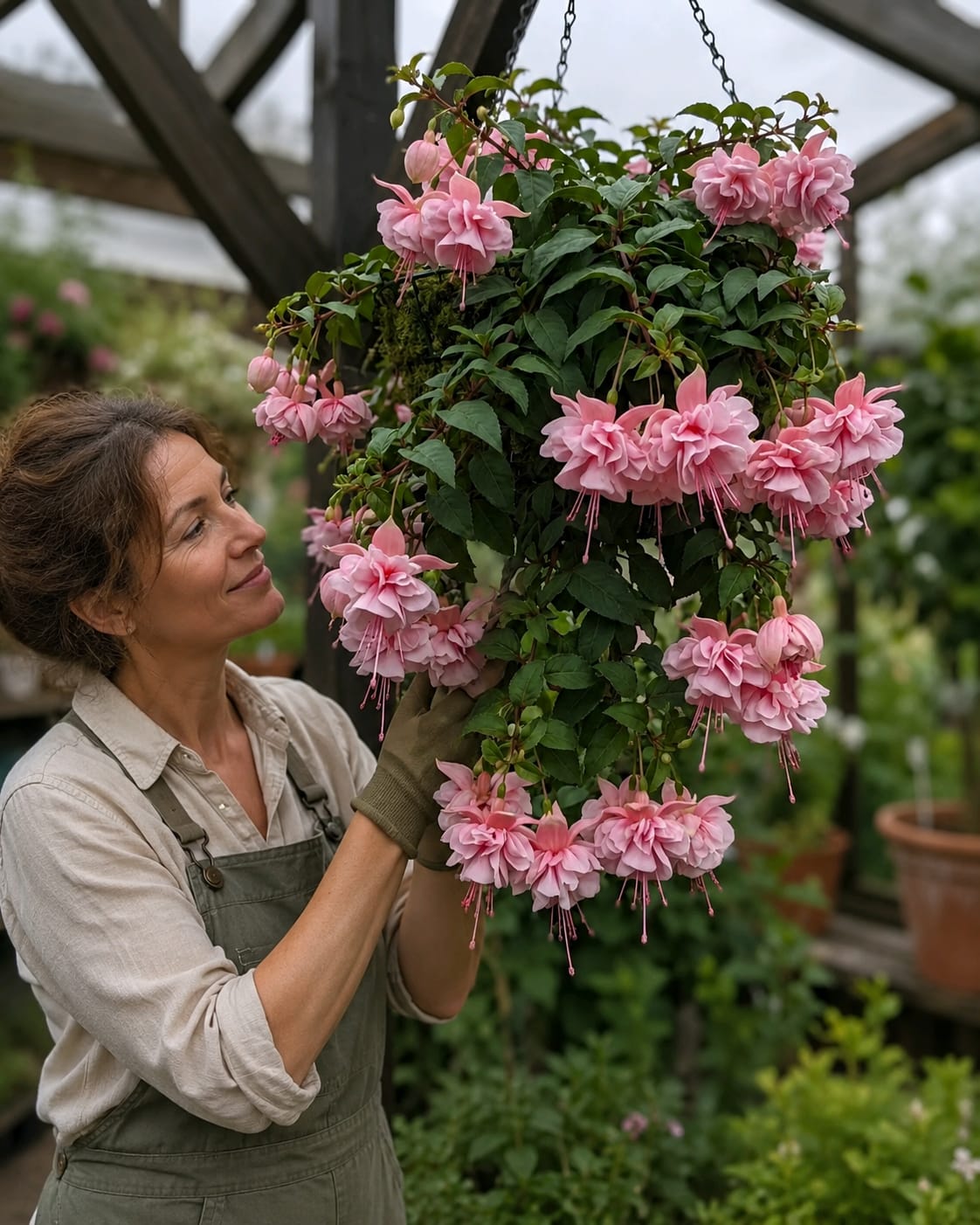
Fuchsia is one of the most beautiful flowering plants for people who want hanging baskets full of color, soft cascading stems, layered blossoms, and a romantic garden look that works beautifully on patios, balconies, porches, pergolas, greenhouse corners, shaded entryways, and outdoor living spaces. Its drooping flowers, pink petals, long elegant stamens, deep green leaves, and trailing growth habit make it a favorite for hanging basket gardening, patio flower displays, balcony decor, cottage garden styling, premium outdoor planters, seasonal container gardening, commercial entrance displays, and polished property presentation. When a fuchsia is healthy and blooming well, it can look like a suspended floral chandelier.
Fuchsias are loved because their flowers have a unique shape. The blooms hang downward like small lanterns, with layered petals and long stamens that create movement and softness. In a hanging basket, this shape becomes even more dramatic because the flowers naturally spill over the sides. A full basket can brighten a shaded porch, soften a greenhouse frame, decorate a balcony rail, or create a high-end cottage garden effect without needing a large flower bed.
However, fuchsias need careful care to stay lush and full of blooms. They are not plants that enjoy harsh midday sun, dry soil, or neglected baskets. Their roots need steady moisture, but not waterlogged conditions. Their leaves need good airflow, but not hot drying wind. Their blooms need gentle feeding, but not heavy fertilizer that burns roots. A hanging basket dries faster than a garden bed, so watering and soil quality matter a lot. When the routine is balanced, fuchsia can bloom beautifully for a long season.
This guide explains how to grow fuchsia in a hanging basket safely, how to choose the right light, how to water without causing root rot, what soil mix works best, how to feed for more flowers, how to prune and pinch for fuller growth, what damage can happen if care is wrong, and how to keep the plant healthy, clean, and suitable for patio styling, balcony decor, cottage garden design, greenhouse displays, commercial landscaping, luxury home staging, and premium flowering basket presentation.
Quick Answer
Fuchsia grows best in a hanging basket when it receives bright indirect light or partial shade, steady moisture, fertile well-draining soil, gentle feeding during the growing season, and regular pinching or pruning to encourage bushier growth. It should be protected from harsh midday sun, dry soil, hot wind, and standing water. The basket should have drainage holes, and the potting mix should stay evenly moist but never soggy. Fuchsia blooms heavily when roots are healthy, the plant is not heat-stressed, faded flowers are removed, and the stems are lightly trimmed to encourage new flowering growth. It is an excellent plant for shaded patios, porches, balconies, greenhouse styling, and cottage garden hanging displays.
What Plant This Is
The plant is fuchsia, a flowering plant known for its drooping ornamental blooms and graceful hanging habit. Fuchsia flowers often have two visible parts: outer sepals that curve outward and inner petals that form a skirt-like center. The long stamens hang below the petals, giving the flowers a delicate and elegant appearance. Many varieties bloom in pink, purple, red, white, coral, or mixed colors.
Fuchsia plants can grow upright, bushy, trailing, or semi-trailing depending on the variety. Trailing and semi-trailing types are especially useful for hanging baskets because their stems spill over the edges and create a cascading shape. This makes the plant ideal for porch ceilings, pergolas, greenhouse beams, balcony hooks, and shaded garden structures.
Fuchsia leaves are usually small to medium, oval, and green. The foliage supports the floral display by creating a dense background for the colorful blooms. A healthy fuchsia basket should have fresh green leaves, flexible stems, many buds, and flowers hanging at different levels. If the leaves wilt, yellow, or drop, the plant may be suffering from heat, dryness, overwatering, pests, or nutrient stress.
Why Fuchsia Works So Well in Hanging Baskets
Fuchsia works beautifully in hanging baskets because its natural flower shape faces downward. Many flowers are best viewed from the side or above, but fuchsia blooms are made for hanging displays. When the basket is elevated, the flowers can be seen clearly from below and around the plant. This creates a soft waterfall effect that feels elegant and romantic.
A hanging basket also allows the stems to trail naturally. Instead of being forced upright, the plant can spill outward and downward. This makes the display look fuller and more layered. The basket becomes a living decoration, not just a container. A mature fuchsia can transform a shaded porch or greenhouse corner into a premium floral focal point.
Fuchsia also pairs well with many garden styles. It can look classic in a black metal hanging basket, rustic in a moss-lined basket, charming in a cottage garden, fresh on a balcony, and refined in a greenhouse display. Its soft pink blooms create a calm, decorative look that fits beautifully with wood, stone, glass, terracotta, woven baskets, and vintage garden accessories.
What This Plant Should Not Be Misunderstood As
Fuchsia should not be misunderstood as a full-sun bedding plant that can handle intense afternoon heat without stress. Many fuchsias prefer bright shade, filtered light, or morning sun with afternoon protection. Strong midday sun can scorch leaves, wilt flowers, dry the basket too quickly, and reduce bloom quality.
It should not be misunderstood as a drought-tolerant plant. A fuchsia hanging basket needs consistent moisture. If the soil dries out completely, the plant may wilt dramatically, drop buds, or lose flowers. However, consistent moisture does not mean soggy soil. The basket still needs drainage and airflow around the roots.
It should also not be misunderstood as a plant that blooms best without pruning. Fuchsia often produces more flowers when stems are pinched back and shaped regularly. Pinching encourages branching, and more branches can create more bloom points. A neglected fuchsia may become long, thin, and less full. Gentle shaping keeps it attractive.
Best Light for Fuchsia
Fuchsia usually prefers bright indirect light or partial shade. A spot with morning sun and afternoon shade is often ideal. Filtered light under a pergola, greenhouse roof, tree canopy, balcony overhang, or porch cover can support strong growth without overheating the plant. The goal is bright light without harsh heat.
If the plant receives too little light, it may produce fewer flowers and become weak or stretched. If it receives too much direct sun, leaves can scorch and flowers may fade quickly. The best location depends on climate. In cooler regions, fuchsia may tolerate more sun. In hot climates, shade during the hottest part of the day is very important.
Light also affects watering. A basket in brighter light dries faster than one in deep shade. A basket in hot wind dries even faster. The plant should be watched closely after choosing a location. If it wilts daily even when watered, it may need more shade or a larger basket with better moisture retention.
Best Soil Mix for a Hanging Basket
Fuchsia needs a fertile, well-draining potting mix that holds moisture without becoming heavy. A good container mix should feel light and soft while still retaining enough water for the roots. Hanging baskets dry faster than ground plantings, so the soil must balance drainage and moisture retention.
A quality potting mix with composted organic matter, fine bark, coco coir, peat-free moisture-retentive material, and perlite can work well. Perlite or similar drainage material helps prevent compaction. Organic matter supports nutrients and moisture. The mix should not become muddy or sour after watering.
Garden soil should not be used in a hanging basket. It can compact, drain poorly, and become too heavy for the basket. Heavy soil can also stress the hanging hardware. A proper container mix protects roots and keeps the basket easier to manage. Good soil is the foundation for full blooms.
Choosing the Right Basket
The hanging basket should be large enough to hold moisture and support root growth. Small baskets dry quickly and can stress fuchsias during warm weather. A larger basket gives roots more space and helps the plant stay hydrated longer. The basket should also have strong drainage.
The hanging chains or hooks should be sturdy. A watered basket can become heavy, especially when the plant is mature and full of flowers. The hook, ceiling beam, pergola frame, or greenhouse support should be strong enough to hold the weight safely. A beautiful basket should also be secure.
The basket material can influence watering. Plastic baskets retain moisture longer. Wire baskets with moss liners look natural but may dry faster. Ceramic hanging pots can be decorative but heavy. The best basket depends on the location, climate, and watering routine. For fuchsia, a basket that holds steady moisture while draining excess water is ideal.
Watering Fuchsia Correctly
Fuchsia should be watered when the top of the potting mix begins to feel slightly dry, before the whole basket becomes bone dry. The soil should remain evenly moist, especially during active growth and blooming. If the plant dries too much, buds and flowers may drop. If it stays soggy, roots may rot.
Water should be applied evenly across the basket until excess drains from the bottom. This ensures the whole root zone receives moisture. A light sprinkle on the surface may not reach deeper roots. Hanging baskets should be checked often because wind, heat, and sun can dry them quickly.
Morning watering is often best because it gives the plant moisture before the warmest part of the day. It also allows foliage to dry if any leaves are splashed. In very hot weather, baskets may need checking again later. The plant should not sit in a waterlogged liner or sealed container.
How to Avoid Overwatering
Although fuchsia likes moisture, overwatering can still damage it. Roots need oxygen. If the potting mix stays saturated, roots can become weak and brown. The plant may wilt even though the soil is wet, which can lead people to water more and make the problem worse.
The basket should drain freely after watering. If water does not drain, the holes may be blocked or the mix may be too dense. A sour smell from the soil is a warning sign. Yellow leaves, soft stems, and fungus gnats can also suggest too much moisture.
The safest routine is to keep the soil evenly moist but not swampy. Check the basket by touch and weight. A very light basket may be dry. A very heavy basket may still be wet. Learning this difference helps prevent both underwatering and overwatering.
Feeding for More Blooms
Fuchsia is a flowering plant that benefits from regular gentle feeding during the growing season. A balanced fertilizer or bloom-support fertilizer can help maintain steady growth and flower production. It should be used at a mild strength according to the product directions. Strong feeding can burn roots and damage leaves.
Liquid fertilizer every few weeks during active growth can work well. Slow-release fertilizer may also be used in the potting mix if the product is suitable for flowering container plants. Feeding should support the plant, not overload it. More fertilizer does not always mean more flowers.
Fertilizer should not be applied to a dry, wilted plant. Water the plant first if it is dry, then feed later when it is stable. Fertilizer should also be reduced when growth slows or weather becomes cold. A healthy feeding routine follows the plant’s active season.
Pinching and Pruning
Pinching is one of the best ways to create a fuller fuchsia basket. When young stem tips are pinched back, the plant often produces side shoots. More side shoots create a bushier plant with more flowering points. This helps the basket become rounded and full instead of thin and leggy.
Pruning can also remove weak, damaged, or overly long stems. Clean scissors or pruning shears should be used. The goal is to maintain shape while encouraging fresh growth. Fuchsia blooms on new growth, so gentle pruning can support more flowers when done at the right time.
Heavy pruning should be done carefully and usually not during extreme heat or severe stress. Light regular shaping is often better than one harsh cut. A well-shaped fuchsia basket looks more premium and produces a better cascade of blooms.
Deadheading Faded Flowers
Removing faded flowers helps keep the basket clean and encourages more blooming. When old blooms remain, the plant may put energy into seed production. Deadheading redirects energy toward new buds and fresh growth. It also keeps the display looking polished.
Faded flowers should be pinched off gently or cut with clean scissors. Any dropped petals or old plant material should be removed from the basket surface because decaying material can attract pests or encourage mold. A clean basket stays healthier and looks more professional.
Regular deadheading is especially important for hanging baskets because old flowers are visible from below and around the plant. A fuchsia basket should look fresh, not cluttered with spent blooms. Grooming is part of the decorative value.
Temperature and Heat Protection
Fuchsias prefer mild conditions and can struggle in intense heat. Hot sun, dry wind, and overheated baskets can cause wilting and flower drop. In warm climates, the plant should be placed in shade during the hottest part of the day. A porch, greenhouse with ventilation, or bright shaded patio can be ideal.
If the plant wilts in heat, check the soil before watering. If the soil is dry, water thoroughly. If the soil is wet and the plant is still wilting, heat stress or root stress may be the cause. Moving the basket to a cooler shaded area may help.
Cold can also damage fuchsia depending on the variety. Some types are hardy in mild climates, while many basket fuchsias are treated as tender plants. In cold weather, they may need protection, overwintering, or replacement as seasonal plants. Local climate matters.
Humidity and Airflow
Fuchsia appreciates moderate humidity, but it also needs airflow. In a greenhouse, humidity may be higher, which can help the plant stay fresh. However, stagnant humid air can increase the risk of fungal problems. Good ventilation helps protect leaves and flowers.
Outdoor hanging baskets usually get natural airflow, but very strong wind can dry the plant quickly and damage delicate blooms. A protected position is best. The plant should have enough air movement to stay healthy without being battered by wind.
Humidity and watering should work together. A humid shaded area may keep the basket moist longer, while a dry windy area may require more frequent watering. Care should match the actual environment instead of following a rigid schedule.
Possible Damage If Care Is Wrong
Fuchsia can decline if it receives harsh sun, dry soil, soggy roots, poor drainage, strong fertilizer, or neglected pruning. The plant may drop buds, wilt repeatedly, develop yellow leaves, stop blooming, or become leggy. A hanging basket can decline quickly because roots have limited space and moisture changes fast.
Dry soil can cause flowers and buds to fall. Soggy soil can cause root rot. Too much sun can scorch leaves and fade flowers. Too little light can reduce blooms. Too much fertilizer can burn roots. Each problem has a different cause, so the plant should be observed carefully before making changes.
A fuchsia basket looks best when care is consistent. Sudden extremes are stressful. The plant prefers stable moisture, soft light, gentle feeding, and regular grooming. Balance is the key to long-lasting blooms.
Warning Signs to Watch For
Warning signs include wilting, bud drop, yellow leaves, crispy edges, brown flower tips, sour soil smell, fungus gnats, sticky residue, weak stems, fewer blooms, or leaves falling from the center of the plant. These signs suggest the care routine or location may need adjustment.
If the basket wilts and the soil is dry, it likely needs water. If it wilts and the soil is wet, the roots may be stressed or the plant may be overheated. If leaves are scorched, the light may be too harsh. If there are few blooms, the plant may need more bright indirect light, feeding, or pruning.
Pests can also appear on fuchsias. Aphids, whiteflies, spider mites, and other small insects may target tender growth and flower buds. Early inspection helps prevent a small pest problem from spreading through the whole basket.
Common Mistakes
One common mistake is hanging fuchsia in full hot sun. The flowers may fade and the plant may wilt daily. Another mistake is allowing the basket to dry completely between waterings. Fuchsia prefers steadier moisture than many drought-tolerant container plants.
Another mistake is using heavy soil without enough drainage. This can hold too much water around the roots. Hanging baskets need a light container mix. Heavy garden soil can cause root problems and make the basket unnecessarily heavy.
Neglecting pruning is also common. Without pinching or trimming, fuchsia may become long and uneven. Regular light shaping helps the basket become fuller and more bloom-heavy. A little grooming makes a major difference.
What to Do If the Fuchsia Wilts
If the fuchsia wilts, check the soil first. If it is dry, water deeply until water drains from the bottom. Move the basket out of harsh sun while it recovers. The plant may perk up after the roots rehydrate. Do not apply fertilizer to a wilted dry plant until it has recovered.
If the soil is wet and the plant is wilting, do not add more water immediately. The roots may be stressed by poor drainage or rot. The basket should be checked for blocked drainage, sour smell, or heavy soil. Improving airflow and allowing the mix to dry slightly may help. Severe root problems may require repotting.
If wilting happens every day in hot weather, the location may be too exposed. Moving the basket to morning sun and afternoon shade can reduce stress. A larger basket or moisture-retentive but draining mix may also help.
Repotting or Refreshing a Hanging Basket
A fuchsia basket may need refreshing if the soil becomes compacted, roots fill the basket, or blooming declines. The plant can be gently removed and repotted into fresh container mix. If the plant is very large, some root and stem pruning may be needed, depending on the season and plant condition.
Fresh soil gives the roots better oxygen and moisture balance. It can also restore nutrients that have been used up. The new basket or pot should drain well. After repotting, the plant should be watered carefully and kept in bright shade while it adjusts.
Refreshing can also mean trimming back leggy stems, removing old flowers, and adding a small amount of fresh potting mix to the top. A midseason refresh can bring a tired basket back to a cleaner, fuller look.
How to Encourage More Blooms
More fuchsia blooms come from the right balance of light, water, feeding, and pruning. The plant should receive bright indirect light or partial shade, not deep darkness. It should stay evenly moist without root rot. It should receive mild fertilizer during active growth. It should be pinched or pruned to encourage branching.
Removing faded flowers also helps keep new blooms coming. A basket full of old blooms and seed pods may slow down. Regular grooming keeps the plant focused on fresh flowers. Clean stems and open airflow also reduce disease risk.
If a fuchsia stops blooming, check light first. Too much shade can reduce flowers. Then check feeding and pruning. If the plant is healthy but leafy, it may need a little more brightness or a bloom-support feeding routine. If it is stressed, fix water and roots before pushing flowers.
Cleaning and Grooming the Display
A fuchsia basket should be groomed regularly because hanging flowers are highly visible. Dead petals, yellow leaves, broken stems, and old buds should be removed. This keeps the display fresh and reduces pest hiding places. A clean basket looks more premium and lasts longer.
The basket exterior should also be checked. Moss liners, metal chains, hooks, and the underside of the basket can collect debris. Cleaning these areas improves the overall presentation. A flowering hanging basket should look beautiful from every angle.
When watering, avoid splashing soil onto flowers. If blooms become dirty, they may fade faster. Gentle watering at the soil level protects the flower display. A narrow-spout watering can helps control the flow.
Outdoor Decor Value
Fuchsia has strong outdoor decor value because it brings soft cascading color to spaces that may not support full-sun flowers. It can decorate shaded porches, balconies, pergolas, greenhouse entries, covered patios, and garden seating areas. Its pink hanging blooms create movement and romance.
The plant works especially well with cottage garden decor, vintage garden styling, black metal hooks, wood beams, glass greenhouse frames, terracotta pots, and natural stone paths. A hanging fuchsia can soften strong architectural lines and make a space feel more welcoming.
Because the flowers hang downward, the basket should be placed where people can see it from below or at eye level. A high basket can still look beautiful, but it should not be so high that watering and grooming become difficult. Practical placement supports long-term beauty.
Room-by-Room and Space Styling
On a porch, a fuchsia basket can hang near the entrance and create a welcoming floral look. It should receive bright shade or morning sun. The basket should be easy to reach for watering. A pair of matching baskets can frame a doorway beautifully.
On a balcony, fuchsia can bring color to a shaded railing or overhead hook. The basket should be protected from strong wind. Water should not drip onto neighbors or delicate surfaces. A saucer-style hanging basket may help, but drainage must still work.
In a greenhouse, fuchsia can thrive when light is filtered and humidity is moderate. Good ventilation is important. The plant can hang from a frame or beam, creating a lush floral display above other potted plants. The basket should not block airflow around nearby plants.
On a patio, fuchsia can soften a seating area and add color where full-sun flowers struggle. It pairs beautifully with ferns, begonias, impatiens, coleus, hostas, and other shade-loving plants. The display feels layered and garden-like.
Continue to Page 2
Continue to page 2 for more details about this article and the key points many readers miss on the first page.