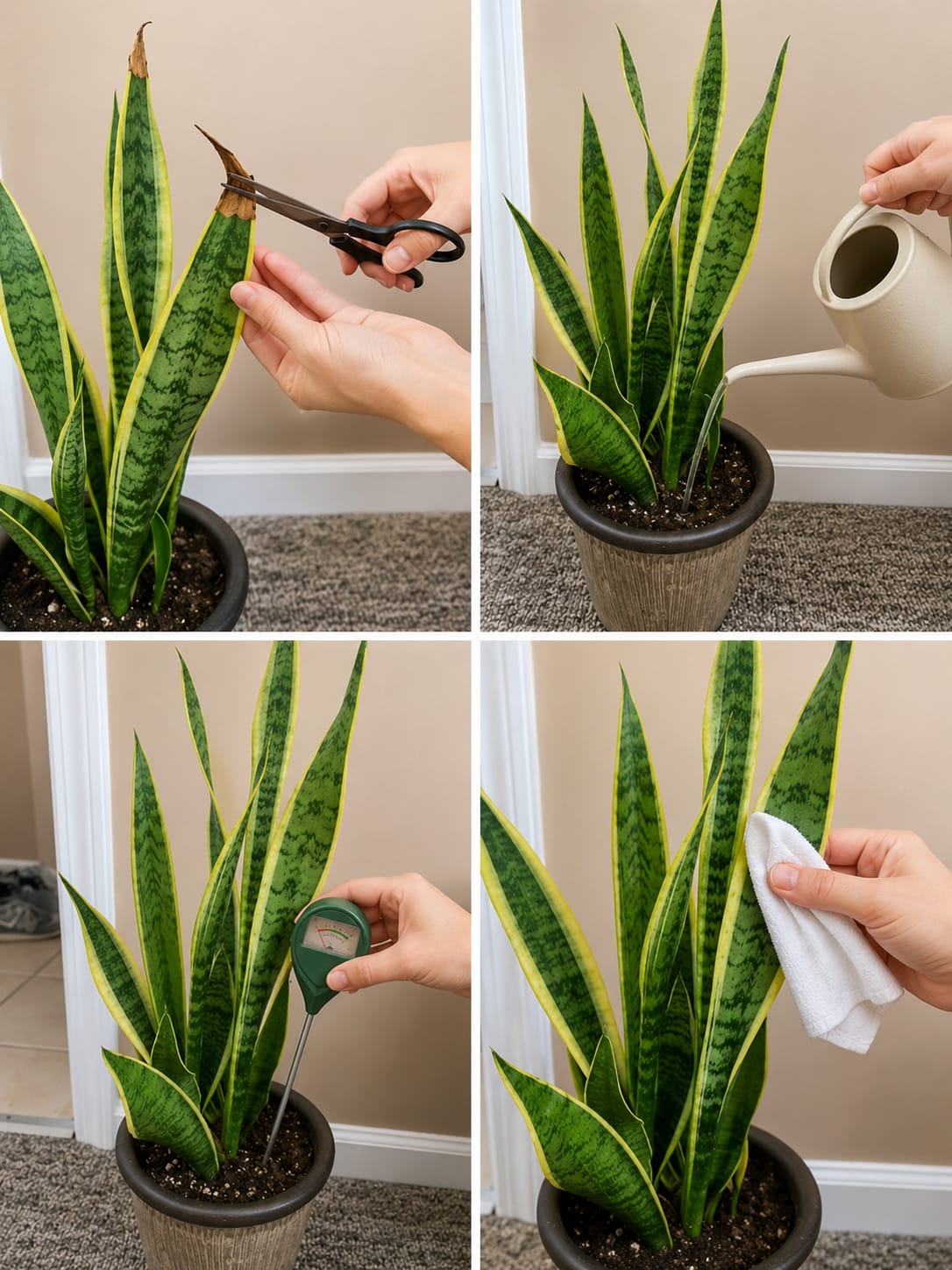
Snake plant is one of the most reliable indoor plants for people who want strong upright leaves, low-maintenance care, and a clean modern look that fits beautifully in living rooms, bedrooms, home offices, entryways, apartments, plant shelves, and premium indoor plant displays. Its sword-shaped foliage, green patterned surface, yellow-edged variegation, and bold architectural form make it a favorite for indoor plant styling, modern apartment decor, low-maintenance houseplant care, commercial interior landscaping, luxury home staging, and polished property presentation. When a snake plant is healthy, it looks firm, structured, elegant, and almost effortless.
Dry and crispy tips are one of the most common problems snake plant owners notice. The plant may still look mostly healthy, but the pointed ends can turn brown, dry, sharp, papery, or curled. This can make an otherwise beautiful plant look stressed and less polished. Because snake plants are known for being tough, crispy tips can be confusing. Many people assume the plant is dying, but in most cases, dry tips are a sign of stress that can be managed with better watering, light, humidity, soil, and grooming.
A dry tip does not usually turn green again. Once the tissue is brown and crispy, that damaged part is permanent. However, the rest of the leaf can remain healthy, and new growth can come in cleaner if the root zone and care routine are corrected. The goal is not to magically reverse the brown tip. The goal is to stop the problem from spreading, improve the plant’s growing conditions, and trim the damaged area neatly so the snake plant keeps a clean indoor look.
This guide explains why snake plant tips become dry and crispy, how to tell the difference between underwatering, overwatering, low humidity, fertilizer stress, sun scorch, mineral buildup, physical damage, and natural aging, how to trim damaged tips correctly, how to water safely, how to use a moisture meter without overreacting, how to clean the leaves, and how to keep the plant healthy, stylish, and suitable for living room styling, bedroom decor, home office greenery, modern apartment interiors, commercial plant displays, luxury home staging, and premium houseplant presentation.
Quick Answer
Snake plant tips usually become dry and crispy because of inconsistent watering, long periods of dryness, strong direct sun, low humidity, fertilizer burn, mineral-heavy water, cold drafts, physical damage, or stress from poor soil and drainage. The brown tip itself will not turn green again, but the plant can continue growing well if the cause is corrected. Trim the crispy area with clean scissors, following the natural shape of the leaf tip. Water only when the soil has dried well, use a fast-draining cactus or succulent mix, keep the pot in bright indirect light, avoid strong fertilizer, and wipe dust from the leaves. Do not overwater to compensate for crispy tips because wet soil can cause root rot. Healthy roots, controlled watering, and clean grooming are the safest fix.
What Plant This Is
The plant is a snake plant, also known as Sansevieria or Dracaena trifasciata. It is recognized by its upright sword-like leaves, green patterned bands, yellow-edged margins, and thick succulent-like structure. The leaves store water, which helps the plant survive dry periods and makes it one of the most forgiving indoor plants.
Snake plants grow from underground rhizomes. These rhizomes hold water and energy, allowing the plant to tolerate missed watering better than many tropical houseplants. However, this same structure means the plant can be damaged by soggy soil. Snake plants prefer a dry-friendly root zone with good airflow and drainage.
A healthy snake plant usually has firm upright leaves, stable color, clean leaf bases, and soil that smells fresh and earthy. Dry brown tips can appear even when the plant is not dying. They are often a sign that the leaf edge experienced stress at some point. The key is to identify whether the problem is active or old damage.
What Dry and Crispy Tips Mean
Dry and crispy tips mean the leaf tissue at the end has lost moisture and died. The damage may be small and cosmetic, or it may signal a care problem that is still continuing. If only one or two tips are dry while the rest of the plant is firm, the problem may be minor. If many leaves are browning, curling, softening, or yellowing, the plant needs closer attention.
The texture matters. A dry, papery, brown tip often points to dehydration, sun stress, mineral buildup, fertilizer stress, or physical damage. A soft, mushy, brown tip can point to rot or severe overwatering. A yellow base with soft leaves is more serious than a dry tip at the very top.
Snake plant leaves are slow to show problems and slow to repair visually. Damage may reflect stress from weeks or months earlier. This is why the best approach is to inspect the full care routine instead of reacting with one quick treatment.
Why the Tips Turn Brown
One common reason is inconsistent watering. Snake plants like to dry between waterings, but extreme long dryness can stress leaf tips. If the plant sits dry for too long in a warm bright room, the tips may become crisp. This is especially common when the plant is near a sunny window, heater, or air vent.
Another common reason is overwatering. This may sound opposite, but wet soil can damage roots, and damaged roots cannot move water properly into the leaves. The result can be brown tips, yellowing, and weak growth. If crispy tips appear along with soft bases or wet soil, root stress may be involved.
Strong direct sun can also burn or dry leaf tips. Snake plants tolerate bright light, but sudden exposure to harsh sun can scorch the leaves. The tips and edges may become dry, tan, or brown. This is more likely when a plant has been moved from low light into intense sun too quickly.
Underwatering and Crispy Tips
Underwatering can cause dry tips when the plant goes too long without moisture. Snake plants are drought-tolerant, but drought-tolerant does not mean they never need water. The leaves store moisture, and when reserves become low, the tips can dry first.
A snake plant that is too dry may have slightly wrinkled leaves, curling edges, dull color, or soil pulling away from the pot edges. The pot may feel very light. The leaves may remain upright because snake plants are stiff, but the tips can become crispy.
The fix is not to water every day. The fix is to water thoroughly when the soil is dry, then let the pot drain and dry again. A deep watering followed by a dry-down period is safer than frequent small splashes. Small splashes can wet only the top layer while deeper roots stay dry.
Overwatering and Root Stress
Overwatering can also lead to brown tips because roots need oxygen. When soil stays wet too long, roots can weaken or rot. Once roots are damaged, they cannot supply moisture properly to the leaves. The leaf tips may dry while the lower leaf bases become soft or yellow.
Overwatering is more likely if the pot has no drainage holes, the soil is dense, the plant is in low light, the room is cool, or watering is done on a fixed weekly schedule. A snake plant in a dark corner may need far less water than one near a bright window.
If the soil smells sour or the leaf bases feel soft, stop watering and inspect the plant. Root rot should be handled by removing damaged roots, repotting into fast-draining mix, and using a pot with drainage. Adding fertilizer, milk water, tonics, or homemade remedies to wet soil can make the problem worse.
Low Humidity and Dry Air
Snake plants tolerate normal indoor humidity better than many tropical plants, but very dry air can still contribute to crispy tips. This is more common in winter, near heaters, near air-conditioning vents, or in rooms with strong airflow. Dry air pulls moisture from the leaf surface and can make already stressed tips worse.
Unlike ferns or peace lilies, snake plants do not need constant misting. Misting can leave water trapped between leaves and may increase rot risk if airflow is poor. A better solution is to keep the plant away from direct hot air and maintain stable room conditions.
Cleaning the leaves with a slightly damp cloth can help remove dust and improve appearance, but this should not be confused with a humidity treatment. The plant should dry quickly after cleaning. The leaf bases should not remain wet.
Fertilizer Burn
Snake plants are light feeders. Too much fertilizer can cause brown tips, dry edges, and salt buildup in the soil. This often happens when a plant receives strong liquid fertilizer, frequent feeding, or too many slow-release pellets. The roots become irritated, and the leaf tips show stress.
Fertilizer burn may appear as brown tips, yellowing edges, crusty white residue on the soil, or general weakness. If the plant is in low light, it uses nutrients slowly, so buildup becomes more likely. Fertilizer should be used lightly and only during active growth.
The safest feeding routine is mild and simple. Use a diluted cactus and succulent fertilizer or balanced houseplant fertilizer during spring or summer if the plant is healthy. Avoid feeding during winter, after repotting stress, or when roots are struggling. More plant food does not mean stronger leaves.
Mineral Buildup From Water
Mineral-heavy tap water can contribute to crispy tips over time. Some indoor plants are sensitive to salts, chlorine compounds, or mineral buildup. Snake plants are not the most sensitive houseplants, but repeated watering with hard water can still leave deposits in the soil.
Mineral buildup may show as white crust on the soil surface or pot rim. The plant may develop dry tips even when watering seems correct. If this happens, using filtered water, rainwater, or water left out overnight may help. Occasional flushing with plain water can also help if the pot has drainage holes.
Flushing should not be done in a pot without drainage because the minerals and water will remain trapped. A draining pot is essential for safe watering and root health. If the soil is old and crusted, repotting into fresh mix may be better.
Sun Scorch and Heat Stress
Snake plants can handle bright conditions, but sudden harsh direct sun can burn leaf tips and edges. Sun scorch often appears as tan, brown, dry patches or crispy tips on the side facing the light. A plant moved outdoors or placed in a hot window can show damage quickly.
The fix is to provide bright indirect light or gentle morning sun. If direct sun is desired, the plant should be acclimated gradually. Sudden exposure from low light to strong sun is stressful. The damaged areas will not turn green again, but new growth can stay cleaner once the light is corrected.
Heat stress can happen near radiators, heaters, fireplaces, hot windows, or appliances. The leaf tips may dry out even if the soil has moisture. Moving the plant slightly away from heat sources can reduce future damage.
Physical Damage and Natural Aging
Sometimes crispy tips come from physical damage. The pointed ends of snake plant leaves can be bumped, bent, scratched, cut, or crushed during moving, cleaning, or placement in narrow spaces. Once the tip is injured, it may dry and turn brown.
Natural aging can also cause small dry areas on older leaves. A few old tips are not always a sign of poor care. Snake plants keep leaves for a long time, and older leaves may show marks from past stress. The plant can still be healthy overall.
The difference is pattern. If only one leaf has a damaged tip after being touched or bent, it is probably physical. If many tips are turning brown at the same time, look at watering, light, fertilizer, soil, and environment.
How to Trim Crispy Tips Correctly
Dry tips will not recover, so trimming is the best cosmetic fix. Use clean sharp scissors. Wipe the blades with alcohol or wash them well before cutting. This helps reduce the risk of spreading disease. The cut should follow the natural pointed shape of the leaf rather than creating a flat blunt end.
Only remove the brown crispy part and a tiny edge of healthy tissue if needed. Avoid cutting too much green leaf. A careful angled trim can make the leaf look more natural. If the entire leaf is damaged, yellowing, or soft, removing the whole leaf near the soil line may be better.
After trimming, keep the plant dry above the soil. Do not spray the cut tips with water or homemade mixtures. The cut surface will dry naturally. Good airflow and stable care help prevent further browning.
How to Water After Trimming
Do not water just because tips were trimmed. Watering should depend on soil dryness. If the soil is still damp, wait. If the soil is dry all the way down or mostly dry, water thoroughly and allow excess to drain.
A watering can with a narrow spout helps direct water to the soil instead of the leaves. Water should not collect between leaf bases. Snake plants are more likely to rot when water sits in the crown or dense leaf clusters.
After watering, empty the saucer. If the plant is in a decorative outer pot, remove the inner pot to drain fully before returning it. This prevents hidden standing water.
Using a Moisture Meter Safely
A moisture meter can be helpful, but it should not be the only guide. Some meters are less accurate in chunky or dry mixes. Use the meter together with pot weight, finger testing, and the plant’s condition. If the meter says wet but the top looks dry, check deeper before watering.
Insert the probe into the soil away from the rhizomes and leaf bases. Do not stab the thick roots or rhizomes repeatedly. Check different areas if the pot is large. Snake plant soil can dry unevenly, especially in decorative containers.
The goal is to confirm that the plant has dried enough before watering. For snake plants, it is safer to wait a little longer than to water too early. A moisture meter should support patience, not create panic.
Best Soil Mix for Snake Plant
Snake plants need fast-draining soil. A cactus and succulent mix is usually a good base. It can be improved with perlite, pumice, coarse sand, fine gravel, or small bark pieces. The soil should let water pass through easily and should not stay wet for many days.
Dense indoor potting soil alone can hold too much moisture. Garden soil should not be used indoors because it compacts and drains poorly. Heavy soil makes watering mistakes more serious and can lead to root stress, soft leaves, and brown tips.
If the current soil is old, compacted, sour-smelling, or slow to dry, repotting may help more than trimming. A fresh dry-friendly mix gives the roots oxygen and helps prevent future damage. Good soil is one of the strongest defenses against crispy tips and root problems.
Choosing the Right Pot
The pot should have drainage holes. This is essential for snake plant health. A decorative planter can look beautiful, but excess water must be able to escape. If the outer pot has no drainage, the plant should remain in a draining inner pot placed inside it.
The pot should fit the plant. A pot that is too large can hold too much wet soil around the roots. A pot that is too small may dry too quickly or become unstable. Snake plants often do well in a slightly snug pot because the soil dries at a safer pace.
Terracotta can help soil dry faster, while plastic and glazed ceramic hold moisture longer. All can work if the watering routine is adjusted. The best pot supports both root health and the room’s style.
Best Light for Cleaner Leaves
Bright indirect light is usually best for snake plants. They can survive in lower light, but they grow more slowly and use less water. Low light combined with frequent watering can cause root stress. Better light helps the plant stay stronger and use moisture more efficiently.
Direct sun should be introduced gradually. A snake plant that has lived in a dim room may scorch if suddenly placed in strong sun. Gentle morning light is usually safer than harsh afternoon exposure. Filtered light near a window can give the plant energy without burning the tips.
If crispy tips are caused by sun or heat, move the plant slightly away from the window or filter the light with a curtain. The goal is bright, comfortable light, not harsh stress.
Cleaning the Leaves
Dust can build up on snake plant leaves and make them look dull. Cleaning the leaves helps restore the polished look and allows the plant to receive light more effectively. Use a soft damp cloth and support the leaf gently while wiping.
Do not use oil, milk, leaf shine sprays, or sugary mixtures on the leaves. These can leave residue, clog the surface, attract dust, and reduce the clean indoor look. Plain water on a cloth is enough.
After cleaning, allow the plant to dry in a bright room with good airflow. Avoid letting water run down into the crown or sit at the leaf bases. Clean leaves should look fresh, not wet or sticky.
Continue to Page 2
Continue to page 2 for more details about this article and the key points many readers miss on the first page.