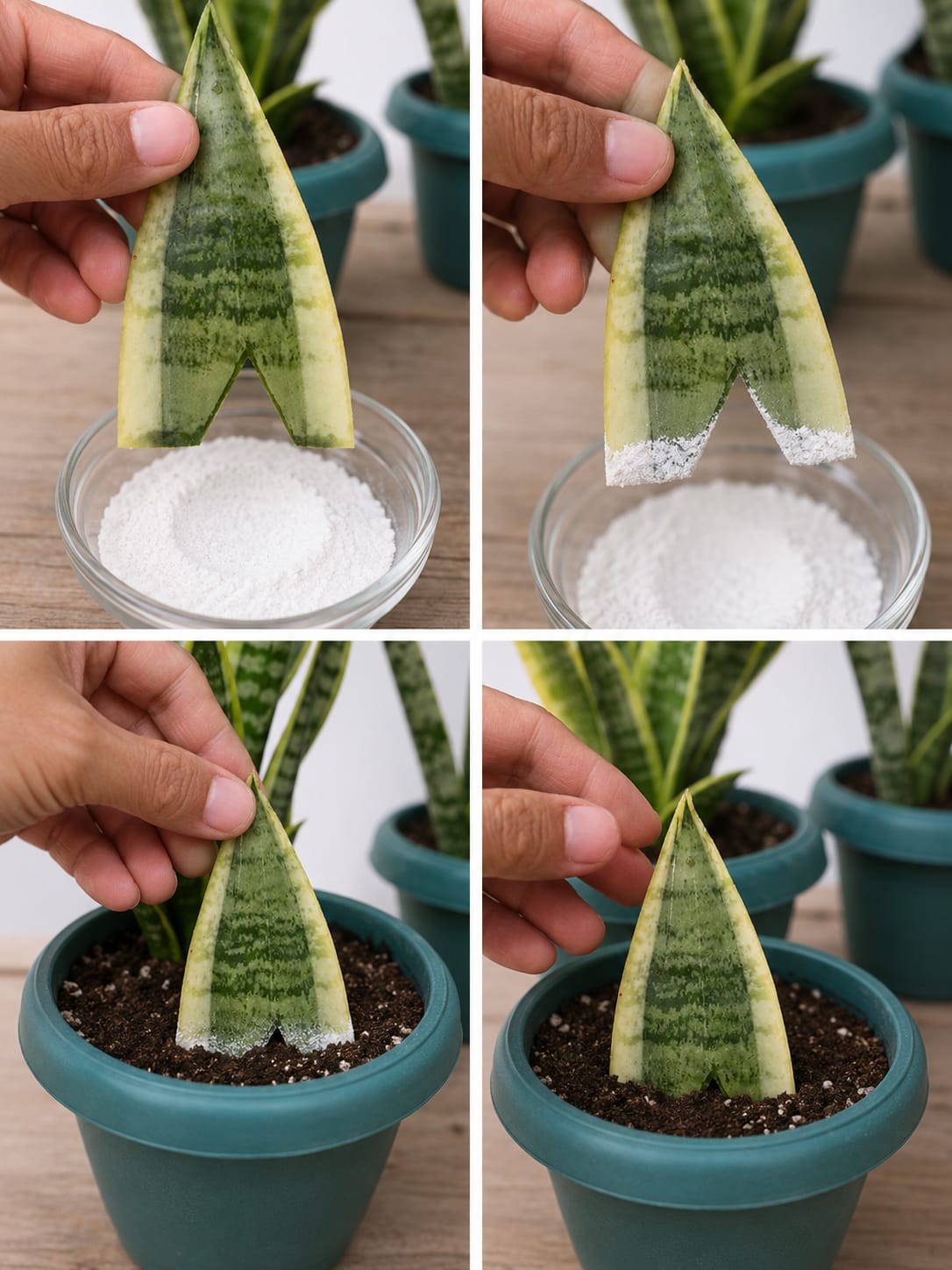
Snake plant is one of the most dependable indoor plants for people who want strong upright leaves, low-maintenance care, and a clean modern look that fits beautifully in living rooms, bedrooms, home offices, apartments, windowsills, entryways, plant shelves, and premium indoor plant displays. Its sword-shaped foliage, green patterned surface, yellow-edged variegation, thick succulent-like leaves, and bold architectural form make it a favorite for indoor plant styling, modern apartment decor, low-maintenance houseplant care, commercial interior landscaping, luxury home staging, and polished property presentation. When a snake plant is healthy, it looks structured, elegant, and almost effortless.
Many gardeners propagate snake plants by cutting a healthy leaf into sections and planting those pieces into soil or placing them in water until roots form. Before planting, some gardeners dip the cut end into a light white powder. This powder is usually rooting hormone powder, a dry fungicide powder, cinnamon powder, sulfur powder, or another plant-safe rooting support product. The purpose is usually to help the cut end stay clean, reduce rot risk, and encourage faster root development. However, this method needs to be explained carefully because not every white powder is safe for snake plant cuttings.
Snake plant cuttings are thick, juicy, and slow to root. Because the leaf tissue holds a lot of moisture, the cut end can rot if it is planted too wet, buried too deeply, or placed into dense soil. White powder can be useful only when it is identified, clean, plant-safe, and used in a very thin coating. Too much powder, unknown powder, wet powder paste, or powder pushed into soggy soil can create problems instead of helping the cutting root.
This guide explains why gardeners dip snake plant cuttings in white powder, what the powder may be, how it may support rooting, how to prepare the cutting safely, how to plant it correctly, what damage can happen if the powder is misused, and how to keep new snake plant cuttings healthy, clean, and suitable for indoor plant styling, windowsill propagation displays, modern apartment decor, commercial plant care, luxury home staging, and premium houseplant presentation.
Quick Answer
Gardeners dip snake plant cuttings in white powder before planting to support cleaner rooting and reduce the risk of rot. The powder is often rooting hormone powder, which may encourage root development, or a plant-safe dry antifungal powder used to keep the cut end cleaner. The cutting should first be allowed to callus for a short period so the wound becomes drier. Then the bottom cut end can be dipped lightly in the powder and planted into a fast-draining cactus or succulent mix. The soil should be slightly moist at most, never soggy. Unknown powders, baking soda, salt, flour, sugar, cleaning powders, and human supplement powders should not be used. Healthy snake plant propagation depends more on correct cutting direction, dry callusing, bright indirect light, well-draining soil, and careful watering than on powder alone.
What Plant This Is
The plant is a snake plant, also known as Sansevieria or Dracaena trifasciata. It is recognized by its upright sword-like leaves, green banded pattern, yellow margins on variegated types, and thick succulent-like leaf structure. Snake plants are popular because they tolerate dry conditions, grow slowly, and maintain a clean decorative shape with very little daily care.
Snake plants grow from underground rhizomes. These rhizomes store water and produce new shoots. When propagating from leaf cuttings, the cutting must develop roots and then eventually produce a new rhizome or shoot. This process is slow. It can take weeks or months before visible new growth appears.
Because snake plant leaves are thick and moisture-filled, propagation requires patience and careful moisture control. A cutting can look healthy for a long time even before it has roots, but it can also rot if the base remains wet. The goal is to create a clean, dry-friendly rooting environment.
What the White Powder Might Be
The white powder may be rooting hormone powder. This is one of the most common products used on cuttings. Rooting hormone is designed to encourage root development from the cut area. It is often used with houseplant cuttings, woody cuttings, and slow-rooting plants. For snake plant cuttings, it may help support rooting, but it is not a guarantee.
The powder may also be a plant-safe antifungal powder. Some gardeners use dry powders to reduce the chance of rot at the cut end. Snake plant cuttings can rot when the wound stays wet, so keeping the base clean and dry is important. A thin dusting can help, but the soil and watering routine matter more.
Some people use cinnamon powder as a homemade dry surface treatment. Cinnamon is often used in plant-care content because it is dry, easy to apply, and associated with reducing surface issues. However, it is not the same as a labeled rooting hormone. It may help keep the cut end drier, but it should not be treated as a powerful rooting product.
The key rule is simple: the powder must be identified. A white powder is not automatically safe. Household powders can damage cuttings. Cleaning powders, salt, sugar, baking soda, flour, starch, and unknown materials should never be used on snake plant cuttings.
Why Gardeners Use White Powder
Gardeners use white powder because snake plant cuttings can be slow and vulnerable during the rooting stage. The powder gives the cut end a dry coating and may support root formation. This can make the process feel more controlled, especially for beginners who worry about rot.
Rooting hormone powder is used because it may encourage the cutting to produce roots from the cut surface. The powder is usually applied only to the lower end that will enter the soil. It should not be spread across the entire leaf or piled heavily around the cutting.
Dry protective powders are used because cuttings are wounded plant tissue. When a leaf is cut, the exposed area needs time to dry and seal. A powder may help keep the area cleaner, but it cannot replace callusing, proper soil, and careful watering.
What This Method Should Not Be Misunderstood As
This method should not be misunderstood as a magic propagation trick. A snake plant cutting will not grow roots overnight just because it was dipped in powder. Rooting takes time, warmth, bright indirect light, and the right moisture level.
It should not be misunderstood as a way to rescue rotten cuttings. If the base is already soft, brown, mushy, or smelly, powder will not reverse rot. The damaged part must be cut away with a clean blade, and the remaining healthy tissue must callus again before planting.
It should also not be misunderstood as safe with any powder. Using the wrong white powder can burn tissue, block rooting, attract mold, or contaminate the soil. Plant-safe products and clean technique matter.
Why Callusing Matters Before Powder
Callusing is one of the most important steps in snake plant propagation. After a leaf is cut, the cut end should be allowed to dry until the surface becomes less wet and more sealed. This reduces the chance of rot when the cutting is placed into soil.
A fresh wet cutting pushed directly into damp soil can rot quickly. The leaf tissue is full of moisture, and the open wound is vulnerable. A short callusing period helps create a safer boundary between the cutting and the soil.
White powder works best after the cut surface is no longer dripping wet. If powder is applied to a very wet cut, it can clump into paste. A paste-like coating can trap moisture instead of keeping the cut end dry. A dry, thin dusting is safer.
How to Cut Snake Plant Leaves Correctly
Use a healthy mature leaf with firm tissue and good color. A weak, yellow, soft, or diseased leaf is not the best choice for propagation. The cutting should come from a strong plant that has not been overwatered or stressed.
Use a clean sharp knife or scissors. Dirty tools can introduce bacteria or fungi into the cut. The cut should be clean rather than crushed. Crushed tissue is more likely to rot and less likely to root well.
Direction matters. Snake plant leaf cuttings must be planted with the same bottom end down. If the cutting is planted upside down, it usually will not root properly. Marking the bottom end or cutting a small V-shape at the bottom can help remember the direction.
How to Apply White Powder Safely
After the cutting has callused, dip only the lower end into the powder. The coating should be light. Tap off the excess so the cutting is dusted, not covered in a thick layer. A heavy pile of powder is not better and may interfere with the soil contact.
The powder should not be rubbed over the entire leaf. It should not be placed on the top end. It should not be mixed into a wet paste unless the product specifically instructs that method. For snake plant cuttings, a dry light coating is usually safer.
Once the powder is applied, plant the cutting promptly into the prepared mix. Do not leave powdered cuttings sitting in damp conditions. Keep the process clean and simple.
Best Soil for Snake Plant Cuttings
Snake plant cuttings need a fast-draining mix. A cactus and succulent mix is usually a good base. It can be improved with perlite, pumice, coarse sand, fine gravel, or small bark pieces. The soil should hold the cutting upright while allowing water and air to move through easily.
Dense garden soil is not suitable for indoor snake plant cuttings. Heavy soil holds too much water and can suffocate the cut end. A cutting without roots cannot use water the same way a mature plant can, so soggy soil is especially risky.
The soil should be slightly moist or barely moist when planting, not wet. If the mix feels muddy or clumps heavily, it is too wet. Dry-friendly soil gives the cutting a better chance to callus fully, root slowly, and avoid rot.
How Deep to Plant the Cutting
The cutting should be planted deep enough to stand upright, but not so deep that too much leaf tissue is buried. Usually, placing the lower portion into the mix is enough. Burying too much of the leaf increases the amount of tissue exposed to moisture and can raise rot risk.
The soil should be gently firmed around the cutting so it stays stable. It should not be packed tightly. Roots need oxygen. A loose, breathable mix is better than compacted soil.
If the cutting is tall and unstable, a small support can be used. A leaning cutting may disturb the new root area. Stability helps the cutting root without being pulled or moved repeatedly.
Watering After Planting
Watering is one of the most important parts of snake plant propagation. After planting a cutting, the soil should not be kept constantly wet. A cutting without roots can rot if the mix stays damp for too long.
If the soil was already slightly moist, wait before watering again. If the mix is completely dry, a very light watering around the soil can be used, but the pot should drain fully. The cutting should not sit in standing water.
After the first light moisture, allow the soil to dry significantly before watering again. Patience is important. Frequent watering is one of the most common reasons snake plant cuttings fail.
Light for Rooting Cuttings
Bright indirect light is best for snake plant cuttings. The cutting needs enough light to stay healthy, but harsh direct sun can dry or scorch the leaf before roots form. A bright windowsill with filtered light or a bright room is usually ideal.
Low light slows rooting and keeps soil wet for longer. This increases rot risk. If the room is dark, the cutting may survive for a while but root slowly. A grow light can help in darker homes or offices.
Strong direct sun should be avoided during the early rooting stage. Once the cutting is rooted and growing, it can be acclimated gradually to brighter conditions if desired.
Temperature and Airflow
Warm stable temperatures help snake plant cuttings root. Cold rooms slow the process and increase the risk of rot. The cutting should be kept away from cold drafts, open windows, air-conditioning blasts, and damp chilly corners.
Good airflow is helpful, but strong drying wind is not necessary. The goal is a stable indoor environment where the cut end can remain clean and the soil can dry at a safe pace.
Do not cover snake plant cuttings with a humidity dome unless the environment is extremely dry and the setup is carefully managed. High humidity around thick succulent cuttings can increase rot risk. Snake plant cuttings usually prefer a drier propagation method than soft tropical cuttings.
How Long Rooting Takes
Snake plant cuttings are slow. Roots may take several weeks to form, and new shoots may take several months. This is normal. The cutting may look unchanged for a long time while root development happens below the soil.
Do not pull the cutting out repeatedly to check for roots. This can break new roots and delay progress. A gentle resistance test can be done after several weeks, but it should be done carefully.
New growth usually emerges as a small pup from the soil. The original cutting may remain in place while the new plant develops. Patience is one of the most important parts of snake plant propagation.
Important Note About Variegation
Variegated snake plant leaf cuttings may not always produce new plants with the same yellow edges. Many yellow-edged snake plants propagated from leaf cuttings can produce green pups without the original variegation. This surprises many plant owners.
To preserve the yellow-edged look more reliably, division of the rhizome is usually better than leaf cuttings. Division keeps the plant genetically connected to the original growth pattern and is more likely to maintain the same appearance.
Leaf cuttings are still useful and fun, but the result may look different from the parent plant. This does not mean the propagation failed. It means the new growth may not carry the same variegated pattern.
Possible Damage If Powder Is Used Incorrectly
Too much powder can clump around the cut end and hold moisture. This can increase rot risk, especially if the cutting is planted into damp soil. A thin dusting is safer than a thick coating.
Unknown powder can damage the tissue. Salt can dehydrate and burn the cutting. Sugar can attract pests and mold. Flour or starch can become pasty and encourage decay. Cleaning powders can poison the plant. Only plant-safe products should be used.
Planting immediately after cutting without callusing can also cause damage, even if powder is used. The cut end needs time to dry. Powder is support, not a replacement for the correct drying step.
Warning Signs During Propagation
Watch for soft tissue at the base, black or brown mushy edges, sour smell, mold, fungus gnats, yellowing, collapsing leaf sections, or a cutting that becomes slimy. These signs suggest rot or poor conditions.
If the bottom becomes mushy, remove the cutting from the soil. Cut away all soft tissue with a clean blade. Let the healthy part callus again before trying again. Use fresh dry soil and reduce watering.
If the cutting stays firm but does not grow, it may simply need more time. Slow rooting is normal. Do not overwater or overfeed out of impatience.
Common Mistakes
One common mistake is planting the cutting upside down. Snake plant leaf sections have a top and bottom. The original bottom must go into the soil. Marking the cutting helps prevent confusion.
Another mistake is using wet soil. A cutting without roots cannot handle constantly wet conditions. Slight moisture and good drainage are safer. Watering too often is usually worse than waiting.
A third mistake is using too much white powder. A light coating is enough. Heavy powder does not guarantee faster rooting. It may create buildup and moisture problems around the cut end.
What to Do If the Cutting Starts Rotting
If the cutting starts rotting, act quickly. Remove it from the pot and inspect the base. Any soft, brown, black, or smelly tissue should be cut away with a clean sharp blade. The remaining tissue must be firm and healthy.
After trimming, let the cutting callus again in a dry shaded place with good airflow. Do not dip it immediately into wet soil. Once the cut end is dry, a light dusting of plant-safe rooting powder can be used again if desired.
Use fresh fast-draining mix for the second attempt. Do not reuse wet or contaminated soil. Reduce watering and place the cutting in bright indirect light. A cleaner setup gives the cutting a better chance.
Continue to Page 2
Continue to page 2 for more details about this article and the key points many readers miss on the first page.