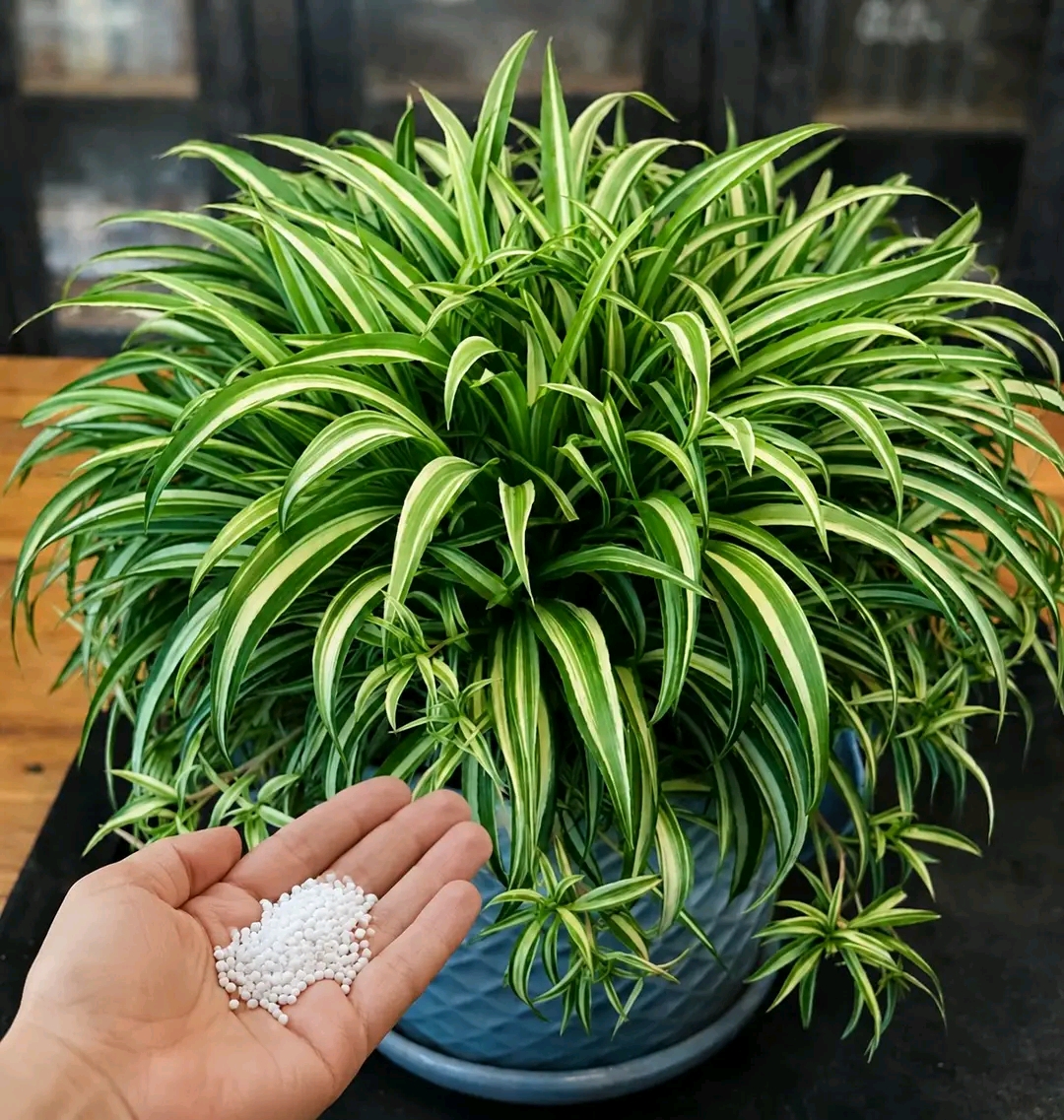
Spider plant is one of the most reliable indoor houseplants for people who want bright striped leaves, graceful arching growth, easy care, and a fresh decorative look that works beautifully in kitchens, living rooms, bedrooms, home offices, apartments, plant shelves, windowsills, hanging baskets, and premium indoor plant displays. Its fountain-like foliage, green-and-white variegation, soft trailing baby plantlets, and forgiving nature make it a favorite for modern apartment decor, low-maintenance houseplant care, commercial interior landscaping, luxury home staging, and polished property presentation.
When a spider plant becomes full, lush, and packed with cascading baby plantlets, many homeowners want to know what helps it stay strong. Small white pellets placed around the soil are often slow-release fertilizer granules, controlled-release plant food, or another mineral-based soil amendment. These pellets can look simple, but they should be used carefully because spider plants can develop brown tips, weak roots, or salt stress when they receive too much fertilizer.
A spider plant does not need heavy feeding to look beautiful. It grows best with bright indirect light, a breathable potting mix, a pot with drainage holes, steady watering, and gentle feeding during active growth. White pellets may help only when the amount is correct, the product is safe for indoor plants, and the soil is not already overloaded with fertilizer salts. Used too heavily, pellets can release more nutrients than the plant can use, especially in warm rooms, wet soil, or small pots.
This guide explains what the white pellets may be, how they may support spider plant growth, how to use them safely, what mistakes to avoid, and how to keep a spider plant full, clean, healthy, and suitable for indoor plant styling, modern home decor, commercial plant displays, luxury home staging, and premium houseplant presentation.
Quick Answer
Small white pellets around a spider plant are usually slow-release fertilizer granules or controlled-release plant food. They can support fuller growth and stronger leaves when used lightly during the active growing season, but they should never be overapplied. Spider plants are sensitive to fertilizer buildup, and too many pellets can cause brown tips, root stress, yellowing, and salt crust on the soil. Use only the amount recommended on the product label, keep pellets away from the crown, water normally, and flush the soil occasionally with clean water if the pot drains well. If the plant already has brown tips, wet soil, fungus gnats, or weak roots, fix watering and drainage before adding fertilizer pellets.
What Plant This Is
The plant is a spider plant, also known as Chlorophytum comosum. It is recognized by its long arching leaves, green-and-white striped variegation, central rosette growth, and trailing baby plantlets that hang from mature stems. These baby plantlets are one of the reasons spider plants are loved for hanging baskets and decorative shelves.
Spider plants are adaptable and beginner-friendly, but they still have preferences. They like bright indirect light, evenly moist but not soggy soil, and a potting mix that allows air to reach the roots. They can tolerate some neglect, but they dislike heavy fertilizer, salty soil, and standing water.
A healthy spider plant usually has firm arching leaves, bright color, active new growth, and clean baby plantlets. A stressed spider plant may show brown tips, pale leaves, yellowing, limp growth, root crowding, or a sour smell from the pot. Before adding any pellets, the plant’s current condition should be checked.
What the White Pellets Might Be
The small white pellets are most likely slow-release fertilizer granules. These products are designed to release nutrients gradually when the soil is watered. They may contain nitrogen, phosphorus, potassium, and sometimes micronutrients that support leaf growth and root development.
They could also be perlite, pumice, or another white potting mix ingredient. Perlite is often already mixed into soil to improve drainage and airflow. Unlike fertilizer pellets, perlite does not feed the plant. It simply helps the soil stay lighter and more breathable.
The difference matters. If the pellets are fertilizer, they should be measured carefully. If they are perlite, they are mostly a soil-structure material. A plant owner should always identify the product before adding it to the pot.
Why Some Homeowners Use White Pellets
Some homeowners use white pellets because they want spider plants to grow fuller, produce stronger leaves, and send out more baby plantlets. Since spider plants can become dense and decorative, a gentle nutrient supply may help during spring and summer when the plant is actively growing.
Slow-release fertilizer can be convenient because it feeds gradually instead of requiring frequent liquid fertilizer mixing. This can be useful for busy homeowners, office plant care, rental property plant displays, and commercial interiors where simple maintenance is preferred.
However, convenience does not mean unlimited use. Spider plants are not heavy feeders. Too many pellets can create fertilizer buildup, especially when the plant is in a small pot or the soil is not flushed regularly.
What This Method Should Not Be Misunderstood As
This method should not be misunderstood as an instant growth trick. White pellets will not make a spider plant double in size overnight. New leaves and baby plantlets develop gradually when the roots, light, water, and nutrients are balanced.
It should not be misunderstood as a cure for every spider plant problem. Brown tips, weak leaves, and poor growth are often caused by inconsistent watering, mineral-heavy water, too much fertilizer, low humidity, root crowding, or poor drainage. Adding more pellets may make some of these problems worse.
It should also not be misunderstood as safer than liquid fertilizer simply because it looks neat. Slow-release pellets can still overfeed a plant if too many are used. The release rate can change with temperature and moisture, so wet warm soil can release nutrients faster.
How White Pellets May Help Spider Plants
When used correctly, fertilizer pellets may provide a steady supply of nutrients during active growth. Nitrogen can support leaf production, potassium can help overall plant strength, and micronutrients can support healthy color and development.
A mild nutrient supply may help a mature spider plant produce fuller foliage and maintain strong plantlets. This is especially useful if the plant has been in the same soil for a long time and nutrients have been depleted.
Still, fertilizer works only when the plant can use it. A spider plant in poor light, soggy soil, or root stress will not benefit much from pellets. Correct care must come first.
When White Pellets Should Be Avoided
White fertilizer pellets should be avoided if the plant already has brown leaf tips from fertilizer buildup. Adding more fertilizer can increase the problem. If white crust is visible on the soil or pot edge, the soil may already contain excess mineral salts.
Pellets should also be avoided if the soil is wet, sour-smelling, or full of fungus gnats. In that case, the plant needs better drainage and moisture control, not more nutrients.
They should also be avoided immediately after repotting into fresh pre-fertilized soil. Many commercial potting mixes already contain nutrients. Adding pellets too soon can overfeed the plant.
How to Use Fertilizer Pellets Safely
Use only a small amount, following the product label. For indoor spider plants, it is often safer to use less than the maximum recommendation. More pellets do not mean more beauty. They can mean more root stress.
Scatter pellets lightly on the soil surface, away from the crown and leaf bases. Do not pile them in one spot. A concentrated pile can release nutrients unevenly and burn nearby roots.
Water normally after application. Do not soak the plant repeatedly just to activate the pellets. Spider plants need moisture balance, not constant wet soil.
Where to Place the Pellets
Pellets should be placed on the soil surface or gently mixed into the top layer, depending on the product directions. They should not be pressed against the central crown where the leaves emerge.
Keep pellets away from baby plantlets touching the soil surface. Tender new roots and young crowns can be more sensitive to concentrated fertilizer.
If the plant is in a hanging basket, apply pellets evenly and lightly. Avoid dumping them on one side because watering can move nutrients unevenly through the pot.
Best Soil for Spider Plants
Spider plants grow best in a light, well-draining indoor potting mix. The mix should hold some moisture but still allow oxygen around the roots. A good blend may include indoor potting soil, perlite, coco coir, fine bark, or pumice.
Dense garden soil should not be used indoors. It can compact, stay wet, and suffocate the roots. A spider plant in heavy soil may develop yellowing leaves or root problems even if fertilizer is added.
If the soil is old, compacted, or crusted, replacing the mix may help more than adding pellets. Fresh soil gives the roots a cleaner environment and reduces the risk of nutrient imbalance.
Choosing the Right Pot
The pot should have drainage holes. This is essential when using fertilizer pellets because water must be able to move through the soil and carry away excess salts over time.
A terracotta pot can help the soil breathe and dry more evenly. Ceramic and plastic pots can also work, but watering must be adjusted because they hold moisture longer.
Spider plants can become root-bound. If the plant is very crowded, dries out too fast, or pushes roots out of the drainage holes, repotting into a slightly larger pot may support better growth than adding more fertilizer.
Watering After Adding Pellets
Water the spider plant when the top layer of soil begins to dry. The plant likes consistent moisture, but it should not sit in soggy soil. After watering, excess water should drain away fully.
If fertilizer pellets are present, avoid letting the pot sit in a saucer of water. Standing water can create root rot and may also keep fertilizer dissolving around the roots for too long.
Occasionally, if the pot drains well, water thoroughly enough to rinse the soil and allow excess to drain out. This can help reduce salt buildup. Do not do this if the plant is already sitting in wet soil or a pot without drainage.
Best Light for Fuller Growth
Bright indirect light is one of the best ways to support a full spider plant. Good light helps maintain variegation, encourages stronger leaves, and supports baby plantlet production. Fertilizer cannot replace light.
Low light may keep the plant alive, but growth can become slower, thinner, and less full. Harsh direct sun can scorch the leaves and create brown patches. A bright filtered window is usually best.
If the plant looks pale or stretched, improve light gradually. Better light often produces a better result than increasing fertilizer.
Feeding Schedule for Spider Plants
Spider plants need only light feeding during active growth. Spring and summer are usually the best times to feed. In fall and winter, growth slows, so fertilizer should be reduced or stopped.
If using slow-release pellets, avoid adding liquid fertilizer on top of them unless the product instructions allow it. Combining fertilizers can overfeed the plant.
If the plant is growing well, do not keep adding more pellets. Wait until the product’s feeding period has ended. Overlapping applications are a common reason for fertilizer stress.
Brown Tips and Fertilizer Sensitivity
Spider plants are known for developing brown tips. These tips can be caused by dry air, inconsistent watering, mineral-heavy tap water, fluoride sensitivity, fertilizer buildup, or root crowding. Fertilizer pellets can make brown tips worse if overused.
If brown tips appear after adding pellets, stop feeding and flush the soil with clean water if the pot drains well. Use filtered or rainwater if mineral buildup is suspected.
Brown tips can be trimmed with clean scissors by following the natural leaf shape. This improves appearance but does not solve the underlying cause. The care routine should still be adjusted.
Possible Damage From Too Many Pellets
Too many fertilizer pellets can cause root burn. The plant may develop brown tips, yellow leaves, dry patches, limp growth, or slower development. In severe cases, roots may become damaged and unable to absorb water properly.
Excess pellets can also create a white crust on the soil surface or pot edge. This suggests mineral buildup. The soil may need flushing or replacement depending on how severe the problem is.
If the plant is in a small pot, the risk is higher because there is less soil volume to buffer the fertilizer. Small pots should receive very small amounts.
Warning Signs to Watch For
Watch for worsening brown tips, yellowing leaves, wilting after feeding, white crust on soil, sour smell, fungus gnats, sticky-looking soil, or roots turning brown and damaged. These signs suggest that the plant may be overfed, overwatered, or stressed.
If warning signs appear, stop feeding. Check soil moisture, drainage, and root condition. If the soil has too many visible pellets, remove some from the surface.
If the plant continues declining, repot into fresh soil and avoid fertilizer for several weeks. Let the roots recover before feeding again.
How to Fix Overfertilizing
If too many pellets were added, remove as many as possible from the soil surface. Do this gently without damaging the crown or roots. If the pellets were mixed deeply into the soil, repotting may be easier than trying to pick them out.
Flush the soil with clean water if the pot has drainage holes. Allow water to run through the soil and out the bottom. Empty the saucer afterward. This may help reduce dissolved salts.
If the soil smells sour, has heavy crust, or the roots look damaged, repot into fresh airy mix. After repotting, avoid fertilizer until the plant shows stable new growth.
Common Mistakes
One common mistake is using a handful of pellets instead of a measured amount. Slow-release fertilizer should be used according to pot size, not guessed by appearance.
Another mistake is placing pellets directly in the crown. The central crown should stay clean, dry, and free from concentrated fertilizer.
A third mistake is adding pellets to a plant that is already struggling from overwatering. Fertilizer cannot fix root rot. Drainage and soil health must be corrected first.
Continue to Page 2
Continue to page 2 for more details about this article and the key points many readers miss on the first page.