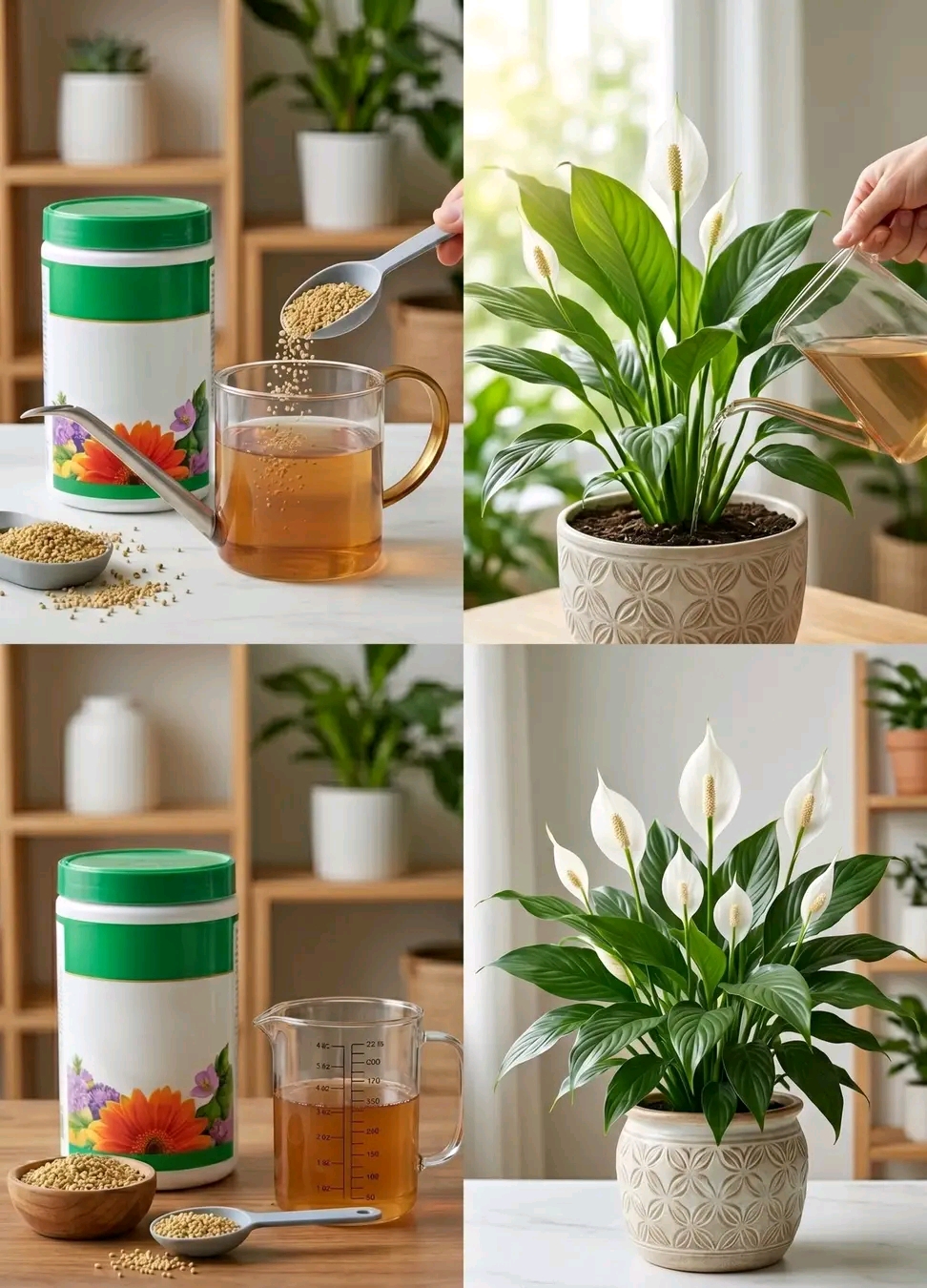
Peace lily is one of the most elegant indoor flowering plants for people who want glossy green leaves, white sail-like blooms, soft tropical texture, and a clean decorative look that fits beautifully in living rooms, bedrooms, home offices, apartments, bright kitchens, plant shelves, windowsills, commercial interiors, luxury home staging, and premium indoor plant displays. Its deep green foliage, upright white spathes, and calm sculptural shape make it a favorite for modern apartment decor, indoor plant styling, office plant design, commercial interior landscaping, and polished property presentation.
Many homeowners become curious when they see small beige fertilizer granules mixed into water until the liquid turns light brown, then poured around a peace lily. This type of method is usually presented as a root-zone tonic for stronger growth and more blooms. The idea is simple: dissolve or steep a small amount of plant food in water, then use the liquid to feed the roots more evenly than dry granules scattered on the surface.
However, peace lilies are sensitive plants. They like moisture, but they do not like soggy soil. They enjoy gentle feeding, but they do not tolerate heavy fertilizer well. A light brown tonic may help only if it is made from a safe houseplant fertilizer, diluted correctly, and used during active growth. If the mixture is too strong, too frequent, or poured into soil that already stays wet, it can cause brown leaf tips, yellowing leaves, root burn, salt buildup, fungus gnats, and weak blooms.
Quick Answer
A light brown root tonic for peace lilies is usually made by diluting a small amount of water-soluble fertilizer, organic plant food, compost tea, or slow-release granules in water. It can support healthy leaves and blooms when used weakly and occasionally, but it should never be strong, thick, sour, salty, or used as a replacement for proper care. Peace lilies need bright indirect light, evenly moist but well-drained soil, drainage holes, clean water, and gentle feeding during spring and summer. If the plant has brown tips, yellow leaves, soggy soil, or weak roots, fix watering and drainage before adding any tonic.
What Plant This Is
The plant is a peace lily, also known as Spathiphyllum. It is recognized by its shiny green leaves and white spathes that rise above the foliage. Although many people call the white part a flower, it is actually a modified leaf surrounding the small flower spike. This clean white-and-green contrast is what makes peace lilies look so refined indoors.
A healthy peace lily usually has upright leaves, firm stems, glossy foliage, clean soil, and occasional white blooms when conditions are right. A stressed peace lily may show drooping leaves, brown tips, yellow leaves, black leaf edges, weak blooms, root rot, or soil that smells sour.
What the Brown Liquid Might Be
The brown liquid may be diluted organic fertilizer, steeped plant food granules, compost tea, worm casting tea, or another mild nutrient solution. It may also be a water-soluble bloom-support fertilizer mixed into a watering can. The brown color does not automatically mean the mixture is safe or effective. The ingredient and strength matter more than the color.
If the granules are a labeled houseplant fertilizer, they should be used exactly according to the instructions, often at reduced strength for peace lilies. If the granules are unknown, they should not be added to the plant. Mystery fertilizer can burn roots quickly.
Why Some Homeowners Use This Method
Some homeowners use a liquid tonic because it distributes nutrients through the root zone more evenly than dry pellets sitting on top of the soil. A weak liquid feed can be useful when a peace lily is actively growing and producing fresh leaves or blooms.
A mild feeding routine may help support stronger stems, greener foliage, and better blooming potential. However, fertilizer does not force flowers by itself. Peace lilies bloom best when they receive enough bright indirect light, stable moisture, healthy roots, and gentle nutrition.
What This Method Should Not Be Misunderstood As
This method should not be misunderstood as an instant bloom trick. A peace lily will not produce many flowers overnight because of one brown liquid treatment. Blooming depends on plant maturity, light, root health, and consistent care.
It should not be misunderstood as a cure for drooping. Peace lilies droop from underwatering, overwatering, root rot, heat stress, or shock. Adding fertilizer to a stressed plant can make the problem worse.
It should also not be misunderstood as safe in any amount. Too much fertilizer can cause brown tips and root damage. Peace lilies usually prefer weak feeding rather than strong feeding.
How to Use a Brown Root Tonic Safely
Use only a clearly labeled fertilizer or plant-safe product. Dilute it more than the label suggests if the peace lily is sensitive or if it has not been fed recently. A half-strength or quarter-strength solution is often safer than full strength for indoor peace lilies.
Apply the tonic only when the soil is ready for watering. Do not pour it into already wet soil. Water slowly around the soil surface, keeping the liquid away from the crown where stems meet the soil. Allow excess water to drain fully from the bottom of the pot.
Use this method occasionally during active growth, usually spring and summer. Do not feed heavily in winter when growth is slower. Do not combine dry pellets, liquid fertilizer, and homemade tonics at the same time.
When This Method Should Be Avoided
A brown fertilizer tonic should be avoided if the soil is soggy, the pot has no drainage holes, the plant smells sour, fungus gnats are present, or the leaves are yellowing from overwatering. Fertilizer cannot fix damaged roots.
It should also be avoided right after repotting into fresh pre-fertilized soil. Many potting mixes already contain nutrients. Adding more too soon can overfeed the plant.
If the peace lily has severe brown tips, flush the soil with clean water if the pot drains well, then pause feeding. Brown tips can be caused by fertilizer salts, mineral-heavy water, dry air, or inconsistent watering.
Best Soil for Peace Lily
Peace lilies grow best in a rich but airy potting mix. The soil should hold moisture without staying muddy. A good indoor mix may include potting soil, perlite, fine bark, coco coir, and a little compost-based material.
Dense garden soil should not be used indoors. It can compact, hold too much water, and suffocate roots. When roots lose oxygen, the plant may droop even though the soil is wet.
If the soil is old, compacted, or crusted with fertilizer residue, repotting into fresh mix may help more than adding another tonic.
Watering Peace Lilies Correctly
Peace lilies prefer evenly moist soil, but not soggy soil. Water when the top layer begins to dry and the pot feels slightly lighter. The plant may droop dramatically when too dry, but repeated wilting can weaken it.
Water thoroughly until excess drains out, then empty the saucer. This is especially important after using fertilizer because standing nutrient water can damage roots.
If using a brown tonic, count it as a watering. Do not feed and then water again immediately unless flushing is needed because the solution was too strong.
Best Light for Bigger Blooms
Bright indirect light is one of the most important factors for peace lily blooms. A peace lily in low light may survive and produce green leaves, but it may bloom rarely. Better filtered light usually improves flower production.
Harsh direct sun can burn leaves, especially near hot windows. A bright room with filtered light, sheer curtains, or gentle morning sun is usually ideal.
If the plant is healthy but not blooming, improve light before increasing fertilizer. Light drives flowering more than feeding alone.
Feeding Schedule for Peace Lily
During spring and summer, a peace lily can be fed lightly every four to six weeks with a diluted balanced houseplant fertilizer. Some growers feed even less often if the plant is growing well. The key is moderation.
During fall and winter, feeding should be reduced or stopped unless the plant is actively growing under strong indoor light. Overfeeding during slow growth can create salt buildup.
If using slow-release granules, avoid also using liquid fertilizer frequently. Too many nutrient sources can overwhelm the roots.
Possible Damage From Too Much Tonic
Too much brown tonic can cause fertilizer burn. The first signs may be brown leaf tips, yellowing leaves, crispy edges, or sudden drooping after feeding. The soil may also develop white or tan crust from salt buildup.
If the tonic is organic and too strong, it may sour in the pot, smell unpleasant, or attract fungus gnats. Indoor pots do not process organic liquids the same way outdoor soil does.
If damage appears, stop feeding. Flush the soil with clean water if the pot drains well, or repot into fresh mix if the soil smells bad or contains too much residue.
Continue to Page 2
Continue to page 2 for more details about this article and the key points many readers miss on the first page.