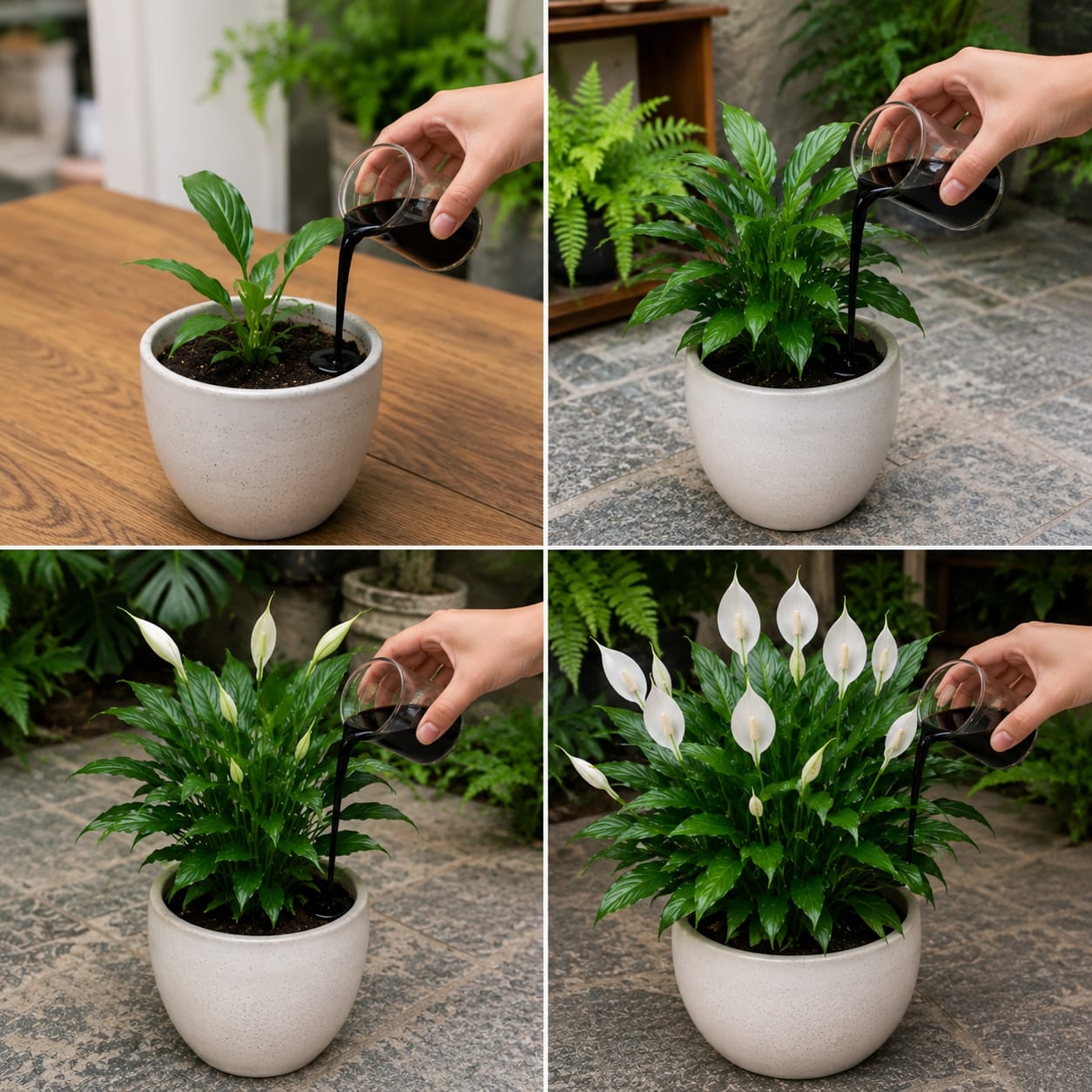
Peace lily is one of the most elegant indoor plants for homeowners who want glossy green leaves, graceful white blooms, soft tropical texture, and a calm decorative display that fits beautifully inside living rooms, bedrooms, home offices, apartments, bright kitchens, entryways, plant shelves, commercial interiors, luxury home staging, and premium indoor plant displays. Its deep green foliage and white spathes create a clean contrast that feels peaceful, refined, and expensive, especially when the plant is placed in a simple white ceramic planter, a textured stone pot, a woven basket cover, or a modern neutral container.
Many plant lovers become curious when they see a dark liquid being poured around the base of a peace lily. This type of black or deep brown root-zone tonic is often presented as a simple plant hack for fuller foliage, more blooms, and stronger growth. The liquid may be diluted compost tea, worm casting tea, humic acid solution, seaweed extract, liquid organic fertilizer, very weak coffee-water style tonic, or another dark plant-care mixture. The idea is usually to feed the roots gently and support the soil biology so the plant can grow with richer leaves and more elegant white spathes.
However, peace lilies are sensitive plants. They enjoy consistent moisture, but they dislike soggy soil. They can benefit from gentle feeding, but they do not tolerate strong fertilizer well. A dark root tonic may help only when it is clean, fresh, diluted, odor-free, and used on a plant that already has healthy roots, good light, and a pot with drainage holes. If the liquid is too concentrated, fermented, sour, sugary, acidic, or poured into already wet soil, it can cause yellow leaves, brown tips, root burn, root rot, fungus gnats, sour soil, and weak blooms.
The safest way to understand this method is not as an instant blooming secret, but as a small optional support step. A peace lily blooms best when the plant receives bright indirect light, breathable soil, steady moisture, good drainage, warm indoor conditions, clean leaves, and mild feeding during active growth. The dark liquid may support the routine, but it cannot replace the routine. A plant in a dark corner, a pot without drainage, or compacted wet soil will not become a luxury blooming display just because a dark tonic is poured into the pot.
Understanding Peace Lily Growth
Peace lily, also known as Spathiphyllum, grows from a central crown with upright stems that carry glossy green leaves and white spathes. The white part that most people call a flower is technically a modified leaf surrounding the central spadix, where the true tiny flowers appear. This structure gives peace lily its classic elegant look and makes it one of the most popular flowering houseplants for indoor plant care and interior styling.
A healthy peace lily usually has firm stems, rich green leaves, fresh new growth, clean soil, and occasional white blooms when conditions are right. A stressed peace lily may droop, develop yellow leaves, show brown tips, produce smaller blooms, or stop flowering for long periods. In many cases, the cause is not lack of a special tonic. The cause is usually low light, inconsistent watering, compacted soil, poor drainage, excess fertilizer, cold drafts, or root damage.
Peace lilies are often marketed as low-light plants, but this can be misleading. They can survive in lower light, but survival is different from blooming. A peace lily that receives very little light may stay green for months or years, but it may produce few flowers. For lush leaves and stunning blooms, the plant needs bright indirect light. This is one of the most important parts of the care routine, and no dark liquid can fully replace it.
What the Dark Liquid Might Be
A dark root tonic may be compost tea, which is made by steeping compost in water. Some gardeners use it because it can contain mild nutrients and beneficial organic compounds. However, indoor compost tea must be handled carefully. If it smells rotten, sour, or unpleasant, it should not be used. A bad-smelling mixture can introduce problems into a small indoor pot and may attract fungus gnats or create sour soil.
The dark liquid may also be worm casting tea. Worm castings are often used as a gentle organic soil amendment, and a diluted tea made from them may provide mild nutrients. This can be safer than strong synthetic feeding when prepared cleanly and used weakly. Still, it should not be poured too often. Organic liquids can build up and create moisture problems in indoor containers if the soil does not dry properly.
Another possibility is humic acid or seaweed extract. These products are often dark brown or black and are used in small amounts to support root activity and nutrient uptake. They can be helpful when used according to label directions, but they are concentrated products. More is not better. A few drops or a weak dilution may be enough, depending on the product. Strong doses can stress the roots.
The dark liquid may also be diluted liquid fertilizer. Some organic fertilizers are very dark and may look almost black. If it is a labeled houseplant fertilizer, it should be mixed carefully, usually weaker than full strength for peace lilies. A weak feeding can support foliage and blooms during spring and summer, but heavy feeding can cause brown tips and root burn.
Some people may use coffee water, molasses mixtures, or other kitchen-based dark liquids. These can be risky. Coffee can be acidic and may contain compounds that are not ideal for repeated use in small indoor pots. Molasses and sugary mixtures can feed microbes, create sticky soil, and attract pests. Peace lilies do not need sugary tonics. Clean water and gentle balanced fertilizer are usually safer.
What This Method Can Actually Do
A clean, weak, plant-safe dark tonic may support a peace lily by providing mild nutrients or organic compounds around the root zone. If the plant is actively growing, a small amount of nutrition can help maintain glossy leaves and support blooming potential. If the liquid contains humic substances or seaweed extract, it may support root function when used carefully. If it is weak compost or worm casting tea, it may add gentle organic nutrition.
However, the method cannot create instant blooms. Peace lilies need time to respond. New leaves and new spathes develop gradually. A dark tonic may be part of a care routine, but the visible result depends on the plant’s overall environment. If the plant is in low light, the tonic will not give it enough energy to bloom. If the roots are damaged, the tonic may not be absorbed properly. If the soil is wet, adding more liquid may cause harm.
This method is best seen as a root-zone support treatment for a healthy plant, not a rescue solution for a struggling one. A weak plant needs diagnosis first. If the soil smells sour, the leaves are yellowing, or the plant droops even when the soil is wet, the roots may be in trouble. Feeding a damaged root system can make the problem worse. Root health must come before plant tonics.
Why the Root Zone Matters So Much
Peace lilies are lush plants with broad leaves, and their top growth depends completely on the condition of the roots below the soil. When the roots are healthy, the plant can absorb water and nutrients steadily. The leaves remain firm and glossy, and the plant has enough strength to produce white spathes. When the roots are stressed, the plant may droop, yellow, and stop blooming even if the leaves still look green for a while.
The root zone should be moist but airy. This balance is important. If the soil dries completely for too long, the plant may wilt and lose leaf quality. If the soil stays wet for too long, oxygen disappears from the root zone and rot can begin. Many peace lily problems come from this imbalance. A dark tonic poured into the wrong soil can increase the moisture load and make the root zone worse.
Good root care begins with the right pot and soil. A peace lily should grow in a pot with drainage holes. The soil should hold moisture but still allow air to move. A rich indoor potting mix with perlite, fine bark, coco coir, and a small amount of organic material can work well. Heavy garden soil should be avoided because it can compact and hold too much water.
Best Soil for Peace Lily
Peace lilies grow best in a potting mix that feels rich but not muddy. The mix should stay slightly moist after watering, then gradually dry at the top. If the soil remains wet for many days, it may be too dense. If water runs straight through and the plant wilts quickly, the soil may be old, hydrophobic, or root-bound. Both situations can interfere with blooming and leaf quality.
A good peace lily mix may include indoor potting soil blended with perlite for drainage, fine bark for structure, coco coir for moisture retention, and a small amount of compost-based material for gentle nutrition. The goal is not a dry cactus mix and not a swampy tropical mud. The goal is balance. Peace lilies like moisture, but the roots still need oxygen.
If the plant has been in the same soil for years, a dark tonic may not be enough. Old soil can become compacted, depleted, and filled with mineral buildup. Repotting into fresh airy soil may create a much stronger improvement. After repotting, avoid strong feeding for several weeks so the roots can settle.
Watering Peace Lily Correctly
Watering is the foundation of peace lily care. The plant should be watered when the top layer of soil begins to dry and the pot feels slightly lighter. When watering, water thoroughly so moisture reaches the root zone, then allow excess water to drain fully from the bottom. The saucer should be emptied afterward. Standing water in the saucer can suffocate roots and lead to rot.
If a dark tonic is used, it should count as watering. It should not be added on top of a normal watering schedule when the soil is already moist. This is a common mistake. A plant may look like it needs feeding, but if the soil is wet, extra liquid can create problems. Wait until the plant is ready for water before applying any diluted root tonic.
Peace lilies may droop when thirsty, but they can also droop when roots are damaged by too much water. This can confuse many homeowners. If the leaves droop and the soil is dry, the plant likely needs water. If the leaves droop and the soil is wet, the roots may be stressed. In that case, do not add tonic. Improve drainage and let the soil breathe.
Best Light for Lush Leaves and Blooms
Bright indirect light is one of the most important secrets for peace lily blooming. A plant kept in low light may produce leaves but few flowers. To encourage blooms, place the plant near a bright window with filtered light. A sheer curtain can soften direct sun and protect the leaves from scorching. Gentle morning light may be acceptable, but harsh afternoon sun can burn the foliage.
If the plant has not bloomed for a long time, the first solution is usually more light, not more fertilizer. Move the plant gradually to a brighter position. Sudden exposure to strong sun can stress the leaves, so changes should be gentle. Over time, improved light can help the plant build energy and produce more spathes.
For home decor, peace lily looks beautiful in soft window light. The white blooms catch the light and create a peaceful focal point. A bright living room corner, a bedroom near filtered curtains, a home office with indirect daylight, or a staged entryway can all support both beauty and growth if the plant is not exposed to direct heat or cold drafts.
How to Use a Dark Root Tonic Safely
If the dark liquid is a labeled fertilizer, humic acid, seaweed extract, or organic plant tonic, follow the label and use a weaker dilution for indoor peace lilies. A quarter-strength or half-strength mixture is usually safer than a strong dose. Peace lilies are sensitive to fertilizer burn, so gentle feeding is better than aggressive feeding.
If the liquid is compost tea or worm casting tea, it should be fresh, mild, and not foul-smelling. It should look like weak tea, not thick sludge. It should be poured around the soil surface, away from the crown where the stems meet the soil. The crown should not be kept wet because trapped moisture can encourage rot.
Apply the tonic only during active growth, usually spring and summer, and only when the soil needs watering. Do not use it every few days. Once every four to six weeks is already enough for many mild feeding routines. During winter or low-light periods, reduce or stop feeding because the plant uses fewer nutrients.
When the Dark Liquid Should Be Avoided
A dark tonic should be avoided if the peace lily has yellow leaves from overwatering, a sour smell in the soil, fungus gnats, blackened roots, mushy stems, or a pot without drainage. These signs suggest that the root zone is already stressed. Adding more liquid can worsen the problem. The correct response is to improve drainage, inspect roots, and repot if necessary.
It should also be avoided if the mixture is unknown, fermented, sugary, sticky, thick, or smells unpleasant. Indoor plants should not be treated with mystery liquids. A peace lily used in a premium indoor display should never have soil that smells sour or attracts pests. Clean care matters as much as growth.
Do not use dark liquid on a plant that was recently repotted into fresh fertilized soil. Many potting mixes already contain nutrients. Adding extra feed too soon can create salt buildup or root stress. Let the plant settle and watch for new growth before feeding again.
Possible Problems From Overusing Dark Tonics
Overusing dark tonics can create several problems. If the liquid contains fertilizer, excess salts may build up in the soil and cause brown leaf tips. If it contains organic matter, repeated use may create sour soil, mold, or fungus gnats. If it is too acidic, it may disturb the soil balance. If it is too concentrated, it may burn sensitive roots.
One of the first warning signs is brown tips on the leaves. Peace lilies can develop brown tips from several causes, including dry air, hard water, inconsistent watering, and fertilizer buildup. If brown tips appear after feeding, the tonic may be too strong or too frequent. Yellow leaves can also appear when roots are stressed by wet soil or excess nutrients.
If problems appear, stop using the tonic. Wipe the leaves clean if any liquid splashed onto them. If the pot drains well, flush the soil gently with clean water and allow it to drain completely. If the soil smells bad or feels sticky, repotting may be safer. Fresh airy soil can reset the root environment.
How to Encourage More Peace Lily Blooms
To encourage peace lily blooms, begin with light. The plant needs bright indirect light for enough hours each day. A peace lily deep inside a dark room may remain leafy but may not bloom well. Moving it closer to a filtered window can be the most effective blooming improvement.
Next, maintain healthy roots. The soil should not stay soggy, and the pot should drain. If roots are healthy, the plant can use nutrients more efficiently. If roots are weak, feeding will not create blooms. A peace lily with healthy roots and good light is much more likely to produce white spathes.
Then use gentle feeding. A diluted balanced houseplant fertilizer during active growth can support blooms. A dark organic tonic may be used carefully, but it should not replace a balanced feeding routine unless the product is designed for plant nutrition. Blooming is a slow response. The plant may need weeks or months of steady care before flowers appear.
How to Keep Leaves Glossy and Clean
Peace lily leaves look best when they are clean and glossy. Dust can make the plant look dull and can reduce light absorption. Wipe the leaves gently with a soft damp cloth. Support each leaf while wiping so the stem does not bend. Avoid oily leaf shine products because they can leave residue and attract dust.
If a dark tonic splashes on the leaves, wipe it away before it dries. Organic liquids and fertilizers can leave marks on glossy foliage. Clean leaves are part of the luxury look. A peace lily should look fresh and natural, not stained or sticky.
Remove old yellow leaves at the base with clean scissors. Remove faded blooms once they turn green, brown, or tired. This keeps the plant looking polished and helps the display remain elegant. Good grooming can make even a modest plant look more expensive.
Humidity and Indoor Conditions
Peace lilies appreciate moderate humidity. Dry indoor air can contribute to brown tips and curled leaves. A humidifier, plant grouping, or pebble tray can help if the room is very dry. However, humidity should be balanced with airflow. A damp, stagnant environment can encourage fungal problems.
Temperature should remain stable. Peace lilies dislike cold drafts, sudden temperature changes, and hot air from heaters. Keep the plant away from cold windows in winter, air-conditioning vents, and heating registers. A stable warm room supports better leaf quality and stronger growth.
Good indoor conditions make any feeding routine safer. A plant in bright filtered light with warm temperatures and good airflow can use water and nutrients better than a plant in a dark cold corner. Environment comes before tonic.
Indoor Decor and Styling Ideas
Peace lily has strong indoor decor value because it combines deep green leaves with elegant white blooms. In a living room, it can sit on a side table, plant stand, or near a bright window where the foliage adds softness and the white spathes create contrast. A cream ceramic pot or textured white planter gives a luxury home staging look.
In a bedroom, peace lily creates a calm and restful atmosphere. Its white blooms pair beautifully with neutral bedding, soft curtains, and natural wood. In a home office, it adds polish and greenery without looking too busy. In an entryway, it can create a welcoming impression if the space has enough filtered light.
For commercial interior landscaping, peace lilies work well in reception areas, wellness spaces, waiting rooms, boutique corners, salon interiors, hotel-style displays, and staged properties. In these spaces, the plant should be cared for with clean, predictable methods. Strong homemade tonics that smell or leave residue are not suitable for professional presentation.
Continue to Page 2
Continue to page 2 for more details about this article and the key points many readers miss on the first page.