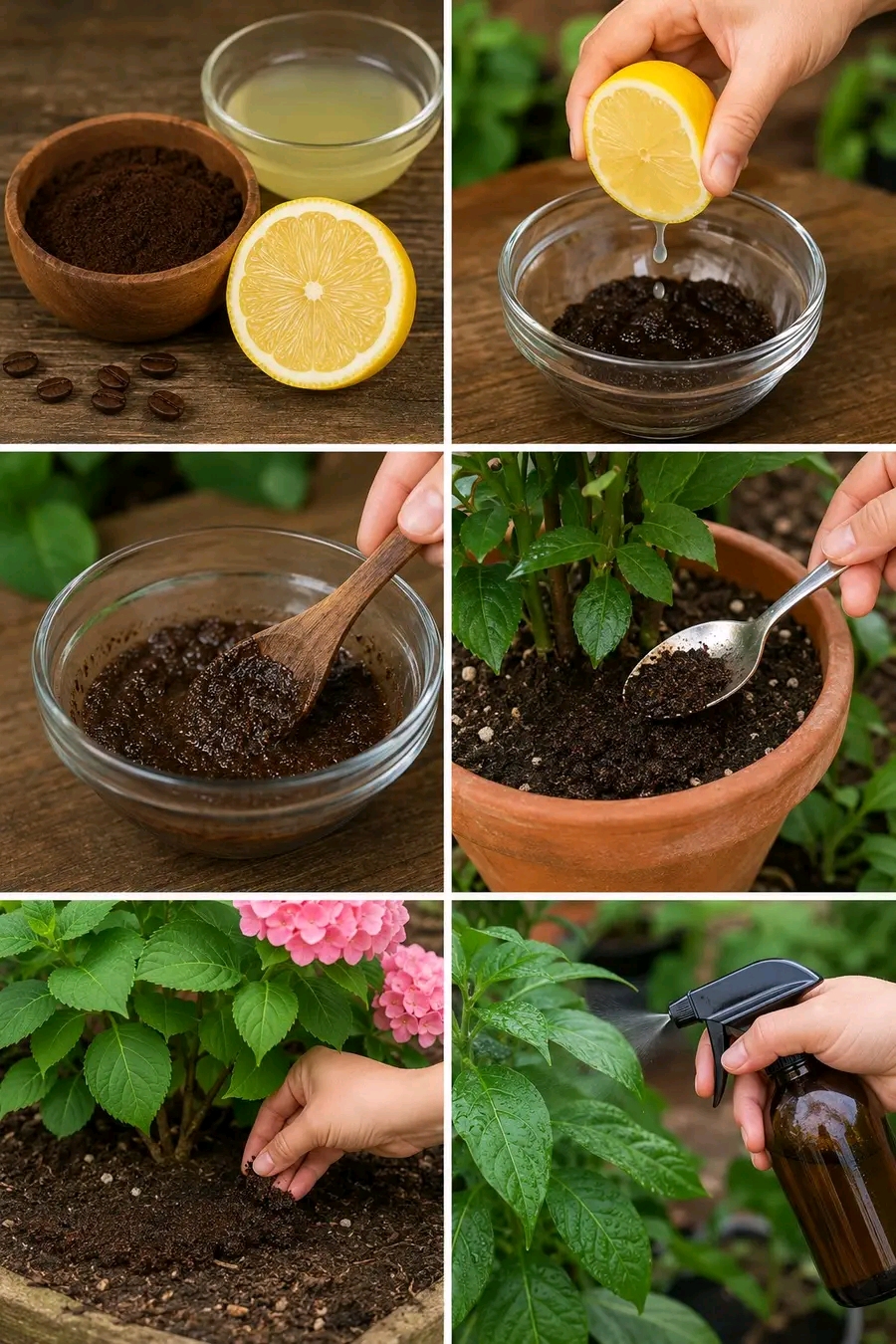
Hydrangeas are some of the most beautiful flowering shrubs for homeowners who want large rounded blooms, lush green leaves, soft cottage-garden color, and a romantic outdoor display that works beautifully in patios, balconies, garden beds, porch planters, terrace corners, backyard borders, shaded walkways, and decorative container gardens. Their pink, blue, purple, white, and green flower heads can make a simple outdoor space feel full, expensive, and elegant. A healthy hydrangea with clean leaves and strong stems can become the main focal point of a garden table, courtyard, balcony railing display, or shaded front entry.
Many gardeners become curious when they see coffee grounds mixed with lemon juice and water, then placed around hydrangea soil or sprayed lightly near the leaves. This method is often described as a simple homemade acid-loving plant tonic. The idea usually comes from the fact that hydrangeas can respond to soil pH, and some varieties can shift flower color depending on acidity and aluminum availability in the soil. Coffee and lemon both look like natural acidic ingredients, so many people assume they can help hydrangeas bloom brighter or change color faster.
The safest way to understand this method is to treat it as an optional soil-care experiment, not a guaranteed bloom-color secret. Hydrangeas do not become full, colorful, and healthy because of one spoonful of coffee grounds or one squeeze of lemon. They need the right light, consistent moisture, rich well-draining soil, correct pruning, steady feeding, healthy roots, and a suitable pH range for the variety being grown. Coffee grounds and lemon mixtures can create problems when used too strongly, especially in pots. They may compact the soil, attract fungus gnats, irritate roots, or create unstable acidity if applied too often.
Understanding Hydrangea Soil Before Using Coffee and Lemon
Hydrangeas grow best when their soil is rich, moisture-retentive, and well-draining. They like consistent moisture, especially during warm weather and bloom development, but they do not like roots sitting in soggy soil. A healthy hydrangea root zone should feel evenly moist and fresh, not sour, compacted, or waterlogged.
Some hydrangeas, especially bigleaf hydrangeas, are famous for changing bloom color in response to soil conditions. Acidic soil can encourage blue tones when aluminum is available, while more alkaline soil often supports pink tones. However, not all hydrangeas change color. White hydrangeas usually stay white, and many modern varieties have genetics that limit color shifting. This means coffee and lemon mixtures should not be promoted as a universal color-changing solution.
Before adding acidic ingredients, it is better to know the current soil condition. A soil pH test is safer than guessing. If the soil is already acidic, adding more acidic material may stress the plant. If the soil is alkaline, a controlled garden product made for acid-loving plants may be more reliable than random kitchen mixtures. Soil balance matters more than dramatic homemade treatments.
What Coffee Grounds Can Actually Do
Coffee grounds are often described as acidic, but used coffee grounds are usually less acidic than many people expect. They can add organic matter when composted properly, but fresh or wet grounds can compact on the soil surface. A thick layer can block air, hold moisture, grow mold, and attract pests. In containers, this risk is higher because the soil volume is small and drainage is limited.
Coffee grounds are not a complete fertilizer. They may contain small amounts of nitrogen and organic material, but they do not provide a balanced nutrient profile for heavy-blooming hydrangeas. A hydrangea needs balanced nutrition, especially potassium and other nutrients that support strong stems and flowers. Coffee grounds alone cannot provide everything the plant needs.
The safest way to use coffee grounds is to compost them first. Once they become part of finished compost, they are more stable and less likely to mold. Fresh coffee grounds should be used very lightly, if at all, and should never be piled against hydrangea stems.
What Lemon Juice Can Actually Do
Lemon juice is acidic, but that does not automatically make it safe for plant roots. Lemon juice can be too sharp and concentrated when applied directly. It may temporarily lower pH in a small area, but it does not create a stable long-term soil adjustment. In pots, a strong lemon mixture can irritate roots or create uneven acidity around the root zone.
Hydrangea soil pH should be adjusted slowly and carefully. Sudden changes can stress the plant. If the goal is to grow blue hydrangeas, gardeners usually use tested soil amendments designed for acid-loving plants or aluminum sulfate products used according to label directions. Lemon juice is not as controlled or predictable.
If lemon is used at all, it should be extremely diluted and applied rarely. It should not be sprayed heavily on leaves during hot sun, and it should not be poured as a strong liquid into dry roots. A gentle soil-care routine is safer than a harsh acidic shock.
Why Mixing Coffee and Lemon Can Be Risky
Combining coffee grounds and lemon juice can create a dark, wet paste. This paste may look rich, but it can be too heavy for container soil. If placed thickly on top of the pot, it may trap moisture and reduce airflow. Hydrangeas like moisture, but they still need oxygen around the roots. A compacted layer can cause the soil surface to stay damp and encourage mold.
The mixture can also attract fungus gnats or other insects if it remains wet. Organic kitchen materials break down, and that breakdown can be messy in decorative pots. Outdoor garden beds handle organic matter better than indoor or balcony containers because there is more soil, more airflow, and more microbial balance. A small pot is much less forgiving.
Another risk is leaf spotting. If a lemon-coffee mixture is sprayed on hydrangea leaves in sunlight, it can leave residue or cause damage. Hydrangea leaves should be kept clean, especially when the plant is part of a decorative display. Any spray should be very diluted, tested first, and applied only during cool parts of the day.
How to Use This Method More Safely
If a gardener wants to test a coffee and lemon method, the safest version is very weak and soil-focused. The coffee grounds should be used sparingly, preferably composted or finely mixed into existing compost rather than applied fresh in a thick layer. The lemon juice should be heavily diluted in water. The mixture should never smell sour, fermented, rotten, or unpleasant.
Apply only a small amount around the outer root zone, not directly against the stems. The plant should already be healthy and growing in a pot with drainage holes. The soil should be slightly moist before any mild treatment, not bone dry and not soggy. After applying, monitor the plant closely for leaf curling, yellowing, wilting, mold, or odor.
This method should not be repeated frequently. Occasional light use is very different from weekly heavy applications. If the soil surface begins to look crusty, moldy, or compacted, stop immediately and remove the residue. Return to normal watering and balanced plant care.
Best Light for Hydrangeas
Hydrangeas need bright light, but the right amount depends on climate and variety. Many hydrangeas enjoy morning sun and afternoon shade, especially in hot regions. Too much harsh sun can wilt leaves and scorch blooms. Too much shade can reduce flowering and create weak stems.
Container hydrangeas on patios and balconies often do best where they receive gentle morning light and protection from intense afternoon heat. In cooler climates, they may tolerate more sun. In hot climates, shade during the hottest part of the day is important. The plant’s leaves will often show when conditions are wrong. Wilting during midday heat may mean the plant needs more shade or more consistent moisture.
Good light is one of the real keys to strong blooming. A homemade tonic cannot replace sunlight. If a hydrangea is not blooming, light exposure should be checked before adding coffee, lemon, or fertilizer.
Watering Hydrangeas Correctly
Hydrangeas are thirsty plants, especially in containers. Their large leaves lose moisture quickly, and their flowers need steady hydration. The soil should stay evenly moist, but not swampy. Water deeply when the top layer begins to dry, then allow excess water to drain.
In terracotta pots, hydrangeas may dry faster because the pot breathes. In plastic or glazed pots, moisture may last longer. Weather also matters. Hot, windy days can dry containers quickly, while cool cloudy days slow evaporation. Watering should respond to the plant and soil, not a fixed calendar.
If coffee and lemon mixture has been added, watering should be watched more carefully. Coffee grounds can hold moisture on the surface. If the top layer stays wet or begins to smell, remove it. A clean root zone is more important than keeping homemade material in place.
Best Soil for Container Hydrangeas
Container hydrangeas need rich, well-draining potting mix. The soil should hold moisture but still allow air to reach the roots. A quality potting mix can be improved with compost, pine bark fines, perlite, or other materials that support both moisture and drainage. Heavy garden soil is not ideal in pots because it can compact.
If the plant is in a pot, drainage holes are essential. A hydrangea in a decorative container without drainage may look beautiful for a short time, but roots can suffer quickly. If the pot sits in a saucer, excess water should be emptied after watering.
Mulch can help retain moisture outdoors, but it should be clean and breathable. Bark mulch or composted material is usually better than a thick layer of wet coffee grounds. Keep mulch slightly away from the stems to prevent rot.
Feeding Hydrangeas for Strong Blooms
Hydrangeas benefit from balanced feeding during the growing season. A fertilizer designed for hydrangeas, flowering shrubs, or acid-loving plants can support healthy foliage and blooms. The best feeding routine depends on the variety, soil, and climate. Too much fertilizer, especially too much nitrogen, can create lush leaves with fewer flowers.
Coffee grounds do not replace balanced fertilizer. Lemon juice does not feed the plant. If the hydrangea needs nutrients, use a measured fertilizer product at the correct strength. Homemade mixtures vary too much to be reliable as the main feeding method.
Do not feed a stressed hydrangea heavily. If the plant is wilting from heat, sitting in soggy soil, or suffering from root problems, fertilizer can make stress worse. Stabilize watering, light, and roots first.
Hydrangea Bloom Color and Soil pH
Bigleaf hydrangeas may shift color depending on soil pH and aluminum availability. Acidic soil can support blue blooms, while alkaline soil often supports pink blooms. Purple tones can appear when conditions fall between the two. However, color change takes time and does not happen overnight.
Coffee and lemon may slightly affect acidity in a small area, but they are not precise tools. A soil pH test gives better information. If a gardener wants blue hydrangeas, a controlled soil acidifier or aluminum sulfate product used correctly is more reliable. If the goal is pink blooms, garden lime may be used carefully where appropriate. These adjustments should be made slowly.
Not every hydrangea will change color. Panicle hydrangeas, smooth hydrangeas, oakleaf hydrangeas, and many white cultivars do not respond the same way as bigleaf hydrangeas. Knowing the plant type prevents disappointment and avoids unnecessary treatments.
Using the Mixture as a Spray
Spraying coffee and lemon mixtures on leaves is riskier than applying a mild soil treatment. Lemon can irritate foliage, especially in sunlight. Coffee can leave residue. Hydrangea leaves should not be coated with dark organic liquid if the goal is a clean decorative display.
If any foliar spray is tested, it should be extremely diluted and applied to a small area first. Spray only in the cool morning or evening, never during hot sun. Avoid spraying open flowers because petals can spot easily. If residue appears, rinse with plain water.
For leaf cleaning, plain water is usually safer. A gentle rinse or damp cloth can remove dust without introducing acidity or organic residue. Healthy leaves are best supported by correct watering, airflow, and pest monitoring.
Preventing Fungus Gnats and Mold
Fungus gnats are common when organic material stays damp on the soil surface. Coffee grounds can contribute to this problem if used fresh or thickly. Mold may also appear when grounds remain wet. This is especially likely in shaded containers or indoor plant rooms.
To prevent problems, keep the soil surface clean. Remove fallen leaves, old flowers, and thick residue. Let the top layer breathe. Avoid adding kitchen materials repeatedly. If gnats appear, reduce surface moisture and remove organic buildup.
A plant can still be grown organically without dumping fresh kitchen scraps into pots. Finished compost, proper mulch, and measured organic fertilizers are cleaner and safer than unstable homemade pastes.
Pruning and Deadheading Hydrangeas
Hydrangea pruning depends on the type. Some bloom on old wood, some bloom on new wood, and some bloom on both. Pruning at the wrong time can remove flower buds. This is one reason hydrangeas sometimes fail to bloom even when the plant looks healthy.
Deadheading spent blooms can keep the plant looking clean, but major pruning should be done according to the variety. Bigleaf hydrangeas often need careful pruning after flowering, while panicle hydrangeas are usually more forgiving. Knowing the variety matters more than using a homemade tonic.
A well-pruned hydrangea has better airflow and a cleaner shape. This helps leaves dry after rain and reduces disease pressure. Good pruning and grooming are part of a strong bloom display.
Decor and Styling Ideas for Hydrangeas
Hydrangeas bring a romantic, premium look to outdoor spaces. A pink hydrangea in a terracotta pot creates a cottage garden mood. A blue hydrangea in a white or stone planter feels calm and coastal. A large hydrangea near a porch, garden bench, or patio table can make the area feel lush and welcoming.
For balconies, choose a container large enough to support the roots and hold moisture. Hydrangeas in small pots dry quickly and may wilt often. A larger pot with drainage creates a stronger display. Pair hydrangeas with simple foliage plants or let them stand alone as a statement piece.
Clean presentation matters. If coffee grounds or dark mixtures are used, they should not spill over the pot or stain the patio surface. A premium display looks tidy, fresh, and intentional. The flowers should be the focus, not a messy soil treatment.
Continue to Page 2
Continue to page 2 for more details about this article and the key points many readers miss on the first page.