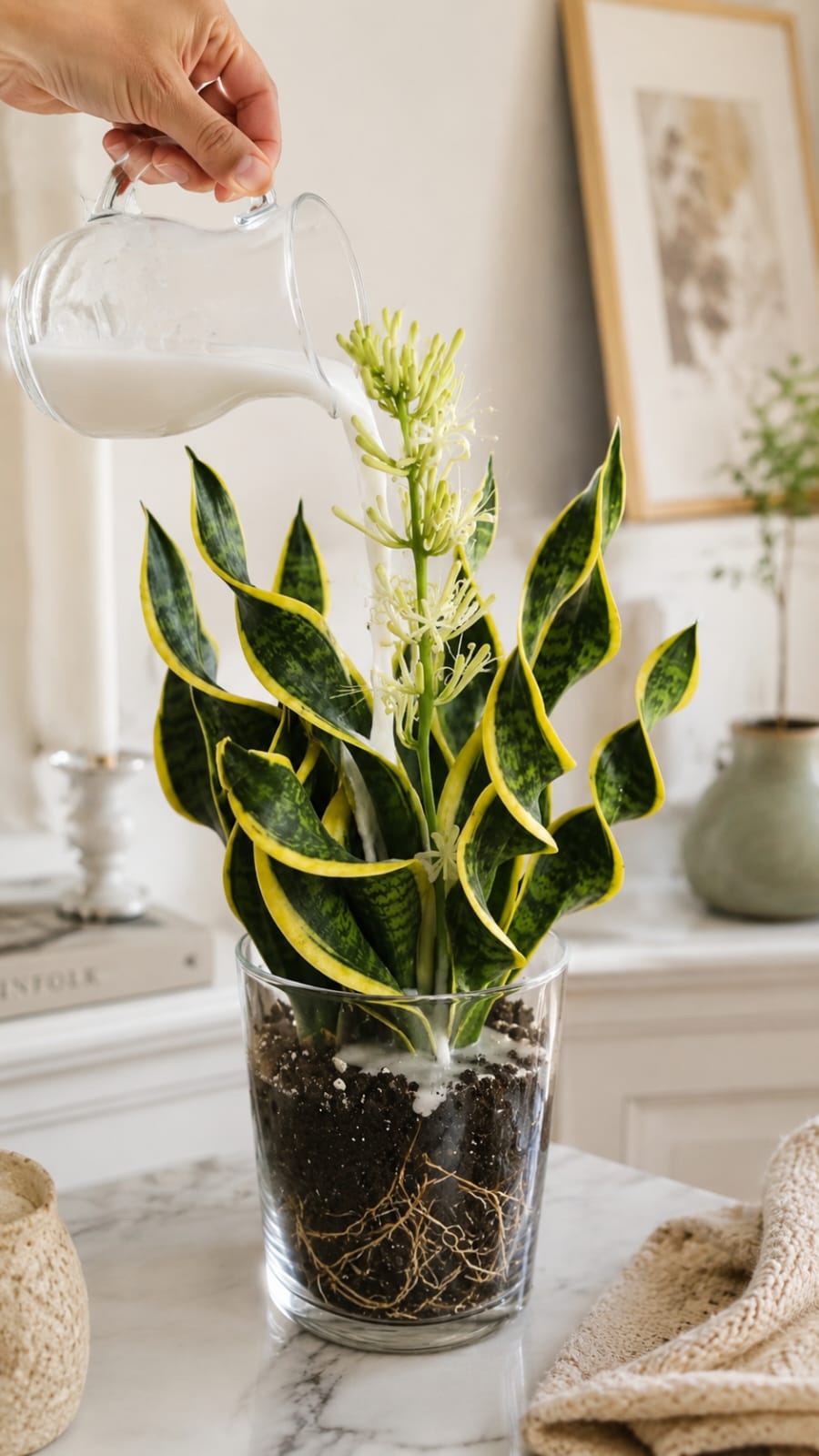
Snake plant is one of the most reliable indoor plants for homeowners who want upright leaves, bold variegation, sculptural shape, and a clean decorative look that fits beautifully in living rooms, bedrooms, home offices, apartments, bright windowsills, entryways, modern plant corners, commercial interiors, luxury home staging, and premium indoor plant displays. Its firm sword-shaped leaves, deep green patterning, yellow-edged margins, and vertical growth make it one of the easiest houseplants to style in almost any home. When a snake plant produces a tall flower stalk with pale fragrant blooms, it becomes even more eye-catching because many people do not expect this low-maintenance plant to bloom indoors.
Many plant lovers become curious when they see a light white liquid being poured around a blooming snake plant. The method is often described as a simple root tonic for stronger roots, fuller leaves, more pups, cleaner soil, and better flowering. The white liquid may be diluted rice water, diluted milk water, weak fertilizer, calcium water, or another homemade mixture. It may look gentle and natural, but snake plants are drought-tolerant plants with thick leaves and underground rhizomes that store water. Their roots need air, their soil must dry properly, and their crown should never stay wet. Because of that, any white liquid must be used with caution.
The safest way to understand this method is to treat it as an optional support step, not a miracle bloom trick. A snake plant does not bloom because of one dramatic pour. Flowering usually happens when the plant is mature, slightly root-bound, receiving enough bright indirect light, and growing with healthy rhizomes. A homemade white tonic cannot force safe blooming if the plant is weak, overwatered, or kept in poor light. If the soil is already wet, compacted, sour-smelling, or sitting inside a pot without drainage, pouring a white liquid into the pot can make the root zone worse.
Understanding Why Snake Plants Bloom
Snake plant blooms are not as common indoors as regular leaf growth. The plant may produce a tall stalk with small pale greenish-white or cream flowers when it is mature and under the right conditions. The blooms can have a light fragrance, especially in the evening. This flowering does not always happen every year, and it should not be forced by stress or heavy feeding. A bloom is usually a sign that the plant has stored energy and is mature enough to produce a flower spike.
Some snake plants bloom when they are slightly snug in their pot. This does not mean the plant should be neglected or starved. It means the rhizomes may respond when the plant is stable, mature, and not sitting in excess wet soil. A snake plant that is too comfortable in a large wet pot may grow slowly or develop root problems instead of blooming.
Bright indirect light is one of the biggest factors. Snake plants can survive in low light, but they grow and bloom better in brighter conditions. A plant placed near a filtered window often has more energy than one kept far from natural light. If blooming is the goal, light and root health matter far more than homemade liquids.
What the White Liquid Might Be
The white liquid may be rice water. Rice water is made from rinsing or soaking plain rice, and it can look cloudy because of starch. Fresh diluted rice water may contain tiny traces of minerals, but it is not a complete fertilizer. Thick rice water, fermented rice water, or repeated applications can leave starch residue in the soil. For snake plants, that residue may become risky because the soil is supposed to dry between waterings.
The liquid may be milk water. Milk water is sometimes used by plant owners because milk contains calcium and small amounts of nutrients. However, milk can sour in potting soil, especially when used too strongly or too often. Straight milk should never be poured into a snake plant pot. It can create odor, mold, fungus gnats, and white residue on the soil, pot, and leaves.
The white liquid may also be a weak fertilizer solution. Some fertilizers look pale or cloudy after mixing. A properly diluted cactus or succulent fertilizer is usually more predictable than kitchen liquids because the nutrient strength is known. Snake plants are light feeders, so even fertilizer should be used gently. Too much fertilizer can cause brown tips, salt buildup, and root stress.
Why the Root Zone Matters Most
Snake plants grow from underground rhizomes. These rhizomes store water and energy, allowing the plant to tolerate dry indoor conditions. This is why snake plants are popular with busy homeowners and beginners. However, rhizomes can rot when the soil stays wet too long. Once the rhizomes become soft, the plant can decline quickly.
Healthy rhizomes should feel firm. Healthy roots should not smell sour or look black and mushy. If leaves become soft at the base, yellow, folded, wrinkled, or unstable, the root zone should be checked before adding anything. A white tonic is not a cure for root rot. In a stressed plant, extra liquid can make the damage worse.
For a blooming snake plant, the root zone is especially important because the flower stalk uses stored plant energy. The plant should not be flooded during flowering. Stable care is safer than sudden changes. A blooming plant should receive careful watering, bright indirect light, and good drainage, not heavy homemade treatments.
Using White Liquid Safely
If the plant is healthy and the soil is dry enough for watering, a very diluted white liquid may be tested rarely. The mixture should be thin, fresh, and mild. It should not smell sour, sweet, fermented, or spoiled. It should not contain rice grains, milk solids, thick paste, sugar, salt, oil, or unknown ingredients.
Apply the liquid only to the soil surface around the outer root zone. Do not pour it into the center of the leaves or onto the flower stalk. Moisture trapped between snake plant leaves can cause rot. If liquid splashes on the leaves, wipe it off gently before it dries.
The pot must drain completely after application. If the snake plant is inside a decorative cover pot, remove the inner pot after watering and empty any collected liquid. The plant should never sit in white liquid. Standing liquid can sour and damage roots.
Why Milk Water Can Be Risky
Milk water is one of the riskier homemade options for snake plants. Milk contains organic material that can spoil inside the soil. In a plant that needs dry-down periods, sour milk residue can create odor and attract pests. This is especially unpleasant indoors where the plant is part of a clean decorative display.
If milk water is used too strongly, it can leave white marks on terracotta pots, glass containers, leaves, and soil. The plant may look messy instead of healthy. A premium indoor plant display should look clean, not coated with residue.
For most snake plant owners, milk water is unnecessary. If the plant needs nutrients, a weak cactus or succulent fertilizer is cleaner and more reliable. If the plant needs stronger roots, better soil and careful watering matter more than milk.
Why Rice Water Needs Caution
Rice water is often promoted as gentle, but it can still create problems when used repeatedly. The starch can feed microbes in the potting mix. If the soil dries quickly and the mixture is weak, it may not cause obvious trouble immediately. If the soil stays damp, the starch can contribute to sour conditions, fungus gnats, and residue.
Fresh diluted rice water is safer than fermented rice water. It should be strained carefully and used rarely. Fermented rice water can be too strong and unpredictable for snake plants. If it smells sour, discard it and use plain water instead.
Rice water is not a complete fertilizer. It should not replace a measured feeding routine. Snake plants need little feeding, and when they do need it, a weak controlled fertilizer is usually better.
Best Soil for Blooming Snake Plants
A snake plant should grow in a loose, gritty, fast-draining mix. A cactus or succulent mix is a good base. It can be improved with perlite, pumice, coarse sand, lava rock, or orchid bark. The goal is a mix that drains well and does not stay wet for many days.
Dense potting soil can be dangerous, especially when homemade liquids are added. Heavy soil holds moisture around the rhizomes and limits oxygen. If the soil smells sour, feels muddy, or stays wet too long, repotting is a better solution than adding a tonic.
Clear containers can look attractive because they show roots and soil layers, but they must be used carefully. If there is no drainage hole, the risk of rot increases. Snake plants need drainage more than they need a decorative container. If a glass display is used, it should be designed so excess water can be removed and the soil does not remain wet.
Best Light for Snake Plant Flowers
Snake plants can survive in low light, but blooming is more likely with bright indirect light. A spot near a window with filtered brightness gives the plant more energy. Gentle morning sun may be acceptable if the plant is gradually acclimated, but harsh afternoon sun can scorch leaves.
If the plant is not blooming, increasing light safely is more useful than adding more tonic. A snake plant that receives bright indirect light often grows firmer leaves and may produce more pups over time. A plant in dim light may stay alive but grow slowly.
Light also affects watering. A snake plant in bright light uses water faster than one in a dark corner. This means a homemade liquid is riskier in low light because the soil dries more slowly. Always match watering to the actual environment.
Watering During Blooming
When a snake plant is blooming, keep the watering routine stable. Do not suddenly water more because flowers have appeared. The plant still needs a dry-down period. Water only when the soil has dried well. The flower stalk does not mean the plant needs constant moisture.
Pour water or diluted tonic around the soil, not on the flower stalk. Wet flowers can become sticky or damaged. The tall bloom spike should stay dry and clean. If the flowers release nectar, wipe nearby leaves or surfaces gently if needed.
After watering, allow full drainage. The pot should not sit in a saucer of water. Blooming is a beautiful sign, but root rot can still happen if the plant is overwatered during this stage.
Feeding Snake Plants During Active Growth
Snake plants are light feeders. During spring and summer, a diluted cactus or succulent fertilizer may support growth. Feeding once in a while during active growth is enough. Strong feeding can cause brown tips, weak growth, and mineral buildup.
If the plant is blooming, avoid heavy fertilizer. A flower spike does not mean the plant needs a strong dose. Gentle care is safer. If fertilizer is used, keep it weak and apply only when the soil is ready for watering.
Do not feed a stressed snake plant. If the leaves are soft, yellow, or collapsing, inspect the roots first. Fertilizer and homemade tonics can worsen root stress.
Protecting the Flower Stalk
A snake plant flower stalk can be delicate. It should not be bent, soaked, or handled roughly. The small pale flowers may open gradually and can create a soft fragrance. Keep the plant in a stable position so the stalk does not break.
If the flower stalk begins to fade, it can be removed with clean scissors after blooming finishes. Cut near the base without damaging nearby leaves. Removing the spent stalk helps keep the plant tidy.
The plant may not bloom again immediately. Snake plant flowering is not always regular. After the bloom, return to normal care and let the plant rebuild energy naturally.
Encouraging Pups After Blooming
Many snake plant owners hope blooming means more pups will follow. Pups appear when the rhizomes are healthy and the plant has enough energy. Bright indirect light, a slightly snug pot, fast-draining soil, and careful watering can support offshoot production over time.
A white liquid will not safely force pups. If the root zone becomes wet and sour, pups are less likely and rot becomes more likely. The best way to encourage new shoots is to protect the rhizomes and give the plant consistent conditions.
Patience is important. Snake plants grow slowly. A plant may rest for weeks or months, then suddenly push new growth when the season, light, and root energy are right.
Cleaning Snake Plant Leaves
Snake plant leaves look best when they are clean and dust-free. Dust can dull the leaf pattern and reduce the elegant appearance. Wipe each leaf gently with a soft damp cloth, supporting it so it does not bend sharply.
If white liquid splashes onto the leaves, remove it before it dries. Milk or rice residue can leave cloudy marks and attract dust. The clean vertical leaf pattern is one of the main reasons snake plants look so good in modern interiors.
Do not use oily leaf shine products. A clean damp cloth is enough. Natural gloss and strong leaf patterns create the best premium look.
When White Liquid Should Be Avoided
White liquid should be avoided if the snake plant is in wet soil, a pot without drainage, dense soil, low light, cold conditions, or a room where the soil dries slowly. It should also be avoided if there are fungus gnats, mold, sour smell, soft leaves, yellowing at the base, or mushy rhizomes.
Do not use straight milk, spoiled milk, sweetened milk, flavored milk, fermented rice water, salty water, oily kitchen liquids, or unknown mixtures. These can damage roots and create pest problems. Snake plants do not need complicated homemade treatments to thrive.
During winter or low-growth periods, avoid extra liquids and feeding. Less water is usually safer. Snake plants prefer stability over constant intervention.
Indoor Decor and Styling Ideas
A blooming snake plant can become a striking indoor focal point. The tall pale flower stalk softens the bold upright leaves, creating a rare and elegant contrast. A clear pot can show roots and soil, while a terracotta pot adds warmth. A white ceramic planter creates a clean modern look, and a stone-textured pot gives a calm luxury style.
Place the plant near bright filtered light where the flower stalk can be seen without being bumped. A side table, plant stand, marble surface, wood console, or bright bedroom corner can work beautifully. Keep the surrounding area clean because white tonics can stain surfaces if spilled.
For premium styling, avoid messy soil residue. The plant should look natural, healthy, and intentional. Strong leaves, a clean pot, tidy soil, and a graceful bloom stalk create a better display than any visible homemade mixture.
Continue to Page 2
Continue to page 2 for more details about this article and the key points many readers miss on the first page.