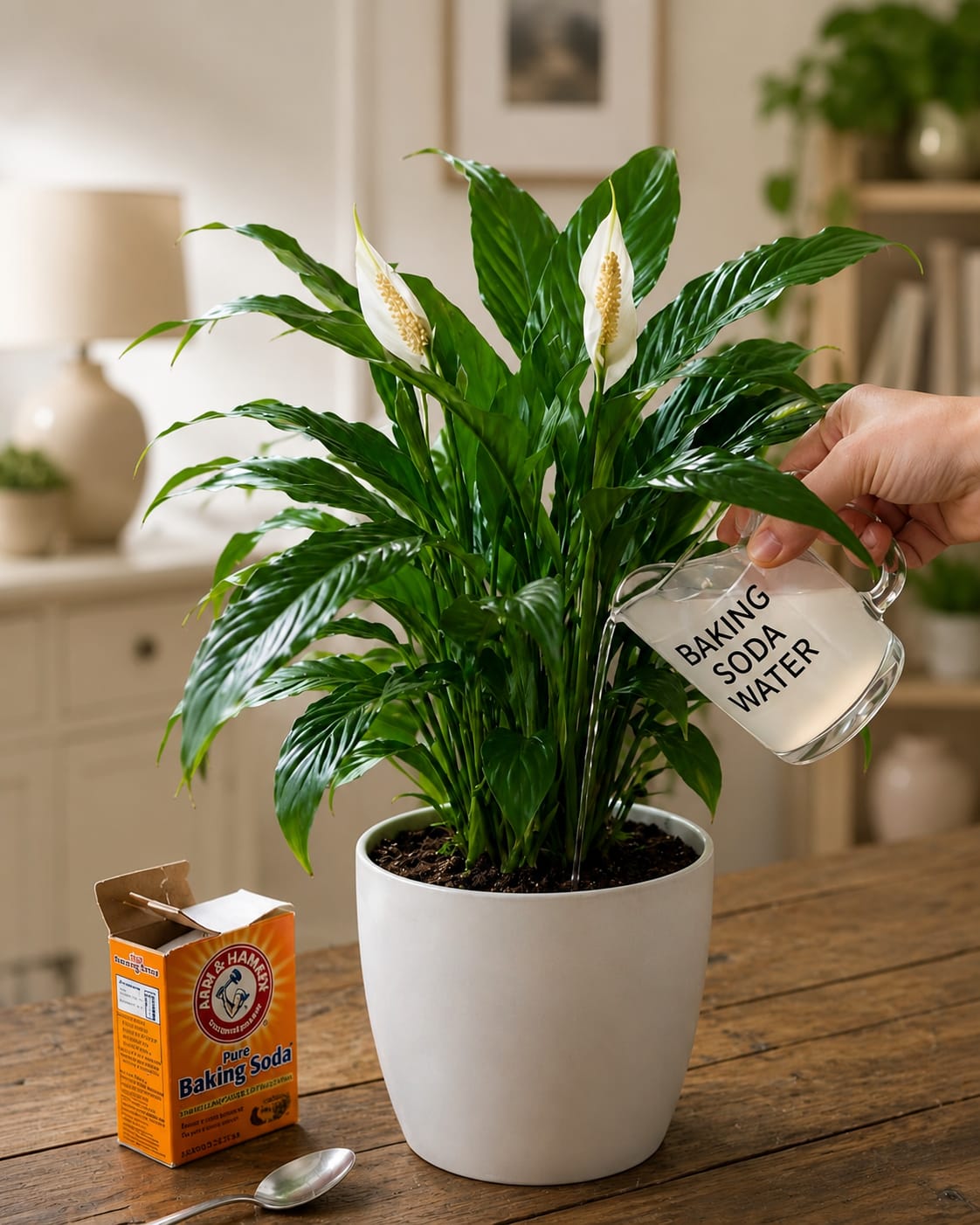
Peace lily is one of the most graceful indoor plants for homeowners who want glossy green leaves, soft white blooms, and a calm decorative display that fits beautifully in living rooms, bedrooms, home offices, apartments, bright windowsills, entryways, plant corners, commercial interiors, luxury home staging, and premium indoor plant displays. Its deep green foliage and elegant white spathes create a clean, peaceful look that feels fresh and refined, especially when the plant is placed in a simple white ceramic pot, a textured planter, or a woven basket near soft filtered light.
Many plant lovers become curious when they see baking soda water being poured around a peace lily. The method is often presented as a simple household trick for cleaner leaves, stronger growth, fewer soil problems, and better-looking blooms. Baking soda is familiar, inexpensive, and often used in home cleaning, odor control, and garden recipes, so it can seem like a harmless natural solution. However, peace lilies are sensitive tropical houseplants, and baking soda is not a regular fertilizer. Used incorrectly, it can change soil chemistry, create salt buildup, stress the roots, and damage the plant over time.
The safest way to understand baking soda water is to treat it as a risky household experiment, not a reliable peace lily care routine. A peace lily does not bloom beautifully because of baking soda. It grows well when it receives bright indirect light, steady moisture, warm indoor conditions, clean leaves, a pot with drainage holes, airy potting mix, and gentle balanced feeding during active growth. If the plant is struggling, the real issue is usually watering, light, soil, roots, humidity, fertilizer buildup, or temperature stress. Baking soda water should never be the first solution.
What Baking Soda Water Actually Is
Baking soda is sodium bicarbonate. It is alkaline, which means it can raise pH when added to water or soil. In some garden discussions, baking soda is used in very diluted sprays for certain fungal issues on outdoor plants, but that does not mean it is safe to pour into every houseplant pot. Peace lilies generally prefer a slightly acidic to neutral potting environment, not strongly alkaline soil. Repeated baking soda use can push the root zone in the wrong direction.
The word “sodium” is important. Peace lilies do not need sodium as a fertilizer nutrient. Too much sodium in potting soil can interfere with root function and moisture balance. Indoor pots are small closed systems, so salts can build up faster than they would in outdoor garden beds. If baking soda water is poured into the soil again and again, the residue may remain around the roots.
This is why baking soda water should not be treated like plant food. It does not provide the balanced nutrients a peace lily needs for healthy leaves and blooms. It does not replace nitrogen, phosphorus, potassium, magnesium, calcium, iron, or trace elements in a proper fertilizer routine. It is a chemical household ingredient that can affect the root zone, and it should be used only with caution, if at all.
Why Peace Lilies Are Sensitive to Soil Changes
Peace lilies grow from a central crown and produce broad glossy leaves on upright stems. Their roots like consistent light moisture, but they still need oxygen. When the soil becomes too wet, compacted, salty, or chemically unbalanced, the plant can react quickly. The leaves may droop, yellow, develop brown tips, or stop producing new growth.
A peace lily may look strong above the soil while its roots are already stressed below. This is why adding baking soda water without checking the root zone can be risky. If the potting mix is old, compacted, or already holding fertilizer salts, baking soda can add more stress instead of helping.
The roots are the foundation of the plant’s beauty. Strong roots support glossy leaves, upright stems, and white spathes. Weak roots lead to drooping, yellowing, and slow decline. Any homemade treatment should protect the roots first. If it can harm root balance, it should be avoided.
Can Baking Soda Help Peace Lily Leaves?
Some people use baking soda sprays in gardening because baking soda can make leaf surfaces less favorable for certain fungal problems when used in very diluted outdoor formulas. However, peace lily leaves are soft, glossy, and often grown indoors where airflow is limited. Spraying or splashing baking soda water on peace lily foliage can leave residue, dull the leaves, and cause spotting if the mixture is too strong.
If the goal is cleaner leaves, plain water and a soft cloth are safer. Dust can be wiped away gently without changing soil chemistry. Peace lily leaves do not need baking soda to shine. In fact, residue from baking soda can make them look cloudy or streaked.
If the plant has leaf spots, the first step is not baking soda water. Leaf spots may come from overwatering, poor airflow, cold drafts, sunburn, bacterial or fungal issues, or water sitting on the foliage. The cause should be identified before applying any treatment. Random household mixtures can make diagnosis harder.
Can Baking Soda Help Peace Lily Blooms?
Baking soda does not force peace lilies to bloom. Blooming depends mostly on plant maturity, bright indirect light, healthy roots, steady moisture, and gentle nutrition. A peace lily kept in low light may survive for months or years, but it may not produce many white spathes. Pouring baking soda water into the pot will not replace the energy the plant needs from light.
If a peace lily is not blooming, the best first step is to move it gradually into brighter indirect light. A spot near a filtered window is usually better than a dark corner. The plant should receive enough brightness without harsh direct sun. Light is the real bloom support.
Balanced fertilizer may also help during active growth, but it should be diluted and used carefully. Too much fertilizer can cause brown tips and root stress. Baking soda is not fertilizer, so it should not be used as a bloom booster.
Why Baking Soda Water Can Cause Brown Tips
Brown tips are common on peace lilies, and they can happen for many reasons. Dry air, inconsistent watering, fertilizer buildup, tap water minerals, low humidity, root stress, and overfeeding can all contribute. Baking soda water can add to the problem because it introduces sodium into the potting mix.
As salts build up, roots may struggle to absorb water properly. The plant may show stress through brown leaf edges or tips. If brown tips appear after using baking soda water, stop using it. Flush the soil gently with plain water only if the pot drains well, then allow the plant to return to a normal moisture balance.
If the pot has no drainage holes, flushing is not safe because water can collect around the roots. In that case, repotting into a proper draining container may be necessary. Drainage is one of the most important parts of peace lily care.
When Baking Soda Water Should Be Avoided
Baking soda water should be avoided if the peace lily has wet soil, yellow leaves, brown tips, drooping while the soil is damp, fungus gnats, mold, sour-smelling soil, weak roots, or a pot without drainage holes. These signs suggest the plant is already stressed. Adding an alkaline sodium-based liquid can make the situation worse.
It should also be avoided during winter or low-light periods when the plant is growing slowly. In low light, peace lilies use water and nutrients more slowly. Extra treatments can sit in the soil longer and create buildup. During slow seasons, simple careful watering is usually safer.
Do not use strong baking soda mixtures, repeated applications, or baking soda combined with vinegar, lemon, milk, sugar, oil, or other household ingredients. Mixing household products for plants can create unpredictable effects. Peace lilies need stable root care, not chemical experiments.
What to Do Instead for Healthy Peace Lily Growth
The best peace lily routine starts with light. Give the plant bright indirect light. A sheer curtain can soften sun and protect the leaves. If the plant is far from a window and not blooming, move it gradually closer to a brighter spot. Avoid sudden harsh sun because the leaves can scorch.
Water when the top layer of soil begins to dry. Peace lilies like moisture, but the soil should not stay soggy. Water thoroughly, let the excess drain, and empty the saucer. If the plant droops and the soil is dry, it likely needs water. If the plant droops and the soil is wet, the roots may be stressed.
Use an airy potting mix that holds light moisture but still drains well. A quality indoor potting mix with added perlite, fine bark, or coco coir can work well. The pot must have drainage holes. Without drainage, peace lily care becomes much harder and root rot becomes more likely.
Safe Leaf Cleaning for Peace Lilies
Peace lily leaves look best when they are clean and glossy. Dust can dull the foliage and reduce light absorption. The safest cleaning method is a soft damp cloth. Support each leaf with one hand and wipe gently with the other. This removes dust without leaving chemical residue.
If the leaves are very dusty, use plain room-temperature water. Avoid cold water because it can shock the plant. Avoid oily leaf shine products because they can attract dust and clog the leaf surface. Natural clean leaves look better than artificially shiny leaves.
If baking soda water has splashed on the leaves, wipe it off before it dries. Dried baking soda residue can leave pale marks. A clean peace lily display should have glossy green leaves and fresh white spathes, not powdery streaks.
How to Handle Soil That Already Received Baking Soda Water
If baking soda water was used once in a very weak amount and the plant looks healthy, simply stop using it and return to normal care. Watch the plant over the next few weeks. If no problems appear, the plant may recover without intervention.
If baking soda water was used repeatedly, the soil may contain sodium buildup. If the pot drains well, you can water thoroughly with plain water and allow excess to run out. This may help move some buildup through the pot. Do not leave the plant sitting in the drained water.
If the plant is declining, the soil smells sour, or the pot does not drain, repotting may be safer. Remove old soil gently, inspect the roots, trim rotten sections if needed, and place the plant in fresh airy mix. After repotting, avoid fertilizer and homemade treatments until the plant stabilizes.
Feeding Peace Lilies the Right Way
Peace lilies are not heavy feeders, but they can benefit from gentle fertilizer during active growth. A diluted balanced houseplant fertilizer can support leaves and blooms. Use it lightly and avoid strong doses. Overfertilizing often causes more problems than underfeeding.
Fertilizer should be applied only when the plant is healthy and growing. A stressed plant with damaged roots should not be fed immediately. If roots are struggling, fertilizer can burn them further. Fix the root environment first.
Baking soda water should never replace fertilizer. It does not provide the nutrients peace lilies need. A measured fertilizer product used at the correct strength is more reliable than household alkaline water.
Humidity and Peace Lily Health
Peace lilies appreciate moderate humidity. Dry indoor air can cause brown tips and dull growth. A humidifier, plant grouping, or pebble tray can help increase moisture around the plant. However, humidity should come with airflow. Damp stagnant air can encourage leaf problems.
Keep peace lilies away from heating vents, cold drafts, air-conditioning, and sudden temperature changes. Stable warmth supports better growth. Cold roots and wet soil are a bad combination for tropical plants.
When the plant is placed in a warm bright room with steady humidity, it usually looks healthier without complicated treatments. Simple environmental care often works better than baking soda water.
Indoor Decor and Styling Ideas
Peace lilies are perfect for elegant indoor styling because they combine dark green leaves with soft white blooms. A white pot creates a clean modern look. A textured ceramic pot adds depth. A woven basket gives a warm natural style. A plant stand can lift the foliage and make the blooms more visible.
Place the plant where it receives bright indirect light and where the leaves have room to spread. A peace lily near a sofa, wooden table, entry console, or bedroom window can make the room feel calm and fresh. Keep the soil surface tidy and remove faded blooms to maintain a premium look.
A decorative display should never smell sour or show residue. If baking soda water leaves cloudy marks on the pot or soil, it takes away from the plant’s beauty. Clean care is part of luxury plant styling.
Continue to Page 2
Continue to page 2 for more details about this article and the key points many readers miss on the first page.