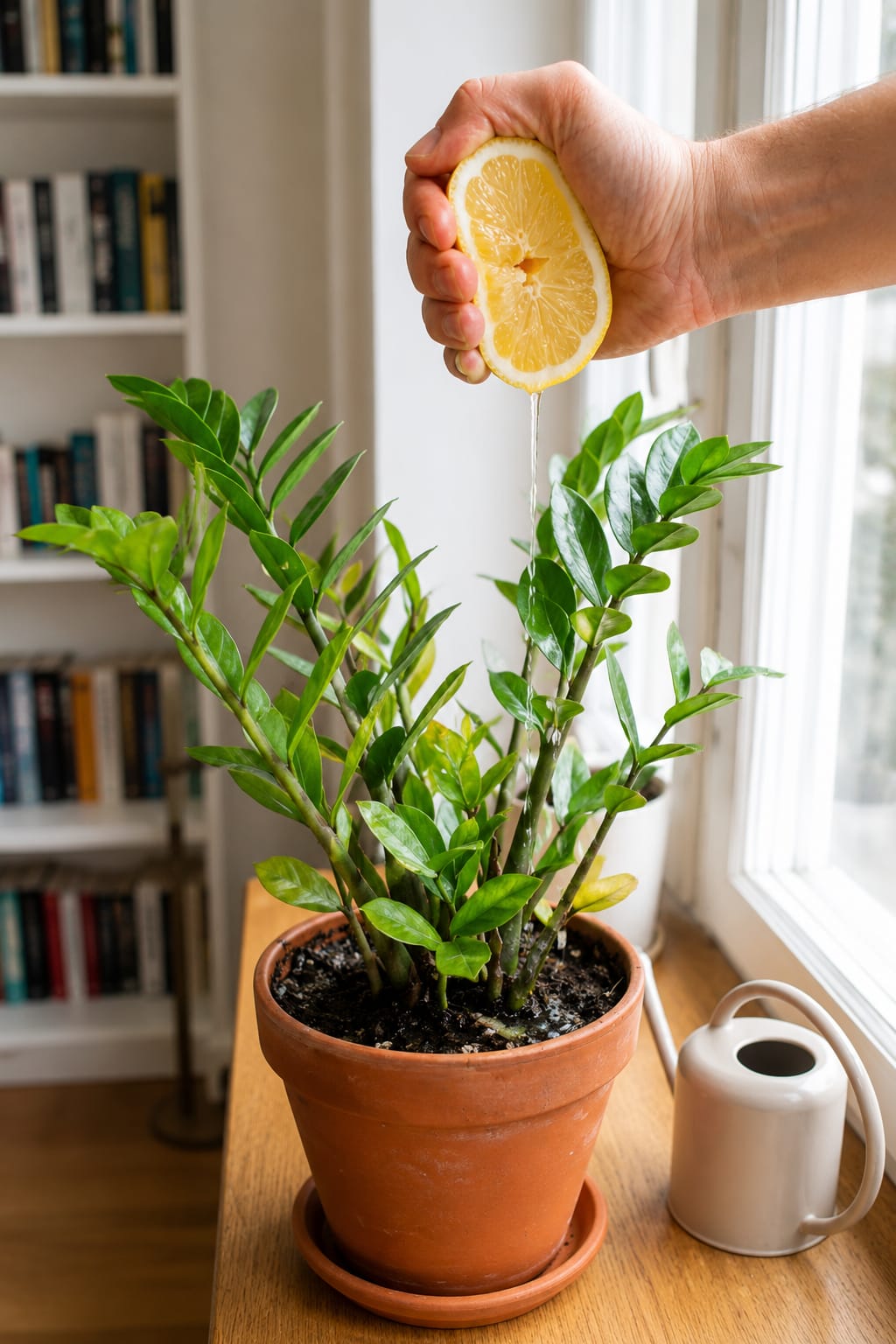
ZZ plant is one of the most dependable indoor plants for homeowners who want glossy green leaves, upright stems, simple care, and a clean decorative display that fits beautifully in living rooms, bedrooms, home offices, apartments, bright windowsills, entryways, plant shelves, modern interiors, commercial spaces, luxury home staging, and premium indoor plant styling. Its thick stems, shiny oval leaves, and sculptural growth make it look elegant even when placed in a simple terracotta pot, ceramic planter, woven basket, or minimalist container near soft filtered light.
Many plant lovers become curious when they see lemon juice being squeezed directly around a ZZ plant. The method is often presented as a quick natural trick for waking up slow growth, cleaning the soil, refreshing the roots, or encouraging stronger stems. Lemon looks fresh, bright, and harmless because it is a common kitchen ingredient. However, ZZ plants are drought-tolerant plants with thick rhizomes that store water underground. Their roots and rhizomes do not like wet, acidic, sticky, or unstable soil conditions. For that reason, lemon juice should be treated with serious caution.
The safest way to understand this method is to treat lemon juice as a risky household experiment, not a reliable ZZ plant care routine. A ZZ plant does not grow faster because lemon is squeezed into the pot. It grows best when the rhizomes are healthy, the soil drains quickly, the pot has drainage holes, the plant receives bright indirect light, watering is infrequent, and feeding is gentle during active growth. If the plant is yellowing, drooping, or growing slowly, the answer is usually light, watering, soil, roots, or seasonality. Lemon juice should never be the first solution.
Understanding ZZ Plant Roots Before Using Lemon
ZZ plants grow from thick underground rhizomes. These rhizomes store water and energy, which is why the plant can survive missed waterings and dry indoor air better than many tropical houseplants. This storage system is also the reason ZZ plants are sensitive to overwatering. When the rhizomes sit in wet soil too long, they can soften, rot, and damage the whole plant.
A healthy ZZ plant has firm stems, glossy leaves, and sturdy growth. New shoots often appear slowly, then rise quickly once the plant has enough stored energy. A ZZ plant may pause for weeks or months without visible change, especially in winter or low light. This slow growth is normal and does not mean the plant needs lemon juice.
Before adding anything to the pot, the root zone should be protected. If the soil is damp, compacted, sour-smelling, or slow to dry, extra liquid can make the situation worse. Lemon juice is acidic and can irritate roots if used strongly. For a ZZ plant, simple stable care is usually safer than dramatic homemade tricks.
What Lemon Juice Can Do to Potting Soil
Lemon juice is acidic. When poured into soil, it can temporarily lower pH in the area where it lands. Some plants prefer acidic soil, but ZZ plants do not need sharp acidic treatments to thrive. They grow well in a slightly acidic to neutral indoor potting mix as long as the mix is airy and well-draining.
Strong lemon juice can disturb the soil balance. It may irritate roots, affect beneficial microbes, and create uneven acidity around the rhizomes. In a small pot, there is not much soil to buffer the change. This makes direct lemon juice more risky for container plants than for large outdoor beds.
Lemon juice also contains organic compounds that can become sticky or attract insects if used repeatedly. It may leave residue on the soil surface or pot. A clean indoor plant display should not smell sour, attract gnats, or develop crusty buildup from kitchen liquids.
Why Lemon Juice Is Not Fertilizer
Lemon juice is not a complete fertilizer. It does not provide the balanced nutrients a ZZ plant needs for healthy growth. It does not replace nitrogen, phosphorus, potassium, calcium, magnesium, iron, or trace elements in a measured plant fertilizer. Using lemon juice as plant food is not reliable.
ZZ plants are light feeders. During spring and summer, they may benefit from a diluted balanced houseplant fertilizer or a fertilizer suitable for foliage plants. Even then, the dose should be weak. Too much fertilizer can damage roots and cause leaf problems. Lemon juice does not solve nutrient needs and may create new stress.
If a ZZ plant looks pale or weak, the first step is not lemon. Check light, watering, root health, and soil quality. A plant in low light or wet soil will not improve from acidic juice. It needs better growing conditions.
Why Direct Lemon Juice Can Be Risky
Direct lemon juice can be too strong for ZZ plant roots. The rhizomes are built to store water, not to sit in acidic kitchen liquid. If lemon juice is squeezed into already moist soil, it may stay around the roots longer than expected. This can increase stress and create an unpleasant sour smell.
Another risk is leaf and stem contact. Lemon juice on leaves can cause spotting, especially if the plant receives bright light afterward. Citrus juice can make leaf surfaces more sensitive. If lemon drips onto the foliage, it should be wiped off immediately with plain water.
A third risk is repeated use. One small accidental amount may not destroy a healthy plant, but repeated lemon treatments can gradually change the soil environment. Indoor pots collect residues over time. ZZ plants prefer low-maintenance stability, not frequent homemade additions.
When Lemon Should Be Avoided Completely
Lemon juice should be avoided if the ZZ plant has yellow leaves, soft stems, wet soil, fungus gnats, mold, sour odor, mushy rhizomes, a pot without drainage, or dense compacted soil. These are signs that the plant may already be stressed. Adding acidic liquid can make the root zone worse.
It should also be avoided during winter or low-light periods. ZZ plants use less water when light is weak and temperatures are cooler. Extra liquid sits in the soil longer and increases the risk of rot. During slow-growth periods, less intervention is safer.
Do not mix lemon juice with baking soda, vinegar, milk, sugar, oil, soap, coffee, or other household ingredients for ZZ plant soil. Kitchen mixtures can create unpredictable reactions and residues. ZZ plants need clean watering and airy roots.
What to Do If Lemon Juice Was Already Used
If lemon juice was used once in a very small amount and the ZZ plant still looks healthy, stop using it and return to normal care. Let the soil dry properly before watering again. Watch the plant for yellowing, softness, sour odor, or fungus gnats over the next few weeks.
If a lot of lemon juice was poured into the pot and the pot has drainage holes, water the soil thoroughly with plain room-temperature water and allow all excess to drain out. This can help dilute and move some residue through the pot. Do not let the plant sit in the drained liquid.
If the pot has no drainage holes, flushing is not safe because water may collect around the rhizomes. In that case, repotting may be better. Remove the plant gently, inspect the rhizomes, discard sour or wet soil, and repot into fresh airy mix. Do not fertilize immediately after repotting. Let the plant settle first.
Best Soil for ZZ Plants
ZZ plants need a well-draining potting mix. A standard indoor potting mix can be improved with perlite, pumice, coarse sand, orchid bark, or cactus mix. The goal is a medium that holds a little moisture but dries well between waterings. Dense soil that stays wet is one of the most common causes of ZZ plant decline.
If the soil feels muddy, compacted, or heavy, repotting is more useful than adding any homemade liquid. Healthy rhizomes need air. A loose mix allows oxygen to move through the pot and helps prevent rot.
Terracotta pots can work well because they allow moisture to evaporate through the sides. Ceramic and plastic pots can also work if they have drainage holes and the soil is airy. Decorative cover pots are fine, but excess water should never remain inside them.
Watering ZZ Plants Correctly
ZZ plants should be watered only after the soil has dried well. They do not need frequent watering. The thick rhizomes store moisture, so the plant can tolerate dryness better than wetness. Water deeply when needed, then let the pot drain completely.
Watering too often causes yellow leaves, soft stems, and root rot. If the plant is in low light, it will need water even less often. A bright location dries faster than a dark corner. The watering routine should depend on the soil and environment, not a strict calendar.
Do not pour lemon juice, milk water, rice water, or other kitchen liquids as extra water between normal waterings. Any liquid added to the pot counts as watering. For ZZ plants, extra moisture is usually more dangerous than temporary dryness.
Best Light for ZZ Plant Growth
ZZ plants can tolerate low light, but they grow better in bright indirect light. A plant near a window with filtered brightness will usually produce stronger stems and more new shoots than a plant in a dark corner. Low light survival is not the same as active growth.
If the plant is growing slowly, try improving light before adding treatments. Move it gradually to a brighter location. Avoid harsh direct sun, especially through hot glass, because leaves can scorch. Soft bright light is ideal.
Good light also helps the soil dry more evenly. A ZZ plant in a dim room stays wet longer after watering, increasing the risk of root problems. Light and watering are connected.
Feeding ZZ Plants Safely
ZZ plants do not need heavy feeding. During spring and summer, a diluted balanced houseplant fertilizer may be used occasionally. A weak dose is enough. Overfeeding can cause mineral buildup and root stress.
Do not feed a ZZ plant that is stressed, overwatered, newly repotted, or sitting in poor soil. Fertilizer helps healthy roots grow; it does not rescue rotten roots. If the plant has yellow leaves and wet soil, fix the moisture and root problem first.
Lemon juice should not be used as fertilizer. It does not provide balanced nutrition and may make the soil more acidic than the plant prefers. A measured fertilizer product is safer and more predictable.
Cleaning ZZ Plant Leaves
ZZ plant leaves are naturally shiny and decorative. Dust can dull their appearance, so they should be wiped gently with a soft damp cloth. Support the stem while cleaning so it does not bend. Clean leaves help the plant look fresh and allow better light absorption.
If lemon juice touches the leaves, wipe it off right away. Citrus residue can leave spots or sticky marks. Do not let lemon dry on the foliage. Plain water is the safest leaf-cleaning tool.
Avoid oily leaf shine products. ZZ plants already have a natural gloss. Oils can attract dust and create an artificial look. Clean water and a cloth are enough for a premium display.
Encouraging New ZZ Plant Shoots
New ZZ plant shoots appear when the rhizomes have enough stored energy. Bright indirect light, proper watering, warm temperatures, and healthy roots all support new growth. The plant may grow slowly for a long time, then suddenly send up fresh pale green shoots.
A slightly snug pot can support healthy growth because it prevents excess wet soil around the roots. However, the plant should not be severely root-bound to the point of stress. If the pot is packed with rhizomes and drying too quickly, repotting may help.
Lemon juice will not safely force new shoots. Growth comes from healthy rhizomes and stable care. Patience is important with ZZ plants.
Continue to Page 2
Continue to page 2 for more details about this article and the key points many readers miss on the first page.